
A pallet containing several nearly identical elbows, swivel ends, and dash sizes should not move directly into stock. To inspect a multi-SKU shipment of one-piece fittings, receiving must preserve carton identity, reconcile documents, separate every SKU and lot, apply the approved inspection scope to each population, and quarantine discrepancies before any bin release. The main risk is not only a defective part; it is a correct part under the wrong label, a mixed batch, or an inspection result applied to the wrong SKU. A checkpoint workflow keeps evidence attached to each carton from unloading through final disposition without inventing one sampling rule for every product.
Freeze Shipment Identity Before Breaking Down the Pallet
Receiving control begins while cartons still retain their original relationship to the shipment. Moving loose boxes to several areas too early can erase the evidence needed to resolve a shortage, mix, or label conflict.

Create a receiving boundary
Assign a receipt or inspection identifier to the shipment and designate a controlled staging area. Photograph the pallet, external labels, damage, wrap, and carton arrangement when the procedure requires it. Record arrival condition before removing labels, replacing packaging, or combining partial cartons.
Keep the shipment unavailable to production and picking until disposition is complete. If urgent demand exists, use an authorized partial-release process that identifies exactly which SKU, lot, carton, and quantity were accepted; do not treat urgency as blanket approval of the pallet.
Map cartons to purchase-order lines
Create a carton map or receiving list that links each physical carton and inner pack to the purchase-order line, packing-list entry, supplier item, expected quantity, and lot or batch marking. Use temporary receiving labels only when they do not cover original information and are clearly distinguished from final stock labels.
Do not assume adjacent cartons contain the same item. A mixed pallet can include several fitting angles or connections with nearly identical packaging. Maintain one physical location or clearly bounded zone per identified SKU and lot while documents are checked.
Reconcile the Purchase Order, Packing List, and Labels
Document agreement is the first release gate. Quantity reconciliation alone cannot detect the wrong model listed under a plausible description.
Compare item-level fields
For every purchase-order line, compare full SKU, description, hose-side size, port-side connection, angle, material or finish when specified, ordered quantity, supplied quantity, lot or batch, and required document references. Check whether the packing list uses the buyer’s code, supplier code, or both, and confirm the approved cross-reference.
Review carton and inner-pack labels against that same line. A correct outer label with conflicting inner labels is a mix signal. A shortened description such as “female fitting” or “90-degree flange” is not enough when several products share that wording.
For each order line, verify at least:
- Buyer and supplier item codes
- Port connection, hose dash, angle, and specified finish
- Ordered and received quantities by SKU
- Lot, carton, and required document identities
Resolve overages, shortages, and substitutions
Record quantity differences by SKU and lot rather than balancing the total shipment. An overage of one fitting must not hide a shortage of another. If a substituted code appears, hold it until purchasing and technical authorities verify the approved change and product definition.
Preserve commercial and technical documents with the receipt. Missing certificates or reports should be evaluated only when they were required by the order; their presence does not replace physical identity and condition checks. Never create acceptance evidence by renaming an unrecognized document.
Verify SKU, Dash, Angle, and Connection Identity
Physical verification should confirm that the contents match the label and controlled product definition. It should not attempt to identify every fitting from appearance alone.
Use a SKU-specific comparison
Compare product markings and selected features with the current drawing, approved sample, item master, or inspection instruction for that SKU. Check straight, 45-degree, or 90-degree form; hose dash; port dash; male or female construction; swivel or fixed end; thread form; seat or seal type; and relevant stem and ferrule features.
Dash labels must remain attached to the correct side of the description. Port size and hose size are not automatically equal. Similar ferrules or body shapes also do not prove that two products belong to the same hose-fitting series.
Escalate look-alike conflicts
If a carton contains more than one visible geometry, marking, finish, or size, stop removal and preserve the pattern. Do not sort only by eye when final identity requires thread gauges, dimensional checks, drawings, or traceable codes. Place the affected carton and any loose pieces in quarantine.
A photo can document the comparison but cannot prove pitch, taper, seat angle, material, internal stem geometry, or hose compatibility. Use suitable controlled measurement methods and current specifications for the features required by the inspection plan.
Set Inspection Scope by SKU and Lot Risk
Sampling and characteristic selection should follow the organization’s approved plan, product risk, and purchase requirements. There is no universal sample count that fits every shipment.
Keep populations separate
Define the inspection population by SKU and lot or another approved traceability unit. Do not pool samples from multiple SKUs merely because they share a product family. A passing result for one dash size, connection, or lot cannot release another.
Risk inputs may include new item status, first receipt, drawing revision, changed source, past nonconformity, mixed or damaged packaging, application consequence, lot size, supplier history, and characteristic criticality. Record which factors drove normal, reduced, expanded, or full inspection under the approved system.
Select characteristics with consequences in mind
Identity and sealing errors can have different consequences from nonfunctional appearance variation. The SKU-specific plan may call for document review, visual condition, thread and seat verification, selected critical dimensions, ferrule or stem features, finish, marking, cleanliness, or other requirements.
Do not downgrade a required check because the gauge is unavailable. Hold the population until suitable equipment and qualified inspection are available. Conversely, do not invent dimensions or tolerances when the drawing does not provide them; request the controlling specification.
Inspect Packaging, Protection, Finish, and Damage
Packaging is part of the receipt evidence because it can explain contamination, corrosion, impact, and mixing. Review it at carton, inner-pack, and component levels.
Follow exposure from package to part
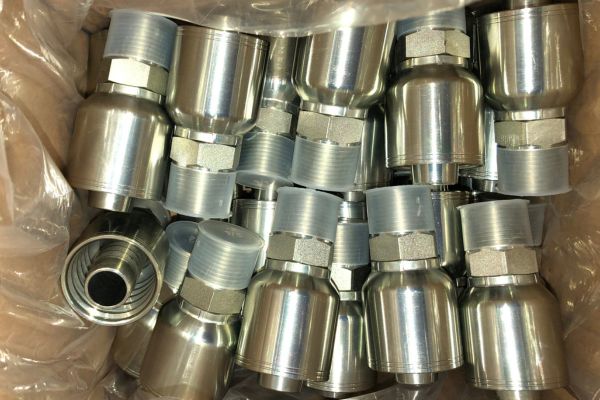
Check for crushing, punctures, water marks, chemical or oil contamination, torn bags, failed dividers, missing caps, loose parts, and foreign material. Note whether damage affects one carton, one inner pack, one layer, or the entire pallet. Keep the pattern linked to the SKU and lot.
On the fitting, inspect exposed threads, seats, O-rings, machined faces, body, ferrule, plating, and internal openings as required. Do not polish, chase threads, add lubricant, replace seals, or clean aggressively without an approved procedure; those actions can alter evidence or create a new condition.
Separate cosmetic and functional questions
Finish shade or a light rub may be cosmetic under one specification, while corrosion, flaking, dents, damaged thread entry, or a scratched sealing face may affect function. Describe the location and type of observation, then compare it with approved acceptance criteria. Do not invent a visual limit.
If the effect is unclear, place the affected population on hold and request technical disposition. An acceptable appearance does not prove material, pressure rating, thread identity, or hose-and-crimp compatibility.
Quarantine Discrepancies and Preserve Traceability
Quarantine must prevent both physical use and administrative release. Moving a discrepant carton aside without changing its system status leaves a path for accidental picking.
Contain the right scope
Identify the SKU, lot, carton, inner pack, quantity, receipt, and reason for hold. Separate affected material from accepted and uninspected populations. If loose parts could have crossed a boundary, expand containment to the last point where identity was verified rather than guessing which pieces are involved.
Use clear hold labels and a controlled location. Do not place rejected or questionable fittings in an active stock bin, return them to an open carton, or mix them with samples awaiting measurement.
Preserve objective records
Record the exact observation, specification reference, sample identity, instrument, measurement result where applicable, photographs, inspector, date, and related documents. “Wrong fitting” is less useful than a statement that names the label conflict or measured feature.
A quarantine record should keep together:
- SKU, lot, carton, inner-pack, and affected quantity
- Reason for hold and objective observation
- Samples, images, measurements, and document references
- Containment boundary, reviewer, and final disposition link
Route the nonconformance through authorized review for return, sort, re-inspection, concession, rework, or rejection as permitted. Receiving personnel should not change labels, repair threads, replace seals, or accept a substitution without documented authority.
Release Accepted Material to the Correct Stock Bin
Stock-bin release is a separate checkpoint after inspection. The accepted product, label, system item, lot, quantity, and physical location must agree.
Prevent the last-step mix
Before movement, reconcile accepted, held, rejected, sampled, and missing quantities for each SKU and lot. Apply final internal labels through the approved method while retaining required supplier and traceability information. Scan or independently verify bin location when similar items are stored nearby.
Do not combine lots unless the inventory and quality procedures allow it and traceability remains adequate. Close cartons and restore approved protective packaging before storage. Partial cartons need clear content and quantity identification.
Use a receiving control table
| Checkpoint | SKU/lot control | Evidence | Stop condition |
| Unload | Receipt and carton map | Arrival record, original labels | Unidentified or damaged carton |
| Document review | PO line to packing list | Approved item cross-reference | Wrong, missing, or substituted code |
| Identity check | Separate physical population | Drawing, sample, measurements | Mixed or ambiguous product |
| Risk inspection | Approved scope per population | Inspection plan and results | Failed or unavailable required check |
| Quarantine | Carton and quantity containment | Hold record and photos | Scope cannot be defined |
| Bin release | Accepted SKU, lot, quantity, location | Release record and inventory transaction | Label or location conflict |
The table is a workflow aid, not a replacement for SKU-specific inspection criteria or a statistical sampling plan.
Maintain a SKU-by-SKU Receipt Log
The final log should let another person reconstruct what arrived and why each population was released or held. Use one row or linked record per SKU and lot.
Capture purchase order and line, receipt identifier, supplier and buyer item codes, full description, SKU, lot, expected and received quantities, carton IDs, drawing or specification revision, inspection scope, sample IDs, required characteristic results, packaging observations, nonconformance reference, accepted quantity, held quantity, rejected quantity, stock location, inspector, reviewer, and date.
Link photographs, reports, and concessions rather than copying uncontrolled values into notes. Where a field is not required, identify it as not applicable; where evidence is missing, identify it as missing. A blank cell should never quietly mean “accepted.” Retain the log according to the quality system so later complaints, assembly issues, or stock checks can be traced to the correct receipt.
Conclusion
Multi-SKU receiving succeeds when identity remains attached to every carton, sample, result, and disposition. Freeze the pallet record, reconcile each purchase-order line, and separate populations by SKU and lot before inspection. Verify physical identity against controlled product data, then apply the approved risk-based scope without pooling unlike parts or inventing sample plans. Packaging damage, label conflicts, mixed geometry, failed checks, and missing evidence require visible physical and system quarantine. Reconcile all quantities again before releasing accepted material to the correct bin. To inspect a multi-SKU shipment of one-piece fittings reliably, preserve the carton map, inspection evidence, nonconformance records, and SKU-by-SKU receipt log so no correct result is assigned to the wrong product.
Frequently Asked Questions
Can samples from similar SKUs be combined into one inspection lot?
No, not unless an approved plan explicitly defines that population and technical basis. Similar appearance or shared family names do not make different SKUs or lots equivalent.
Should every fitting in a multi-SKU shipment be measured?
Not automatically. Follow the approved risk-based inspection and sampling plan for each SKU and lot, expanding scope when defined risk or findings require it.
Can an outer-carton label release the inner packs?
No, the inner contents and labels still need the verification required by the receiving procedure. A correct outer label can conceal mixed or mislabeled inner packages.
What should happen to a carton with two fitting geometries?
Quarantine the carton and preserve its contents, labels, and location pattern. Do not visually sort and release parts unless an authorized method establishes identity and disposition.
May accepted lots be combined in one bin?
Only when inventory and quality procedures permit it and required lot traceability remains intact. Similar fittings should never be combined in a way that creates picking or investigation ambiguity.