
JIC Hydraulic Fittings Manufacturer in China

Supply JIC 37° flare hose fittings and adapters in straight, elbow, tee, bulkhead, and conversion types.
Available in carbon steel, stainless steel, and brass for standard and custom hydraulic projects.

▷ Hose fittings and thread adapters

▷ Straight, elbow, tee, and conversion types

▷ Carbon steel, stainless steel, and brass

▷ OEM drawings, samples, and custom packaging

Product List

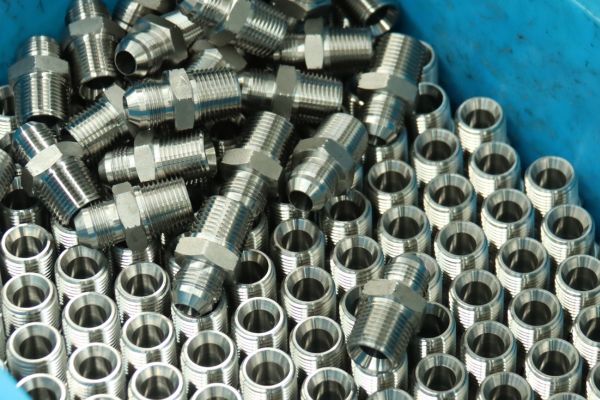
Topa supplies a full range of JIC 37° flare hydraulic fittings built for stable sealing and long service life in hose and adapter systems. Configurations cover straight, 45°, and 90° options, helping you solve installation space limits and hose routing issues.

Material options include carbon steel for general applications, stainless steel for corrosion environments, and brass for specific low-pressure systems. A wide size range supports different thread standards and hose sizes, making replacement and OEM matching faster and more accurate. You can avoid common problems such as thread mismatch, sealing failure, or repeated installation adjustments.

Send your drawing, sample, or thread details. We will confirm size, type, and specifications quickly, helping you reduce errors and get a fast quotation.

JIC Hydraulic Hose Fitting

Made of stainless steel or carbon steel, impact-resistant, wear-resistant, and durable.

JIC Crimped Hydraulic Fitting

JIC Parker hydraulic fitting reduces complexity and leak paths. Installation is simple and efficient.

JIC Reusable  Hydraulic Fitting

JIC reusable hydraulic fitting, can be assembled on site without any special tools.

JIC to Flange  Hydraulic Fitting

JIC to flange hydraulic fitting one end is JIC thread and one end is flange.

JIC to NPT  Hydraulic Fitting  

JIC to NPT hydraulic fitting one end JIC male, one end NPT male.

JIC to ORFS hydraulic fitting

JIC to ORFS Hydraulic Fitting

JIC to ORFS hydraulic fitting, JIC male to SAE O-Ring Boss/ORFS male thread.

JIC to Metric  Hydraulic Fitting

JIC to metric hydraulic fitting can connect two different threaded fittings together.

JIC to ORB Hydraulic Fitting

JIC to ORB hydraulic fittings are durable, wear-resistant.

JIC to BSP  Hydraulic Fitting 

JIC to BSP hydraulic fitting, male 74° cone to BSP male with O-ring. Straight, 45°, 90°

JIC Bend  Hydraulic Fitting  

JIC bend hydraulic fitting can be used to change the direction of the hose.

JIC Tee and Cross

JIC tee and cross hydraulic fitting used for connection to hydraulic lines. Ideal for distributing or combining fluid.

JIC Plug Fitting

JIC plug hydraulic fittings are usually used on the end of hoses.

JIC Female Hydraulic Fitting

Two sides are JIC female thread.

JIC Male to Female Fitting

JIC male to female hydraulic fitting, one end male thread, one end female thread.

JIC brake hydraulic fitting factory china

JIC Brake Hydraulic Fitting

Durable, high-strength JIC brake hydraulic fitting are suitable for brake hoses, PTFE and other hoses.

JIC Male  Hydraulic Fitting

JIC male hydraulic fitting is a reliable metal-to-metal seal.

JIC Bulkhead  Hydraulic Fitting 

JIC bulkhead hydraulic fitting one end has a longer thread. Can add lock nut and nut.

Products Video

In this video, we showcase the wide range of Hydraulic JIC fittings available at Topa. From straight to elbow and tee configurations, our fittings are designed to meet the highest standards of quality and reliability. Watch as we demonstrate how each fitting is tailored for specific hydraulic applications, providing secure and leak-free connections.

Our fittings are engineered with a 37° flare, ensuring an ideal seal for high-pressure applications. Whether you need a standard fitting or a specialized design, Topa offers versatile options to meet all your hydraulic needs.

Discover the perfect JIC fitting for your system today. Contact us for custom solutions!

Application

Topa’s JIC hydraulic fittings are widely used across multiple industries thanks to their reliable 37° flare sealing, broad size range, and strong compatibility with hydraulic hoses. Available in carbon steel and brass, with stainless steel options for corrosive environments, these fittings are built to handle fluid transfer in demanding conditions. They are commonly applied in construction equipment, aerial lifts, heavy machinery, engine systems, and agricultural equipment where stable performance and leak-free connections are required.

JIC hydraulic fittings manufacturer

Agriculture

The application of agricultural Topa's JIC hydraulic fittings has significantly improved several functions of agricultural machinery, and the performance of cash crop agricultural machinery and production subsidiary machinery has been enhanced.

JIC hydraulic fittings factory application

Construction

The construction industry is one of the most important contributors to economic development, where JIC hydraulic fittings provide many benefits to the development of the construction industry, it can increase the efficiency and productivity of machines.

JIC hydraulic fittings supplierr application

Material Handling

Topa’s JIC hydraulic fittings play an important role in material handling and are widely used for lifting, holding, and moving load work. With it, we can easily accomplish tasks such as dock loading, forklift lifting, and aerial work.

Request a Free Sample

Want to see the quality for yourself? Contact us today to request a free sample of our JIC fittings, and experience the reliability and precision that Topa offers firsthand!

All You Need to Know About Hydraulic JIC Fittings

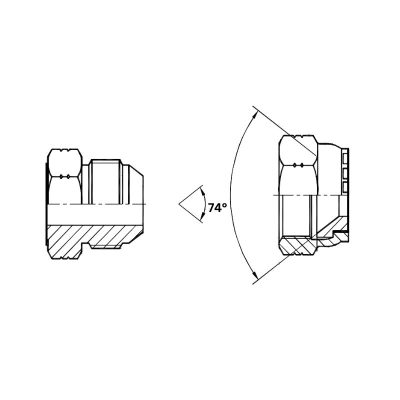
JIC 74° Topa

Working Principle

JIC hydraulic fittings use a 37° flare sealing structure combined with straight threads to create a stable, high-pressure connection. During installation, the 37° flare surface contacts the matching seat, forming a tight metal-to-metal seal that helps prevent fluid leakage. 

This design makes JIC fittings suitable for high-flow and high-pressure hydraulic systems, especially in equipment exposed to continuous movement and harsh working conditions.

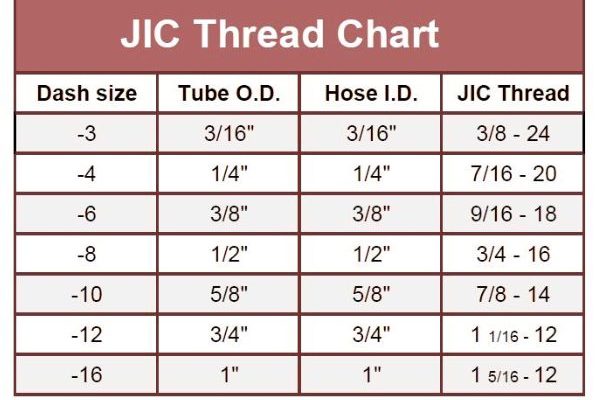
To support different system requirements, JIC fittings can be combined with multiple connection standards, including SAE straight thread O-ring Boss (ORB), NPTF, BSPP-ED, BSPP-O-ring Retaining Ring (ORR), BSPP, BSPT, ISO 6149, as well as metric options such as Metric-ORR and Metric-ED. This allows easier integration into international hydraulic systems and reduces compatibility issues during replacement or OEM assembly.

Materials

JIC hydraulic fittings are made from high-quality materials designed to withstand demanding hydraulic systems and harsh environments. The common materials used are:

Steel – Provides excellent strength and durability, making it ideal for high-pressure applications. Steel fittings are often coated with corrosion-resistant layers for additional protection.

Stainless Steel – Offers superior corrosion resistance, making it perfect for use in environments exposed to moisture, chemicals, and extreme temperatures. Stainless steel fittings are often preferred in industries like food processing, pharmaceuticals, and marine applications.

Brass – Known for its ease of machining and resistance to corrosion, brass fittings are ideal for moderate-pressure systems and environments where strength requirements are lower compared to steel or stainless steel.

JIC Fitting material

Materials

The typical JIC fitting features the following key structural components:

37° Flare – JIC fittings are distinguished by their 37° flare angle, which ensures a tight, leak-free seal when mated with the corresponding tube or hose. This flare angle creates a mechanical seal that can handle high-pressure conditions.

Straight Threads – JIC fittings have straight threads, which provide a secure connection without the need for additional seals or gaskets. These threads ensure the fitting stays in place without leaking under pressure.

Locknut and Port Stud (for Adjustable Ports) – The locknut helps secure the fitting in place, while the port stud holds the fitting to the port. Some designs feature a longer locknut for improved stability and reduced potential for washer damage.

Common JIC Fitting Problems and Solutions

Avoid costly mistakes in hydraulic fitting selection. These common problems often lead to leakage, installation failure, and repeated purchasing errors. Each solution helps you reduce risk and improve system reliability.

Leakage After Installation

Even correct-looking fittings may leak due to wrong flare angle or damaged sealing surface.

Solution: Confirm 37° flare and sealing seat before ordering. Topa checks sealing surfaces to reduce leakage risk.

Thread Mismatch

JIC, NPT, BSP, and metric threads are often confused, causing installation failure.

Solution: Verify thread type and pitch. Topa supports matching by drawing or sample.

Repeated Rework

Incorrect size or structure leads to repeated installation attempts and delays.

Solution: Confirm size and type in advance. Topa helps verify specs before production.

Loosening Under Vibration

Continuous vibration in heavy machinery can cause fittings to loosen over time.

Solution: Use correct torque and fitting design. Topa fittings support stable connections.

Corrosion in Harsh Environments

Standard fittings may rust quickly in outdoor or chemical environments.

Solution: Choose proper material and coating. Topa offers stainless steel options.

Inconsistent Bulk Quality

Bulk orders may vary in size and sealing performance, affecting assembly.

Solution: Focus on inspection and consistency. Topa controls dimensions before shipment.

Get Your Custom Quote Today

Have questions or need guidance on fitting options? Our experienced team is ready to assist you. Reach out to us now for a tailored quote on your hydraulic fitting needs.

How to Customize JIC Fittings with Topa

Get the right JIC hydraulic fittings without mismatch or delays. Topa helps you confirm specifications, reduce errors, and move from idea to production faster.

JIC Fitting parameters
Step 1

Send Your Requirements

Share your drawing, sample, or photo. Include thread type, size, and application if available.

Hydraulic Fitting Sizes JIC thread
Step 2

Specification Confirmation

We verify thread, flare angle, size, and structure to avoid mismatch and installation issues.

JIC Fitting material
Step 3

Quotation and Solution

You receive a clear quotation with matched specifications, material options, and lead time.

JIC fitting Production
Step 4

Sample or Production

Samples can be arranged before mass production to confirm fitting accuracy and performance.

Quality Test and inspection
Step 5

Quality Inspection

Each batch is checked for thread accuracy, dimension, and sealing performance before shipment.

Packing area
Step 6

Packing and Delivery

Export packing protects fittings during transport and keeps threads and surfaces in good condition.

Hydraulic JIC Fittings Manufacturing Process

At Topa, we employ advanced CNC machining to produce our Hydraulic JIC fittings with precision. The manufacturing process includes raw material selection, CNC turning and milling, threading, and final quality inspection. Each fitting undergoes stringent testing for dimensional accuracy and pressure tolerance. Once finished, the fittings are carefully cleaned and prepared for shipping.

JIC Fitting material Selection

Material Selection

Depending on the application, materials such as steel, stainless steel, or brass are chosen. The raw materials are then cut to the required lengths and prepared for machining.

JIC Fitting CNC machine

CNC Machining

The prepared material is then fed into CNC machines, which precisely cut and shape the fittings to the desired dimensions.

JIC Fitting Thread grill

Flare Formation

This step involves the creation of a 37° flare at the end of the fitting, which is essential for sealing the fitting to hydraulic hoses or tubes.

6. fitting galvanize Topa

Surface Treatment

Common treatments include galvanizing (zinc coating) or applying plating for steel fittings. Stainless steel fittings may receive coatings to prevent galling.

JIC Fitting Crimping

Assembly

Once the fittings are coated and treated, they are assembled with additional components if necessary, such as O-rings, seals, or locknuts.

9. packing Topa

Packaging and Shipping

Custom packaging options are available for clients who require branded or specific packaging solutions.

Quality Check

Each hydraulic fitting is checked through a series of inspection and testing procedures to ensure consistent performance, reliable sealing, and long service life in hydraulic systems.

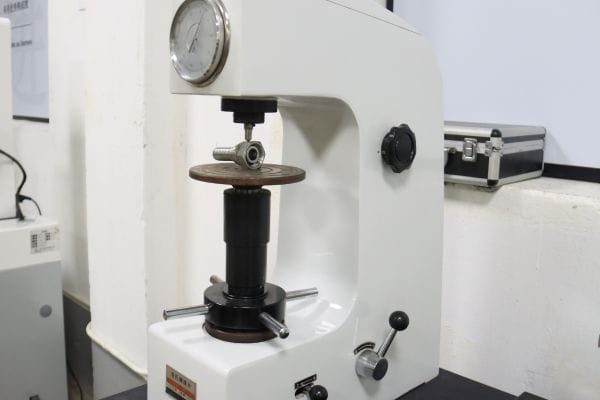
hardness test Topa

Hardness Testing

Material hardness is tested to ensure the fitting has the required strength and durability. Proper hardness helps prevent deformation, cracking, or failure under high-pressure working conditions.

Spectrometer Topa

Surface Roughness Testing

Surface roughness is inspected to ensure proper sealing performance. A controlled surface finish helps reduce leakage risks and improves connection reliability.

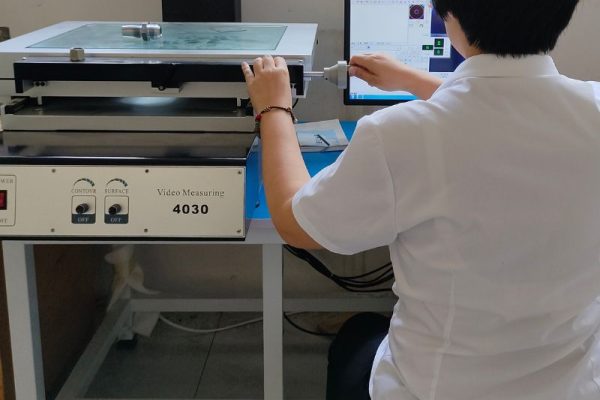
profile projector test Topa

Profile Inspection

Profile testing is used to verify the shape and angle of threads and sealing surfaces. This ensures that each fitting matches standard specifications such as JIC, BSP, or ORFS connections.

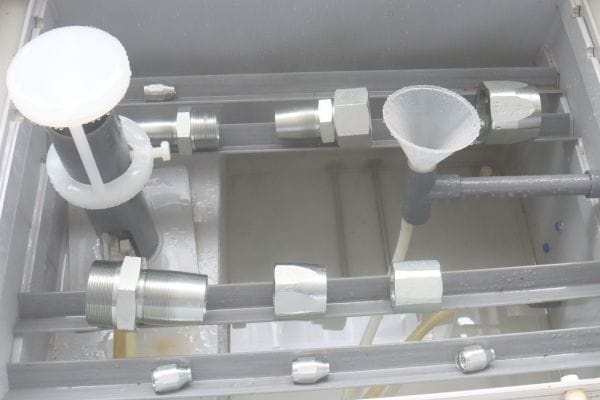
Hydraulic Fitting Salt Spray Test

Salt Spray Testing

Salt spray testing evaluates corrosion resistance of the plated surface. This helps ensure the fittings can perform reliably in humid, outdoor, or harsh operating environments.

FAQ

What is JIC hydraulic fttings?

JIC hydraulic fittings have a 37° cone seat on the female fitting and a 37° flare on the male fitting. Common in hydraulic systems. for conveying fluids.

What does JIC mean in hydraulic fittings?

JIC is a thread type. A form of metal-to-metal sealing. Suitable for hydraulic systems.

How to measure JIC hydraulic fittings?

First measure the thread using a thread gauge. Only if the JIC thread gauge fits tightly into the fitting you have in your hand will this indicate a JIC thread.

Use calipers to measure the inner and outer diameter of the threads. You can check Topa’s datasheet for fit measurements.

What is the difference between JIC and SAE hydraulic fittings?

SAE hydraulic fittings are always used in those low pressure applications,like refrigeration etc.
JIC hydraulic fittings are invariably used in where high stress are involved,like fluid power.

Is JIC and NPT hydraulic fittings the same?

JIC hydraulic fittings are compression fittings ,having a 74 degree cone and parallel threads. NPT is a kind of United States standard tapered threads , providing an effective seal for piping .

JIC hydraulic fittings have better sealing power which can work under higher pressures. NPT threads are always used in those lower stress systems and are often used in conntecting ports.

What is the standard of JIC hydraulic fitting?

JIC hydraulic fitting was defined by SAE J514 and MIL-DTL-18866 those two distinct stangards ,and its flare seat is 37°. JIC hydraulic fitting is broadly used on those products with pressures up to 10,000 psi.

Should you use thread sealant on hydraulic fittings?

Some thread sealants are suitable for high-pressure hydraulic fittings. Fits any size NPT, O-ring boss or JIC fitting and resists rotation and leakage.

Can JIC hydraulic fittings be used on hydraulics?

JIC fittings are ideal for hydraulic applications. Widely used in the market. Metal-to-metal seal for high and low temperature fluids.

What is the difference between AN and JIC hydraulic fittings?

AN hydraulic fittings use threads with increased root radius ,and their tolerances are tighter. They are commonly used in US military aerospace applications.

The cone of JIC hydraulic fittings are 37 degree, and their thread quality are slightly lower than those of AN fittings, which are often used in those heavy machinery applications ,such as agricultural equipment and construction equipment.

What is the difference between JIC and JIS hydraulic fittings?

JIS hydraulic fittings are mostly used in Japan and South Korea for heavy applications, and their female cone seat are 60 degree . JIC hydraulic fittings are mostly perfered by the North American market, even popular in the whole world,and their female cone seat are 74 °.

Get More Information About Products

JIC fitting catalog

Contact Topa

Save 30% on maintenance costs with our easy-install hydraulic fittings. Contact Now!