Aluminum and brass hose fittings serve different material and application requirements. Neither material is automatically the better choice for every hose assembly.
Before comparing the metals, identify the fitting itself. A garden-hose coupling, camlock coupling, AN fitting, pneumatic push-in fitting, hydraulic adapter, and industrial hose barb may operate under very different pressure, temperature, fluid, mechanical-load, and regulatory requirements.
“Aluminum fitting” is not a complete material specification. Aluminum fittings may be machined, forged, cast, or formed from different alloys, each with its own strength, corrosion behavior, machinability, and finishing requirements.
Alloys such as 6061 are widely used for machined adapters and performance-fluid connections, while other alloys may be selected for camlock couplings, irrigation fittings, or formed hose ends. The alloy and temper should be stated on the drawing or material specification rather than assumed from appearance.
Aluminum’s main advantage is weight. Its density is roughly one-third that of common brass alloys, so the weight difference can be significant in a vehicle, mobile assembly, large coupling, or multi-connection system. Aluminum can also be machined into complex fitting shapes and treated with anodizing or another finish when the application requires additional surface protection.
Its natural oxide film provides protection in many environments, but that protection is not universal. Chlorides, strong acids or alkalis, trapped moisture, damaged finishes, and contact with more noble metals can accelerate attack. Threads and sealing faces also require care because aluminum is more easily scratched, galled, or deformed than many steel or brass components.
Aluminum fittings are commonly considered for applications in which component weight, ease of handling, and the availability of a suitable corrosion-resistant finish matter.
Typical examples may include:
– Aluminum camlock couplings for compatible water, fuel, and industrial transfer services
– AN-style hose ends and adapters used in automotive or performance-fluid systems
– Selected irrigation and fluid-transfer fittings
– Mobile equipment where reducing assembly weight has measurable value
– Large-diameter couplings that would be considerably heavier in brass
These examples are not blanket approvals. The exact alloy, fluid, temperature, pressure, seal material, joining method, and applicable standard must still be confirmed. Aerospace, fuel, chemical, or safety-related service requires the specified approved component, not simply any fitting made from aluminum.
Lightweight: One of the most significant advantages of aluminum fittings is their lightweight nature. This makes them easier to handle and transport, reducing the physical strain on workers during installation and maintenance. The reduced weight also contributes to lower overall system weight, which is particularly beneficial in mobile and aerospace applications.
Corrosion Resistance: Aluminum’s natural corrosion resistance is a critical benefit. The protective oxide layer that forms on aluminum fittings shields them from the damaging effects of moisture, salt, and other corrosive elements. This makes aluminum fittings ideal for use in outdoor and marine environments, where they are exposed to harsh conditions.
Cost-Effectiveness: Generally, aluminum fittings are more affordable than their brass counterparts. This cost-effectiveness, combined with their other benefits, makes aluminum fittings an attractive option for many users. They provide a budget-friendly solution without compromising on performance, especially in applications where weight and corrosion resistance are key considerations.
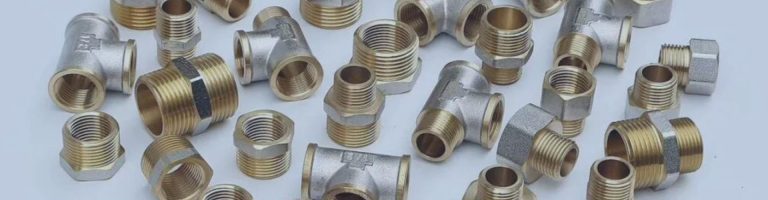
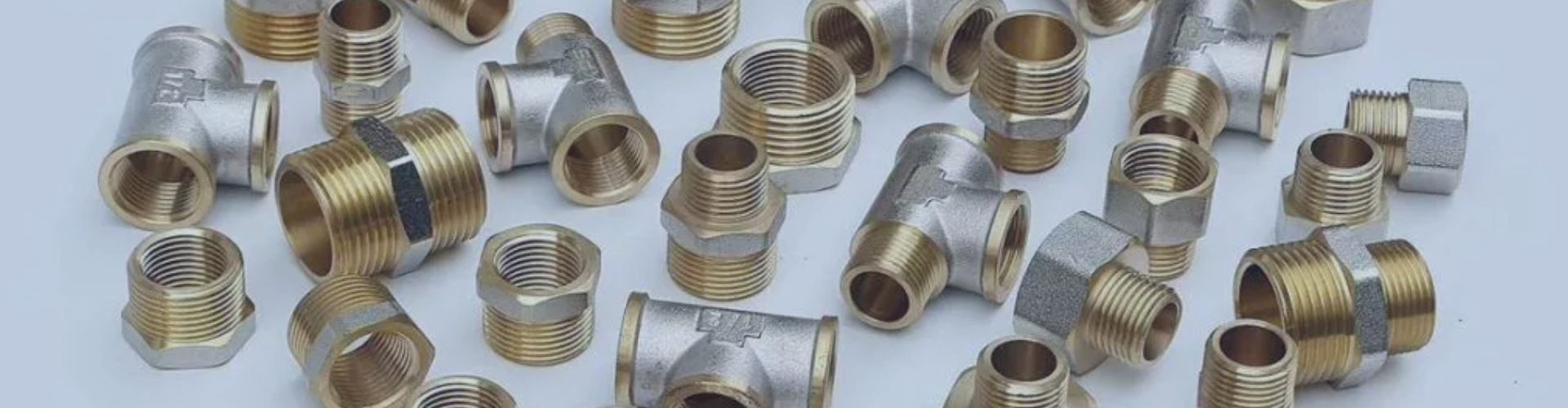
Brass is a family of copper-zinc alloys rather than one fixed material. Changes in copper and zinc content, together with additions used for machinability, strength, corrosion control, or lead reduction, can materially change fitting performance.
Machined brass is widely used for threaded fittings, hose barbs, compression fittings, pneumatic fittings, valves, and plumbing components. Brass is heavier than aluminum but is generally easy to machine, provides stable threads and sealing surfaces, and is available in a wide range of established fitting designs.
Corrosion resistance depends on the alloy and service environment. Some brass alloys can suffer dezincification in particular water chemistries, while ammonia-containing environments can increase the risk of stress-corrosion cracking. A corrosion-resistant or dezincification-resistant alloy should be specified where those risks are relevant.
Potable-water and gas applications require more than a brass body. For drinking-water service in the United States, confirm that the specific product satisfies the applicable health-effects and lead-content requirements. For fuel-gas service, verify the product standard, listing, connection design, pressure, temperature, and gas compatibility required by the applicable code.
Selection factor | Aluminum | Brass |
Weight | Much lighter | Considerably heavier |
Strength | Depends on alloy, temper and part design | Depends on alloy and part design |
Pressure capability | Must be verified by exact part number | Must be verified by exact part number |
General corrosion behavior | Protective oxide film, but vulnerable in some chloride, acid, alkaline and galvanic conditions | Good in many services, but alloy may be vulnerable to dezincification or ammonia |
Dissimilar-metal contact | Galvanic corrosion can be significant | Can accelerate corrosion of coupled aluminum in an electrolyte |
Thread damage | Greater care may be needed to avoid galling, cross-threading and deformation | Generally provides durable machined threads, but can still be damaged by overtightening |
Surface treatment | Often anodized or coated | May be unfinished, nickel-plated, chrome-plated or otherwise treated |
Potable water | Requires product-specific approval | Requires suitable lead-free alloy and product-specific approval |
Gas service | Requires product-specific approval | Requires product-specific approval |
Typical purchasing driver | Weight and compatible service environment | Established fitting designs, machinability and approved service options |
Cost | Depends on alloy, machining, finish and quantity | Depends on alloy, machining, certification and quantity |
Automotive and Aerospace
Aluminum Fittings: In the automotive and aerospace sectors, reducing weight is a critical factor for improving fuel efficiency and overall performance. Aluminum fittings are often preferred in these applications due to their lightweight nature. This weight reduction can lead to significant savings in fuel costs and enhancements in vehicle performance. Additionally, the corrosion resistance of aluminum ensures that the fittings maintain their integrity even when exposed to harsh environmental conditions typical in these industries.
Agriculture and Irrigation
Aluminum Fittings: In agricultural and irrigation systems, aluminum fittings are favored for their excellent corrosion resistance. These fittings are ideal for outdoor use, where they are exposed to water, fertilizers, and varying weather conditions. Their lightweight nature also makes them easier to handle during installation and maintenance.
Brass Fittings: Brass fittings are also widely used in agriculture and irrigation due to their robustness and ability to handle high pressures. They are suitable for applications that require durable connections that can withstand the rigors of constant water flow and pressure changes.
Residential and Commercial Plumbing
Brass Fittings: Brass fittings are commonly used in residential and commercial plumbing due to their durability and compatibility with a wide range of substances, including potable water. Their ability to handle high pressures and resist corrosion ensures long-lasting performance in plumbing systems.
Aluminum Fittings: In less demanding plumbing applications where weight is a consideration, aluminum fittings can be a viable option. While they may not match the durability of brass, aluminum fittings offer sufficient performance for certain residential uses, particularly where corrosion resistance and ease of handling are important.
The choice between aluminum hose fittings and brass hose fittings varies greatly, depending on the specific requirements of the industry. Each material offers unique advantages that make it better suited for certain applications. By considering the unique needs of your industry, such as weight reduction, corrosion resistance, durability, and pressure handling, you can choose the hose fitting that offers the best performance and value for your project.
When selecting between aluminum and brass hose fittings, it is essential to consider several factors to ensure the best fit for your application. Each material has unique advantages, and the choice depends on the specific requirements and conditions of your project.
High Pressure: For applications that require handling high pressure, such as industrial machinery and gas systems, brass fittings are typically the better choice. Brass’s robustness and ability to withstand high pressure make it ideal for these demanding environments.
Moderate to Low Pressure: Aluminum fittings are suitable for applications with moderate to low-pressure requirements. They provide adequate strength while offering other benefits like being lightweight and cost-effective.
Corrosive Environments: If the fittings will be exposed to corrosive elements, such as saltwater, chemicals, or outdoor weather, aluminum fittings may be preferable due to their natural corrosion resistance. Aluminum’s protective oxide layer helps it withstand harsh conditions, making it suitable for marine, agricultural, and outdoor applications.
Non-Corrosive Environments: Brass fittings also offer excellent corrosion resistance, especially in water systems and many chemical environments. They are well-suited for indoor plumbing and industrial applications where the risk of corrosion is lower or can be managed with regular maintenance.
Weight-Sensitive Applications: In industries where reducing weight is crucial, such as aerospace and automotive, aluminum fittings are the preferred choice. Their lightweight nature contributes to improved fuel efficiency and easier handling during installation and maintenance.
Less Weight-Sensitive Applications: For applications where weight is not a primary concern, the durability and strength of brass fittings can be advantageous. Although heavier, brass provides a sturdy and reliable connection, particularly in fixed installations.
Cost-Effective Solutions: If budget constraints are a significant factor, aluminum fittings generally offer a more cost-effective solution. They are less expensive than brass and provide good performance for many applications, making them an economical choice without sacrificing essential qualities.
Investment in Durability: While brass fittings are more expensive, their long-term durability and ability to handle high pressure can justify the higher initial cost. For critical systems where reliability and longevity are paramount, investing in brass fittings can be more cost-effective over time.
Choosing the right hose fitting material is essential for ensuring optimal performance and longevity in your applications. By considering the specific requirements of your project and weighing the pros and cons of aluminum and brass fittings, you can make an informed decision that best meets your needs.
Aluminum fittings are lightweight and corrosion-resistant, while brass fittings are known for their durability and high-pressure resistance.
Brass fittings are recommended for high-pressure applications due to their strength and ability to withstand higher pressures.
Yes, aluminum fittings are ideal for outdoor environments because of their excellent corrosion resistance.
Yes, brass fittings are compatible with potable water and are commonly used in residential and commercial plumbing systems.
Generally, aluminum fittings are more cost-effective than brass fittings, making them a good choice for budget-conscious projects.
While aluminum fittings are lightweight and corrosion-resistant, they are less durable under high pressure compared to brass fittings and can be susceptible to galvanic corrosion when in contact with certain metals.