
Carbon steel, stainless steel, and brass offer different combinations of mechanical properties, corrosion resistance, and manufacturing characteristics.

Carbon steel is widely used in hydraulic fittings and adapters for its mechanical properties, manufacturing versatility, and cost balance. It supports a broad range of connection shapes and sizes.
In environments exposed to moisture, the surface finish plays an important role in protecting the base metal. The supplied grade, manufacturing condition, and coating form part of the finished fitting specification.
Display highlights
Stainless steel is selected where corrosion exposure, cleanliness, or fluid compatibility influences the fitting specification. Its corrosion resistance comes from a passive surface film supported by the alloy composition.
Grades such as 304 and 316 serve different conditions. The molybdenum in 316 improves resistance to certain forms of localized corrosion, but neither grade is resistant to every chemical or environment. The actual grade and surface condition remain important.
Display highlights


Brass is a copper-zinc alloy family valued for its machinability and suitability for many fluid-connection products. It is used in a variety of adapters, valves, and fittings where the alloy and product rating match the service.
Brass grades differ in composition and properties. Water chemistry, temperature, pressure, and any lead-content or dezincification requirements help define the appropriate specification.
Display highlights
Explore the fitting configurations associated with each material family. Product pages provide the available connection types, dimensions, and specifications for individual items.

Carbon steel fittings offer a practical balance of mechanical performance, machining versatility, and cost for many hydraulic applications.

Stainless steel fittings are often selected where moisture, cleaning, or process fluids make corrosion resistance a priority.
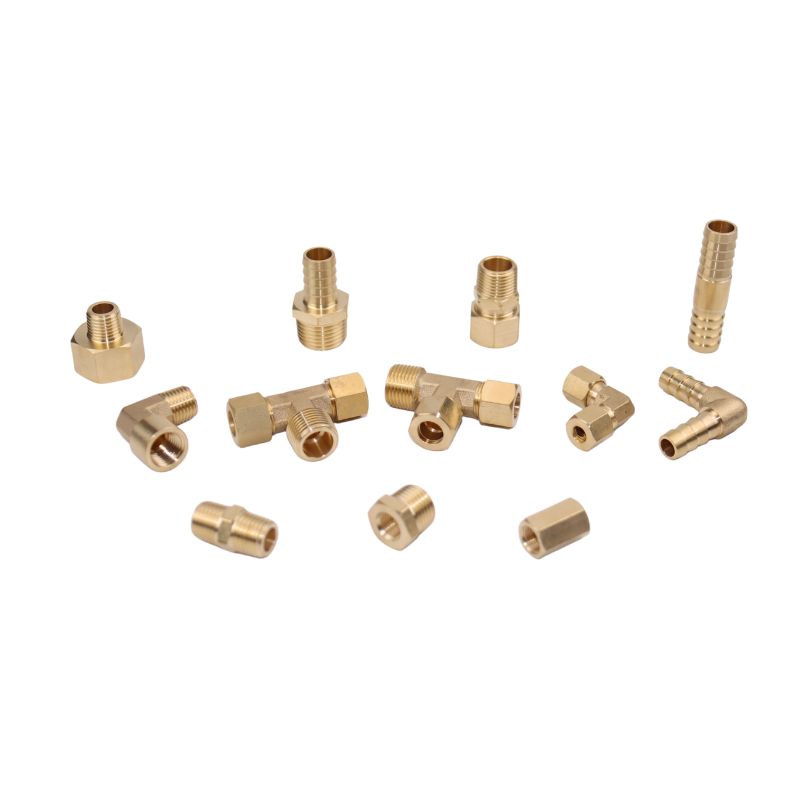
Brass fittings combine machinability with a range of connection options for air, water, and other compatible fluids.
Carbon steel, stainless steel, and brass are common fitting materials. Carbon steel offers a practical balance of mechanical performance and cost. Stainless steel is often selected for corrosion resistance, while brass is used in a range of fluid connections where its alloy properties suit the application.
Each material has advantages in different operating conditions. Coated carbon steel is a practical option for many hydraulic systems. Stainless steel may be a better fit where moisture, cleaning chemicals, or process conditions make corrosion resistance a higher priority.
Both are austenitic stainless steels. The molybdenum in 316 generally improves resistance to pitting and crevice corrosion in chloride-containing environments compared with 304. However, 316 is not immune to corrosion, and the grade alone does not establish a fitting’s pressure rating or suitability for seawater service.
Stainless steel relies on a passive surface film for corrosion resistance. Depending on manufacturing and application requirements, cleaning, pickling, passivation, or electropolishing may be used to address surface contamination, heat scale, or finish quality.
Properly specified zinc-nickel systems can provide greater corrosion resistance than conventional zinc plating. Zinc remains a common choice for general industrial applications. A useful comparison considers coating thickness, post-treatment, and equivalent corrosion test criteria, along with the exposure conditions and cost.
Color can provide a visual clue, but it does not reliably identify the complete coating specification. Similar-looking fittings may have different coating thicknesses, conversion treatments, or sealers.
Suitability depends on the brass alloy, water chemistry, temperature, and applicable product requirements. Some applications call for dezincification-resistant alloys, while drinking water applications may require specific lead-content limits and approvals.
Plating helps protect carbon steel from corrosion during storage and service. Zinc-based coatings provide sacrificial protection, while conversion treatments and sealers can add to the protection provided by the complete coating system. Plating supports surface durability; it does not increase the fitting’s pressure rating.
For OEM production, distributor replenishment, or recurring multi-SKU supply, share your fitting list and material requirements with Topa.
Include the product or drawing reference, required grade and finish, operating conditions, and quantities by item. Documentation or inspection requirements can be included with the request.
Whether you have a detailed drawing or an existing fitting to match, Topa can help you discuss material and finish options for your application.
Discuss carbon steel, stainless steel, and brass options based on your fluid, operating conditions, and product specifications.
Explore zinc plating, zinc-nickel plating, and stainless steel surface treatments. Availability depends on the fitting series and specification.
Share a drawing, part number, or clear product photos to help identify the connection, dimensions, and material requirements.
Discuss quantities by item for OEM production, distributor stock, or repeat orders across multiple fitting sizes and types.