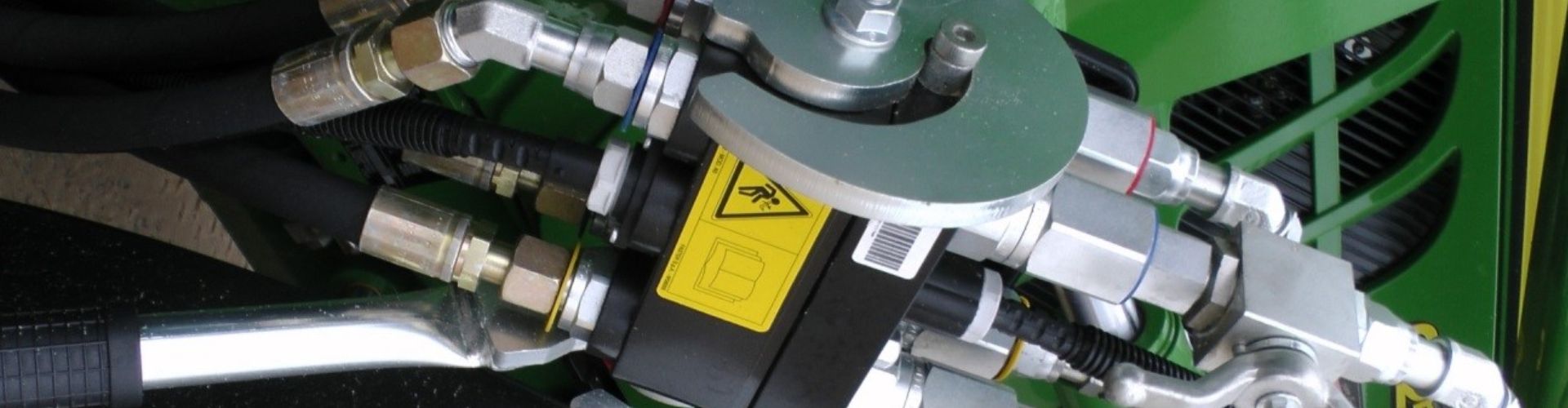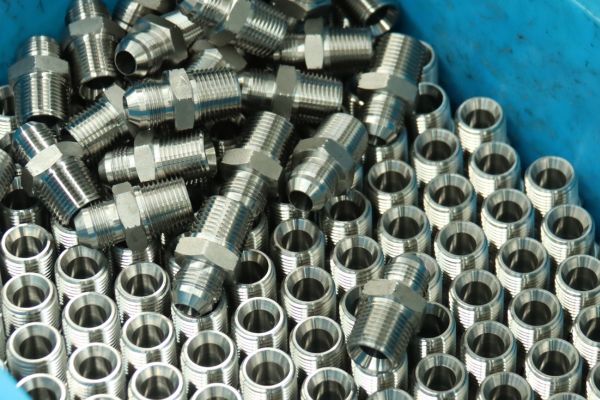
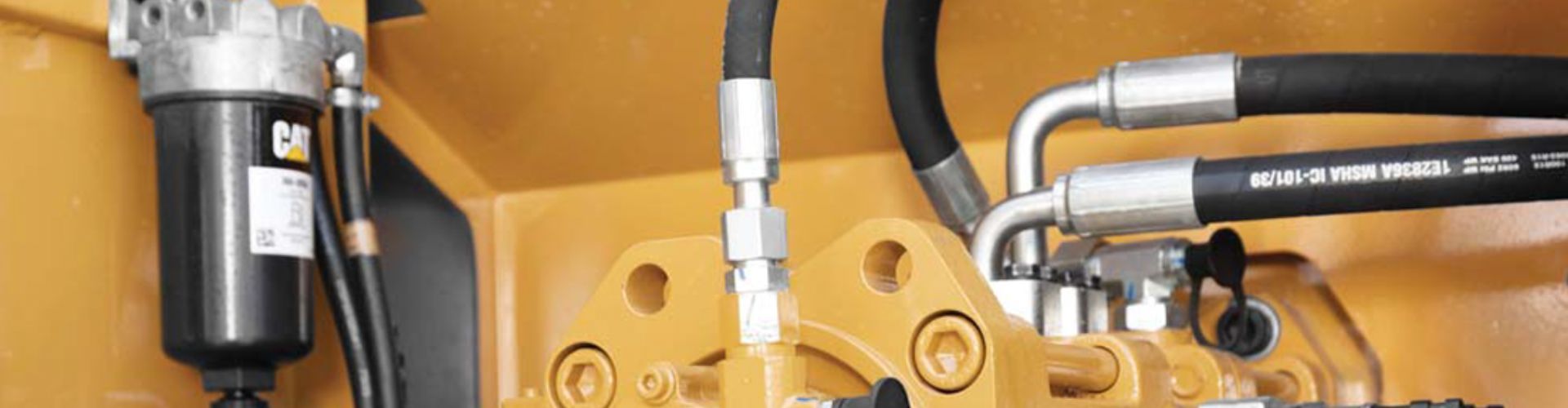
The reason your excavator hose repairs fail repeatedly is usually not a “bad hose” but a fundamental mismatch between the replacement assembly’s technical specs and the machine’s actual dynamic workload. Most field repairs focus on getting the machine moving again rather than diagnosing why the original failure occurred, leading to a cycle of burst lines and leaked fluid.
Why Do Pressure Spikes Cause Repeat Hose Failures?
Pressure spikes are the silent killers of hydraulic assemblies because they often exceed the hose’s rated working pressure for fractions of a second during heavy digging. When you replace a hose with one that only meets the “average” system pressure, these instantaneous surges fatigue the wire reinforcement until it snaps.
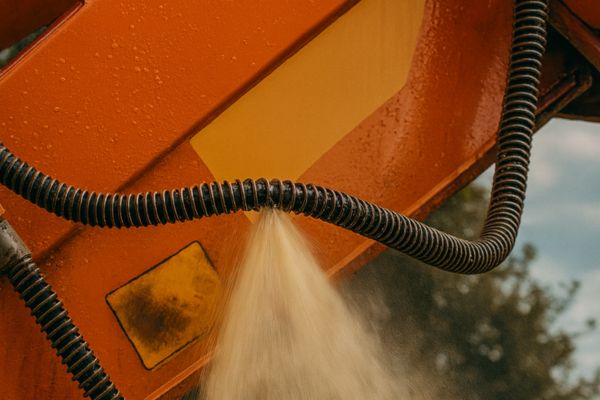
How Do Surge Pressures Weaken Wire Braiding?
Every time your operator hits a hard stop or a rock, a shockwave travels through the fluid. If your replacement hose lacks the impulse cycle rating required for heavy excavation, the steel wires will experience microscopic fractures.
- Sudden valve closures create rapid fluid deceleration.
- The resulting energy pulse expands the hose diameter momentarily.
- Repeated expansion weakens the bond between the tube and the cover.
You need to ensure that the replacement hose is rated for the maximum relief valve setting plus a safety margin for peaks. This is where many aftermarket selections fall short.
Can Underrated Hoses Survive Heavy Lifting Cycles?
Using a standard two-wire braid hose where a four-wire spiral hose is required is a recipe for immediate failure. Spiral reinforcement is designed to handle the high-impulse nature of excavator arm and bucket movements better than braided alternatives.
- Spiral hoses offer superior resistance to wire “sawing” during pressure pulses.
- Braided hoses tend to heat up and fail faster under constant surging.
- Check the SAE or ISO standard marked on the layline before installing.
Ensuring your procurement team understands the difference between constant pressure and variable pressure ratings will save you from the next blowout.
Selecting a hose with a 4:1 safety factor ensures that even during a catastrophic spike, the line remains intact. This proactive choice keeps your machine in the dirt and out of the shop.
| Repeat Failure Symptom | Likely Cause | Repair Action | Procurement Check |
| Hose bursts near fitting | High pressure spikes | Install spiral reinforced hose | Verify impulse cycle rating |
| Outer cover charring | Excessive system heat | Improve cooling or add heat sleeve | Check temp range specs |
| Wire reinforcement rust | Cover abrasion/cracking | Reroute hose or add guards | Select high-abrasion cover |
How Does Poor Hose Routing Lead To Abrasion?
If excavator hose repairs fail because of leaks in the middle of the assembly, the culprit is almost always mechanical abrasion. When a hose is installed too loose or at the wrong angle, it rubs against the steel frame or adjacent lines during every movement of the boom.
Why Is The Bend Radius Critical For Longevity?
Exceeding the minimum bend radius creates a massive stress point on the outside of the curve. This thins the outer cover and opens the wire reinforcement to moisture and external damage.
- Measure the distance between ports before cutting the hose.
- Ensure there is enough slack for the arm to fully extend without tension.
- Avoid “twisting” the hose during installation to prevent internal torque.
You must remember that a hose under pressure will contract in length by up to 4%, so a “tight” fit is actually a failure waiting to happen.
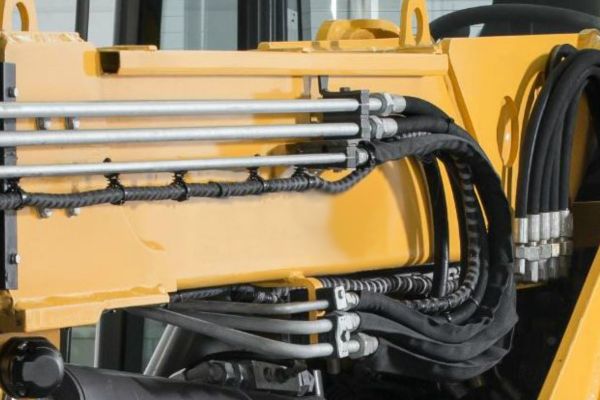
Do You Use Protective Sleeving On Friction Points?
In the tight confines of an excavator’s center joint or valve bank, contact is sometimes unavoidable. Without a nylon or plastic wrap, the vibrating steel components will eventually saw through the hose cover.
- Nylon textile sleeves provide excellent burst protection and abrasion resistance.
- Plastic spiral wraps are better for heavy impact zones.
- Spring guards prevent kinking in high-flex areas.
Is Incorrect Crimping Destroying Your Hose Fittings?
Even the best hose will fail if the fitting is not attached with the exact technical precision required by the manufacturer. If excavator hose repairs fail by having the “hose blow out of the fitting,” your crimp diameter is likely incorrect.
What Happens When Crimp Diameters Are Too Large?
If the crimp is too loose, the serrations on the fitting won’t bite into the wire reinforcement. Under high pressure, the fluid will eventually push the hose off the stem, often with violent results.
- Use digital calipers to verify every crimp against the manufacturer’s chart.
- Ensure the hose is fully “bottomed out” in the shell before crimping.
- Mark the insertion depth with a paint pen to verify no movement.
You can’t rely on “feel” when it comes to high-pressure hydraulic connections; only hard data ensures a safe seal.
Can Over-Crimping Damage The Internal Tube?
Conversely, squeezing the fitting too hard can crush the internal rubber tube or even fracture the steel wire. This creates a leak path that allows oil to travel under the cover, causing the hose to “bubble” or blister.
- Check for “flaring” at the end of the crimp shell.
- Inspect the internal bore for signs of collapse or restriction.
- Discard any assembly that doesn’t meet the +/- 0.1mm tolerance.
Consistency in the assembly room is the foundation of reliability in the field, so never skip the final measurement step.
Verification of crimp specs is the only way to guarantee that a 5,000 PSI hose actually holds 5,000 PSI. Precision in the shop equals performance on the job site.
| Repeat Failure Symptom | Likely Cause | Repair Action | Procurement Check |
| Fitting blows off | Loose crimp diameter | Recalibrate crimper/check dies | Verify hose/fitting match |
| Leaking from shell end | Over-crimp or tube cut | Adjust crimp settings | Confirm shell wall thickness |
| Fitting rust/pitting | Poor plating quality | Replace with high-spec fittings | Request salt spray test data |
Why Does Hydraulic Oil Contamination Kill New Hoses?
When a hose bursts, it often introduces rubber chunks and metal shards into the system. If excavator hose repairs fail shortly after replacement, it might be because the debris from the old hose is now tearing up the new components from the inside out.
How Does Internal Debris Scour The Hose Tube?
Fine metal particles act like sandpaper when moving at high speeds through your hydraulic lines. They erode the inner lining of the hose, eventually causing “pinhole” leaks that are difficult to detect.
- Flush the system after any major component failure.
- Use a “cleaning projectile” (foam pig) on every new hose assembly.
- Cap both ends of the hose until the moment of installation.
You must treat your hydraulic system like a clean room if you want your components to reach their maximum service life.
Are You Monitoring Your Oil Filter Health?
If your excavator’s filters are in bypass mode, the oil is circulating unfiltered. This allows contaminants to settle in dead-ends of the hydraulic circuit, ready to move when the next cylinder is activated.
- Change return-line filters every 500 hours or as specified.
- Perform regular oil analysis to check for high silicon or iron counts.
- Use a portable kidney loop filter for heavily contaminated systems.
Cleaning the oil is always less expensive than replacing a main pump or a set of travel motor hoses.
Cleanliness starts at the assembly bench. A hose that is not capped immediately after crimping is just a vacuum for dust and dirt. Protect your investment from the start.
How Do Temperature Extremes Affect Hose Life?
Hydraulic hoses are made of rubber compounds that have specific thermal limits. If excavator hose repairs fail because the hose becomes “brittle” or cracks when bent, it is likely being cooked by engine heat or overheating oil.
Is Your Engine Bay Cooking Your Hydraulics?
Hoses routed too close to the exhaust manifold or turbocharger will lose their flexibility very quickly. The heat dries out the plasticizers in the rubber, making it crack like a dry riverbed.
- Install heat shields or firesleeves in high-heat zones.
- Verify the hose is rated for at least 100°C (212°F) if near the engine.
- Maintain proper airflow within the machine compartments.
You need to realize that a hose’s life is cut in half for every 10°C it operates above its maximum rated temperature.
Does Cold Weather Cause “Cracking” Failures?
In arctic conditions, standard rubber becomes brittle. If an operator starts the machine and immediately moves the boom, the “frozen” hose can actually snap its internal reinforcement.
- Use “Low-Temp” rated hoses for environments below -40°C.
- Allow the machine to warm up at idle to circulate warm oil through the lines.
- Avoid high-flex movements until the hose covers feel pliable.
Matching the rubber compound to your local climate is a critical step that many general-purpose suppliers ignore.
Thermal management is about both protection and selection. By using heat-resistant materials and proper warm-up procedures, you extend the window of reliability.
| Repeat Failure Symptom | Likely Cause | Repair Action | Procurement Check |
| Brittle, cracked cover | Excessive external heat | Move hose or add firesleeve | Check temp rating on layline |
| Soft, “spongy” hose | Oil incompatibility | Flush system and change hose type | Verify fluid compatibility |
| Internal tube hardening | High oil temperature | Check oil cooler and fan | Upgrade to high-temp hose |
Can Incorrect Hose Length Cause Premature Failure?
Measurement errors are a leading cause of repeat issues. If excavator hose repairs fail because they “pull out” at full stretch or “kink” when the bucket is tucked, the assembly length was simply wrong.
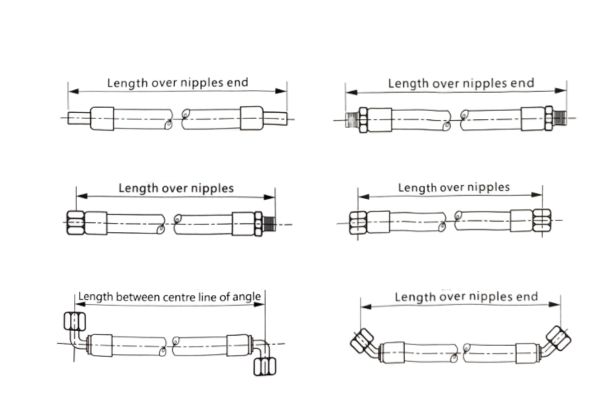
Why Is “Too Short” A Critical Danger?
A hose that is even an inch too short will be pulled tight when the excavator arm is at its maximum reach. This tension puts massive lateral force on the fitting stems, leading to fatigue and eventual snapping.
- Measure the original hose when it is off the machine and laid flat.
- Account for the depth of the fitting “cutoff” in your calculations.
- Always err on the side of a slightly longer hose (within reason).
You should see a gentle “S” curve in the hose at all positions, never a straight line like a guitar string.
How Does An Overly Long Hose Create Hazard?
If the hose is too long, it will droop. This creates “loops” that can snag on branches, rebar, or other machine parts, leading to a catastrophic tear-away.
- Use zip ties or clamps to manage excess length safely.
- Ensure the hose doesn’t dip into the “pinch point” of the linkage.
- Re-measure if you switch from an OEM to an aftermarket fitting.
The goal is a “Goldilocks” fit—not too tight to pull, and not too loose to snag. This requires precise field measurement before the hose is built.
A properly measured hose should look like it belongs on the machine, with smooth transitions and zero tension. Taking an extra minute to measure twice prevents a day of downtime.
Are You Using The Wrong Thread Or Sealing Type?
Many people assume “if it threads on, it’s right.” However, mixing JIC, ORFS, and BSPP threads is a guaranteed way to ensure excavator hose repairs fail due to weeping leaks that won’t stop no matter how much you tighten them.
Why Do Mismatched Seats Leak Under Pressure?
Even if the threads match, the sealing surface (the “seat”) might be different. A 37-degree flare (JIC) will not seal against a 45-degree seat, even though they look similar to the naked eye.
- Use a thread gauge and a seat angle gauge for every repair.
- Never use “thread tape” or sealant on hydraulic flare or O-ring fittings.
- Inspect the “O-ring” for nicks or flat spots before installation.
You must understand that in hydraulics, the threads only provide the clamping force; the seat or the O-ring does the actual sealing.
Can Reusing Old Fittings Save Money?
Reusing a hose fitting that has been through a high-pressure failure is extremely risky. The steel can have invisible stress cracks or the sealing face may be deformed from previous over-tightening.
- Only reuse fittings in extreme emergencies, and replace them immediately after.
- Look for “rounding” of the hex nut or pitting on the stem.
- New hoses deserve new fittings to ensure a 100% reliable bond.
The cost of a new fitting is negligible compared to the cost of the labor required to replace the hose a second time when the old fitting leaks.
Correct identification of the sealing interface is the difference between a dry machine and a greasy mess. Invest in a thread ID kit for your service truck.
| Repeat Failure Symptom | Likely Cause | Repair Action | Procurement Check |
| Thread weeping | Wrong thread type | Identify and replace fitting | Use thread gauge on samples |
| O-ring blowout | Wrong O-ring size/durometer | Replace O-ring and check groove | Order OEM-spec O-ring kits |
| Cracked nut | Over-tightening | Use a torque wrench | Verify fitting material grade |
Does Low-Quality Aftermarket Hose Increase Costs?
While saving 30% on a hose might look good on a monthly budget, it becomes a massive liability if excavator hose repairs fail twice as often. Not all “aftermarket” hoses are created equal.
What Is The Difference In Rubber Compounds?
Premium hoses use high-grade synthetic rubber (like Nitrile or Neoprene) that resists oil degradation and ozone cracking much better than the “natural rubber” blends used in ultra-cheap alternatives.
- Premium hoses maintain flexibility after years of sun exposure.
- Cheap rubber becomes hard and cracks within months.
- Look for reputable brands that provide full technical data sheets.
You are not just buying a hose; you are buying the chemical engineering that keeps that hose pliable under stress.
Why Does Consistent Wire Diameter Matter?
The strength of the hose comes from the steel wire. Low-cost manufacturers often use inconsistent wire gauges or lower-tensile steel, leading to “weak spots” in the braid.
- Higher tensile steel allows for a thinner, more flexible hose.
- Inconsistent braiding causes the hose to “twist” under pressure.
- Test certificates from the manufacturer prove the burst pressure.
A cheaper hose is often a heavier, stiffer hose that is harder to install and fails sooner. It is a false economy for any professional operation.
Quality is an investment in your machine’s future. By choosing high-spec components, you reduce the “total cost of ownership” even if the “purchase price” is slightly higher.
Why Should You Match Hoses To The Machine Model?
General-purpose hydraulic hose is fine for a log splitter, but an excavator requires specialized “Excavator-Duty” lines. If excavator hose repairs fail, it might be because you aren’t matching the specific requirements of your machine’s brand (CAT, Komatsu, Volvo, etc.).
Do Different Brands Use Different Standards?
Japanese machines often use JIS (Japanese Industrial Standard) fittings, while European machines prefer DIN or BSPP. Using an “adapter” to make an American JIC hose fit can create more leak points and stress.
- Identify the machine’s country of origin to narrow down thread types.
- Maintain a stock of brand-specific hose assemblies for common failure points.
- Avoid using multiple adapters in a single line.
You will find that using the “correct” fitting type results in a much cleaner, more reliable installation than a “cobbled-together” solution.
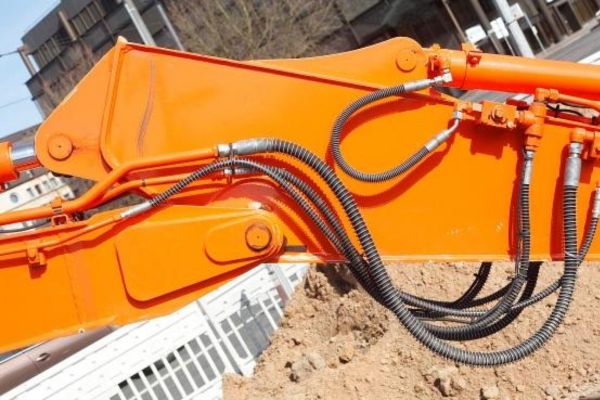
Should You Consult A Specialist For High-Flow Lines?
The main pump-to-valve-bank hoses handle the highest flow and pressure. These are not areas where you want to guess on the specifications.
- High-flow lines require specific internal diameters (ID) to prevent “cavitation.”
- If the ID is too small, the oil will overheat and damage the pump.
- Always match the original OEM internal diameter exactly.
Specialized machines need specialized support. When in doubt, provide your supplier with the machine’s serial number to ensure a perfect match.
The closer you stay to the original engineering specs, the less trouble you will have in the field. Precision matching is the ultimate downtime killer.
How Can You Choose A Better Replacement Excavator Hose?
To break the cycle of failure, your procurement process must transition from “buying a commodity” to “specifying a component.” If excavator hose repairs fail repeatedly, it is time to audit your supply chain and your technical requirements.
- Match Pressure Rating: Always verify the “Working Pressure” (WP), not just the burst pressure.
- Confirm Hose Size: Use the “Dash Size” system to ensure ID compatibility.
- Confirm Sealing Type: Verify if you need O-ring Face Seal (ORFS), JIC, or Flange heads.
- Check Working Temperature: Ensure the rubber compound can handle your specific climate and engine heat.
- Check Routing Space: If space is tight, look for “High-Flex” hoses with a smaller bend radius.
- Compare OEM Samples: Use photos or old samples to verify fitting angles (e.g., 45° or 90° elbows).
- Avoid Price-Only Decisions: Calculate the cost of 2 hours of downtime vs. the cost of a premium hose.
- Ask for Details: A good supplier should be able to tell you the wire tensile strength and the rubber origin.
Critical Inspection Checklist Before Installation:
- [ ] Hose length (measured flat)
- [ ] Internal Diameter (ID) match
- [ ] Pressure rating (WP) exceeds relief valve setting
- [ ] Fitting threads and seats identified with gauges
- [ ] Crimp diameter verified with calipers
- [ ] No kinking or twisting in the routing path
- [ ] Abrasion points protected with sleeves
- [ ] Oil is clean and filters are fresh
- [ ] Machine linkage moves freely without tensioning the hose
By following this rigorous technical approach, you turn a “quick fix” into a “permanent repair.”
Conclusion
Repeated excavator hose failures are not an inevitable part of construction work; they are symptoms of technical mismatches in pressure, routing, or assembly. By focusing on high-impulse spiral hoses, precision crimping, and meticulous routing, you can stop the cycle of constant leaks. We specialize in providing the high-durability aftermarket hydraulic solutions that OEM standards demand, ensuring your fleet stays operational in the most punishing conditions. Our vision is to eliminate unplanned downtime through engineering excellence and technical transparency in every assembly we provide.
FAQ
Can I use a higher pressure hose than the original?
Yes, increasing the pressure rating is generally safe and often recommended for high-wear areas, provided the hose remains flexible enough for the required routing.
What’s the best way to stop a hose from rubbing?
The most effective solution is a combination of proper routing to avoid contact and the application of a high-density polyethylene (HDPE) spiral wrap to protect the cover.
How do I know if my crimp is correct?
You must measure the finished crimp diameter with a digital caliper and compare it to the manufacturer’s specification chart; a visual check is never sufficient.
Can I mix different brands of hoses and fittings?
It is highly discouraged. Hydraulic components are engineered as a “system,” and mixing brands can lead to improper “bite” on the wire, resulting in blowouts.
How often should I inspect my excavator hoses?
Perform a visual “walk-around” inspection every day before starting work, looking for dampness, cover bubbles, or new abrasion marks on all high-flex lines.