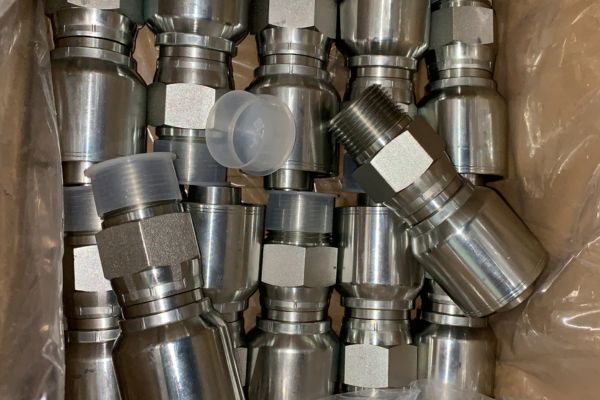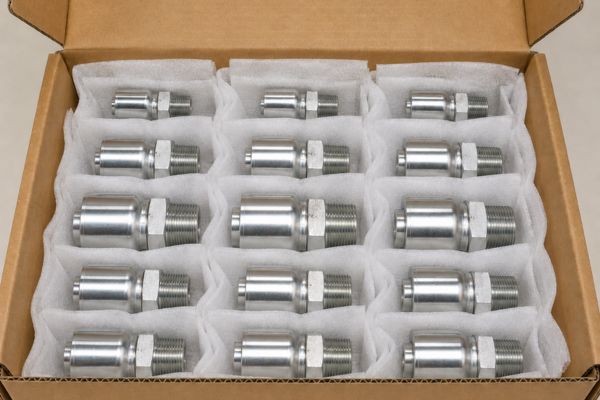
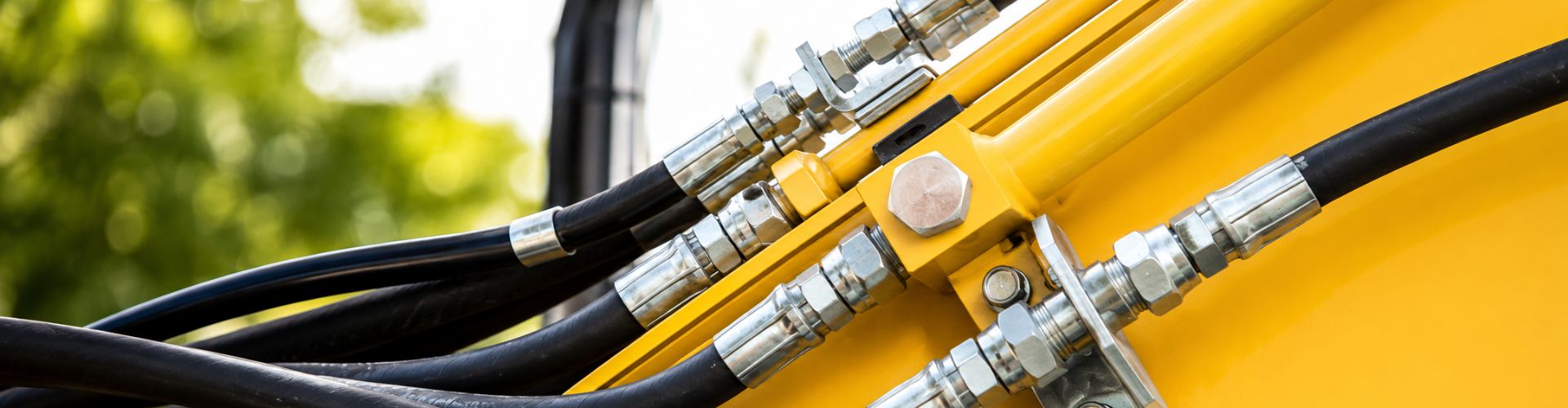
Buyers can verify one-piece fitting quality without operating a laboratory or inspecting the supplier’s factory. Start by confirming product identity, critical dimensions, threads, sealing surfaces, hose compatibility, material documents, surface condition, packaging, and applicable crimp data. These checks cannot replace every engineering or performance test, but they can expose common mismatches before the fittings enter stock or reach a hose assembly.
What Can a Buyer Realistically Verify?
Separate observable facts from supplier claims
Effective quality control begins by dividing information into three groups: details buyers can inspect directly, documents they can compare, and performance claims that require controlled testing. This prevents a general statement such as “the quality looks good” from replacing measurable acceptance criteria.
Buyers can usually verify the part number, product configuration, quantity, labeling, visible condition, thread dimensions, seat features, and selected drawing dimensions. They can also compare the quotation, drawing, packing list, inspection report, and delivered product for consistency.
Other characteristics require supporting documents or specialized tests. Material composition, coating performance, pressure suitability, and long-term service behavior should not be accepted or rejected through appearance alone.
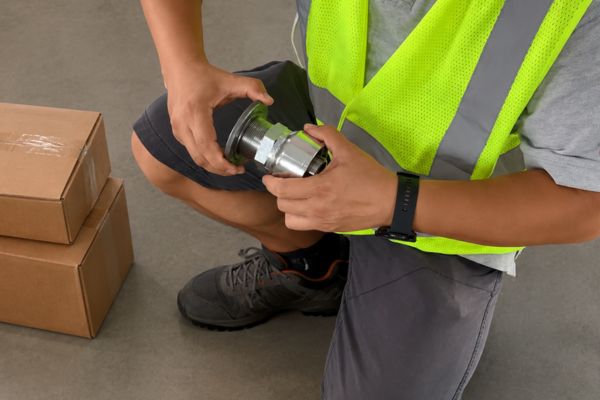
A useful inspection plan identifies:
- What will be checked.
- Which drawing or specification defines the requirement.
- Which measuring method will be used.
- How many pieces will be inspected.
- What result is acceptable.
- What happens when a deviation is found.
The required sampling level should reflect the order quantity, application risk, supplier history, and internal quality procedure. One fixed sample quantity is not suitable for every order.
Quality must be tied to a defined application
A fitting is not “high quality” in isolation. It must be correct for the specified hose, connection, fluid, pressure, temperature, environment, and assembly procedure.
One-piece fittings normally combine or preassemble the fitting stem and ferrule as one component, although the exact construction varies between product series. This design can reduce errors caused by selecting a separate ferrule. It does not guarantee compatibility with every hose of the same dash size or eliminate the need for valid crimp data.
Before inspecting a shipment, make sure the approved requirement is complete. If the hose series, thread, seat, seal, or material remains unknown, the buyer has no reliable standard against which to judge the delivered product.
Verify Product Identity Before Measuring Anything
Compare every document with the purchase order
Begin with the paperwork. Confirm that the quotation, approved drawing, purchase order, packing list, package labels, and physical products use consistent part numbers and descriptions.
A fitting can be dimensionally acceptable but still create problems if it is delivered under an incorrect label. The next order may reproduce the label rather than the product that was originally approved. Document accuracy is therefore part of quality control, not only an administrative concern.
Check the following information for every line item:
| Inspection point | What to compare |
|---|---|
| Part number | Internal reference, supplier reference, and package label |
| Hose compatibility | Approved hose manufacturer, series, and size |
| Configuration | Straight, 45-degree, 90-degree, or other style |
| Connection | Male or female, thread standard, seat, and seal |
| Material and finish | Purchase requirement and supplier documentation |
| Drawing | Drawing number and revision |
| Quantity | Purchase order, packing list, and physical count |
| Traceability | Shipment, batch, or production reference where required |
Resolve inconsistencies before mixing the fittings with approved inventory. A handwritten correction on a box does not establish which document should control future orders.
Check for mixed or substituted parts
Open enough packages to determine whether the shipment contains consistent products. Similar fittings can be mixed when their sizes, angles, or connection ends are difficult to distinguish visually.
Look for differences in ferrule shape, overall length, thread, seat, fitting orientation, markings, or surface color. A variation does not automatically prove that the part is defective, but it requires identification before acceptance.
Do not allow an undocumented substitution to enter stock. If the supplier changes the product series, manufacturing reference, material, finish, or dimensions, request an updated drawing and technical explanation. The revised fitting should be evaluated against the intended hose and application before approval.
Inspect Visible Condition and Workmanship
Look for defects that affect assembly or sealing
Visual inspection is useful when it focuses on functional areas. Buyers do not need to reject a fitting for every minor cosmetic variation, but they should identify defects that may interfere with connection, sealing, crimping, handling, or traceability.
Inspect for:
- Damaged, flattened, or incomplete threads.
- Burrs or sharp edges near assembly surfaces.
- Scratches, dents, or contamination on sealing faces.
- Missing, damaged, or incorrectly positioned O-rings.
- Deformed ferrules or fitting stems.
- Cracks, splits, or visible manufacturing damage.
- Corrosion, discoloration, or coating damage.
- Metal chips, dirt, moisture, or foreign material.
- Incorrect fitting angle or orientation.
- Missing or inconsistent identification.
Pay particular attention to the thread start and sealing face. Damage in these areas may prevent correct engagement or create a leak path, even when the rest of the fitting appears acceptable.
Distinguish cosmetic differences from functional defects
Surface appearance can vary with material, coating process, handling, lighting, and storage. Color alone does not prove coating thickness, corrosion resistance, or material composition.
When a visual difference is found, compare it with the approved finish specification and available documentation. If necessary, isolate the affected items and request evidence rather than accepting or rejecting the shipment based only on photographs.
Minor marks on a non-functional surface may have little effect, while a small scratch across a sealing face may be unacceptable. Inspection standards should therefore identify critical areas instead of applying the same cosmetic requirement to every surface.
Photograph deviations using consistent lighting and include a reference that shows the part number and affected location. Avoid descriptions such as “bad quality.” Record the specific feature, its location, and how it differs from the approved requirement.
Measure Threads, Seats, and Critical Dimensions
Verify the complete connection
Two fittings can look almost identical while using different thread forms, pitches, seat angles, or sealing methods. Confirm the connection through measurement rather than visual comparison.
Record whether the connection is male or female and whether the thread is straight or tapered. Measure the relevant outside or inside diameter and determine the pitch or threads per inch with suitable tools.
Never force parts together during inspection. Thread sealant must not be used to compensate for an incorrect thread or damaged sealing feature.
Inspect the seat and sealing method separately
Threads often provide mechanical engagement while another feature contains the hydraulic fluid. Determine whether the fitting seals through a flare, cone, face O-ring, stud O-ring, bonded seal, tapered thread, or another defined method.
Check the seat angle and sealing geometry against the drawing. Inspect the surface for scratches, dents, incomplete machining, contamination, or deformation. If an O-ring is included, verify its location and specified dimensions.
O-ring material cannot be confirmed reliably through color or touch. Request the required material documentation and confirm that the seal is suitable for the fluid and temperature range.
Measure other dimensions that affect installation and hose assembly, such as:
- Overall fitting length.
- Connection-end length.
- Hose-tail dimensions.
- Ferrule length and position.
- Hex size.
- Elbow angle.
- Drop length or centerline dimensions.
- Orientation between multiple connection features.
Confirm Hose Compatibility and Crimp Requirements
Match the fitting to a specific hose series
One-piece construction simplifies component handling, but it does not make the fitting universal. The fitting series must match the specific hose construction and size.
Two hoses with the same nominal ID can differ in reinforcement, tube material, cover thickness, and outside diameter. Their approved fittings and crimp settings may therefore be different.
The buyer should be able to trace the following relationship:
Hose manufacturer and series → hose size → compatible fitting series → approved crimp data
If the supplier confirms only the dash size, the compatibility check is incomplete. Request the supported hose reference and the source of the assembly data.
A cross-reference part number can help identify a possible fitting, but it does not by itself prove complete interchangeability. Confirm the thread, seat, seal, hose tail, ferrule, material, and application requirements.
Verify the assembly instructions
Before approving fittings for regular purchasing, confirm that the assembly team has current information for hose preparation, insertion depth, skiving requirements, die selection, crimp diameter, and post-crimp inspection.
There is no universal crimp diameter for every fitting of the same size. Applying data from a visually similar product can result in under-crimping, over-crimping, hose damage, leakage, fitting pull-off, or restricted flow.
When assembling samples, record:
- Hose manufacturer, series, size, and identification.
- Fitting manufacturer, series, and part number.
- Crimping machine and tooling.
- Assembly-data source and revision.
- Hose preparation and insertion method.
- Specified and measured crimp result.
- Final inspection result.
- Any deviation or corrective action.
If the fitting does not assemble as expected, stop and determine the cause. Repeatedly changing the machine setting until the assembly looks correct is not a valid compatibility test.
Review Material and Surface-Finish Evidence
Match documents to the actual order
Material certificates and coating reports are useful only when they can be connected to the ordered products. Check that the document identifies the relevant material, specification, batch, shipment, or part where traceability is required.
Do not assume that a generic certificate downloaded from a catalog represents the delivered fittings. The document should correspond to the agreed purchase requirements and the supplier’s traceability system.
Depending on the application and order requirements, buyers may review:
- Base-material specification.
- Material certificate or declaration.
- Surface-treatment specification.
- Coating test documentation.
- O-ring material declaration.
- Restricted-substance or regulatory documentation.
- Batch or shipment traceability.
- Inspection report for agreed critical dimensions.
The required evidence should be decided before ordering. Requesting new documentation after delivery can cause delay and may not establish traceability to the received products.
Understand what the documents do not prove
A material certificate does not prove that the fitting is compatible with every fluid or temperature. A coating test does not predict exact service life in every environment. A dimensional report does not prove correct hose assembly.
Evaluate material and finish together with fluid compatibility, temperature, corrosion exposure, mechanical load, and regulatory requirements. Carbon steel, stainless steel, and other materials each have suitable applications and limitations; none is automatically the best choice for every hydraulic system.
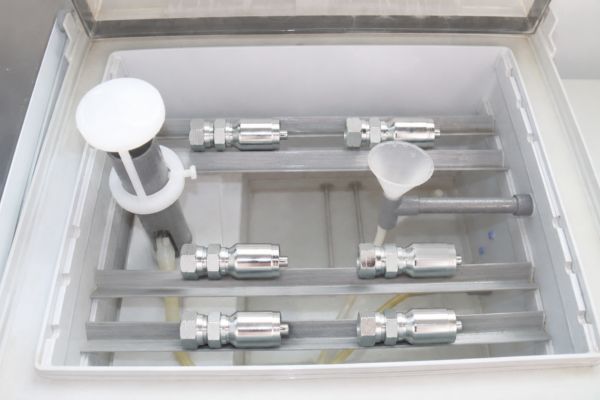
Do not use salt-spray duration as a direct service-life promise. Actual corrosion behavior also depends on installation damage, chemicals, humidity, temperature, maintenance, and exposure conditions.
Use Sample Assembly and Controlled Validation
Check the fitting as part of the complete assembly
Dimensional inspection can identify many errors, but it cannot confirm every aspect of assembled performance. Evaluate representative fittings with the approved hose, crimping equipment, tooling, and procedure.
The validation level should match the application risk and applicable standards. It may include assembly inspection, dimensional verification, or other controlled tests defined by the equipment, hose, fitting, or quality procedure.
Never invent a general test pressure or duration. Requirements depend on the complete hose assembly, intended application, applicable standards, and manufacturer data.
Follow hydraulic safety procedures
Before inspecting, testing, repairing, or replacing a hose assembly, shut down the equipment and release hydraulic pressure and stored energy. Follow the procedures provided by the equipment and component manufacturers.
Never use a bare hand to search for a pinhole leak. Escaping hydraulic fluid may penetrate the skin even when the leak appears small. Do not disassemble a pressurized connection or use mismatched parts as a temporary method of restoring operation.
If a test requires specialized equipment, trained personnel, or controlled containment, do not replace it with an improvised workshop method. Record the limitation and arrange the appropriate validation.
Control Incoming Inspection and Nonconforming Parts
Keep unapproved fittings separate
New samples and trial shipments should remain separate from approved inventory until inspection is complete. Use a clearly identified quarantine or evaluation location.
This protects normal stock from accidental mixing and preserves traceability. It also prevents an unverified fitting from being supplied to a customer or used in a hose assembly.
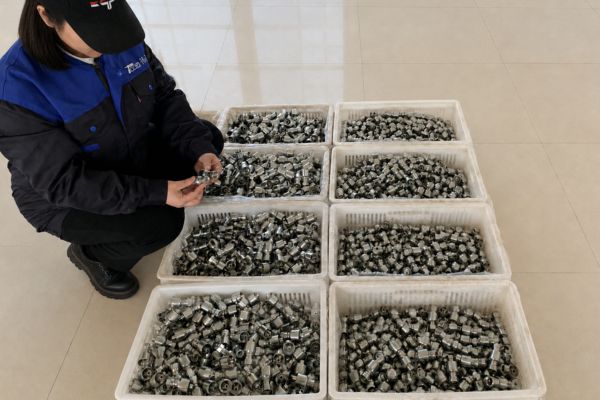
For each inspection, record:
- Supplier and internal part numbers.
- Purchase order and shipment reference.
- Quantity received and quantity checked.
- Drawing or specification revision.
- Inspection items and measured results.
- Accepted and rejected quantities.
- Photographs or reports for deviations.
- Final status and responsible reviewer.
Describe deviations with measurable facts
A useful nonconformance report explains what was required, what was found, how it was measured, and which parts may be affected.
For example, “seat damaged” is more useful than “poor workmanship,” but it can still be improved by identifying the location, quantity, and reference photograph. Dimensional issues should include the specified range, measured result, tool used, and affected sample.
Ask the supplier to explain:
- The scope of the affected products.
- The immediate containment action.
- The identified cause.
- The proposed correction.
- How recurrence will be prevented.
- How the next shipment will be verified.
Decide When a Fitting Is Ready for Repeat Orders
Approve a defined product, not an entire catalog
Approval should apply to the exact fitting series, connection, material, specification revision, hose combination, and intended use that were evaluated.
Several successful samples do not validate every size and configuration from the same supplier. New hose series, thread families, materials, sealing methods, or high-risk applications require their own review.
Use clear purchasing statuses:
- Approved for the defined hose and application.
- Conditionally approved pending corrective action.
- Additional inspection or assembly validation required.
- Approved only for sample or trial use.
- Rejected because of technical nonconformance.
- Evaluation stopped because information is incomplete.
Monitor consistency after initial approval
Quality control does not end after the first trial order. Continue monitoring part-number accuracy, dimensional consistency, visible condition, packaging, labeling, assembly results, complaints, and corrective actions.
Increase or reduce inspection according to risk and demonstrated performance. A supplier with stable results may require a different inspection level from a new source or a supplier with repeated deviations. Any major product or specification change should trigger another review.
Maintain a controlled reference that connects the internal part number with the supplier code, approved drawing, hose series, crimp-data source, inspection status, and purchasing notes. This reduces repeat-order mistakes and prevents approval decisions from depending on individual memory.
Frequently Asked Questions
Can buyers verify one-piece fitting quality from appearance alone?
No. Visual inspection can reveal damage, contamination, mixed products, and some workmanship issues, but it cannot confirm material composition, hose compatibility, coating performance, or pressure suitability.
Does a correct thread measurement prove the fitting is compatible?
No. The seat angle, sealing method, hose end, material, fitting orientation, and application conditions must also match. Threads can engage even when the sealing systems are different.
Is a material certificate enough to approve a fitting?
No. It supports material verification but does not confirm dimensions, hose compatibility, assembly accuracy, sealing performance, or suitability for the complete application.
How many fittings should buyers inspect?
The inspection quantity should reflect order size, application risk, supplier history, and the buyer’s quality procedure. A single fixed quantity is not appropriate for every product and shipment.
When should buyers request sample assembly or additional testing?
Use additional validation when dimensional inspection cannot confirm the required performance or when the application has greater pressure, temperature, impulse, fluid, safety, or regulatory risk.