
A reliable one-piece fitting supplier can help a hose shop take more jobs by making component availability, technical identification, and repeat supply more predictable. That confidence matters before a hose reaches the crimper: staff must know they can verify both connections, match the hose and fittings, access current assembly data, source the exact configurations, and state a realistic completion plan. Reliability does not automatically create revenue or justify every unfamiliar repair. It expands practical capacity only when supply evidence, technical control, and inventory discipline work together. The safest path is staged growth: stabilize core jobs, add selected coverage, then approach complex or urgent assemblies under stronger controls.
Supply Confidence Shapes Job Acceptance
A job is accepted before it reaches the crimper
The first capacity decision occurs at the counter, not at the machine. Staff need enough information to determine whether the assembly can be specified and whether every required component has a credible supply path. A common hose may be available, but one uncommon elbow, flange, metric connection, or sealing form can stop the complete job. If availability is unclear, the shop cannot responsibly promise a date.
This uncertainty affects unfamiliar and mixed-configuration work most strongly. A shop may be comfortable repeating assemblies already stored in its records, yet hesitate when a customer arrives with an old part, incomplete markings, or equipment the shop has not supported before. Supply confidence makes further investigation worthwhile because the shop knows that a verified configuration can probably be obtained. Without that confidence, identification effort may still end in an unavailable fitting.

More accepted jobs must still be controlled jobs
“Take more jobs” should mean expanding the categories the shop can complete repeatably, not lowering acceptance standards. The shop still needs:
- Verified connection type, thread form and pitch, sealing method, and port dash
- Confirmed hose dash, hose construction, and fitting series
- Controlled orientation, critical dimensions, and material requirements
- Current assembly and crimp instructions where applicable
A fitting that looks close or carries a similar code is not automatically interchangeable.
Time pressure does not change this boundary. If the hose-and-fitting combination, tooling, preparation method, or crimp specification cannot be validated from current applicable data, the shop should pause the work. A fast supply answer is useful only when the proposed part is technically suitable for the intended assembly.
Availability Defines the Shop’s Practical Service Range
Useful coverage follows the local equipment population
A catalog may contain thousands of configurations, but practical service range depends on the fittings the shop can identify and access for real local equipment. Agricultural machines, construction fleets, industrial systems, and imported equipment can create different patterns of hose sizes, thread systems, sealing methods, fitting angles, and repair urgency. Coverage should follow observed inquiries and completed work rather than the size of a supplier’s catalog alone.
Review which jobs are rejected or delayed because a fitting is missing. Separate genuine supply gaps from incomplete customer information, inaccurate stock records, or limited identification capability. This distinction matters: adding inventory will not solve a job that fails because nobody confirmed the thread or sealing face. Conversely, more training will not solve a configuration that is correctly identified but consistently unavailable.
Accessible stock can extend coverage beyond the shelf
The shop does not need every fitting in its own bins. Core configurations may justify local depth, while uncommon but identifiable parts can be supported through dependable replenishment or special ordering. What matters is whether the shop receives accurate stock status, realistic lead time, controlled item information, and a repeatable order path.
For urgent jobs, “available” must mean more than listed in a file. The required piece may need verified warehouse stock, reservation, and credible dispatch information before the shop promises completion. For planned maintenance, a confirmed production or replenishment window may be enough. Service range therefore depends on both physical availability and the reliability of the information surrounding it.
Predictable Replenishment Supports Broader Equipment Coverage
Core SKUs need continuity, not occasional abundance
Common one-piece fittings support the repairs the shop expects to see repeatedly. Their value comes from consistent replenishment after use, not from one unusually large purchase. If the same high-use configurations regularly become unavailable, technicians lose time, promised jobs move backward, and the shop may carry excessive safety stock simply to protect itself from uncertain supply.
Replenishment reliability should be checked at the SKU or fitting-family level. A supplier may be dependable for common straight fittings yet inconsistent for specific elbows, materials, or connection systems. The shop should base its service promises on the configurations with demonstrated continuity, rather than assuming that general supplier familiarity covers every item.
Broader coverage needs accurate lead-time planning
When the shop adds equipment types or connection systems, many new SKUs will move less frequently than core stock. Predictable lead time allows these parts to be ordered for planned jobs or held in limited quantities. Unpredictable lead time creates two opposite risks: the shop either rejects work it might have completed, or buys excessive stock to compensate for uncertainty.
Use actual order history to compare promised and received dates, partial shipments, backorders, and repeat availability. Do not invent one ideal lead-time target for every fitting. A suitable window depends on repair urgency, local demand, alternative sourcing, customer expectations, and the downtime consequence of a missing part.
Technical Identification Makes Complex Jobs Possible
A part number is useful only when it maps to verified features
Complex jobs often begin with incomplete evidence: a worn fitting, a partial code, unclear photos, or a customer description such as “female swivel.” The shop needs a disciplined path from that evidence to the actual connection. Relevant checks may include male or female form, thread diameter and pitch, straight or tapered thread, seat angle, sealing face, O-ring location, port dash, hose dash, straight or elbow configuration, and critical dimensions.
Technical support is valuable when it closes those information gaps with controlled drawings, descriptions, code mappings, and questions that narrow the identification. It is not reliable when it declares a visual match without enough measurements or treats a competitor code as proof of complete interchangeability. A cross-reference is a starting point for verification, not a substitute for it.
One-piece construction does not create universal compatibility
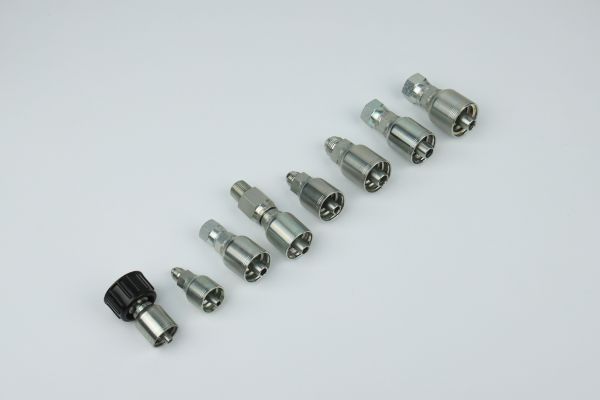
In a one-piece fitting, the ferrule is retained with the stem as part of the supplied configuration. This can reduce the chance of selecting a separate ferrule from the wrong fitting series, but it does not make the fitting compatible with every hose of the same dash size. Hose construction, fitting series, stem geometry, preparation requirements, crimp tooling, insertion instructions, and final crimp specifications still matter.
Before assembly, the shop must use the applicable hose, fitting, and crimp-equipment manufacturer’s current data. It should not infer a crimp diameter, insertion depth, skive requirement, or pressure suitability from a visually similar fitting. Broader job acceptance is legitimate only when the shop can obtain both the component and the information required to assemble it correctly.
Repeat Supply Reduces Hesitation with Recurring Customers
Repeat work depends on repeatable specifications
Recurring equipment customers often return with related assemblies from the same machines or fleet. Once a hose shop has verified and recorded a successful configuration, reliable repeat supply makes the next decision faster and more predictable. The shop can retrieve the hose specification, fitting codes, orientation, cut-length method, material requirement, and current assembly data instead of beginning again from appearance.
This benefit depends on consistency between orders. The delivered fitting must continue to match the approved description, dimensions, hose-series relationship, material or finish, and relevant revision. If a code changes, the mapping should be documented. A repeated commercial code without stable technical meaning does not provide reliable job capacity.
Supply gaps damage continuity even when alternatives exist
When a known fitting is unavailable, an alternative may be possible, but it requires a new verification decision. Staff must not treat similar geometry, the same dash number, or a claimed replacement as automatic approval. The thread, sealing method, hose compatibility, dimensions, orientation, material, application conditions, and current crimp data may all require review.
Frequent gaps therefore increase more than purchasing work. They force the shop to re-open decisions that were previously controlled, making completion dates harder to promise. Predictable repeat supply reduces that hesitation, while a documented alternative path protects the shop when the usual configuration is unavailable.
Grow Without Filling the Warehouse with Slow Movers
Separate inventory breadth from inventory depth
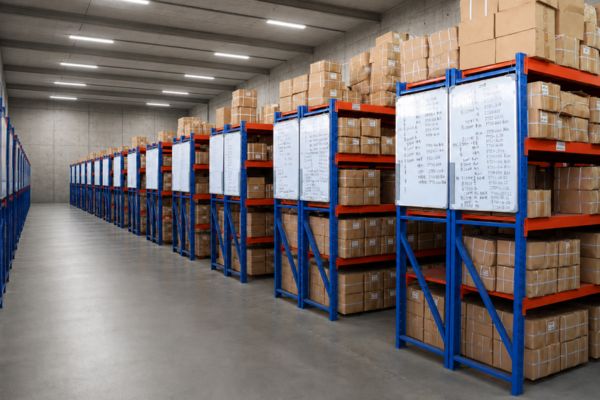
Inventory breadth is the range of configurations the shop can access; inventory depth is the quantity held for each configuration. Growth does not require deep stock across a broad catalog. Core fittings with stable use may justify depth. Less-common but operationally important parts may justify a small controlled quantity. Rare configurations with dependable lead time may remain external until a confirmed job appears.
This structure protects working capital and reduces aging-stock problems. Excess fittings can remain for years while labels fade, packaging deteriorates, codes change, and local equipment demand disappears. A reliable supply path should reduce the pressure to overbuy, not become a reason to add every available SKU to local inventory.
Add stock from evidence, not optimism
Before expanding a fitting family, review completed jobs, rejected inquiries, lost work, repeat demand, local equipment, lead-time performance, current on-hand quantity, and the consequence of a stockout. A single unusual inquiry rarely proves that a deep stock position is necessary. A recurring repair pattern may justify gradual expansion after the technical specification is controlled.
Use staged purchases where order conditions allow them, and assign review dates to low-frequency stock. When a minimum order quantity exceeds realistic demand, compare special ordering, mixed purchasing, shared replenishment between branches, or another technically verified source. Unit price should remain secondary to usable availability and the total risk of holding the wrong quantity.
Verify Supply Metrics Before Adding Job Types
Measure the chain that affects completion
General statements such as “good service” or “large stock” do not show whether the shop can accept more work. Track evidence that connects directly to job completion:
- Stock-confirmation accuracy and repeat SKU availability
- Promised versus actual lead time and order completeness
- Item-description accuracy and revision communication
- Technical-question resolution and nonconformity handling
The shop should also measure its own controls. Inventory-record accuracy, identification success, access to current crimp data, assembly rework, jobs paused for missing information, and repeat-record completeness can expose internal limits. Supplier reliability cannot compensate for poor bin control or incomplete intake data.
Improve the weak stage before expanding
| Business Capability | Supply Requirement | Risk if Unreliable |
| Core repeat jobs | Consistent availability of known SKUs and stable item data | Routine repairs stop despite predictable demand |
| Broader connection coverage | Accurate catalog information and dependable replenishment across selected families | Shelf breadth creates false coverage or excess stock |
| Unfamiliar replacements | Controlled drawings, identification support, and verified sourcing | Appearance-based matches or repeated clarification delay the job |
| Complex or urgent work | Fast technical resolution, confirmed stock, realistic dispatch, and clear exceptions | The shop promises a date or substitution it cannot support |
Do not expand merely because one metric looks strong. Fast replies cannot offset inaccurate stock confirmation, and wide SKU coverage cannot offset missing technical data. The limiting stage should improve through repeated results before the shop adds another job category.
Expand Through a Staged Capability Framework
Move from core jobs to selected complexity
Stage one is core repeat work: stabilize the known assemblies that match regular local demand. Confirm codes, inventory, replenishment, assembly records, and current crimp information. Stage two adds selected fitting families or equipment types based on real inquiries. Increase breadth carefully, keep depth selective, and train staff to identify the new connections.
Stage three covers unfamiliar replacement jobs. Require complete intake evidence, including the old part when available, clear overall and close-up photos, readable codes, hose manufacturer and series, hose size, thread measurements, sealing details, orientation, material needs, application, and urgency. Use controlled technical review before accepting the assembly. Stage four covers complex or urgent work and requires the strongest availability confirmation, escalation path, and stop conditions.
Make acceptance rules visible at every stage
Each stage should define what the shop can accept, what needs more information, and what must be declined. For example, an urgent job may proceed when the fitting is identified, the hose system is validated, current crimp data is available, and stock is confirmed. It should pause when the part remains uncertain or the deadline would require an unsupported substitution.
Review results before moving upward: Were representative jobs completed without rework? Were promised dates met? Did repeat parts remain technically consistent? Could staff retrieve the assembly record? Did inventory stay proportionate to demand? This staged model turns reliable one-piece fitting supply into controlled service capacity rather than an open-ended promise of hose shop business growth.
Conclusion
A reliable one-piece fitting supplier helps a hose shop take more jobs only when supply confidence is supported by technical control. Stabilize common repeat assemblies first, then add selected connection coverage, unfamiliar replacements, and urgent work in measured stages. Track actual availability, lead-time performance, item-data accuracy, repeat consistency, and technical resolution. Keep enough local depth for proven demand, but use dependable replenishment to avoid filling shelves with rare stock. Most importantly, never expand through visual matching or an unverified hose-and-fitting combination. The practical sign of reliable one-piece fitting supplier support for hose shop growth is not a larger catalog; it is a wider group of assemblies the shop can identify, source, build, inspect, and repeat responsibly.
Frequently Asked Questions
Can reliable fitting supply help a shop serve new equipment types?
Yes, when the new connections are identified and the required fittings, hose compatibility, tooling, and current assembly data are available. Add equipment categories gradually from verified local inquiries rather than assuming catalog coverage equals service capability.
Should a hose shop accept more emergency jobs when stock improves?
Only when the shop can also confirm the assembly specification and a realistic completion path. Emergency pressure must not override thread, sealing, hose-series, material, crimp-data, inspection, or safety requirements.
Must rare fittings be held in local inventory?
No. Keep limited local stock when downtime consequence and sourcing difficulty justify it; otherwise, dependable special ordering or shared replenishment may provide coverage with less aging inventory.
Is using multiple fitting suppliers safer than relying on one?
Not automatically. Multiple sources can improve availability, but each part still needs controlled code mapping, dimensional and sealing verification, hose compatibility, material review, and applicable assembly data.
When should inventory expand to support more jobs?
Expand after completed and lost-job evidence shows recurring demand and supply performance is dependable. Add breadth and depth separately, review slow movers, and do not let one unusual inquiry dictate a large purchase.