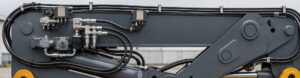
Imagine a high-capacity forklift mid-shift in a busy distribution center. You just replaced a leaking hose, but as soon as the mast lifts a heavy pallet, a high-pressure spray of hydraulic oil coats the floor. This isn’t just a mess; it is a critical safety hazard and an immediate halt to your warehouse throughput. To stop this cycle of failed repairs, you must address the technical nuances of component seating and environmental stressors that lead to forklift hydraulic fittings leak.
Why Does Improper Torque Lead To Immediate Sealing Failure?
Over-tightening is the most common reason a forklift hydraulic fittings leak occurs after a technician attempts to “ensure” a tight seal. When you apply excessive force, the soft metal of the sealing seat deforms or the threads strip, creating microscopic gaps for pressurized oil to escape.

How Does Over-Torque Damage JIC 37° Flare Seats?
When you exceed the recommended torque on a JIC fitting, the nose of the flare can collapse or crack. Have you noticed how a fitting seems tight but still weeps oil? This is often because the mating surfaces are no longer perfectly concentric.
- Check manufacturer torque charts specifically for steel-to-steel connections.
- Use a calibrated torque wrench rather than relying on “feel” or impact tools.
- Inspect the flare nose for any signs of flattening before re-installation.
You might think more force equals more security, but in high-pressure hydraulics, precision is your only safeguard against failure.
Can Under-Torquing Cause Leaks Under Pressure Spikes?
Insufficient torque allows the fitting to vibrate loose the moment the forklift mast encounters a load shock. If the initial seal isn’t compressed to the correct specification, pressure spikes will easily find a path through the interface.
- Mark the nut and body after tightening to monitor for movement.
- Always perform a dry run test of the mast functions before returning to service.
- Ensure the threads are clean and dry unless the manufacturer specifies lubrication.
It is a delicate balance where even a few foot-pounds of difference can determine if a forklift stays in operation or returns to the shop.
| Torque Issue | Physical Symptom | Long-term Risk |
| Over-Torque | Cracked flare or stripped threads | Permanent component destruction |
| Under-Torque | Fluid weeping under load | Fitting detachment and hose blow-off |
| Uneven Torque | Intermittent dripping | Premature fatigue of the port housing |
Is Thread Incompatibility The Hidden Cause Of Your Leak?
A forklift hydraulic fittings leak often stems from the subtle difference between visually similar thread types like NPT and BSPT. Using a fitting with a slightly different pitch or taper might feel “right” during the first few turns, but it will never achieve a liquid-tight seal.
Why Do NPT And BSP Threads Frequently Get Confused?
The thread count per inch is so close between these standards that they often seem interchangeable to the naked eye. Do you verify the thread pitch with a gauge before every installation? Without a gauge, you are essentially guessing with your equipment’s uptime.
- Keep a dedicated thread identification kit in the maintenance bay.
- Never force a fitting that shows resistance in the first two turns.
- Standardize your fleet to one thread type where possible to reduce error.
You can save hours of troubleshooting by simply confirming that your replacement parts match the OEM port specifications exactly.
How Does Pitch Mismatch Destroy Hydraulic Ports?
If you drive an NPT fitting into a BSP port, the threads will cross-link and gall the metal. This doesn’t just cause a leak; it often requires the replacement of the entire expensive hydraulic valve or cylinder.
- Inspect the internal port threads for silvering or metal shavings.
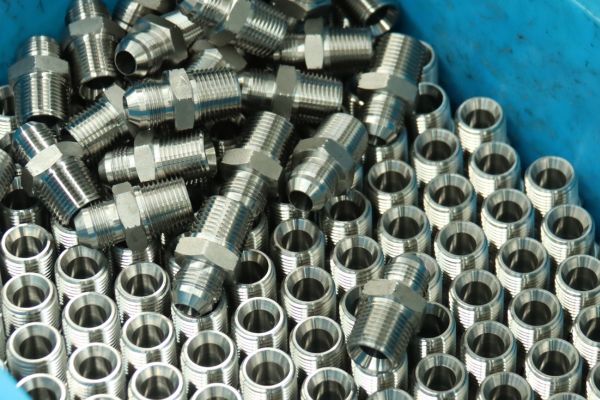
- Use high-quality hydraulic fittings to ensure thread precision.
- Consult the forklift service manual for the specific port dimensions.
Wait for the confirmation of the thread type before you reach for the wrench to avoid a costly “quick fix.”
| Thread Type | Sealing Method | Common Application |
| NPT | Thread interference | Low pressure/General industrial |
| JIC | 37-degree metal seat | High-pressure forklift masts |
| ORFS | O-ring face seal | Modern heavy-duty forklifts |
How Do Damaged Sealing Surfaces Ruin New Installations?
Even a brand-new forklift hydraulic fittings leak if the mating surface on the hose side or the port side has a microscopic scratch. Hydraulic oil under 3,000 PSI will erode even the smallest imperfection into a significant leak path within minutes.
Can Micro-Scratches On Flares Cause Weeping Leaks?
A single drop of oil every ten seconds is often the result of a scratch on the JIC flare seat. Did you know that dropping a fitting on a concrete floor can create enough of a dent to prevent a perfect seal?
- Store all fittings in their original protective caps until installation.
- Clean all mating surfaces with a lint-free cloth before assembly.
- Use a magnifying glass to check for burrs on critical high-pressure seats.
You might overlook a tiny nick, but the high-pressure fluid will find it every single time the system is under load.
Why Does Contamination Prevent Proper Seat Compression?
A tiny grain of sand or a metal flake trapped between the seal faces acts like a wedge. It prevents the two metal surfaces from making full contact, leaving a gap for oil to bypass the intended seal.
- Flush new hoses before attaching them to the forklift’s system.
- Keep the work area clean to avoid airborne debris during repairs.
- Replace any O-rings that show signs of dust or grit accumulation.
A clean installation is a successful installation, especially when dealing with precision-engineered fluid power components.
| Surface Defect | Visual Indicator | Recommended Action |
| Nicks/Gouges | Shiny lines across the seat | Immediate replacement of the fitting |
| Contamination | Gritty feel when turning by hand | Thorough cleaning and re-inspection |
| Oxidation | Dull or pitted metal finish | Clean with specialized solvent or replace |
Why Does Forklift Vibration Lead To Post-Installation Leaks?
The constant oscillation of a forklift mast causes a forklift hydraulic fittings leak by inducing fatigue in the connection points. If the fittings are not properly supported or if the hose routing is too tight, vibration will eventually back the fitting out.
How Does Mast Oscillation Affect Fitting Integrity?
Every time the mast moves up or down, it creates harmonic vibrations that travel through the hydraulic lines. Have you checked if your hose clamps are tight enough to dampen these movements? Loose clamps allow the hose to tug on the fitting, slowly loosening the seal.
- Install vibration-damping clamps at regular intervals along the mast.
- Ensure there is enough slack in the hose for the full range of mast motion.
- Inspect fittings for “witness marks” that indicate loosening over time.
You must account for the dynamic environment of a forklift, which is far more stressful than a stationary hydraulic power unit.
Can Poor Hose Routing Put Stress On The Fittings?
A hose that is pulled too tight or twisted during installation will exert constant side-load on the fitting. This side-loading creates an uneven gap in the seal, leading to a persistent leak that tightening won’t fix.
- Always use two wrenches when tightening to prevent the hose from twisting.
- Follow the “natural lay” of the hose to avoid internal stress.
- Use 90-degree or 45-degree elbows to reduce sharp bends near the port.
You are building a system that must move, so your installation logic must prioritize flexibility and strain relief.
| Vibration Factor | Impact on Fitting | Solution Strategy |
| Engine RPM | High-frequency loosening | Use of anaerobic thread lockers |
| Mast Travel | Mechanical pulling/Tugging | Proper hose length and slack management |
| Load Impact | Sudden pressure shock | Installation of accumulators or dampeners |
Is An Incorrect O-Ring Selection Causing Your Leak?
In modern systems, a forklift hydraulic fittings leak is often traced back to an O-ring that is the wrong size or made of incompatible material. If the O-ring doesn’t match the groove exactly, it will blow out or extrude under the high pressures of lifting operations.

Why Does O-Ring Material Matter For Hydraulic Oil?
Standard rubber O-rings may swell or degrade when exposed to specific hydraulic fluids or extreme warehouse temperatures. Do you check if your seals are Nitrile, Viton, or EPDM? Choosing the wrong material can lead to seal failure in just a few days.
- Match the O-ring material to the specific hydraulic fluid brand you use.
- Consider high-temperature seals for forklifts operating in foundries or hot climates.
- Discard any O-rings that feel brittle or show signs of “compression set.”
You need a seal that can withstand the chemical and thermal environment of your specific warehouse application.
How Does Incorrect O-Ring Sizing Lead To Extrusion?
If an O-ring is too small, it won’t fill the sealing gland; if it’s too large, it can get pinched during installation. Either scenario creates a weak point where the pressure will eventually force the seal out of its seat.
- Lubricate the O-ring with clean hydraulic oil before installation to prevent pinching.
- Use a proper O-ring pick to seat the seal without scratching the metal.
- Verify the dash size of the O-ring against the fitting’s specification sheet.
A perfect fit is the difference between a dry machine and a forklift that is grounded for environmental cleanup.
| O-Ring Issue | Failure Mode | Prevention Method |
| Chemical Incompatibility | Swelling or softening | Use Viton for synthetic fluids |
| Wrong Durometer | Extrusion through gaps | Select harder 90-shore rings for high pressure |
| Pinching | Instant tearing upon assembly | Proper lubrication and careful seating |
Why Do Aftermarket Compatibility Issues Cause Repeat Leaks?
A forklift hydraulic fittings leak frequently happens when using low-quality aftermarket parts that don’t adhere to strict ISO or SAE tolerances. While these parts look the same, their internal dimensions may differ just enough to prevent a reliable seal with OEM components.
Can Tolerance Stack-Up Prevent A Tight Seal?
When the tolerance of the fitting is slightly off and the port is at its wear limit, the two parts may not seat correctly. Have you considered that “cheap” fittings might cost more in downtime than they save in procurement?
- Source replacement parts from reputable hydraulic component suppliers.
- Compare aftermarket dimensions with a caliper against a known OEM part.
- Be wary of fittings that feel “loose” even when the threads are engaged.
You are looking for components that meet or exceed the original equipment manufacturer’s specifications to ensure a first-time fix.
Why Do Some Aftermarket Fittings Fail Under High Heat?
Lower-grade metals used in cheap fittings expand at different rates than the high-quality steel in your forklift’s control valves. As the machine warms up during a shift, the gap between the fitting and the port can widen, causing a leak.
- Prioritize fittings made from high-carbon steel or stainless steel.
- Check for certification stamps like SAE J514 on the fitting body.
- Monitor new installations during the first two hours of heavy-duty operation.
Your procurement strategy should prioritize long-term performance over the initial purchase price to minimize fleet downtime.
| Component Source | Quality Control | Reliability Expectation |
| OEM Parts | High / Standardized | Very High (Guaranteed fit) |
| Premium Aftermarket | Consistent / Certified | High (Cost-effective alternative) |
| Budget Aftermarket | Variable / Unknown | Low (High risk of post-repair leak) |
How Do Pressure Spikes Affect Newly Installed Fittings?
A forklift hydraulic fittings leak can be triggered by sudden pressure surges that exceed the fitting’s rated capacity. In forklift operations, “inching” or rapid load drops can create spikes that are much higher than the average operating pressure.
Why Does Rapid Valve Actuation Cause Leakage?
When a driver snaps a control lever closed, the moving column of oil has nowhere to go, creating a shockwave. Are your fittings rated for the “peak” pressure of your forklift, or just the “working” pressure? A fitting rated too low will weep after the first few shockwaves.
- Upgrade to ORFS (O-Ring Face Seal) fittings for systems prone to high shocks.
- Ensure relief valves are properly calibrated to prevent over-pressurization.
- Educate operators on smooth lever control to prolong hydraulic life.
You need to build a safety margin into your component selection to account for the realities of heavy-duty lifting.
Can Air In The System Lead To Pressure-Related Leaks?
Trapped air compresses and expands differently than oil, leading to “spongy” operation and localized pressure spikes. If you didn’t bleed the system after installation, the air pockets can slam against the new fittings, causing them to loosen.
- Always cycle the cylinders several times to purge air after a repair.
- Check the reservoir level frequently during the first hour of operation.
- Listen for “knocking” sounds that indicate cavitation or trapped air.
Purging the system ensures that the fluid dynamics remain predictable and within the design limits of your fittings.
| Pressure Event | Cause | Impact on Fitting |
| Hydraulic Hammer | Sudden valve closure | Loosens threads and cracks seals |
| Thermal Expansion | Sun exposure / Overheating | Distorts O-rings and seats |
| Over-Loading | Exceeding lift capacity | Bypasses seals and deforms components |
What Is The Best Way To Inspect Fittings After Installation?
To prevent a forklift hydraulic fittings leak from causing a major failure, a systematic post-installation inspection is mandatory. Most leaks don’t start as a burst; they start as a slow weep that can be caught during a 5-minute check.
Why Is The “Clean and Observe” Method So Effective?
The best way to find a leak is to clean the area completely and watch it under pressure. Have you ever missed a leak because the area was already covered in old oil? Starting with a dry surface is the only way to be 100% sure of your repair.
- Use a dedicated brake cleaner or degreaser to remove all residue.
- Cycle the mast through all functions for at least three minutes.
- Use a piece of cardboard (never your hand!) to check for high-pressure pinholes.
You are looking for the very first sign of moisture, which indicates a seating or torque issue that needs immediate attention.
How Can Preventive Maintenance Prevent Future Fitting Leaks?
Regularly checking the torque and condition of your fittings during 250-hour services will stop leaks before they start. If you wait for the oil to hit the floor, you’ve already lost money in downtime and safety risks.
- Implement a “tightness check” as part of your standard PM checklist.
- Look for signs of corrosion or “weeping” around the base of every fitting.
- Replace any fitting that shows signs of rounding on the hex corners.
A proactive approach to fitting health is the hallmark of a well-managed forklift fleet.
| Inspection Step | Action | Outcome |
| Clean | Remove all old oil/dirt | Clear visibility of new leaks |
| Pressurize | Operate mast under load | Tests seal integrity at peak PSI |
| Verify | Check torque after 1 hour | Ensures vibration hasn’t loosened nut |
Conclusion
Ensuring your forklift hydraulic system remains leak-free requires a combination of technical precision, quality component sourcing, and a rigorous maintenance mindset. By addressing the root causes of post-installation failures—ranging from torque errors to thermal expansion—you protect your equipment’s uptime and your team’s safety. At Topa, we understand that a single fitting can be the difference between a productive day and a grounded fleet, which is why we provide components engineered for the harshest industrial environments. Contact us today to secure the reliable, high-pressure fittings your operations demand and keep your forklifts moving forward.
Frequently Asked Questions
Can I use Teflon tape to stop a forklift hydraulic fitting leak?
No, you should never use Teflon tape on JIC or ORFS fittings. Tape can shred and enter the hydraulic system, clogging valves and causing catastrophic pump failure.
What’s the best way to tell NPT from BSP threads?
Check the thread pitch and angle using a gauge. NPT has a 60-degree thread angle, while BSP uses a 55-degree angle; using the wrong one will cause a permanent leak.
How do I know if my O-ring is the wrong size?
If the O-ring doesn’t sit flush in the groove or feels loose when the fitting is assembled, it is likely the wrong dash size. A correct O-ring should require slight pressure to seat but should not “pop” out.
Can I reuse a JIC fitting that has leaked once?
It depends on the cause; if the flare is cracked or flattened from over-torque, it must be replaced. If the leak was due to under-torque and the seat is perfect, you can often re-tighten it once.
What is the best way to clean a hydraulic port before installation?
Use a lint-free cloth and a specialized hydraulic cleaner. Avoid using shop rags that shed fibers, as these can get trapped in the seal and create a leak path.