Corrosion-resistant one-piece fittings improve mining safety by helping hydraulic hose assemblies stay sealed, easier to identify, and less exposed to assembly errors in wet, dirty, and high-vibration work areas. In mining, a small leak is not only a repair issue. It can lead to pressure loss, oil spray, fire risk, slippery walkways, machine downtime, and unsafe work around mobile equipment.
Why Corrosion Is a Safety Problem in Mining
Corrosion Weakens More Than the Surface
Mining equipment often works around water, dust, mud, chemicals, and changing temperatures. These conditions can attack the fitting surface, especially around threads, sealing faces, and the ferrule area. Once corrosion starts, it may make a fitting harder to inspect, harder to remove, and more likely to damage the hose assembly during service.
Corrosion can also hide small cracks, worn sealing faces, or damaged threads. A fitting may still look usable from a distance, but the sealing area may no longer hold pressure correctly. In a hydraulic system, this matters because the safe working pressure depends on the hose, fitting, port, and assembly being correct together.
Mining Conditions Make Small Leaks More Serious
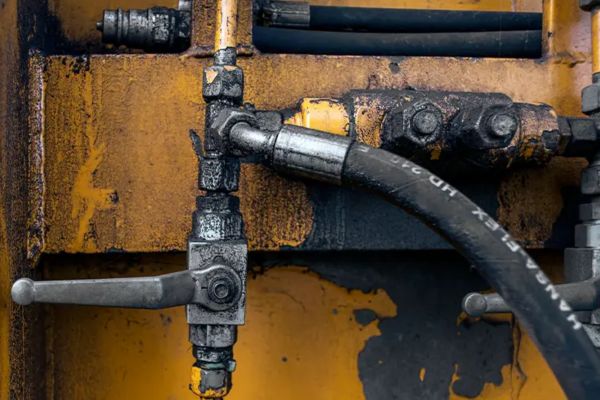
A small hydraulic leak in a clean workshop is easier to see and control. The same leak on a haul truck, drill rig, loader, or conveyor system can be much harder to find. Dirt can cover the leak point, vibration can make the leak worse, and workers may be near moving parts or hot surfaces.
How One-Piece Fittings Reduce Assembly Mistakes
The Stem and Ferrule Are Kept Together
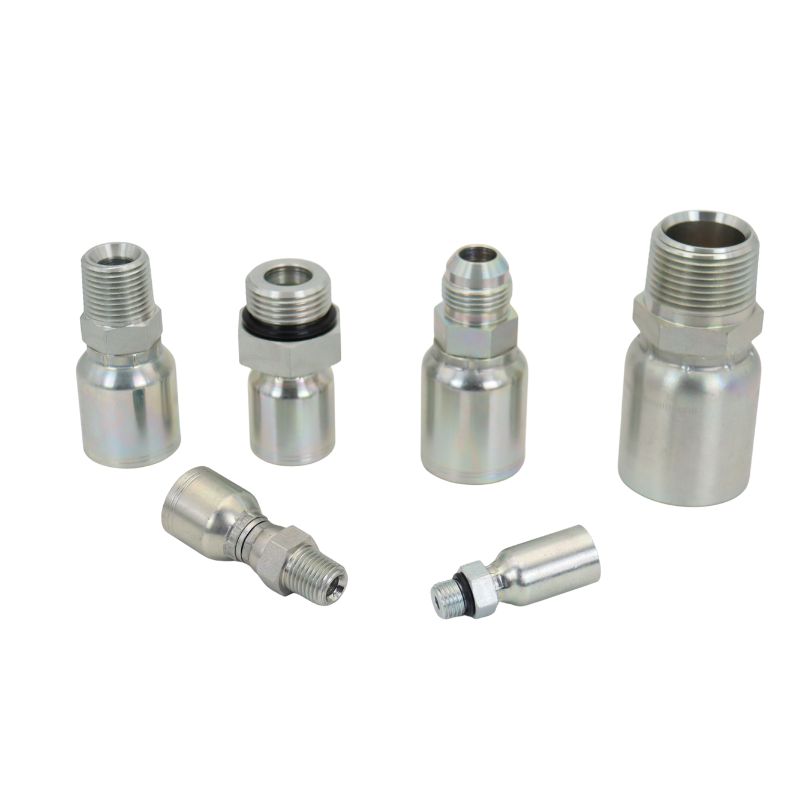
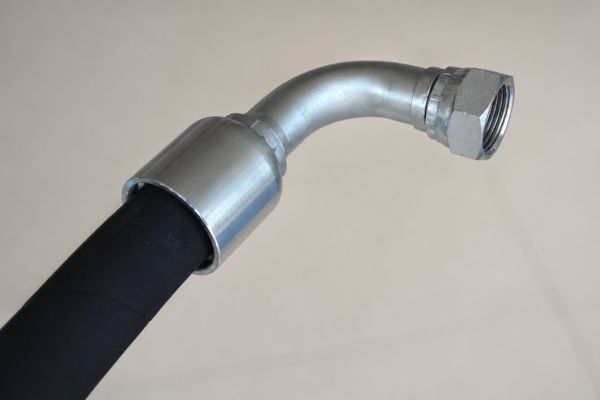
A one-piece hydraulic hose fitting has the fitting body or stem and the ferrule already combined as one assembly. The exact design can vary by product series, but the main idea is simple: the user does not select a separate ferrule for that fitting during normal assembly. This helps reduce one common error in hose work, which is matching the correct stem with the wrong ferrule.
In mining repairs, this is useful because many hoses are replaced under time pressure. A mechanic may be working in poor light, on a service truck, or near a stopped machine that needs to return to work. A one-piece design removes one selection step, so there is less chance of mixing parts that look similar but do not crimp correctly.
One-Piece Does Not Mean Automatically Correct
A one-piece fitting still must match the hose size, hose construction, fitting series, thread type, sealing face, and crimp data. It is not a universal fitting, and it does not guarantee a leak-free assembly by itself. The correct crimp diameter, insertion depth, die selection, and any skive or no-skive requirement must come from valid manufacturer data.
This boundary is important for safety. If a fitting has the right thread but the wrong hose tail, the assembly may leak, pull off, or damage the hose tube. If the crimp is wrong, the outside may look acceptable while the inside grip is unsafe. One-piece construction reduces some matching errors, but it does not replace technical confirmation.
Where Corrosion-Resistant One-Piece Fittings Add Safety Value
Safer Repairs in Wet and Dirty Areas
Corrosion-resistant one-piece fittings are most helpful where fittings face water spray, washdown, mud, salt-like minerals, or long exposure outside. Common mining examples include mobile equipment, underground machines, dewatering systems, crushers, screen plants, and conveyors. These areas often combine vibration, impact, and contamination, so a fitting must stay strong and easy to inspect.
A clean, readable fitting also helps during emergency repair. If the part number, thread form, or shape is still clear, the replacement process is faster and less risky. When corrosion has damaged the surface, workers may rely too much on photos or rough measurements, which can lead to the wrong thread or sealing style.
Lower Risk Around High-Pressure Oil
Hydraulic oil under pressure can be dangerous. A damaged fitting or wrong assembly can release oil suddenly, create mist, or cause a hose to move with force. Workers should never check leaks by hand, and repairs should only be done after the equipment is shut down, pressure is released, stored energy is controlled, and the correct safety procedure is followed.
Better corrosion resistance supports this safety process by reducing avoidable fitting damage. It also helps keep sealing faces and threads in better condition, which makes correct tightening and sealing more reliable. Still, any fitting used in a safety-critical mining system should be checked against the machine, hose, and fitting data before it is approved for use.
What Must Be Confirmed Before Replacement
Thread and Sealing Details Come First
Many hydraulic fittings look alike, but small differences can make them unsafe to interchange. JIC, NPT, NPTF, BSPP, BSPT, ORFS, SAE ORB, Metric, DIN, and JIS connections may share a similar size or shape from a photo. That does not mean they seal the same way.
Before replacing a fitting, confirm the thread outside or inside diameter, pitch or TPI, male or female form, straight or tapered thread, seat angle, and sealing method. Also check whether sealing is made by a metal seat, an O-ring, a bonded seal, or thread contact. Thread sealant should not be used as a fix for the wrong thread or a damaged sealing face.
Hose and Crimp Data Must Match
The hose side is just as important as the port side. A fitting must match the hose ID or dash size, hose construction, fitting series, and the crimp specification for the machine or tooling used. A dash size alone is not enough because hoses with the same nominal size can have different wall thickness, reinforcement, and crimp needs.
For mining service, the repair team should confirm:
- Hose manufacturer, hose series, and hose size
- Fitting series, shape, angle, and connection type
- Crimp diameter, insertion depth, die choice, and skive or no-skive requirement
- Working pressure, temperature, fluid, and machine location
These checks may take a little time, but they reduce the chance of a repeat failure in the same hard-to-reach area.
One-Piece vs Two-Piece Fittings in Mining Repairs
Practical Difference for Maintenance Work
The main difference is the assembly process. A two-piece fitting uses a separate stem and ferrule, so both parts must be selected correctly before crimping. A one-piece fitting keeps these parts together, which can simplify picking, storage, and repair work when the correct series is already known.
This matters in mining because parts may be handled in service vehicles, remote workshops, or small storage rooms near the equipment. Fewer loose matching parts can mean fewer picking errors. It can also make stock control easier when the same equipment uses repeat hose assembly styles.
| Point to Compare | One-Piece Fitting | Two-Piece Fitting |
|---|---|---|
| Part matching | Stem and ferrule are supplied together | Stem and ferrule must be matched |
| Error risk | Lower risk of ferrule mismatch | More care needed during selection |
| Stock handling | Easier for common repeat repairs | Flexible for wider combinations |
| Technical checks | Still requires hose and crimp data | Requires hose, ferrule, and crimp data |
When Two-Piece May Still Be Needed
One-piece fittings are useful, but they are not always the best answer. Some hose types, pressure classes, large sizes, special covers, or machine requirements may need a fitting system that uses separate ferrules. Some repair programs also keep two-piece systems because they need wider flexibility across many hose constructions.
The safest choice is not based only on whether the fitting is one-piece or two-piece. It should be based on the hose maker’s data, the fitting maker’s data, the equipment requirement, and the risk level of the machine. For high-risk systems, replacement decisions should not be reduced to price or appearance.
How Better Fitting Condition Supports Faster Safe Repairs
Clear Identification Reduces Guesswork
Corrosion-resistant fittings can stay easier to read and measure during service life. This helps workers record the correct fitting style, thread type, sealing face, and part number before the hose is replaced. Better records also make the next repair faster because the team does not need to identify the same fitting from scratch.
A good repair record should include photos of the full fitting, the thread, the sealing face, and the hose marking. It should also include the crimp diameter used, the hose series, and the machine location. This creates a practical history for future maintenance, especially on machines that fail in the same hose areas.
Stock Planning Becomes More Reliable
Mining maintenance often depends on whether the right hose end is available at the right time. If the site keeps common corrosion-resistant one-piece fittings for known machines, emergency repair can move faster without using uncertain substitutes. This does not mean every possible size should be stocked. Stock should be based on equipment population, repair history, local thread systems, and seasonal work.
Useful stock planning separates high-use parts from rare parts. High-use parts need clear labels, stable bin locations, and reorder points. Rare parts may need a backup source or longer planning time. A full catalog is not the same as healthy stock; the goal is to have the right parts for the machines that actually work on the site.
Common Mistakes That Reduce Safety
Using Visual Similarity as Proof
One of the most common mistakes is treating a similar-looking fitting as interchangeable. A fitting may have the same angle and almost the same thread diameter, but a different seat angle or sealing method. This can lead to slow leaks, sudden leaks, thread damage, or a false sense that the repair is finished.
Another common error is replacing a corroded fitting without checking why it corroded. The cause may be water exposure, chemical contact, poor routing, damaged hose cover, wrong material, or long service without cleaning. If the cause remains, the new fitting may face the same failure path.
Skipping Safe Shutdown Steps
Mining repairs can feel urgent, but pressure release and stored energy control cannot be skipped. A hose assembly should not be loosened, removed, or inspected closely while pressure remains in the system. Workers should follow equipment procedures, use the correct protection, and keep hands away from possible pinhole leaks.
A safer repair process includes:
- Shut down the equipment and control stored energy before hose work
- Clean the area enough to see the fitting, hose, and leak path
- Confirm thread, seal, hose, and crimp data before making the assembly
- Inspect routing, bend radius, clamps, abrasion points, and heat exposure after installation
These steps help prevent the new fitting from being placed into the same unsafe condition that damaged the old one.
Information to Prepare Before Ordering or Replacing
A Short Checklist for Mining Hose Assemblies
Before choosing a corrosion-resistant one-piece fitting, collect the information that proves the fitting can work with the hose and machine. This is especially important when the old fitting is rusty, damaged, or from unknown stock.
Prepare these details:
- Hose ID or dash size, hose manufacturer, and hose series
- Fitting style, angle, orientation, male or female connection
- Thread diameter, pitch or TPI, and straight or tapered thread
- Seat angle, sealing face, O-ring style, or other sealing method
- Existing part number, if readable
- Clear photos of the complete fitting, thread, and sealing face
- Material or surface-finish requirement
- Working pressure, temperature, fluid, and machine application
- Crimping machine and available crimp specification
- Quantity needed and whether the parts are for repair stock or direct machine service
When Manufacturer Data Is Required
Manufacturer data is required whenever the hose series, fitting series, crimp diameter, insertion depth, skive requirement, pressure rating, or material suitability is uncertain. It is also needed when the assembly is used on steering, braking, lifting, high-pressure drilling, or other safety-related systems.
Do not assume that a fitting with the same dash size can be crimped the same way. Do not assume that a coating with good appearance will perform the same in every mine environment. Pressure, temperature, fluid, vibration, and exposure all affect the safe choice.
FAQ
Are corrosion-resistant one-piece fittings leak-proof?
No, they are not automatically leak-proof. They can reduce some risks linked to corrosion and ferrule mismatch, but the hose, thread, sealing face, and crimp data must still be correct.
Can I replace a rusty fitting by matching the photo?
A photo is only useful for first screening. You still need thread measurements, pitch or TPI, seat angle, sealing method, hose size, and crimp information before making the final choice.
Are stainless steel fittings always the best option for mining?
Not always. Material choice depends on fluid, pressure, temperature, corrosion exposure, mechanical load, cost, and equipment requirements.
Do one-piece fittings fit all hydraulic hoses with the same dash size?
No. The fitting series must match the hose construction and approved crimp data, even when the dash size looks the same.
What should be recorded after a mining hose repair?
Record the hose series, fitting type, thread and seal details, crimp data, machine location, photos, and any cause of damage such as abrasion, heat, or corrosion.