One-piece hydraulic hose fittings reduce hose assembly errors mainly because the fitting stem and ferrule are supplied as one matched unit, so the assembler does not have to select a separate ferrule for each stem. That removes one common source of mismatch, especially in busy hose assembly work where similar parts, mixed bins, urgent repairs, and repeated small orders can lead to picking mistakes. The benefit is practical, not magical: one-piece fittings can reduce ferrule mismatch and sorting errors, but they still require correct hose selection, thread identification, sealing confirmation, and valid crimp data.
Fewer Separate Choices Mean Fewer Picking Errors
The ferrule decision is built into the fitting
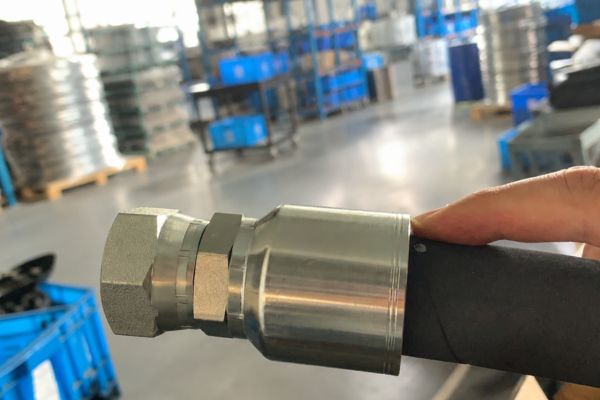
A one-piece fitting normally combines the fitting body or stem with a ferrule that is pre-assembled or fixed as part of the same component. The exact construction can vary by product series, but the working idea is simple: the hose tail and ferrule are no longer selected as two independent items. In real assembly work, that reduces the chance of pairing a correct stem with the wrong sleeve.
This matters because many hose assembly errors start before the crimper is used. A worker may identify the connection end correctly, then pick a ferrule from the wrong drawer, the wrong series, or a visually similar size. With one-piece hydraulic hose fittings, the matched ferrule is already attached to the fitting, so the picking step becomes simpler and easier to control.
The design reduces errors, but it does not approve the assembly
The one-piece structure reduces one category of error: separate ferrule and stem mismatch. It does not prove that the fitting is suitable for every hose with the same dash size, every crimping machine, or every working condition. A one-piece fitting still belongs to a specific fitting series and must be used with compatible hose construction and assembly data.
The Assembly Errors One-Piece Fittings Help Prevent
Ferrule and stem mismatch is the clearest target
The most direct error that one-piece fittings help prevent is ferrule mismatch. In a two-piece arrangement, the stem and ferrule may be stored, labeled, and picked separately. If several series look similar, the wrong ferrule can be selected even when the hose size appears correct.
The result can be more than a cosmetic problem. A mismatched ferrule may crimp unevenly, grip the hose incorrectly, damage the cover or reinforcement, or fail to meet the required assembly dimensions. That can lead to leakage, pull-off risk, repeat labor, and loss of confidence in the finished hydraulic hose assembly.
They also reduce sorting and labeling confusion
One-piece fittings can also reduce errors in storage and job preparation. A single part number can represent the complete hose-end fitting instead of requiring the assembler to manage one number for the stem and another for the ferrule. This is useful when several hose sizes, thread styles, and fitting orientations are handled at the same counter or workbench.
Cleaner identification supports faster work because the assembler has fewer small parts to cross-check during each job. It also helps purchasing and stock control because the finished fitting is easier to count, reorder, and label. For deeper selection work, the fitting still has to be tied to hydraulic hose fitting types and the intended hose series, not just a shelf label.
How the One-Piece Structure Changes the Workflow
Assembly starts with a more controlled component
In a two-piece process, the assembler must confirm the connection end, hose tail, ferrule, hose type, and crimp specification as a combined set. One mistake in the ferrule selection can break the assembly even if the other details are correct. A one-piece fitting reduces that burden by arriving as a more controlled component.
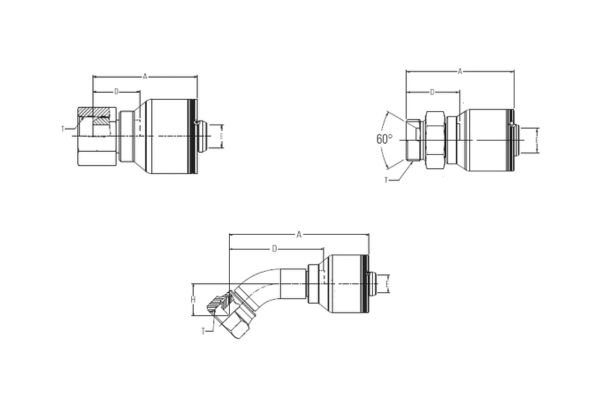
This helps most in repeat work where the same hose sizes and common connections are assembled frequently. Straight, 45-degree, and 90-degree fittings can be stocked as complete items, which reduces the time spent matching sleeves and stems under pressure. The work becomes less dependent on memory and more dependent on verified part identification.
It supports repeatability at the workbench
Repeatability is one of the strongest reasons to use one-piece fittings. When the same fitting series, hose series, and crimp data are used consistently, the assembler can follow a stable routine: select the complete fitting, confirm the hose, insert to the correct depth, crimp to the specified data, and inspect the finished assembly. Fewer loose variables make the routine easier to train and audit.
This does not mean every part with the same dash size is interchangeable. Dash size is only a size reference, not a full compatibility approval. The hose construction, reinforcement, cover thickness, skive or no-skive requirement, and manufacturer crimp data still decide whether the assembly is correct.
What Still Must Be Confirmed Before Crimping
Hose side details decide whether the fitting can be used
Before crimping, the hose side must be checked against the fitting series. Hose ID, dash size, hose construction, reinforcement type, cover condition, and skive requirement can all affect whether the fitting will assemble correctly. A one-piece fitting for one hose family may not be suitable for another hose with a similar nominal size.
The crimp data is especially important. Crimp diameter, insertion depth, die selection, and assembly procedure should come from the applicable hose, fitting, and crimping equipment information. There is no universal crimp diameter that safely applies to all one-piece fittings, so hydraulic hose crimping data should be treated as part of the specification, not an optional detail.
Connection side details decide whether the joint will seal
The connection end must be confirmed separately from the hose side. Thread form, connection standard, male or female style, straight or tapered thread, seat angle, sealing face, and O-ring arrangement all affect whether the joint can seal correctly.
Photos can help with first screening, but they cannot replace measurement. A clear photo may show that a fitting is elbow-shaped or female, yet it may not show thread pitch, seat angle, damaged sealing surfaces, or whether the thread is tapered. When the connection is uncertain, use a proper hydraulic fitting thread identification process before selecting the fitting.
A Practical Error-Reduction Workflow
Check the old part and the hose before choosing the fitting
The most reliable workflow starts with identification, not crimping. If an old assembly is available, inspect the complete fitting, thread end, sealing face, hose marking, and orientation before choosing a replacement. If only a photo is available, treat it as a starting point and ask for measurements before approving the part.
Use this information before selecting the fitting:
- Hose manufacturer or series, if visible, plus hose ID or dash size
- Fitting style and orientation, such as straight, 45-degree, or 90-degree
- Male or female connection, thread OD or ID, and pitch or TPI
- Straight or tapered thread, seat angle, sealing method, and O-ring location
- Existing part number, clear photos, material, finish, fluid, pressure, and temperature
Inspect the assembly after crimping
After the fitting is selected, the assembly process still needs inspection. Confirm insertion depth, hose position, crimp diameter, die set, and whether the finished crimp shape matches the relevant procedure. If the fitting requires skiving or a specific preparation method, that instruction should be followed before the crimp is made.
A simple post-crimp check can catch errors before the hose is installed:
- Confirm the hose was inserted to the required mark or depth
- Check the crimp diameter at the specified location
- Inspect for damaged cover, uneven crimp, twisted hose, or wrong orientation
- Verify that the connection end and sealing surface are clean and undamaged
Where One-Piece Fittings Help and Where They Do Not
High-repeat and emergency work benefit from simpler picking
One-piece fittings are especially useful where the same common hose assemblies are made repeatedly. The fewer separate parts the team has to pick, the lower the chance of using the wrong ferrule or mixing similar sleeves. This is why one-piece fittings often work well for high-turnover sizes and common connection styles.
They also help when several workers share the same stock area. A complete fitting with a clear label is easier to control than separate stems and ferrules that may be returned to the wrong bin. Better stock control can reduce rework and support smoother hydraulic fittings inventory management without forcing every part into a complicated system.
Emergency hose repairs often create conditions where mistakes become more likely. The machine is down, the old part may be damaged, the operator wants a fast repair, and the assembler may have limited information. One-piece fittings reduce the number of loose components that must be matched while the job is urgent.
The safety boundary does not change. Before inspection or replacement, equipment should be shut down, hydraulic pressure and stored energy should be released, and the relevant safety procedures should be followed. A faster fitting selection process should never lead to loosening parts under pressure, checking pinhole leaks by hand, or using unverified components just to restart equipment.
They cannot fix wrong thread, seal, or crimp data
A one-piece fitting can be correctly made and still be wrong for the port. If the thread type is misidentified, the seat angle is wrong, or the sealing face is damaged, the joint may leak even though the hose-side crimp looks acceptable. Thread sealant should not be used as a repair for an incorrect thread or a damaged sealing surface.
This is one reason similar-looking fittings should be treated carefully. An ORFS fitting, a BSPP fitting with a bonded seal, and a metric fitting with an O-ring may all appear close to someone working from a photo. The final choice should be based on measurement and sealing structure, not visual similarity.
One-piece fittings also do not remove the need for manufacturer data. Any decision involving crimp diameter, insertion depth, skive or no-skive preparation, die selection, pressure suitability, or assembly sequence should be checked against the applicable data. The complete hydraulic hose assembly is limited by the lowest-rated component and by the actual working conditions.
Pressure, impulse, temperature, fluid compatibility, vibration, corrosion, and installation routing can all change the risk level. A fitting that works well in one assembly may not be suitable for another application with different hose construction or operating conditions. When leakage history is part of the problem, review hydraulic hose leak causes along with the fitting selection.
What to Prepare Before Ordering or Replacing
Send enough information to prevent guessing
If the goal is to reduce assembly errors, the inquiry should include enough technical information for the fitting to be checked before shipment or use. A request that only says “same as photo” or gives a partial part number leaves too much room for error. Better input creates better selection and fewer corrections later.
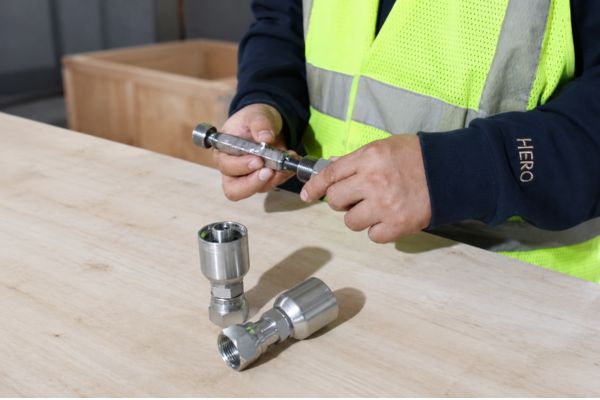
For a one-piece fitting inquiry, prepare the most relevant items:
- Hose ID or dash size, hose series, and visible hose markings
- Fitting style, orientation, male or female connection, and existing part number
- Thread OD or ID, pitch or TPI, straight or tapered thread, seat angle, and sealing method
- Clear photos of the full fitting, thread area, sealing face, and hose end
- Working pressure, temperature, fluid, material or finish needs, and crimping machine data
- Estimated quantity and whether the parts are for stock, repair, resale, or equipment production
The final decision should be based on controlled reduction of risk
One-piece hydraulic hose fittings reduce hose assembly errors because they remove the separate ferrule-selection step and make stock picking more controlled. They are most useful when repeat work, shared inventory, urgent repair, or mixed fittings make picking mistakes likely. Their value is strongest when they are paired with clear hose identification, verified thread and seal details, and valid crimp data.
The next step is not to choose one-piece fittings by appearance or price alone. Prepare the hose information, connection measurements, sealing details, working conditions, and crimping data source before approving the part. Correct matching is what reduces rework, leakage, and downtime; the one-piece structure simply makes that correct matching easier to manage.
FAQ
Do one-piece fittings eliminate ferrule mismatch completely?
They reduce ferrule mismatch by pairing the stem and ferrule as one component, but they do not eliminate errors caused by wrong hose series, wrong crimp data, or wrong connection identification.
Can I choose a one-piece fitting only by dash size?
No, dash size is not enough because hose construction, fitting series, crimp specification, and sealing style must also match. Two hoses with similar nominal size can require different fittings or crimp procedures.
Are one-piece fittings better than two-piece fittings for every hose assembly?
No, they are better when simplified picking and repeatable assembly reduce risk, but two-piece systems may still be used where the hose, ferrule, and crimp data are controlled correctly.
What is the most common mistake when replacing an old fitting?
The most common mistake is relying on appearance or a partial photo instead of confirming thread pitch, seat angle, sealing face, hose markings, and crimp requirements. Visual similarity should only be used for preliminary screening.
When should manufacturer crimp data be checked?
Manufacturer crimp data should be checked whenever the hose series, fitting series, crimping machine, die set, skive requirement, insertion depth, or pressure suitability is involved. It is required before approving a new or replacement assembly process.