Choose a metric light or heavy one-piece fitting by matching the existing connection and the complete application—not by treating “heavy” as automatically better. Confirm the L or S series, tube outside diameter, metric thread, 24-degree sealing geometry, hose series, fitting dimensions, operating conditions, and valid crimp data. Light and heavy fittings that appear similar may use different threads and dimensions, so they should not be substituted without verification.
What Do Light and Heavy Metric Series Mean?
L and S identify different fitting series
In metric 24-degree connection systems, L normally identifies the light series and S identifies the heavy series. Some product ranges also include an LL, or very light, series. These designations help define a coordinated set of connection dimensions rather than acting as a general description of product quality.
The relevant metric connection system includes 24-degree cone connectors used with cutting rings or O-ring seal cones. ISO 8434-1 specifies general and dimensional requirements for these connections, while ISO 12151-2 covers related hose fittings with ISO 8434-1 24-degree cone connector ends and O-rings. ISO 8434-1:2018 and ISO 12151-2:2022 provide the current standards references.
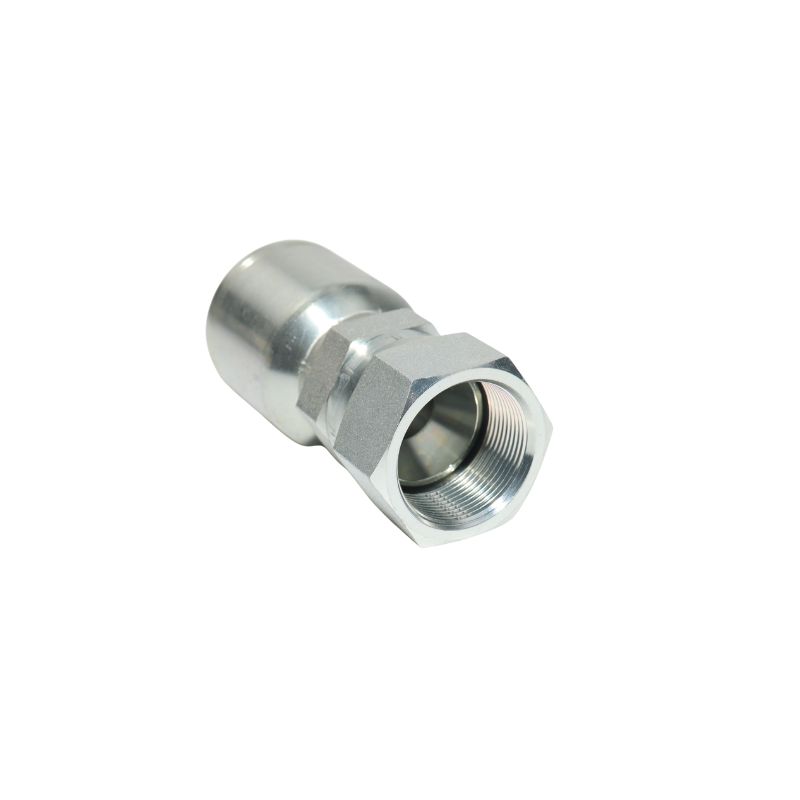
A one-piece hose fitting normally has its stem and ferrule preassembled or fixed together as one component. This design can reduce separate ferrule-selection errors. It does not change the connection-end requirements or make L and S fittings interchangeable.
Heavy series does not simply mean “better”
The heavy series is designed around a different set of dimensions and application requirements. Depending on the size, it may use a different metric thread, connection geometry, wall section, or fitting dimensions from the corresponding light-series connection.
This does not mean every hydraulic application should use the S series. A heavy fitting may be unnecessary, incompatible with an existing L-series port, or too large for the available installation space. Choosing it without checking the mating connection can create an assembly that will not fit or seal correctly.
The correct question is not “Which series is stronger?” It is “Which series matches the existing connection and is approved for the hose assembly and operating conditions?”
Identify the Existing Connection Before Choosing
Find the series marking or technical reference
Begin with the equipment drawing, fitting part number, port specification, or an approved component record. Look for an L or S designation connected to the tube size or product code.
A part number can help identify the series, but manufacturer coding systems differ. Do not assume that the same letters or number sequence mean the same thing across different brands.
If documentation is unavailable, inspect and measure the existing connection. Record:
- Male or female connection.
- Tube outside diameter associated with the connection.
- Metric thread outside or inside diameter.
- Thread pitch.
- Straight or tapered thread.
- 24-degree seat or cone configuration.
- O-ring or metal-to-metal sealing method.
- Existing part number and visible markings.
- Critical installation dimensions.
- Condition of the mating component.
Clear photographs can help narrow the product family, but they cannot reliably confirm thread pitch, seat dimensions, or the final series.
Do not identify the series from tube size alone
The same nominal tube outside diameter may appear in both light and heavy product ranges, depending on the size and manufacturer’s offering. The associated thread and dimensional relationship may differ.
For this reason, a description such as “metric fitting for 12 mm tube” is incomplete. The buyer must still confirm whether the connection is 12L, 12S, or another defined system and verify the relevant metric thread.
A structured description is more reliable:
Tube outside diameter + L or S series + metric thread + connection style + sealing method
Do not force an unidentified fitting into a port to see whether it fits. Partial thread engagement does not confirm that the pitch, seat, or sealing system is correct and may damage the mating component.
Compare the Connection Dimensions
Check the thread and 24-degree sealing geometry
Metric light and heavy fittings should be identified through the complete connection. Measure the thread diameter and pitch with suitable tools, then compare the results with the applicable technical drawing or dimensional table.
The thread usually provides mechanical engagement, while the 24-degree cone and associated seal create the fluid connection. A fitting with the wrong cone, O-ring arrangement, or mating geometry may not seal even if the thread appears to engage.
Check these features separately:
| Feature | What to verify |
|---|---|
| Series | L, S, or another confirmed designation |
| Tube reference | Applicable tube outside diameter |
| Thread | Metric diameter and pitch |
| Connection gender | Male or female |
| Cone | Confirmed 24-degree geometry |
| Seal | O-ring cone, cutting-ring interface, or another specified design |
| Fitting style | Straight, 45-degree, 90-degree, or another configuration |
| Dimensions | Overall length, hex, drop, and clearance dimensions |
Thread sealant must not be used to compensate for an incorrect metric thread or damaged 24-degree sealing surface. If the connection is designed to seal at the cone or O-ring, applying sealant to the thread does not correct a geometry mismatch.
Confirm the mating side
A hose fitting connects to a port, tube fitting, adapter, or another component. Both sides must belong to a compatible system.
Inspect the mating component for its series, thread, seat, and sealing features. An existing port may be damaged, deformed, contaminated, or incorrectly identified. Installing a correctly selected new fitting will not repair a scratched cone or damaged thread.
When changing from an existing supplier to an alternative source, compare the proposed fitting with the application specification rather than only with the used part. Wear and previous over-tightening can change the dimensions of the old fitting.
If the supplier proposes an adapter to connect different systems, evaluate the complete arrangement. An additional adapter changes the overall length, introduces another sealing interface, and may affect installation space and potential leak points.
When Is the Light Series Appropriate?
Choose L series when it matches the system
The light series is appropriate when the equipment port, tube connection, or mating component is designed for the corresponding L-series dimensions and the complete assembly meets the application requirements.
L-series connections are commonly found in metric hydraulic systems, but their use in a specific application must be confirmed from the equipment and component information. Do not select L only because the system is described as “medium pressure” or because the fitting costs less.

An L-series fitting may be a suitable choice when:
- The existing connection is positively identified as L series.
- The thread and 24-degree sealing geometry match.
- The intended hose and fitting series are approved together.
- The complete assembly is suitable for the working conditions.
- The fitting dimensions provide the required installation clearance.
- Material, finish, and seal meet the fluid and environmental requirements.
- Valid assembly and crimp information is available.
Understand the boundaries of the light series
Do not assume that L-series fittings can replace S-series parts when the tube outside diameter looks the same. A thread or sealing mismatch can prevent assembly or create leakage.
The pressure suitability of the finished hose assembly also cannot be determined from the letter L alone. It depends on the fitting, hose, connection, size, temperature, fluid, pressure impulses, routing, and assembly quality.
Published ratings should be taken from the applicable product and manufacturer data. ISO notes that many factors affect satisfactory system performance and that listed connection pressures should not be treated as universal guaranteed minimums for every application.
L series should not be rejected merely because the equipment experiences high operating demands. If it is the specified connection and the complete approved assembly meets those demands, changing to S without redesigning the mating components provides no automatic benefit.
When Is the Heavy Series Appropriate?
Choose S series when the equipment requires it
Use the heavy series when the existing port or connection is identified as S series, or when the system design and component documentation specifically require it.
S-series fittings may be associated with more demanding applications, but selection must remain tied to the complete technical requirement. The heavier designation does not authorize installation into an L-series port.
An S-series fitting may be appropriate when:
- The existing connection is confirmed as S series.
- The equipment drawing specifies S-series dimensions.
- The mating thread and 24-degree cone match the proposed fitting.
- The complete hose assembly meets the pressure, temperature, and impulse requirements.
- The larger or different fitting dimensions fit the available space.
- The material, surface finish, and seal suit the operating environment.
- Current crimp and assembly data are available.
The decision should be supported by documentation rather than a general preference for a heavier component.
Do not upgrade one component in isolation
Changing an L-series hose fitting to an S-series fitting is not a simple pressure upgrade. The mating port, adapter, or tube fitting may also need to change. The new arrangement may require different threads, dimensions, and installation clearance.
The pressure capability of a hose assembly is limited by its lowest-rated relevant component and the conditions under which it operates. Replacing one connection with a heavier-looking alternative does not increase the rating of the hose, port, adapter, or other components.
An isolated change may also create new risks:
- Incorrect engagement with the existing port.
- A mismatched 24-degree sealing interface.
- Insufficient wrench or installation clearance.
- Interference with nearby equipment.
- Higher weight or mechanical loading on the hose.
- Use of the wrong crimp data.
- Confusion during future replacement.
If an application needs redesign, review the complete system instead of substituting one fitting at the purchasing stage.
Consider Pressure, Temperature, and Environment
Evaluate the complete operating conditions
Do not choose light or heavy series using working pressure alone. The complete application includes normal pressure, impulse frequency, temperature, fluid, vibration, movement, corrosion, and external mechanical loads.
Provide the relevant conditions when requesting a quotation:
- Normal working pressure and expected impulses.
- Minimum and maximum temperatures.
- Hydraulic fluid or other medium.
- Mobile or stationary equipment.
- Vibration, shock, and movement.
- Indoor, outdoor, marine, or washdown exposure.
- Installation space and hose routing.
- Applicable equipment, customer, or regulatory requirements.
The fitting material and surface treatment must also suit the environment. Carbon steel, stainless steel, and other material options have different conditions of use. No material is automatically the best choice for every L- or S-series connection.
Treat severe applications separately
Safety-critical, regulated, or severe-duty systems require more than a catalog comparison. Applications involving lifting, braking, risks to personnel, extreme pressure impulses, aggressive fluids, or high temperatures may need engineering review and controlled validation.
Do not change the connection series simply because a machine is experiencing hose failures. The actual cause may be incorrect routing, excessive bending, hose abrasion, pressure impulses, contamination, damaged ports, or unsuitable assembly procedures.
Before modifying the fitting, inspect the complete hose assembly and operating environment. Changing from L to S will not correct a hose that is twisted, too short, exposed to abrasion, or assembled with incorrect crimp data.
Choose metric light or heavy one-piece fittings by matching the existing connection, hose system, and complete application. S series is not an automatic upgrade, and L series is not automatically inadequate. Send TOPA your L or S reference, metric thread measurements, hose details, fitting photos, operating conditions, crimping information, and estimated quantity to confirm a suitable sample or trial order.
Frequently Asked Questions
Can an L-series fitting connect to an S-series port?
Not simply because the tube size or general appearance is similar. The metric thread, dimensional relationship, and sealing geometry must match the specified series.
Is S series always rated for higher pressure than L series?
Do not make the selection from the series letter alone. Use the applicable manufacturer’s data for the exact fitting and evaluate the complete hose assembly, including its lowest-rated relevant component.
Can tube outside diameter identify L or S series?
Tube outside diameter helps narrow the options but may not confirm the series by itself. Check the L or S designation, metric thread, pitch, and 24-degree connection dimensions.
Does changing from L to S require different crimp data?
The connection-end designation alone does not define the crimp setting. Use data for the exact hose, fitting series, stem, and ferrule combination; never copy a crimp value based only on L or S.
What information should I send for an unidentified metric fitting?
Send the hose manufacturer and series, tube or hose size, metric thread measurements, pitch, photos of the complete fitting and sealing face, existing part number, application conditions, and critical installation dimensions.