
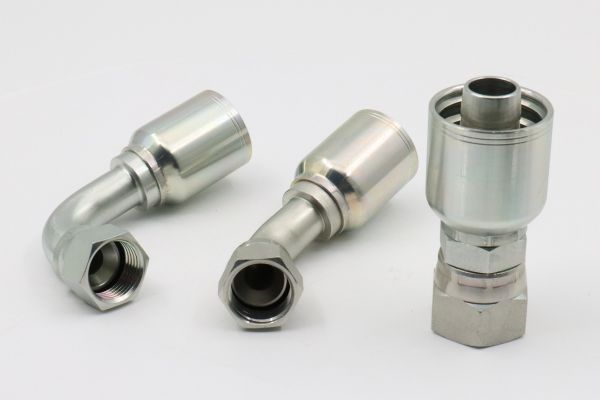
TP43 crimp fitting repeat order consistency means that each replenishment lot continues to meet the same current, approved product identity and technical requirements while keeping agreed appearance, assembly, marking, protection, packaging, and records under control. It does not mean every fitting must look numerically or visually identical. A color shift may be cosmetic, a repeated dimensional movement may indicate process drift, and a wrong sealing face is a functional nonconformity; these findings require different decisions.
Repeat-Order Consistency Is Controlled Conformity
The central question is not whether a new lot resembles the previous carton. It is whether the same SKU, revision, functional features, and agreed commercial presentation remain within controlled requirements across batches.
Define continuity by requirement
The baseline should identify part number, Parker-style comparison reference if used, drawing revision, connection standard, port dash, hose dash, angle, fitting series, material and finish requirements, marking, protective condition, packaging, and batch evidence. Inspection results should be evaluated against these records rather than a buyer’s memory of the last shipment.
A retained sample supports comparison but cannot communicate every dimension, tolerance, material, or inspection method. It may also age, corrode, wear, or become mixed. Use the sample with current drawings, approval records, controlled photographs, and batch-specific inspection data.
Allow controlled variation without accepting drift
Manufacturing processes produce variation, and zero variation is not a realistic acceptance rule. Acceptable variation remains within approved limits and does not alter fit, seal, assembly, identity, protection, or agreed appearance. Process drift is a shift or pattern that suggests the process is moving away from its established condition, even if an individual result has not yet exceeded a limit.
Functional nonconformity occurs when a required characteristic is not met, such as a wrong thread, damaged sealing face, missing O-ring, incorrect hose side, or failed controlled dimension. Cosmetic variation may be acceptable when it does not breach a specified finish or presentation requirement. The classification must come from evidence, not from whether the difference is easy to see.
Structural Features Should Remain Under Technical Control
Repeat orders should preserve the connection and hose-side geometry that define the SKU. A stable surface color cannot compensate for a changed thread, seat, stem, ferrule, or assembly relationship.
Connection and sealing identity
Verify male or female form, thread standard, diameter, pitch or TPI, straight or tapered geometry, seat angle, sealing face, O-ring location, and fitting orientation. These are separate characteristics. Similar-looking JIC, SAE, NPT, NPTF, BSP, ORFS, ORB, metric, DIN, JIS, and flange connections must not be assumed interchangeable.
Use approved drawings, suitable gauges, controlled measurements, and inspection records as required. Do not rely on casual mating or thread sealant to resolve a mismatch. If the connection changed without an approved revision, hold the batch even when the part number and exterior body appear unchanged.
Stem, ferrule, and assembly condition
In a one-piece fitting, the stem or body and ferrule are preassembled, attached, or retained together, with exact construction varying by series. Repeat batches should maintain the approved stem geometry, ferrule design, retention, orientation, and hose-side identification. Inspect for loose, damaged, deformed, or incorrectly assembled components.
The same dash size does not prove that the fitting remains suitable for a hose. Verify hose manufacturer or qualified specification, series, construction, ID, reinforcement, fitting series, crimp equipment, die, and current crimp data. Repeat-order structural consistency is necessary, but it is not universal assembly approval.
Appearance Differences Need Classification, Not Guesswork
Appearance is relevant when it reveals damage, corrosion, contamination, product mixing, or a departure from an agreed finish. It becomes misleading when every visible difference is labeled a quality failure or when uniform appearance is treated as proof of technical conformity.
Cosmetic variation
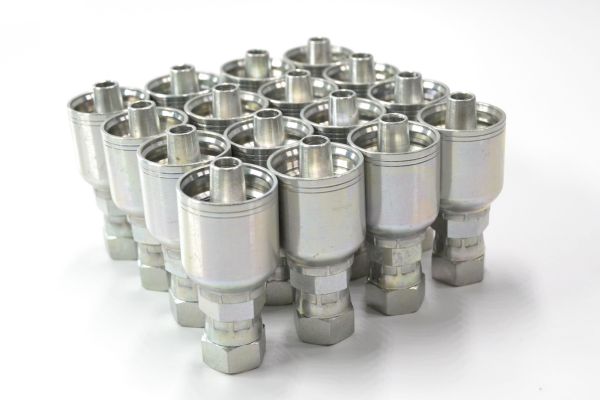
Color tone, gloss, or minor nonfunctional marks may vary because of material, surface treatment, lighting, packaging contact, or normal process range. Their acceptability depends on the current specification and approved reference. Do not invent a color standard or field-life prediction after receiving the lot.
Photographs from different cameras and lighting should not be the only basis for comparison. View representative items under consistent conditions and check finish records where required. A visually different batch may still conform, while an attractive and uniform batch may hide wrong threads or dimensions.
Drift and functional nonconformity
Repeated marks in the same location, progressive cap fit changes, increasing swivel binding, changing ferrule position, or a trend in controlled dimensions may suggest process or handling drift. A single observation cannot always establish cause, but it should trigger documented comparison. Look for links to tooling, process, material, assembly, finish, packaging, or transport changes.
Functional damage includes unacceptable thread deformation, scratched sealing faces, damaged grooves, displaced O-rings, failed retention, severe corrosion, or other departure from controlled requirements. These items require containment and disposition regardless of whether the surrounding finish matches earlier lots.
| Consistency category | Typical evidence | Decision principle |
| Product identity | Part number, revision, connection, dash, angle | Must match controlled order requirements |
| Functional structure | Dimensions, thread, seat, stem, ferrule, retention | Use approved technical criteria and methods |
| Cosmetic appearance | Color, gloss, nonfunctional marks | Compare agreed finish and presentation limits |
| Process drift | Trends across measurements, assembly, or recurring marks | Investigate pattern before it becomes nonconformity |
| Protection and packaging | Caps, separation, labels, carton condition | Preserve critical surfaces and identity |
| Traceability | Batch, inspection, material, change records | Link findings and decisions to actual stock |
Markings and Protection Should Stay Traceable
Markings, labels, caps, and package separation are operational controls. Changes can increase warehouse mistakes or damage even when the fitting’s base geometry remains correct.
Marking and label continuity
Compare product marking content and location, inner-pack labels, carton labels, model descriptions, quantities, and batch identifiers with the approved order. The same SKU should use consistent terminology across purchase order, drawing, inspection report, packing list, and receiving record. Any approved alternate description should be documented.
Do not present a Parker-style replacement as an original branded product. Reference numbers can support identification and comparison, but the product’s own identity and evidence must remain clear. Marking errors can create picking and customer-confidence problems even when the physical fitting conforms.
Protection and packaging continuity
Check caps or plugs on threads, flare seats, ORFS faces, O-ring areas, flange faces, and other exposed connections. Review inner separation for heavy fittings, elbows, swivels, flanges, stems, and ferrules. A new package design is not automatically unacceptable, but it should be evaluated if it changes contact, movement, contamination, moisture, or identification risk.
Compare pre-shipment evidence with arrival condition. Damaged cartons, displaced caps, repeated abrasion, mixed inner packs, or unreadable labels may show that the protection chain changed. Keep open and partially picked stock reprotected so warehouse handling does not become confused with batch variation.
Drawings, Samples, and Records Create the Comparison Chain
Repeat-order decisions are stronger when physical findings and documents point to the same SKU, revision, and batch. Generic certificates or historical sample photographs do not establish current-lot conformity.
Synchronize controlled references
Purchase specifications, drawings, inspection plans, report templates, labels, and retained samples should use the same active revision. When a revision changes, record its effective date and affected order or batch. Do not compare a new lot with an obsolete drawing simply because it was used for the previous delivery.
Keep critical characteristics inspectable. A dimension without clear datums, a thread description without its standard, or an O-ring requirement without a controlled identity cannot support consistent review. Obtain missing information from an authorized source instead of transferring assumptions from a similar SKU.
Require batch-linked evidence
Evidence may include material identity, dimensional results, thread checks, sealing-feature inspection, O-ring and swivel assembly observations, finish documentation, final inspection, marking, packaging, and shipment records. The necessary scope depends on risk and agreement. Each record should identify the product, batch, method, revision, result, and disposition.
Traceability does not prove quality by itself, but it enables comparison and containment. When an issue appears, the buyer can identify which stock shares the batch, process, or package link instead of holding every historical order.
Useful repeat-order references include:
- Current approved drawing and product specification
- Approved sample record and controlled photographs
- Previous accepted batch reports used for trend comparison
- Current material, dimensional, connection, and assembly evidence
- Marking, protection, packaging, and pre-shipment records
- Batch identity, change notifications, deviations, and receiving results
Investigate Unexpected Changes Before Release
An unexpected difference should be described, contained, and compared before anyone decides that it is harmless or critical. The investigation needs enough scope to separate an isolated handling event from a repeat-batch change.
Start with precise observations
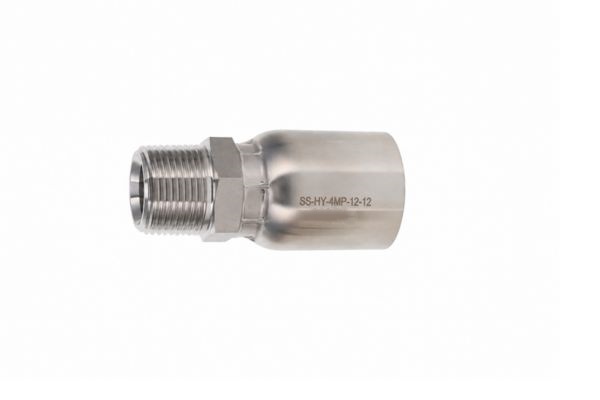
Record the exact SKU, batch, package, feature, location, and visible or measured condition. Take an overview and close-up before cleaning, moving, or reworking the part. Keep affected, uninspected, and accepted quantities separate and preserve relevant caps, bags, dividers, and cartons.
Compare the current drawing, approved sample, previous results, and like-for-like units. Check whether a disclosed or undisclosed change affected material, tooling, machining, thread forming, assembly, O-ring, finish, marking, or packaging. Avoid assigning cause solely from appearance.
Decide through risk and evidence
If the difference is cosmetic, document why it meets the applicable requirement. If it suggests drift, consider expanded inspection or process review according to the approved plan. If it is functional nonconformity, quarantine affected stock and use a controlled disposition.
Do not rework seals, threads, nuts, faces, or protection without authorization. A temporary deviation should identify the requirement, actual condition, affected quantity, technical review, decision, and duration. It should not silently redefine future acceptance.
Avoid Weak Repeat-Order Comparisons
Weak methods compare convenient surfaces rather than controlled characteristics. They can reject acceptable variation and miss safety-relevant changes at the same time.
Common mistakes
Do not compare only the top piece from each carton, finish color under different lighting, or one new SKU against a different historical model. Do not assume the same part number guarantees the same revision or that a new label guarantees the correct fitting inside. Avoid using shipment photos as dimensional or material proof.
Do not let previous good performance waive current inspection automatically. A successful batch improves confidence but does not prove later continuity. Conversely, one questionable unit does not prove an entire shipment has the same cause; use the approved containment and sampling plan.
Neutral repeat-order consistency checklist
Before releasing replenishment stock, confirm:
- SKU, reference, revision, connection, port dash, hose dash, and angle
- Threads, seat, sealing face, O-ring, stem, ferrule, nut, and retention
- Critical dimensions and inspection methods against current data
- Material and finish evidence required by the agreement
- Cosmetic differences are classified separately from functional findings
- Markings, labels, caps, packaging, quantities, and batch identity
- Current reports and photos link to the actual order and batch
- Changes and deviations were disclosed, reviewed, and recorded
- Unexpected patterns are contained and investigated before release
Conclusion
TP43 crimp fitting repeat order consistency should be judged by controlled conformity, not by the illusion of zero variation. Compare each replenishment batch with the current product identity, drawing, approved sample record, connection and sealing requirements, hose-side structure, material and finish evidence, markings, protection, packaging, and traceability. Classify differences carefully: harmless cosmetic variation, possible process drift, and functional nonconformity require different responses. When an unexpected change appears, preserve evidence, contain affected stock, review like-for-like units and batch records, and document the disposition before release. Visual consistency can support customer confidence, but it cannot prove hose and crimp compatibility, pressure suitability, fluid or temperature resistance, or safe application; those characteristics still require approved technical data and appropriate verification.
FAQ
Must repeat batches have exactly the same finish color?
No, exact visual identity is not automatically required. Evaluate color or gloss against the approved finish and appearance requirements, then separate harmless variation from corrosion, process drift, or functional damage.
Does an unchanged part number prove the design did not change?
No, confirm the drawing revision, batch records, and change notifications. Product identity must be supported by controlled documentation and physical inspection.
Can previous incoming results replace inspection of the new batch?
No, historical results provide context and may support risk planning, but they do not prove current-lot conformity. Apply the approved incoming plan to the actual batch.
How should a buyer handle an undisclosed packaging change?
Hold the affected decision long enough to review protection, cleanliness, identity, and damage risk. Document whether the new method meets requirements and update the baseline only through controlled approval.
Does batch consistency guarantee hose assembly performance?
No, consistent fittings still require verified hose construction, fitting series, ferrule, crimp equipment, die, current crimp data, and application suitability for each assembly.