The safest way to test a new one-piece fitting supplier is to evaluate a small group of familiar parts through a controlled process. Confirm the specifications, request samples or a trial order, inspect the parts, assemble them with approved hoses and crimp data, and document every result before increasing the order. This separates measurable supplier performance from price claims and first impressions.
Define What the Supplier Test Must Prove
Test the complete supply process
A supplier test should determine whether the proposed fittings can be identified, ordered, inspected, assembled, and reordered reliably. Receiving an attractive sample is not enough. The supplier must consistently connect your technical requirements with the correct product, documentation, labeling, and shipment.
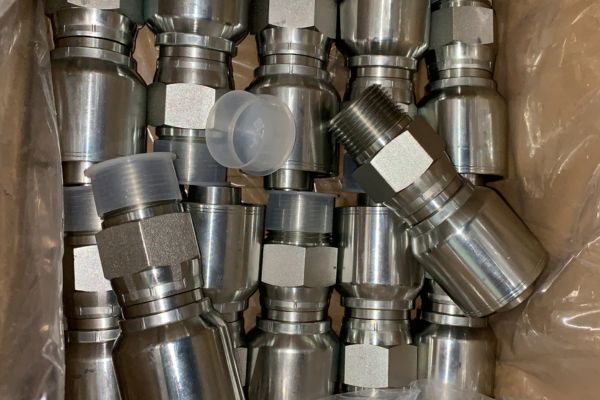
The evaluation should cover four areas:
- Technical accuracy of the recommended fitting.
- Consistency between drawings, samples, quotations, and delivered products.
- Usability of packaging, labels, and part-number references.
- Commercial performance during quotation, trial ordering, and problem resolution.
Set these objectives before requesting prices. Otherwise, purchasing teams may compare quotations without knowing which technical or operational risks must be checked.
Define pass, correction, and rejection outcomes
A trial should lead to a clear decision. For every selected part number, decide whether the possible outcomes are approval, conditional approval, another trial, corrective action, or rejection.
Approval should apply only to the confirmed fitting configuration and intended use. It should not automatically cover every size, thread, material, or product series in the supplier’s catalog.
A fitting may receive conditional approval when the product meets the technical requirements but the supplier must correct a non-critical issue, such as an incomplete label. A dimensional mismatch, incorrect hose compatibility claim, damaged sealing feature, or missing assembly data may require rejection or additional technical review.
Select Trial Parts That Produce Useful Evidence
Begin with familiar, frequently used fittings
Choose trial parts that your team already understands. Familiar fittings are easier to compare against approved drawings, technical records, existing inventory, or completed hose specifications. They also have practical value if they pass the evaluation.
The most useful candidates generally have:
- Regular or clearly documented demand.
- Confirmed hose manufacturer, series, and size.
- Known thread and sealing specifications.
- Valid crimping or assembly information.
- Dimensions that can be inspected with available tools.
- An application that allows controlled evaluation.
- A traceable existing part number or drawing.
Do not choose only the cheapest items. An unusually simple fitting may pass without revealing whether the supplier can handle your normal technical requirements. Include representative parts without making the first trial unnecessarily broad.
Exclude unclear and high-risk applications
Do not begin with a part that your team cannot identify accurately. A sample cannot resolve uncertainty if there is no approved reference against which to check it. First confirm the hose, fitting, thread, seat, seal, material, and operating conditions.
Initial trials should also avoid unverified substitutions in safety-critical, regulated, or severe-duty systems. Applications involving extreme pressure impulses, temperature, aggressive fluid, lifting, braking, or risks to personnel require a more detailed engineering review.
Send a Controlled Technical Inquiry
Give every trial item a complete specification
A supplier can only quote accurately when the inquiry contains enough information to identify the required fitting. Descriptions such as “one-piece fitting, 1/2 inch” leave critical questions unanswered.
One-piece fittings normally have the fitting stem and ferrule preassembled or fixed as one component, although the construction varies by series. This arrangement can reduce errors involving separate ferrule selection. It does not prove compatibility with every hose of the same dash size.
| Information | What to provide |
|---|---|
| Hose | Manufacturer, series, construction, ID, and dash size |
| Fitting style | Straight, 45-degree, 90-degree, or other configuration |
| Connection | Male or female and the applicable connection standard |
| Thread | Outside or inside diameter, pitch or TPI, straight or tapered |
| Seal | Seat angle, sealing face, O-ring, or other sealing method |
| Material | Required base material and surface finish |
| Application | Fluid, pressure, temperature, equipment, and environment |
| Reference | Existing part number, drawing, or approved specification |
| Quantity | Sample or trial quantity and intended use |
| Assembly | Crimping equipment and applicable data requirements |
Ask the supplier to confirm differences
Do not ask only whether the supplier has an “equivalent” fitting. Request the proposed part number, product description, dimensional drawing, hose compatibility, material and finish, and applicable assembly information.
Compare the supplier’s response with your inquiry line by line. Record every difference, including changes that appear minor. A different overall length, seat, O-ring material, thread tolerance, fitting orientation, or ferrule design may affect assembly or installation.
An existing brand or supplier part number can support cross-referencing, but it should not become the only basis for approval. Cross-reference tables help identify candidates; they do not prove that two products are identical in every dimension and application.
Evaluate Technical Communication Before Ordering
Look for precise answers, not fast agreement
A supplier who immediately confirms every item without requesting missing information may be increasing your risk rather than saving time. Technical questions about hose series, thread pitch, sealing method, application, and crimp data are signs that the requirement is being reviewed.
Useful answers should distinguish between confirmed information and assumptions. If a specification is unclear, the supplier should identify what is needed to resolve it instead of quietly selecting the closest-looking product.
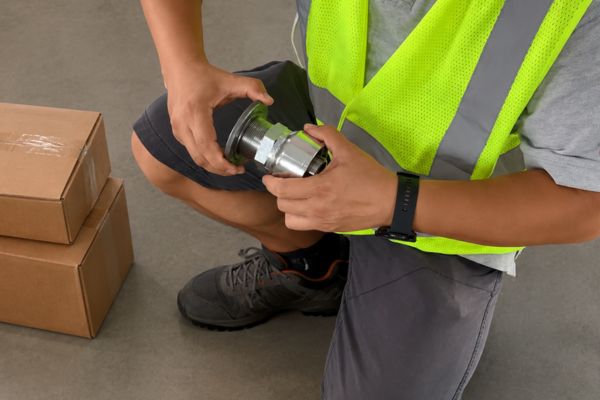
During the inquiry stage, observe whether the supplier:
- Answers questions against the correct part number.
- Separates technical confirmation from commercial quotation.
- Provides readable drawings and consistent descriptions.
- Identifies missing or conflicting information.
- Records agreed changes in updated documents.
- Avoids unsupported interchangeability claims.
- Maintains the same specifications across messages and revisions.
Response speed matters, but response completeness matters more. A quick answer that omits the hose series or sealing method can create additional work after the order is placed.
Test document consistency
Compare the description across the quotation, drawing, sample label, packing list, and invoice. Part numbers and specifications should remain consistent throughout the process.
Document inconsistency can cause the correct physical item to be stored under the wrong reference. It can also lead to repeat-order errors if purchasing uses one code while the supplier’s warehouse uses another.
Create a revision-controlled comparison record. When the supplier changes a drawing, part number, material, or specification, record the new revision and the reason. Do not rely on an old email attachment after a corrected document has been issued.
Inspect Samples Before Approving a Trial Order
Verify identity and critical dimensions
Keep samples separate from approved stock and clearly label them as under evaluation. Begin by checking whether the package, part number, description, quantity, and physical configuration agree with the confirmed documents.
Inspect the fitting for:
- Correct straight or angled configuration.
- Clear and consistent identification.
- Thread damage, burrs, or contamination.
- Scratches or deformation on sealing surfaces.
- Ferrule position and visible assembly condition.
- Surface-finish consistency.
- Corrosion or transportation damage.
- Mixed parts within the same package.
Measure the characteristics that determine connection and assembly. Depending on the fitting, these may include thread diameter and pitch, seat geometry, fitting length, drop length, hose-tail dimensions, and ferrule position.
Use the confirmed drawing and suitable measuring tools. Comparing the new sample only with a used fitting can be misleading because the existing part may be worn, deformed, corroded, or incorrectly identified.
Confirm thread and sealing details separately
A correct thread does not necessarily mean a correct connection. Many hydraulic connections seal on a flare, cone, O-ring, bonded seal, or another surface rather than on the threads.
Check whether the thread is male or female, straight or tapered, and whether its diameter and pitch match the specified standard. Then verify the seat angle and sealing method independently.
Do not force threads together as an identification method. Partial engagement can damage components and does not demonstrate sealing compatibility. Thread sealant must not be used to compensate for an incorrect thread or damaged sealing face.
Test the Fitting as Part of a Hose Assembly
Use the approved hose and crimp data
A one-piece fitting cannot be fully evaluated as an isolated component. It must be checked with the specific hose series, size, fitting system, crimping equipment, and applicable assembly data.
The same dash size does not prove compatibility. Hoses can differ in reinforcement, cover thickness, tube material, and outside diameter. Fittings can differ in stem and ferrule geometry.
Before assembling a sample, confirm:
- The exact hose manufacturer, series, and size.
- The approved fitting series.
- Whether skiving or another preparation is required.
- The insertion or positioning requirement.
- The correct crimping machine and tooling.
- The applicable crimp specification and revision.
- The required post-crimp inspection.
Never create a universal crimp diameter for similar-looking fittings. Using unsuitable crimp data can cause under-crimping, over-crimping, leakage, fitting pull-off, hose damage, or restricted flow.
Record assembly results instead of relying on appearance
Record the fitting part number, hose identification, tooling, crimp specification, measured result, and inspection outcome. If the application requires additional validation, follow an approved procedure suitable for the complete hose assembly.
If a fitting does not assemble correctly, stop and investigate. Do not continue changing the crimp setting until the assembly appears acceptable. The underlying problem may be an incorrect hose, fitting series, die, insertion, preparation method, or technical specification.
Hydraulic inspection and testing require appropriate safety controls. Shut down equipment, release hydraulic pressure and stored energy, and follow the procedures supplied by the equipment and component manufacturers. Never use a bare hand to search for a pinhole leak or disassemble a pressurized connection.
Place a Controlled Trial Order
Keep the first commercial order narrow
A sample confirms only the parts examined. A trial order tests whether the supplier can reproduce the agreed product across a commercial shipment while maintaining identification, packaging, documentation, and quantity accuracy.
Use a limited group of approved sample items. Avoid adding many unverified products simply to meet a freight target or obtain a lower price. The extra inventory may create more risk than the discount saves.
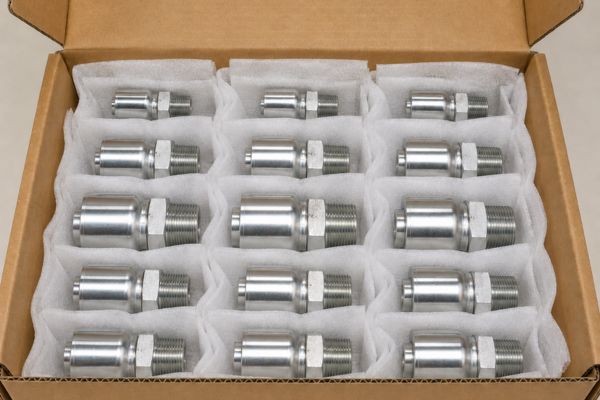
Before approving the order, verify:
- Final supplier and internal part numbers.
- Drawing and specification revisions.
- Hose and fitting-series compatibility.
- Thread, seat, seal, material, and finish.
- Trial quantities and packaging requirements.
- Identification and traceability expectations.
- Inspection and acceptance rules.
- Treatment of nonconforming items.
Purchasing should issue the order from the same controlled specification used during the technical review. Rewriting descriptions manually can introduce errors after the products have already been confirmed.
Protect approved inventory during evaluation
When the trial shipment arrives, do not mix it immediately with existing stock. Use a quarantine or evaluation location until the receiving and assembly checks are complete.
Compare the shipment with the approved order and sample. Inspect selected pieces from each relevant item or identifiable lot according to your risk-based plan. The required sample size depends on application risk, quantity, history, and internal quality procedures; one fixed number is not appropriate for every order.
Traceability should connect the inspection result to the supplier part number, shipment, and applicable batch or production identification when available. This makes it possible to isolate a problem without blocking unrelated approved inventory.
Evaluate Commercial and Operational Performance
Calculate cost beyond the quoted price
Unit price matters, but it is only one part of supplier performance. A lower-priced fitting can become more expensive when the order requires repeated clarification, sorting, relabeling, emergency replacement, or hose reassembly.
Review the total effect of the trial:
- Accuracy of the original quotation.
- Time required to confirm technical details.
- Consistency between sample and trial shipment.
- Packaging and label usability.
- Quantity and part-number accuracy.
- Inspection and sorting effort.
- Nonconformance and corrective-action handling.
- Ease of placing an accurate repeat order.
- Freight, minimum quantity, and replenishment implications.
Do not treat a technically acceptable fitting as commercially successful if the identification system creates a high risk of warehouse mistakes. The supplier’s product and operating process must both be workable.
Test how the supplier handles a problem
A trial with no recorded issue shows limited evidence about corrective support. When a real deviation appears, evaluate whether the supplier identifies the cause, responds against the correct part number, and proposes a measurable corrective action.
An effective response should explain:
- What requirement was not met.
- Which products or shipments may be affected.
- How the cause was investigated.
- What immediate containment is required.
- What will change before the next shipment.
- How the correction will be verified.
A replacement shipment alone does not demonstrate that the underlying problem has been addressed. Keep the item under conditional status until the correction is documented and verified.
Decide Whether to Approve, Expand, or Stop
Approve products individually
Do not approve an entire supplier catalog because several samples passed. Approval should be tied to the fitting series, hose combination, connection, material, specification revision, and intended application that were actually evaluated.
Use clear decision categories:
- Approved for controlled repeat purchasing.
- Conditionally approved pending a documented correction.
- Additional sample or trial required.
- Limited to a defined hose or application.
- Rejected because of technical nonconformance.
- Evaluation stopped because required information is unavailable.
This structure allows useful products to move forward without ignoring problems in other SKUs.
Expand in small, measurable stages
After a successful trial, expand around products with confirmed demand. Add adjacent sizes or configurations only when sales, repair, or inventory records show a reason to stock them.
A new thread family, hose series, material, or sealing method introduces different risks and should receive its own technical review. Supplier approval is not a substitute for product approval.
Continue monitoring repeat orders for specification consistency, packaging accuracy, defects, delivery reliability, and corrective-action performance. A supplier who performs well on the first order must still maintain the agreed standard over time.
Frequently Asked Questions
How many fittings should be included in the first supplier trial?
There is no universal quantity. Select enough familiar parts to evaluate technical accuracy, assembly, packaging, and order consistency without creating excessive unapproved inventory.
Is a free sample enough to approve a supplier?
No. A sample can support dimensional and assembly checks, but a controlled trial order is needed to evaluate commercial shipment consistency, labeling, quantity accuracy, and repeatability.
Can a lower price justify accepting a small specification difference?
Only when the difference has been technically reviewed and approved for the intended application. Price should never be used to override an incompatible thread, seal, hose series, material, or crimp requirement.
Should every trial fitting be pressure-tested?
Testing requirements depend on the hose assembly, application risk, standards, and internal procedures. Use an approved validation plan rather than applying one uncontrolled test to every fitting.
When is a new supplier ready for larger orders?
Expansion is appropriate after the selected products pass technical, assembly, documentation, packaging, and commercial checks. Increase volume gradually and continue monitoring repeat-order consistency.