
One-piece and two-piece hydraulic fittings should be purchased with different controls because their component relationships, inventory identities, and assembly dependencies are different. In one-piece vs two-piece fitting purchasing, the key distinction is not that one system is inherently better; it is that a preassembled fitting places the stem and ferrule under one SKU, while a two-piece system requires a verified body-and-ferrule combination. That change affects quotation descriptions, hose and crimp confirmation, warehouse picking, inspection, sample approval, and replacement records. A sound purchasing process preserves those differences from technical review through receiving instead of treating a one-piece item as an ordinary fitting body with a loose sleeve added later.
Start with the Structural Difference
A one-piece hydraulic hose fitting is an assembly in which the fitting body or stem and ferrule are preassembled, attached, or retained together; the exact construction varies by product series. A two-piece arrangement normally manages the fitting body and a compatible separate ferrule as distinct components. This structural boundary determines what the purchasing record must identify and what the warehouse must keep together.
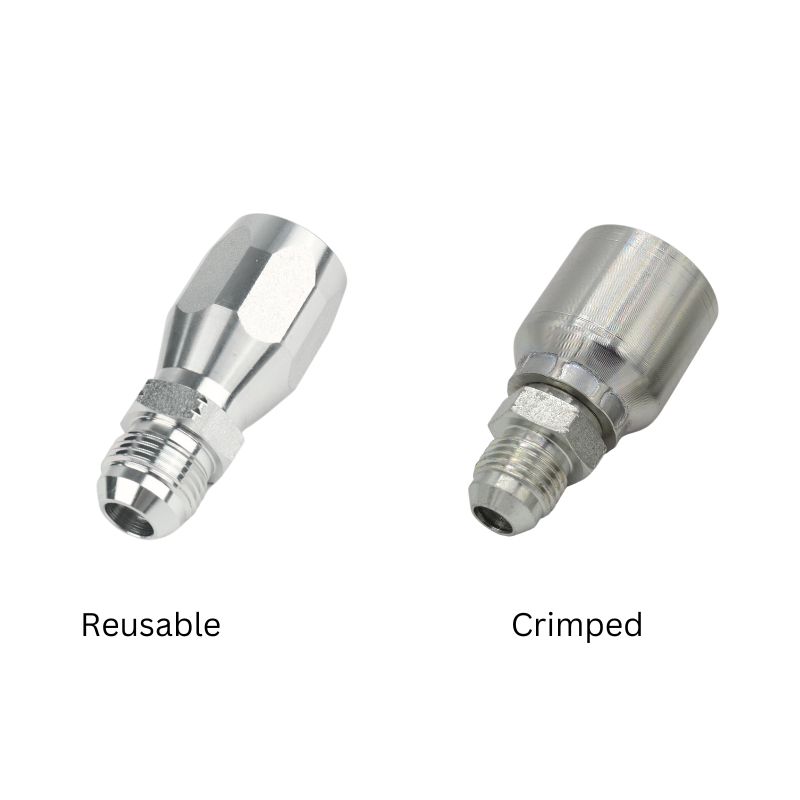
Preassembly changes the order identity
For a one-piece item, the order should describe the complete preassembled configuration, including the connection end, orientation, hose-side identity, and fitting series. The attached ferrule is not a generic accessory that can be assumed suitable because it fits over a hose. If the item received has a different retained ferrule or hose-tail design from the approved sample, the SKU identity may have changed even when the threaded end looks identical.
Separate components create a combination decision
For a two-piece system, purchasing must control both component identities and the approved pairing between them. A correct fitting body with the wrong ferrule can produce an invalid assembly, while the correct ferrule stored in another bin does not prevent a picking error. The order structure must therefore preserve the relationship among body, ferrule, hose construction, hose size, and current assembly data rather than listing two independent parts without a compatibility rule.
Ferrule Handling Changes the Purchasing Control
The one-piece format may reduce separate ferrule selection, sorting, and preparation steps, but it does not eliminate ferrule-related verification. The two-piece format may support different stocking or assembly practices, yet it adds an explicit component-matching task at purchasing, receiving, and picking.
One-piece control focuses on retained configuration
Buyers should confirm that the ferrule is the one defined for the exact one-piece series and remains correctly associated with the stem through transport and storage. Incoming inspection should look for mixed configurations, deformation, corrosion, damage, or changes in the retention arrangement. A supplier code or familiar appearance is insufficient if the drawing, label, and sample do not establish the complete item identity.
Two-piece control focuses on approved pairing
Separate ferrules need distinct part numbers, labels, storage locations, and replenishment rules. The bill of material or assembly record should state which ferrule is approved with which fitting body and hose series, including size-specific exceptions. If warehouse staff select by diameter or color, similar sleeves can be confused and the error may remain hidden until crimping or service.
The purchase specification should distinguish these controls:
- For one-piece items, identify the complete retained assembly and prohibit unapproved ferrule substitutions.
- For two-piece items, identify the body and ferrule separately and state their approved relationship.
- For both, record hose manufacturer or accepted specification, hose series, construction, size, and applicable fitting series.
- Require current crimp information for the exact combination rather than relying on historical shop settings.
- Keep revisions visible so an updated component does not silently inherit an old approval.
Hose and Crimp Matching Still Controls Suitability
Neither structure proves hose compatibility or a correct crimp. Suitability depends on the exact hose manufacturer or accepted specification, hose series, construction, hose ID, dash size, reinforcement, fitting series, ferrule design, crimping equipment, die set, preparation method, and valid current crimp specification.
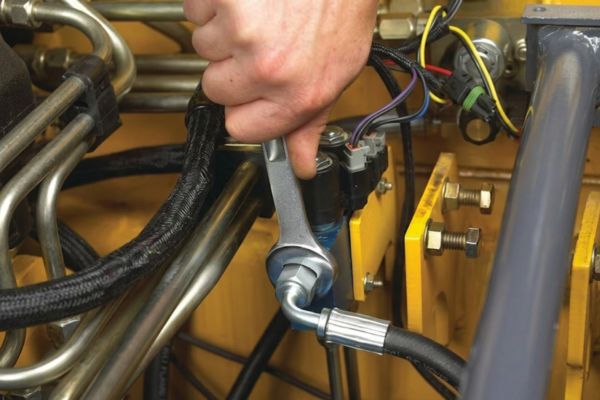
A one-piece item is not a universal matched set
Preassembly confirms that a stem and ferrule were supplied together; it does not confirm that the assembly matches every hose with the same dash size. Hose cover, reinforcement, tube, and outside dimensions can vary by series, changing how the fitting tail and ferrule interact. Purchasing should request the defined hose range and crimp source for the exact part rather than interpreting “one-piece” as automatic assembly approval.
Two-piece flexibility requires tighter configuration records
A two-piece catalog may allow different ferrules for different hose constructions, but that flexibility becomes risk if combinations are selected from memory. The purchasing record should connect the loose components to an approved assembly table or manufacturer procedure. Skive or no-skive preparation, insertion, die selection, crimp diameter, and inspection criteria must come from current data for the exact combination, not from an approximate measurement on another assembly.
| Purchasing area | One-piece fitting control | Two-piece fitting control |
| Ordered identity | Complete stem-and-ferrule assembly | Fitting body and ferrule as separate identities |
| Ferrule risk | Wrong retained configuration or unapproved change | Wrong separate ferrule selected or picked |
| Hose matching | Verify approved hose and crimp data for the complete item | Verify body, ferrule, hose, and crimp combination |
| Inventory record | One SKU can represent the preassembled item | Multiple SKUs plus an approved pairing rule |
| Incoming inspection | Confirm assembly identity, retention, and condition | Confirm each component and their labels separately |
| Sample approval | Applies to the exact complete configuration | Applies to the exact body-and-ferrule combination |
SKU, Storage, and Picking Require Different Designs
Inventory simplicity should be evaluated through error control and demand, not merely by counting item numbers. One-piece fittings can reduce separate component handling for an approved range, while two-piece systems may separate slower-moving bodies and ferrules in ways that suit a particular assembly operation. Actual benefits depend on demand patterns, connection variety, hose series, branch practices, and replenishment lead time.
Build the SKU around what must not be confused
A one-piece SKU should encode or link to connection type, gender, size, seat or sealing method, shape, port dash, hose dash, and fitting series. A two-piece system needs equally clear body and ferrule records plus a controlled compatibility link. Similar-looking JIC, SAE flare, NPSM, ORFS, BSP, or metric ends must not share vague descriptions, because thread appearance alone does not establish the seat or sealing method.
Design picking verification for the structure
One-piece picking can use a single scan or label check, but receiving must first have confirmed that the attached components are correct. Two-piece picking benefits from a two-component verification that prevents a valid body and valid ferrule from becoming an invalid pair. Bins, images, and part numbers should support the check without making color or package location the only identifier.
Practical inventory controls include:
- Separate fields for connection size and hose size, especially when port and hose dash differ.
- Shape and orientation fields for straight, 45-degree, and 90-degree configurations.
- A revision-controlled link to the applicable hose and crimp information.
- Distinct locations or scan rules for similar loose ferrules in two-piece systems.
- Receiving quarantine for mixed labels, damaged sealing faces, or uncertain configurations.
Sample Approval and Incoming Inspection Are Not Identical
Sample approval defines what exact configuration was evaluated and which evidence supported that decision. Incoming inspection checks whether later receipts conform to that approved identity and condition. The procedures should differ by structure, but neither can rely on a brand-style number or overall appearance alone.
Approve the right object
For one-piece fittings, the sample object includes the stem, connection end, ferrule, retention method, hose tail, material, finish, and critical dimensions. For two-piece fittings, approval includes the body, the specific ferrule, and their combination with the intended hose and assembly data. If only the fitting body is measured, the two-piece assembly has not been fully reviewed; if only the thread end is measured, the one-piece hose side remains uncontrolled.
Translate approval into receiving checks
Receiving should compare purchase description, label, part marking, drawing revision, report identity, and physical configuration. Inspection depth can reflect risk and history, but critical identity features should never disappear from the process. Packaging must keep similar SKUs separate, protect threads and sealing faces, and preserve the link between documents and the actual lot.
A neutral approval file may contain:
- Approved part and drawing revision, with complete connection and hose-side descriptions.
- Critical dimensions and their measurement references.
- Material and surface-finish requirements supported by appropriate evidence.
- Hose, fitting, ferrule, crimp, pressure, temperature, fluid, and application limits.
- Photos for identification support, not as substitutes for measurements.
- Defined nonconformity, reinspection, and change-notification rules.
Common Comparison and Ordering Mistakes
The most damaging mistake is to compare only unit prices or SKU counts while ignoring the control work required to create a correct assembly. A lower component price can be offset by separate picking, excess slow-moving parts, inspection effort, assembly rework, or an inability to verify an exact combination.
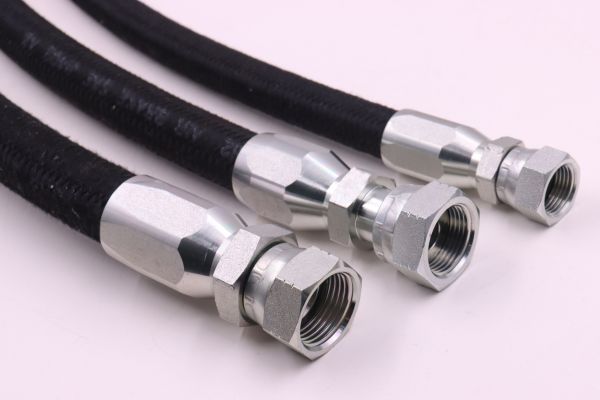
Avoid false equivalence
Do not assume a one-piece fitting equals a familiar body plus any ferrule that appears attached, and do not assume a two-piece body can accept a ferrule from another series. Matching dash sizes, similar plating, or a cross-reference number does not prove the thread, seat, hose tail, material, pressure capability, or crimp relationship. Each replacement requires evidence for its exact configuration.
Do not extend a sample result too far
A passed straight fitting does not approve an elbow, another connection end, another size, or the entire series. Likewise, a passed body-and-ferrule pair does not approve other loose ferrules or hose constructions. Record untested variants as unapproved and require change notification when drawings, materials, coatings, retained parts, or assembly instructions change.
Neutral Purchasing-Comparison Checklist
The final choice should be made from a controlled matrix rather than a general preference. Complete the same core technical review for both structures, then add the component and inventory controls specific to each.
Information to confirm
- Exact connection standard, gender, thread, seat, sealing method, size, and orientation.
- Hose manufacturer or accepted specification, series, construction, ID, dash size, and reinforcement.
- One-piece retained ferrule identity or two-piece approved body-and-ferrule pairing.
- Current preparation, insertion, die, crimp, and inspection data from the applicable source.
- Material, finish, pressure, temperature, fluid, environment, and application requirements.
- SKU, label, package, receiving, traceability, revision, and replacement-record controls.
Review total handling and risk alongside commercial terms. The better purchasing approach is the one that the business can technically verify and operationally control for its actual demand, not the one with the shortest bill of materials.
Conclusion
One-piece and two-piece systems require different purchasing logic because they place the ferrule, SKU, and assembly relationship in different control points. A one-piece fitting can reduce separate ferrule handling, but its retained configuration and approved hose-and-crimp data must be verified as one complete item. A two-piece system can support deliberate component flexibility, but only when body, ferrule, hose, and crimp combinations remain linked through ordering, storage, picking, and inspection. Compare demand, error exposure, revision control, and total handling rather than declaring either structure universally better. For responsible one-piece vs two-piece fitting purchasing, prepare the exact connection, hose series, ferrule identity, crimp source, material, pressure, temperature, fluid, and application information before approving samples or replenishment. Keep approval boundaries visible for every configuration.
FAQ
Does a one-piece fitting eliminate ferrule selection errors?
No, it reduces separate ferrule picking but does not eliminate configuration errors. The retained ferrule can still be wrong, changed, damaged, or incompatible with the intended hose and crimp data.
Can one loose ferrule be used with several two-piece fitting bodies?
Only when current technical data explicitly approves each combination. Similar dimensions or a successful past crimp do not establish compatibility across fitting bodies, hose series, or sizes.
Are one-piece fittings always easier to stock?
No, the answer depends on demand, range breadth, branch practices, and replenishment. A single complete SKU can simplify picking, but many low-volume complete configurations may still create slow-moving inventory.
Should incoming inspection crimp every received fitting?
Not necessarily, because the inspection plan should reflect risk, technical requirements, and approved procedures. Any assembly validation must use the exact hose, fitting, equipment, die, and current crimp specification.
Can a two-piece fitting replace a one-piece fitting with the same thread?
Not based on thread alone. The seat, sealing method, geometry, hose-tail design, ferrule, hose compatibility, crimp data, pressure, temperature, fluid, and installation conditions must all be verified.