
Choose between stainless steel vs carbon steel by matching verified product data to corrosion exposure, fluid, temperature, mechanical demand, pressure, availability, and the complete hose assembly. In a stainless steel vs carbon steel one-piece fittings comparison, stainless is not automatically safer and carbon steel is not automatically limited to dry service. Stainless grades and conditions vary, while carbon-steel performance depends partly on its coating and whether that protection remains intact. The right choice is application specific and size specific.
Compare Base Materials and Corrosion Behavior
The most visible difference is how each material approach manages corrosion. Stainless steel relies on the corrosion behavior of a defined alloy and surface condition, while carbon steel commonly relies on a protective coating system in addition to the base metal.
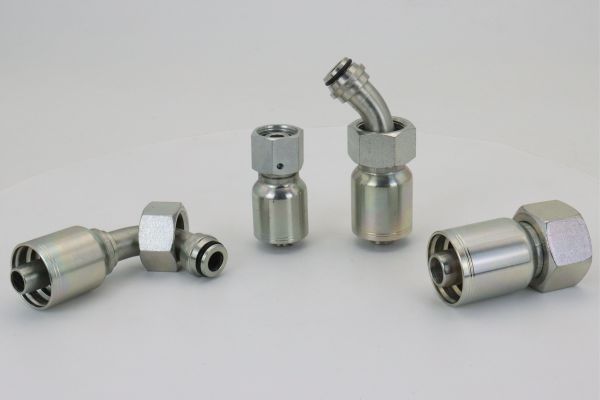
Stainless steel is a material family
“Stainless” does not identify one grade, strength level, or corrosion response. Alloy composition, processing, surface condition, contamination, fabrication, and the service environment can change performance. Chlorides, chemicals, crevices, deposits, and contact with dissimilar materials may create risks even when the general material description sounds suitable.
Carbon steel depends on coating and condition
Carbon-steel fittings may use zinc, zinc-nickel, passivation, topcoats, or another confirmed system to delay corrosion. Performance depends on the exact finish, coverage, component geometry, handling, and damage. A coated fitting can be appropriate in many environments when evidence and maintenance support it, but exposed base metal at scratches, threads, or worn contact points may change the local risk.
Define the corrosion problem with:
- Moisture, condensation, salt, washdown, chemicals, dirt, and drying cycles.
- Indoor, outdoor, mobile, marine, process, or sheltered installation details.
- Abrasion, impact, wrench contact, vibration, and inspection access.
- Storage time, packaging, transport, and preservation conditions.
- Equipment, regulatory, and maintenance requirements.
Pressure and Mechanical Suitability Need Product Data
Material name alone does not establish a pressure rating. The usable rating depends on the exact fitting size, connection, geometry, material condition, hose, ferrule, crimp, adapter, port, seal, temperature, impulse conditions, and the lowest-rated component in the assembly.
Strength cannot be inferred from corrosion resistance
A corrosion-resistant material is not necessarily higher rated for every fitting geometry. Stainless and carbon steels can be supplied in different grades, heat treatments, and manufacturing conditions. The correct comparison uses current data for the exact part rather than a general property from a material handbook or another supplier’s catalog.
Mechanical environment can control the choice
Vibration, impact, side loading, installation stress, and repeated pressure impulses can affect the connection independently of visible corrosion. Thread engagement, wall sections, elbow geometry, swivel design, and adapter interfaces also matter. If material is changed during replacement, confirm that dimensions, sealing surfaces, assembly procedures, and ratings remain valid instead of transferring approval from the old part.
Check Fluid and Temperature Compatibility
Both choices must be reviewed against the hydraulic fluid, contaminants, internal temperature, ambient temperature, and any external heat or cold exposure. Compatibility applies to the complete assembly, including coating, O-rings, hose tube, seals, and adjacent components.
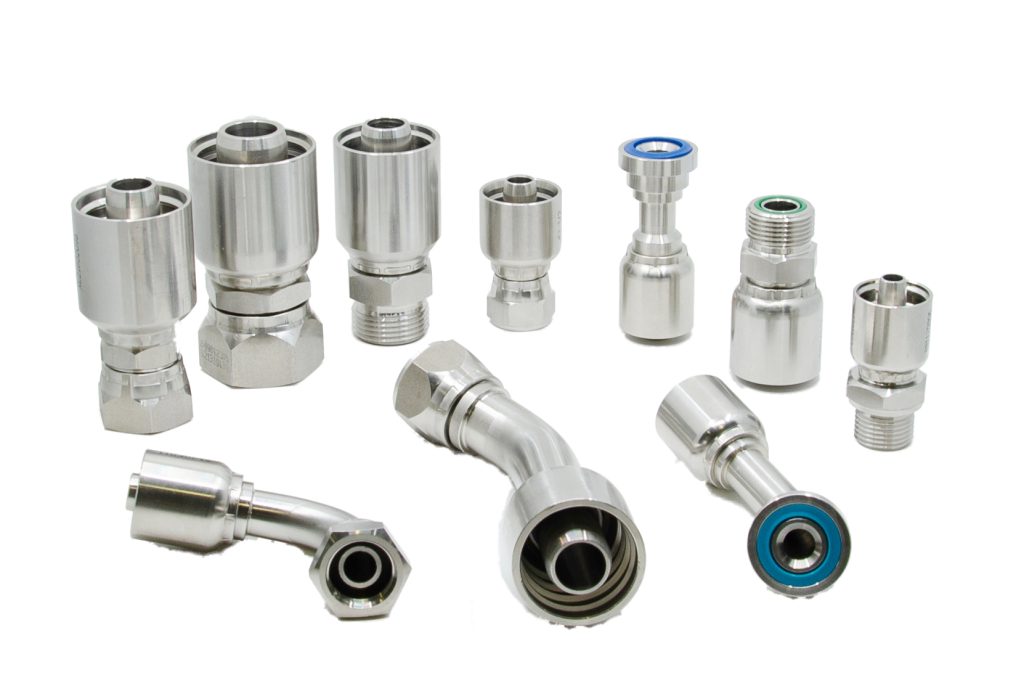
Fluid chemistry affects more than the metal
Mineral oil compatibility does not establish suitability for water-containing, synthetic, biodegradable, or specialty fluids. Concentration, additives, contamination, and exposure duration can change the response of metals, coatings, seals, and hose materials. Use current compatibility information from the relevant product and fluid sources rather than a generic material label.
Temperature can change several limits at once
High temperature may affect seals, hose tube, cover, coating, fluid condition, and crimp requirements before it limits the metal body. Low temperature may reduce hose flexibility, alter seal behavior, increase fluid viscosity, and complicate routing or startup. The permitted operating range is controlled by the lowest-rated component and may differ from storage limits or brief handling exposure.
| Decision area | Stainless-steel fitting | Coated carbon-steel fitting | Required evidence |
| Corrosion strategy | Defined alloy and surface condition | Base steel plus defined coating system | Exact material or finish specification |
| Coating dependence | May not use sacrificial plating, but surface condition still matters | Protection can depend strongly on coating integrity | Component-level coating and damage criteria |
| Mechanical rating | Varies by grade, condition, size, and design | Varies by grade, condition, size, and design | Current part-specific rating |
| Fluid compatibility | Must be confirmed for alloy and full assembly | Must be confirmed for steel, coating, and full assembly | Fluid, concentration, and temperature data |
| Availability | Depends on exact range and market | Depends on exact range and finish | Verified sizes, revisions, and lead conditions |
| Cost evaluation | Include handling, risk, and life-cycle controls | Include coating, inspection, maintenance, and replacement | Total-cost comparison for actual demand |
Evaluate Cost, Availability, and Order Conditions
Commercial practicality matters, but a useful cost comparison includes the controls needed to keep the assembly suitable. Unit price alone can hide slow-moving inventory, coating damage, mixed materials, additional inspection, special storage, or emergency replacement risk.
Compare total purchasing conditions
Record exact sizes, connection systems, shapes, hose-side configurations, minimum practical order conditions, replenishment reliability, and traceability needs. A material may be attractive for one high-exposure group but unnecessary for every low-risk SKU. Segmenting the range by verified application can be more rational than converting an entire product family to one material.
Availability affects replacement discipline
When the specified material is unavailable, teams may be tempted to substitute another finish or material under downtime pressure. The purchasing plan should identify acceptable approved alternatives in advance, including the evidence required for each. An unverified stainless item is not automatically a safe substitute for coated carbon steel, and a coated carbon-steel item is not automatically acceptable where stainless was specified.
Range coverage should also be checked at the configuration level. A material may be readily available in common straight fittings but limited in elbows, swivel ends, flanges, or mixed port-and-hose dash combinations. Approving the material concept without checking the actual SKU matrix can create partial coverage, emergency substitutions, and duplicate stock. Record which configurations are approved and leave unavailable variants visibly unresolved.
Commercial review should include:
- Demand by exact size, connection, angle, hose dash, and application.
- Approved material and finish options for each risk group.
- Packaging and segregation needed to prevent mixed-material picking.
- Inspection, traceability, change notification, and documentation effort.
- Stockout consequence and the process for approving alternatives.
Match the Material to the Application Environment
Neither material owns a universal application category. The choice depends on how corrosion, contamination, mechanical loading, inspection, cleaning, and replacement interact at the installation point.
Where stainless steel may be justified
Stainless may be considered where a verified grade and product design address persistent corrosive exposure, washdown, chemical requirements, coating-damage concerns, or equipment specifications. It may also simplify a corrosion strategy when a plated finish would be repeatedly compromised. These potential advantages still require confirmation of pressure, fluid, temperature, galling, connection, hose, crimp, and adjacent-material conditions.
Where carbon steel may be practical
Coated carbon steel may be appropriate in controlled indoor, mobile, outdoor, or moderately corrosive service when the defined finish, packaging, installation, and inspection plan address the actual exposure. It should not be rejected solely because moisture exists. Conversely, a strong laboratory coating result should not override evidence of repeated field damage, trapped contaminants, or an equipment requirement for another material.
Where different metals meet, also review electrical contact, retained moisture, and the surrounding design. Isolation, drainage, and inspection may be as important as the fitting material itself.
Choose with Evidence Rather Than Assumptions
The decision should be recorded as a product-and-application approval, not a broad statement that one metal is better. A structured review makes missing evidence visible and prevents material preferences from substituting for engineering checks.
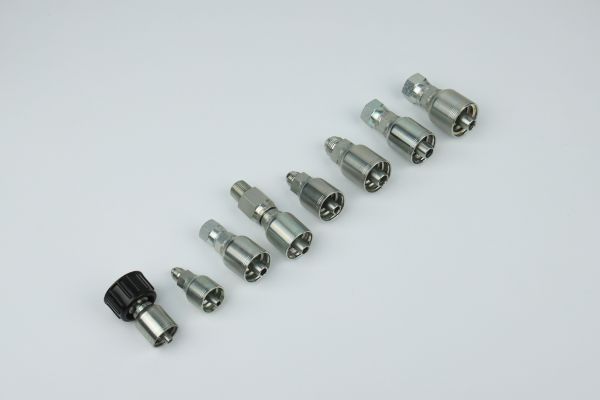
Build a part-specific evidence package
Identify the exact material grade or controlled specification, component revision, manufacturing condition when relevant, coating system for carbon steel, and surface requirements. Link corrosion evidence to the component and intended environment. Then collect current ratings and compatibility information for the fitting, hose, crimp, seal, port, adapter, fluid, temperature, and duty cycle.
Validate changes and samples proportionately
Sample inspection can confirm identity, dimensions, finish, markings, condition, and document linkage for selected items. It cannot approve all sizes, connection types, or applications. Higher-risk configurations and safety-critical assemblies require suitable technical validation, and later changes in material, coating, process source, or geometry should trigger review before routine purchasing continues.
Evidence quality matters as much as the number of documents. A generic material statement may identify a family but fail to link the grade, condition, or finish to the delivered revision. Conversely, a traceable drawing, inspection report, and controlled specification can define what receiving should verify. Resolve conflicting identifiers before approval; do not choose whichever document gives the more favorable claim.
Common Material-Selection Mistakes
The most common errors are treating stainless as one uniform material, treating carbon steel as one uniform finish, and using price or color as the deciding evidence. These shortcuts ignore the exact grade, coating system, geometry, environment, and complete assembly.
Avoid universal rankings
Do not say stainless always lasts longer, carbon steel is always stronger, or one option always costs less overall. The result changes with product design, exposure, damage, maintenance, availability, and replacement strategy. Likewise, salt-spray duration is not a direct service-life prediction and cannot be compared without methods and criteria.
Keep material approval separate from compatibility
A correct base material does not prove thread form, seat angle, sealing method, hose-tail design, or crimp suitability. A visual match or old part number cannot confirm working pressure, impulse behavior, temperature, fluid compatibility, or installation clearance. These factors remain required even when the material decision is sound.
Neutral Material-Comparison Checklist
Use one worksheet for both alternatives so the decision is based on comparable evidence. Mark unknowns as unresolved instead of assuming that a general material reputation answers them.
Information to confirm
- Exact fitting revision, size, connection, seal, shape, and hose-side configuration.
- Defined stainless grade or carbon-steel base material and complete coating system.
- Moisture, salt, chemical, abrasion, impact, temperature, and storage exposure.
- Current pressure, impulse, fluid, temperature, hose, ferrule, and crimp data.
- Port, adapter, seal, and adjacent-material requirements.
- Availability, stock policy, packaging, segregation, inspection, and change control.
The selection record should state why the chosen material fits the defined environment and which limits still apply. That record gives purchasing, receiving, assembly, and maintenance teams the same decision boundary.
Conclusion
Stainless steel and coated carbon steel are conditional material strategies, not a simple premium-versus-budget ranking. Compare the exact stainless grade or carbon-steel coating system with the real moisture, salt, chemical, temperature, impact, storage, and maintenance environment. Then verify part-specific mechanical ratings, fluid compatibility, connection geometry, hose series, ferrule, crimp data, port, adapter, and seals. Include availability, identification, inspection, and alternative-approval controls in the commercial decision. Do not infer performance from color, generic alloy names, or salt-spray duration. A responsible stainless steel vs carbon steel one-piece fittings decision records the evidence for the exact configuration and application, states unresolved limits, and preserves a safe review path whenever material, finish, size, or operating conditions change throughout the documented life of the complete assembly.
FAQ
Are stainless-steel fittings always more corrosion resistant?
No, corrosion behavior depends on the exact alloy, surface condition, contaminants, geometry, and environment. A verified stainless choice may perform well, but the name alone does not guarantee suitability.
Can coated carbon steel be used outdoors?
Yes, when a defined coating system and product data support the actual exposure and maintenance plan. Outdoor conditions vary, so moisture, salt, damage, drainage, and inspection must be described.
Does stainless steel have a higher pressure rating?
Not automatically. Pressure rating depends on the exact material condition, fitting design, size, connection, hose assembly, temperature, impulse conditions, and lowest-rated component.
Should every fitting in one machine use the same material?
Not necessarily, unless equipment or system requirements specify it. Different locations may have different exposure, compatibility, inspection, and galvanic-contact considerations that require coordinated review.
Can material be confirmed from a photograph?
No, appearance cannot reliably establish material grade or coating specification. Use controlled markings, purchase records, drawings, certificates or test evidence where required, and traceability to the exact part.