A look-alike connection can thread into a mating part and still be the wrong JIS interface, seat, or sealing system. To identify JIS one-piece hose fittings correctly, separate the complete fitting series from the connection end, then verify thread form, diameter, pitch, male or female configuration, seat or cone geometry, sealing method, and hose-side design against current controlled references. Do not treat “JIS” as one universal thread-and-seat combination. Metric, BSP-related, and flare-style connections can appear similar in a photograph, while the stem and ferrule may require different hose and crimp data even when the port end is identified.
Treat the Look-Alike Failure as an Identification Problem
When a suspected replacement starts into a port but does not seat correctly, the problem is not solved by applying more torque or sealant. Engagement proves only that some thread features are close enough to begin mating; it does not prove the standard, pitch, seat, seal, or functional dimensions.
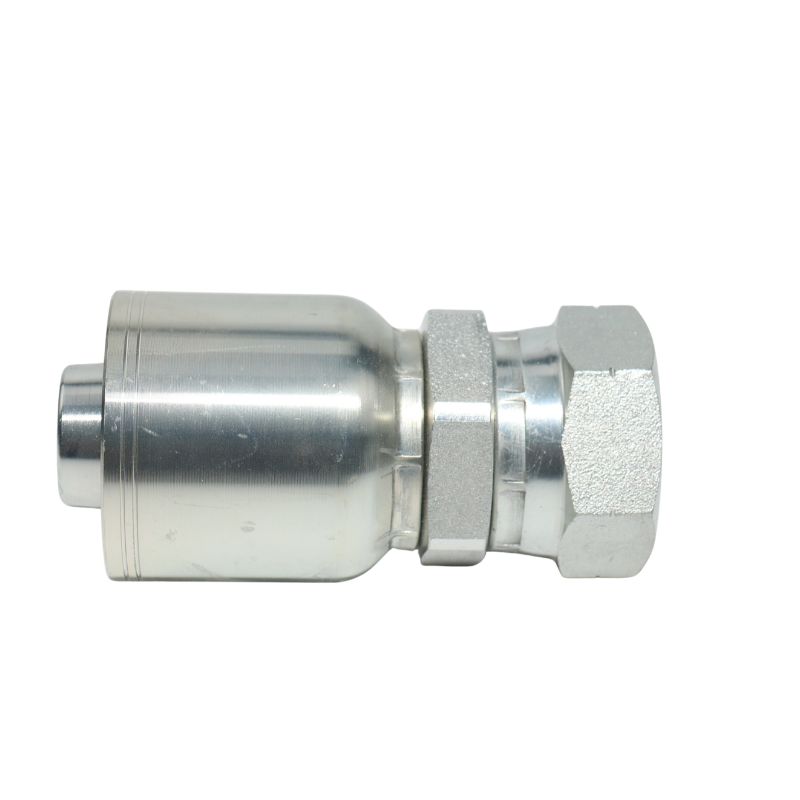
Stop before force damages the evidence
Do not force-mate a suspected JIS connection. Cross-threading, mismatched seats, damaged sealing faces, and distorted swivel components can destroy the features needed for identification and create an unsafe assembly. Stop the equipment, isolate hydraulic pressure, release stored energy, secure raised loads, and follow lockout and equipment instructions before removing an installed fitting.
Keep the original fitting, mating component, caps, labels, and part records together. Clean only through an approved method that will not alter threads, seats, finishes, markings, or seals. Photograph the condition before further handling when damage or contamination could affect the conclusion.
Record why the first identification failed
Note whether the original decision came from a photo, a partial part number, an assumed country standard, thread engagement, nominal size, or comparison with a nearby fitting. That record helps prevent the same shortcut from being repeated. “Looks JIS” is not a measurable product definition.
Describe the actual mismatch: stops after partial engagement, nut bottoms without face contact, visible seat gap, different pitch indication, wrong swivel form, or incompatible hose end. Do not convert the symptom into a standard name until measurements and references support it.
Separate Series Identity From Connection Identity
A complete one-piece fitting contains more than its port connection. The series and hose-side construction determine which hose and crimp process may be approved, while the connection identity determines how the other end mates and seals.
Identify the complete fitting record
Search for a full product code, manufacturer marking, label, drawing, equipment parts list, or purchase record. Record straight, 45-degree, or 90-degree form; male or female end; swivel or fixed construction; material or finish requirement; hose size; fitting series; stem; and retained ferrule details.
A one-piece fitting normally has the body or stem and ferrule preassembled, attached, or retained together, but exact construction varies by series. That structure may reduce separate ferrule selection; it does not make every JIS-style port end compatible with every hose or crimp system.
Identify the connection as a separate layer
Create a connection record that names thread form, measured diameter, pitch, straight or tapered condition, seat or cone feature, sealing face, O-ring or other seal location, and mating-part requirements. Keep observations separate from conclusions. For example, write “measured pitch indication” and “visible internal cone” before assigning a catalog description.
This separation prevents a correct port-end identification from being used to approve the hose side. It also prevents a known fitting series from becoming a shortcut for guessing the exact connection variant.
Preserve an identification evidence pack containing:
- Complete fitting and mating-component photographs
- Markings, labels, part records, and drawing revisions
- Thread, seat, seal, orientation, and critical-dimension observations
- Hose series, fitting series, ferrule, and crimp-data references
Establish the Applicable JIS Reference
JIS identification requires the current standard, manufacturer catalog, or controlled drawing that actually covers the candidate connection. Do not rely on a generic chart that groups several Japanese hydraulic interfaces under one label.
Verify document scope and revision
Check the title, issuer, revision, effective status, and product scope of the reference. Confirm that it defines the same male or female interface, thread form, seat or flare arrangement, and size family being inspected. A valid JIS document for one connection type does not define every fitting commonly described as JIS.
Manufacturer drawings may add product-specific body, swivel, stem, ferrule, or dimensional details beyond the connection standard. Use the connection reference to identify the mating interface and the product drawing to identify the complete one-piece fitting. If the two conflict, place the candidate on hold and request clarification from the document owner.
Avoid unsupported standard cross-references
Do not say that a JIS connection is equivalent to a BSP, metric, DIN, SAE, or another interface merely because a secondary chart places them near each other. Equivalent-looking nominal descriptions may still differ in thread series, tolerance, seat geometry, sealing method, or application scope.
Record any cross-reference as a search lead until dimensions and functional features have been checked against primary or controlled technical data. Never promise interchangeability without evidence that covers the exact mating pair and application.
Measure Thread Form, Diameter, and Pitch
Thread measurement narrows the candidate list, but it must be performed on clean, undamaged features with suitable tools. No single measurement establishes the complete connection.
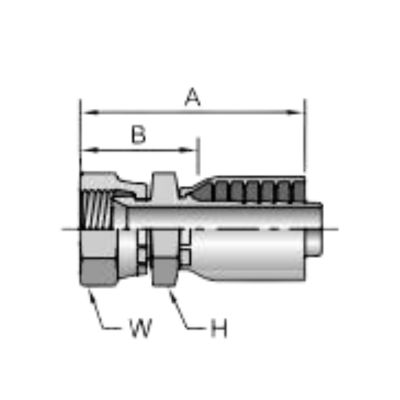
Build a repeatable thread record
First identify male or female form and determine whether the thread appears straight or tapered through the approved method. Measure the appropriate outside or inside diameter at the defined location. Use a suitable pitch gauge or other controlled method to identify pitch or threads per inch, and record the observed value without rounding it to the nearest familiar catalog entry.
Check several usable thread locations when damage, plating, dirt, or limited engagement affects the reading. For a tapered thread, diameter changes with position, so the datum matters. Do not measure across burrs or infer taper from one visual angle.
Compare a combination, not one field
Use thread form, measured diameter, pitch, sex, and straight or tapered condition together to filter the current reference. A pitch match with a different diameter is not acceptable; neither is a diameter match with a different pitch. Thread engagement should never be used as a substitute gauge.
The thread record should state:
- Male or female configuration
- Measured diameter and its datum
- Pitch or TPI observation and gauge method
- Straight or tapered conclusion with supporting method
If readings fall between candidates or instruments cannot reach the feature correctly, classify the result as unresolved. A worn thread, damaged lead, or short thread length may require a drawing, specialized gauge, or qualified inspection rather than repeated trial mating.
Inspect the Seat, Cone, and Sealing Interface
The sealing interface is often the decisive difference between connections with similar threads. JIS-related fitting families do not all use one universal seat angle or sealing method, so the interface must be verified from the applicable reference.
Identify where sealing is designed to occur
Look for a male or female cone, flare seat, flat face, O-ring location, bonded-seal surface, tapered-thread seal, or another drawing-defined interface. Record the location and orientation of the feature. Inspect for damage that could disguise the original profile, including dents, galling, scratches, corrosion, or a deformed cone.
Use a suitable seat gauge, profile method, or controlled drawing comparison when required. Do not estimate an angle from a photograph or place an unverified gauge against a delicate sealing face. A thread that fits cannot compensate for a different seat angle or sealing location.
Examine the mating component too
The port, adapter, tube end, or hose fitting that mates with the candidate provides essential evidence. Confirm its thread, seat, seal, and intended interface from a drawing or known part identity. An old fitting may have wear marks that show contact, but marks alone do not prove the original standard.
Do not use thread sealant to overcome an incorrect seat, damaged face, straight-versus-tapered mismatch, or wrong thread family. Sealant cannot redesign where the connection is meant to contain pressure.
Record Female, Male, Swivel, and Hose-Side Details
Complete identity includes functional construction around the connection. A female swivel nut that turns for assembly is not automatically a live swivel intended for continuous movement, and a familiar nut shape does not establish its thread or seat.
Characterize the port-end construction
Record fixed or swivel form, nut or body wrenching features, retention, accessible thread condition, seat position, and the orientation of an elbow relative to the connection. Check the current drawing for expected axial behavior or movement; do not force, lubricate, or disassemble the swivel to make it resemble a reference sample.
For angled fittings, capture the centerline, drop, and envelope dimensions from named datums. Installation clearance can distinguish candidates that otherwise share connection labels, and it affects whether the hose can meet its bend requirements without interference.
Complete the hose-side identity
Record hose manufacturer, hose series, construction, ID or dash, fitting series, ferrule design, stem features, and the current compatibility record. Verify the approved preparation, insertion, crimp equipment, die set, measurement method, and acceptance data for the exact combination.
Do not assume that a JIS port end determines the hose side. The same connection type may be offered across multiple fitting systems, and matching dash numbers do not prove hose compatibility.
Follow a Gauge-and-Dimension Verification Sequence
A fixed sequence reduces confirmation bias. Begin with observations that do not require mating or alteration, then compare the resulting feature set with controlled references.
- Preserve labels, markings, old parts, and the mating component.
- Record full fitting form, angle, swivel or fixed construction, and hose-side details.
- Determine male or female and straight or tapered thread condition.
- Measure thread diameter and pitch with suitable controlled instruments.
- Identify the seat, cone, face, O-ring, or other sealing method through the approved gauge or drawing.
- Measure critical connection and envelope dimensions from labeled datums.
- Compare the complete feature set with the current JIS reference and product drawing.
- Verify hose series, fitting series, ferrule, and crimp data independently.
- Classify the result as confirmed, candidate requiring clarification, or rejected mismatch.
Photographs can document markings, general shape, damage, and orientation. They usually cannot prove pitch, taper, seat angle, sealing contact, hidden stem geometry, or exact scale. Include front, side, seat, thread, hose-side, and installed views with a scale and labeled measurement references, but do not make the final order from images alone.
The order record should repeat the accepted connection reference, complete fitting code, drawing revision, hose combination, configuration, material or finish requirement, and any unresolved exception. Have the reviewer compare that record with the proposed supplier drawing rather than accepting a shortened commercial description. If the proposed drawing changes the thread, seat, seal, hose stem, ferrule, angle, or envelope, return the decision to clarification. This final comparison keeps a careful identification from being lost when the information moves from inspection to purchasing.
Conclusion
Reliable JIS fitting identification comes from matching a complete feature set, not recognizing a familiar shape. Preserve the original evidence, separate fitting-series identity from connection identity, and use a current reference that covers the exact interface. Measure thread form, diameter, pitch, sex, and taper; then verify the seat, cone, seal location, mating component, swivel construction, angle, and critical dimensions. Complete the decision with hose manufacturer, series, size, stem, ferrule, and approved crimp data. When sources conflict or a feature cannot be measured reliably, hold the candidate rather than force-mating it or claiming interchangeability. That forensic sequence is the defensible way to identify JIS one-piece hose fittings before ordering or assembly.
Frequently Asked Questions
Does a BSP-looking thread prove the fitting is not JIS?
No, visual resemblance does not establish the governing connection standard. Measure the thread and sealing features, then compare the complete interface with current controlled references.
Do all JIS hose fittings use the same seat angle?
No, JIS-related fitting families should not be reduced to one universal seat. Identify the exact series and verify its seat or sealing interface from the applicable standard or drawing.
Can thread engagement confirm a JIS connection?
No, similar threads may begin to engage while having a different pitch, tolerance, taper, or sealing interface. Never force the mating parts as an identification test.
Is a part number enough to order the replacement?
Only when the number is complete, current, and traceable to a controlled product definition. Confirm the connection, geometry, hose side, and revision before relying on it.
What information should accompany a JIS fitting inquiry?
Provide markings, existing part number, male or female form, thread measurements, seat and seal details, fitting angle, critical dimensions, photos, mating component, hose identity, and application information. Mark every unresolved field clearly.