Mixing hose and one-piece fitting brands is acceptable only when an authorized technical basis covers the exact hose, stem, ferrule, preparation, crimp process, tooling, and application. Matching dash sizes, similar construction, thread fit, or a successful-looking first assembly does not establish compatibility. The approval may come from current published combination data or from a formally controlled evaluation accepted by the responsible parties, but it must define scope and accountability. Without that evidence, the combination belongs on hold.
Begin at the Compatibility Approval Boundary
The decision is not whether two components can be physically assembled. It is whether the complete combination has an approved technical basis for the intended service and process.
Name every element in the proposed combination
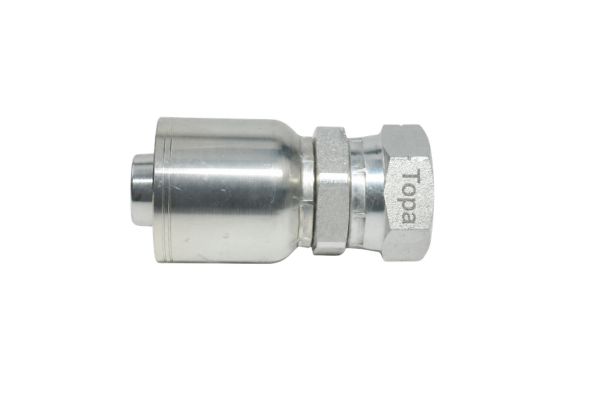
Record the hose manufacturer, complete hose series, construction, size, and relevant revision or lot. Record the full fitting code, stem design, retained ferrule or sleeve, fitting series, and port-end configuration. Add hose preparation, insertion method, crimp machine, die or tooling, program, measurement method, and the controlling document revisions.
The port thread and sealing interface still require separate verification, but they do not approve the hose side. A fitting can mate correctly with the equipment while being unsuitable for the selected hose construction or crimp process.
State who has authority to approve use
Identify the technical authority, hose-assembly quality system, equipment requirement, and contractual conditions that govern the combination. A salesperson’s assurance, distributor chart, old email, or operator experience may point to information, but it is not automatically an approval record.
The decision should define intended application, fluid, working and transient conditions, temperature, routing, vibration, environment, and consequences of failure. Pressure suitability is limited by the lowest-rated component and the complete assembly conditions; no brand combination creates a universal rating.
Prefer Explicit Published Combination Approval
The strongest routine evidence is current technical data that explicitly names or unambiguously covers the exact hose and fitting combination. A general statement that a product is “compatible with common hoses” is not enough.
Check document scope line by line
Confirm the issuer, document number, revision, effective status, hose series and size, fitting family and size, ferrule, preparation method, crimp equipment basis, tooling, target and acceptance method, and any restrictions. Verify that the data applies to mixed-brand use rather than to a same-brand system with similar names.
Read footnotes and exceptions. One approved size does not automatically approve adjacent sizes, and one hose construction does not authorize another. A table may also depend on a specific fitting revision, machine family, or procedure that is not available at the shop.
Distinguish approval from resemblance
Visual matching can reveal obvious conflicts but cannot establish internal stem engagement, ferrule compression, reinforcement capture, or material response. Dash size identifies a nominal size relationship; it does not prove hose OD, reinforcement, cover, tube, or crimp behavior.
Likewise, a thread that engages at the port says nothing about hose-side compatibility. A cross-reference can identify a candidate for comparison, but it must be followed by exact drawings, data, and approval. Do not turn a catalog similarity into a performance guarantee.
Lock the Hose, Stem, Ferrule, and Process Together
Compatibility belongs to a defined assembly system, not to any one component in isolation. Changing one element can change the evidence required for release.
Define the hose and fitting construction
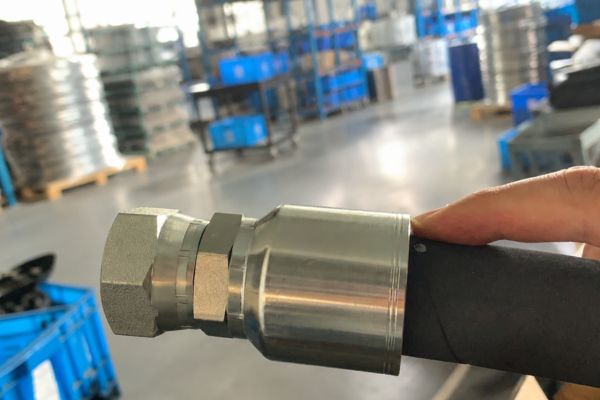
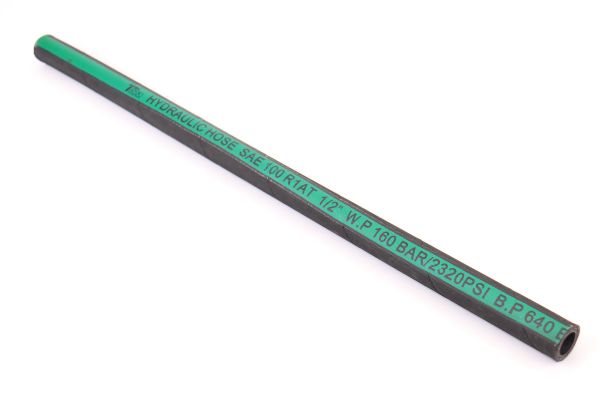
For the hose, capture manufacturer, series, tube and reinforcement type, cover, size, and any version information used by the approval. For the fitting, capture stem geometry, ferrule design, retention method, material or finish where relevant, and complete code. A one-piece configuration reduces the chance of selecting a separate ferrule, but it does not make the retained ferrule suitable for every hose.
Do not assume two hoses with the same inside diameter or dash have the same outside diameter, reinforcement response, or compression requirement. Do not assume two fitting stems with similar serrations or length engage the hose identically.
Define the assembly process as evidence
The process package should identify cutting and cleaning requirements, skive or no-skive preparation when applicable, insertion reference, machine, die set, program or setup, crimp location, measurement instrument, measurement positions, and acceptance rule. Use the current instructions authorized for the mixed combination.
Never derive a crimp target by averaging two brands’ charts or copying the closest same-brand row. A measured diameter by itself cannot prove correct insertion, reinforcement capture, compatibility, or pressure performance.
Require a Controlled Evaluation When Published Approval Is Absent
When no published approval covers the proposed combination, routine production should not become the experiment. Any evaluation must be planned, authorized, and limited to a defined question before parts are assembled for service.
Write the evaluation scope first
The responsible technical authority should define the exact components, sizes, revisions, process, equipment, application envelope, sample plan, inspections, tests, acceptance criteria, and required records. Test methods and conditions must come from applicable requirements; they should not be invented to obtain a favorable result.
The plan should state who owns design responsibility, who performs assembly, who reviews data, who authorizes the result, and what changes require re-evaluation. It should also address safe containment, calibrated equipment, and disposition of tested components. A pressure or impulse test can be hazardous and must be performed only through qualified procedures and facilities.
The evaluation package should identify:
- Exact component codes, sizes, revisions, and lots
- Assembly equipment, tooling, method, and inspection records
- Predetermined test conditions and acceptance criteria
- Deviations, failures, final scope, and approving authority
Avoid conclusions larger than the evidence
One assembly that crimps smoothly or survives one test does not approve a mixed-brand system. Evidence may apply only to a named hose series, size, fitting code, ferrule, machine, tooling, process revision, and defined application. Different sizes, lots, constructions, or environments may require separate consideration.
Record failures and ambiguous results as well as passing observations. Do not retest until a preferred outcome appears without investigating the cause and following the approved plan. If acceptance criteria were not established before testing, the result cannot be converted afterward into a reliable approval.
Control Accountability, Revisions, and Traceability
An approval that cannot be retrieved at the crimper is not an effective process control. The shop must connect the released combination to current work instructions and preserve who authorized it.
Create a controlled combination record
Assign an identifiable record to the exact approved combination. Link it to hose and fitting product definitions, evaluation evidence when applicable, work instructions, machine programs, inspection methods, training, and revision history. Prevent obsolete charts or screenshots from remaining at workstations.
Production records should capture hose lot, fitting lot, machine, tooling, program or setup, operator, first-piece results, and the approval revision. That genealogy lets a later problem be contained without questioning unrelated combinations.
Review changes before continued use
Changes to hose construction, supplier, series, stem, ferrule, material, finish, drawing, machine, die, software, process instruction, or test method may affect the approval basis. Route each change through the designated technical authority rather than relying on the same product name.
Document whether the previous evidence remains applicable, needs supplemental review, or is withdrawn. Communicate effective dates and affected lots so old and new configurations do not mix during transition.
Use Clear Release and Hold Criteria
The decision should be reproducible by another reviewer. “It worked before” and “the sizes match” are not release criteria.
Release only within documented scope
Release the combination when current evidence identifies the exact components and process, the intended application falls within scope, tooling and instructions are available, responsibilities are accepted, and required first-piece or production controls are satisfied. State any limitations directly on the combination record and traveler.
Hold when a product identity, revision, process field, application condition, approval owner, or acceptance source is missing or conflicting. Reject the proposed path when controlled data explicitly exclude it, the combination falls outside the approved scope, or required evidence cannot be obtained.
Release requires all of the following:
- Exact hose, fitting, ferrule, and process scope
- Current approval evidence and named decision owner
- Application conditions within the documented boundary
- Workstation instructions and traceability records ready for use
Prevent emergency substitution
An equipment outage does not justify assembling an undocumented mix. Stop the equipment, isolate the hydraulic system, release pressure and stored energy, secure raised loads, and follow lockout and manufacturer procedures. Do not install a questionable assembly temporarily or check a suspected high-pressure leak by hand.
If time is critical, pursue a documented approved combination, a correctly identified replacement assembly, or authorized engineering review. Record the missing evidence so the same unsafe shortcut is not proposed at the next repair.
Complete an Evidence Request Worksheet
Use the worksheet before purchasing, assembly, or evaluation. Mark unavailable items as missing rather than assuming them.
| Evidence area | Information to request | Release question |
| Hose | Manufacturer, series, construction, size, revision, lot | Is this exact hose covered? |
| Fitting | Manufacturer, code, stem, ferrule, size, revision | Is this exact hose-side design covered? |
| Port end | Thread, seat, seal, dimensions, mating interface | Is equipment connection identity complete? |
| Process | Preparation, insertion, machine, dies, program, measurement method | Can the approved assembly method be reproduced? |
| Approval | Published table or authorized evaluation record and revision | Who accepts design responsibility and scope? |
| Application | Fluid, pressure conditions, temperature, routing, motion, environment | Does intended service remain inside scope? |
| Traceability | Component lots, setup, first piece, operator, inspection records | Can every released batch be reconstructed? |
| Change control | Review triggers, owner, effective dates, obsolete-data control | Will approval remain current after a change? |
Attach the governing documents, not only their titles. Record conflicts, open questions, reviewer, final decision, and date. The worksheet organizes evidence; it does not replace the technical documents or approval authority it references.
Evaluate the quality of each attachment before treating the worksheet as complete. A current signed or otherwise controlled technical record with defined product scope carries different weight from an undated screenshot, marketing page, translated excerpt, or email that omits the exact series. Check whether a table is normative approval data, a cross-reference for identification, or merely a sales catalog. If language has been translated, preserve the source version and confirm that size notes, exclusions, and revision information were not lost.
The final decision note should state what is approved and what is not. For example, approval of one hose size and one fitting code should not appear in the item master as approval of every size in those two families. Name the permitted machine and process basis when they are part of the evidence, and name application limits that require separate review. Link the decision to purchasing controls so an alternate component cannot be introduced under the same short description. Link it to the crimper so the operator sees the current combination record, not a detached copy. These controls keep technical scope intact as the decision moves from engineering to buying, inventory, assembly, inspection, and later repair records.
Conclusion
Mixed-brand assembly decisions require more than matching labels or a successful crimp. Define the exact hose, stem, ferrule, fitting, process, tooling, and application, then look for current published data that explicitly approves that combination. When no such approval exists, use a formally authorized evaluation with predetermined methods, criteria, responsibilities, and scope. Keep the resulting decision revision-controlled and traceable to component lots, machine setup, first-piece inspection, and production records. Hold any combination with missing identity, conflicting data, unclear ownership, or application conditions outside the evidence. Before mixing hose and one-piece fitting brands, prepare the full evidence worksheet and obtain the responsible technical approval rather than transferring assumptions from dash size, appearance, thread fit, or one test.
Frequently Asked Questions
Does matching dash size prove cross-brand compatibility?
No, dash size does not define hose construction, outside diameter, stem geometry, ferrule response, or crimp process. Approval must cover the exact component combination.
Can a correct crimp diameter validate a mixed-brand assembly?
No, the measurement confirms only one characteristic under a defined method. Identity, insertion, reinforcement engagement, process, application, and approval evidence still require verification.
Is one successful pressure test enough for approval?
No, a single result cannot establish broad compatibility. Testing must follow an authorized plan with defined samples, methods, criteria, scope, and technical acceptance.
Who should approve a mixed-brand combination?
The authority must be defined by the applicable manufacturer data, equipment requirements, quality system, contract, and design responsibility. An informal assurance should not replace that documented authority.
What happens when one component revision changes?
Route the change through the approval owner before continued use. The reviewer must decide whether existing evidence remains applicable, needs supplementation, or must be withdrawn.