Compression fittings and unions are often compared, but they are not always two separate fitting families. A compression fitting describes how the connection grips and seals the tube, usually by compressing a ferrule or sleeve around the tube. A union describes a connection style that allows two sections of pipe or tubing to be joined and later disconnected without rotating the entire line.
This means a fitting can be both a compression fitting and a union. A compression union, for example, connects two tubes with compression nuts and ferrules on both sides. A pipe union, on the other hand, uses a union nut and mating faces to allow easier disassembly in threaded piping.
What Are Compression Fittings?
Definition and Purpose of Compression Fittings
A compression fitting is a mechanical fitting that seals by compressing a ferrule, sleeve, or olive onto the outside of a tube. The typical assembly includes a fitting body, one or more ferrules, and a compression nut.
When the nut is tightened, the ferrule grips the tube and forms a seal between the tube and the fitting body. In many industrial and hydraulic tube systems, the fitting also helps resist tube pull-out when properly selected and assembled.
Compression fittings are commonly used with metal tubing, instrumentation lines, pneumatic systems, water systems, and selected hydraulic applications. The correct fitting must match the tube outside diameter, tube material, wall thickness, pressure requirement, fluid, temperature, and vibration conditions.
Not all compression fittings are the same. A light-duty plumbing compression fitting is not the same as a double-ferrule instrumentation fitting or a DIN-style hydraulic compression fitting. The pressure rating and assembly method must come from the fitting series and manufacturer data.
Common Applications of Compression Fittings in Plumbing
Compression fittings are used in a wide range of plumbing applications, including:
Pipe repairs: Compression fittings are ideal for repairing damaged or leaking pipes without the need for cutting or replacing entire sections of pipe.
Connecting fixtures and appliances: They are commonly used for connecting water supply lines to faucets, toilets, dishwashers, and other household appliances.
Water, gas, and heating systems: Compression fittings are used in a variety of systems, from water supply to heating, where a secure and leak-proof connection is critical.
Tight spaces: Since compression fittings do not require any welding or soldering, they are often used in areas with limited access, where other connection methods may not be feasible.
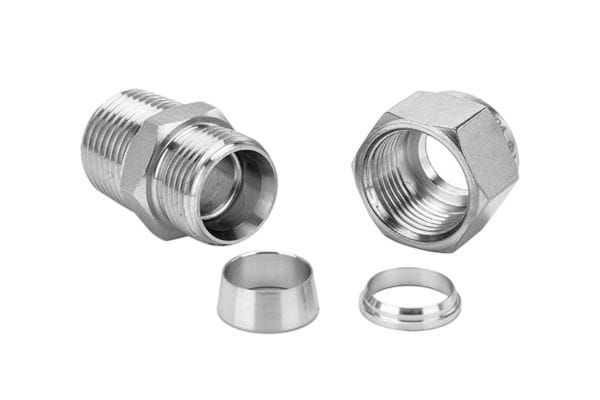
The Anatomy of a Compression Fitting
A typical compression fitting consists of several key components:
Nut: The nut is the outermost part of the compression fitting and is used to tighten the connection.
Ferrule (or compression ring): The ferrule is placed around the pipe and is compressed by the nut. As the nut tightens, the ferrule creates a tight seal around the pipe, preventing leaks.
Body or Fitting: The body of the compression fitting is the central component that connects to the pipe. It is typically made of brass or stainless steel and contains a threaded opening for the nut to be attached.
Seal: The seal is created by the compression of the ferrule around the pipe, ensuring that the connection is watertight or airtight.
What Are Union Fittings?
Definition and Purpose of Pipe Unions
A union fitting is designed to connect two sections of pipe or tubing while allowing the connection to be taken apart later. The word “union” describes the function of the fitting, not one single sealing method.
A union may seal in several ways, depending on its design. A threaded pipe union may seal at a machined face, gasket, or metal seat. A flare union seals against flared tube ends. A compression union seals by compressing ferrules onto both tube ends. A hydraulic union adapter may connect two threaded ends or two tube connections in a straight line.
Common Types of Union Fittings
| Union Type | How It Connects | Typical Use | Important Check |
| Compression Union | Uses a compression nut and ferrule on both ends | Joining two tubes of the same size or different sizes | Tube OD, ferrule type, tube material, fitting material, and pressure rating |
| Pipe Union | Uses threaded pipe ends with a union nut and sealing face | Removable sections in pipe systems | Thread type, gasket or seat design, material, and pressure rating |
| Flare Union | Connects flared tube ends with matching seats | Automotive, hydraulic, refrigeration, and gas systems, depending on the fitting design | Flare angle, tube size, tube material, and pressure rating |
| Hydraulic Union Adapter | Uses threaded or tube connections in a straight adapter body | Connecting hydraulic lines, adapters, or fitting transitions | Thread standard, seal type, material, finish, and pressure rating |
| Bulkhead Union | Passes through a panel, bracket, tank wall, or machine frame | Panel-mounted tube or hose connections | Panel thickness, locknut, seal type, port style, and installation clearance |
When and Where Unions Are Typically Used in Plumbing Systems
Use a union when the line may need to be separated later for maintenance, replacement, cleaning, inspection, or equipment removal. A union lets the connection open without rotating long pipe sections or disturbing nearby components.
The right union depends on the system. A compression union is useful for joining two tube ends. A pipe union is useful in threaded piping where a removable joint is needed. A flare union is used when the tube ends are flared and the seal is made at the flare seat. A hydraulic union adapter is used when two compatible hydraulic connections need to be joined in line.
Do not choose a union only because it is easier to remove. Confirm the sealing method, pressure rating, tube or pipe size, thread type, material, fluid, and vibration conditions. A removable fitting still has to match the system’s mechanical and sealing requirements.

Compression Fitting vs Union: Key Differences Explained
| Item | Compression Fitting | Union Fitting |
| What It Describes | A sealing and gripping method | A connection style for joining and later separating two sections |
| Main Function | Grips and seals tubing | Connects two sections and allows easier disassembly |
| Common Components | Fitting body, compression nut, ferrule or sleeve | Body, union nut, mating face, gasket, ferrule, flare, or seat, depending on the design |
| Sealing Method | Ferrule compresses onto the tube to form the seal | Depends on the union type, such as a gasket, seat, flare, O-ring, or compression ferrule |
| Disassembly | Possible in some designs, but ferrule-style fittings may have reuse limits | Usually designed for easier disassembly and maintenance |
| Typical Use | Tube-to-fitting connections | Maintenance sections, removable equipment, tube joining, or pipe joining |
| Key Selection Point | Tube OD, tube material, ferrule type, pressure rating, and fitting series | Union type, sealing face, thread or tube connection, pressure rating, and service access |
How Compression Fittings Work: The Sealing Mechanism
Step-by-Step Explanation
Compression fittings create a leak-proof seal by compressing a ferrule (or compression ring) around the pipe, using pressure to form a tight connection. Here’s how the sealing process works:
Placement of the Compression Ring: The compression ring is placed on the pipe before the fitting is screwed on.
Tightening the Nut: When the nut is tightened around the fitting, the compression ring is forced against the pipe, applying inward pressure.
Compression of the Ring: As the nut tightens, the ferrule compresses around the pipe, sealing the connection. The compression creates a strong, watertight or airtight barrier.
Fitting Against the Pipe: The fitting itself does not move; rather, the seal is achieved by the compression ring creating friction between the pipe and the fitting. This ensures that there are no gaps where water, gas, or other fluids can leak through.
The Role of the Compression Ring and Nut in Securing the Fitting
The compression ring (ferrule) is the key to the leak-proof seal. The ring is made of a soft material, such as brass, that deforms slightly as the nut is tightened. This deformation helps create a tight fit against the pipe, preventing any leakage. The nut applies pressure to the ferrule, pushing it into the pipe and causing the compression. The tightness of the nut determines the effectiveness of the seal, which is why proper installation is essential.
Which One Should You Choose?
| Requirement | Recommended Fitting | Why / What to Check |
| Join two unflared tube ends | Compression union | Ferrules grip and seal the tubes. Check tube outside diameter, material, and fitting series. |
| Connect a tube to a threaded port | Compression connector | The tube end uses a compression connection; the port end must match the thread and sealing method. |
| Create a removable pipe section | Pipe union | Allows the section to be disconnected without rotating the entire pipe run. |
| Join two flared tube ends | Flare union | Seals at matching flare seats. Check tube size and flare angle. |
| Remove equipment regularly | Union fitting suited to the connection | Makes disassembly easier. Match the union’s ends and seal to the equipment connections. |
| Use in a high-vibration hydraulic system | Fitting series rated for the application | Check working pressure, vibration requirements, tube material, and installation instructions. |
| Replace an unidentified fitting | Identify it before selecting a replacement | Measure the tube outside diameter and identify the thread, seat, and sealing method. |
Common Problems with Compression Fittings and Unions
When using compression fittings and pipe unions, some common issues may arise during installation or over time due to wear and tear. Understanding these problems will help you troubleshoot effectively and maintain a leak-free plumbing system. Here’s an overview of the most frequent issues associated with each fitting type, along with solutions to resolve them.
Frequent Issues with Compression Fittings
Leaks at the Connection
Cause: One of the most common issues with compression fittings is leakage at the connection point. This is usually due to an improper seal created by a loose or incorrectly tightened nut or a damaged compression ring.
Solution: Ensure that the compression fitting is tightened properly. The nut should be turned until it feels firm, but avoid overtightening, which can damage the ferrule. If leaks persist, check the compression ring (ferrule) for damage, and replace it if necessary. Also, confirm that the pipe is clean and free of burrs or damage that could affect the seal.
Over-tightening the Nut
Cause: Over-tightening the compression nut can cause damage to the pipe or compression ring, potentially leading to cracks or deformities that prevent a proper seal.
Solution: Always use a wrench to tighten the nut until it’s snug, but avoid applying excessive force. Use the right-sized fitting for your pipe to ensure a proper fit, and check for signs of stress or damage to the parts before installation.
Deformed Compression Ring (Ferrule)
Cause: The ferrule can become deformed or damaged, especially if it’s installed incorrectly or reused. A deformed ferrule will not create a tight seal, leading to leaks.
Solution:Replace the ferrule if it’s damaged or deformed. Always use a new ferrule when reinstalling or making adjustments to the compression fitting. Additionally, ensure the ferrule is properly aligned with the pipe during installation to avoid deformation.
Incorrect Pipe Size or Material
Cause: Compression fittings are designed for specific pipe sizes and materials. Using the wrong combination can cause leaks or poor performance, as the fitting won’t create an adequate seal.
Solution: Double-check that the compression fitting matches the size and material of your pipe. For example, using a brass compression fitting on copper pipes is common, but a plastic compression fitting may not work on metal pipes.
Fittings Becoming Loose Over Time
Cause: Over time, vibrations, pressure changes, or temperature fluctuations can cause the compression fitting to loosen, resulting in leaks.
Solution: Periodically check and retighten compression fittings. If the fitting continues to loosen, consider replacing the fitting with a more robust one or using additional sealing measures like thread sealant to prevent further loosening.

Problems That Can Occur with Pipe Unions
Gasket or O-ring Failure
Cause: Pipe unions rely on gaskets or O-rings to provide a watertight seal. If these seals become damaged or worn, they can lead to leaks at the union joint.
Solution: If you notice water around the union, check the gasket or O-ring for cracks or wear. Replace the damaged gasket or O-ring with a new one that matches the size and material of the union. Regularly inspect these components to ensure they are intact and properly seated.
Corrosion and Rusting
Cause: Unions, especially those made from metal, can be susceptible to corrosion or rusting, particularly in high-moisture environments or systems with poor water quality.
Solution: Inspect unions regularly for signs of corrosion, particularly at the nut and body. If corrosion is present, replace the union. To prevent corrosion, use corrosion-resistant materials (such as stainless steel unions) or apply a protective coating to prevent rust from forming.
Leaks Due to Improper Tightening
Cause: If the union nut is not properly tightened, or if it’s overtightened, it can lead to leaks at the connection, as the seal between the union body and the pipe face is not secure.
Solution: Ensure that the union nut is tightened to the correct torque. Tighten the nut snugly but not excessively. If the nut is overtightened, it could damage the sealing components. If it’s too loose, it will fail to create a proper seal.
Misalignment of Union Components
Cause: Sometimes, if the components of the union (nut, body, and face) are misaligned or improperly assembled, it can cause an imperfect seal, leading to leaks.
Solution: Carefully check the alignment of the union parts. Ensure the nut is properly threaded, the union body is secure, and the face is aligned to meet the pipe properly. Any misalignment could cause uneven pressure and lead to leaks.
Thread Damage
Cause: Union threads can become worn or damaged from repeated assembly and disassembly or from the union being improperly handled during installation.
Solution: Inspect the threads on the union body and nut for any signs of damage or wear. If the threads are compromised, replace the union with a new one to ensure the integrity of the connection. Additionally, use thread sealant to prevent damage from corrosion and wear.
How to Troubleshoot and Fix These Issues for Both Types
For Compression Fittings:
Check for Leaks: Inspect the fitting for leaks, especially around the nut and ferrule. If leaks are detected, check for a properly aligned ferrule, tightened nut, and clean pipe ends. If necessary, replace the ferrule and retighten the fitting.
Avoid Over-tightening: Use the appropriate tool to tighten the fitting just enough to create a secure connection. Over-tightening can damage the ferrule and pipe, causing leaks.
Inspect for Deformation: If the ferrule is deformed, replace it with a new one. Always ensure the fitting and pipe size match before installation.
For Pipe Unions:
Inspect Gaskets and O-rings: If leaking occurs, remove the union and check the gasket or O-ring for wear. Replace damaged components and reassemble the union.
Check for Corrosion: Examine metal unions for rust or corrosion, especially in wet environments. Replace any corroded unions and consider using more corrosion-resistant materials or protective coatings.
Proper Tightening: Always tighten the union nut by hand first and finish with a wrench. Do not overtighten, as it can damage the threads or the sealing components.
Thread Care: Regularly check union threads for wear or damage. If threads are worn, replace the union. Use thread sealant as needed to prevent leaks.
Conclusion
A compression fitting and a union are not always competing choices. Compression describes how a fitting grips and seals the tube. Union describes a fitting layout that allows two sections to be joined and later separated.
If you need to connect two plain tube ends, a compression union may be the correct answer. If you need a removable section in threaded piping, a pipe union may be better. If you are working with flared tubing or hydraulic adapters, the sealing seat, thread standard, and pressure rating become the deciding factors.
For purchasing, always specify the tube OD, connection type, thread or seat, material, pressure requirement, fluid, and quantity by SKU. The name alone is not enough to confirm the correct fitting.
FAQ
What’s the main difference between compression fittings and unions?
Compression fittings create a permanent or semi-permanent seal by compressing a ferrule around the pipe, while unions allow for easy disassembly and reconnection, making them ideal for systems that need frequent maintenance or adjustments.
Can I reuse a compression fitting?
While you technically can reuse a compression fitting, it’s recommended to replace the compression ring (ferrule) each time to ensure a proper seal. Reusing a ferrule can lead to leaks.
Are pipe unions more expensive than compression fittings?
Generally, pipe unions tend to be more expensive than compression fittings due to their larger size and design for easy disassembly. However, their cost is often justified for systems requiring frequent repairs or modifications.
Can compression fittings be used for gas lines?
Yes, compression fittings are often used in gas lines as they provide a strong, leak-proof seal. However, it’s crucial to choose fittings specifically rated for gas applications.
How do I fix a leak in a compression fitting or pipe union?
For compression fittings, try retightening the nut and check if the ferrule is damaged. For unions, inspect the gasket or O-ring for wear and replace if necessary. If leaks persist, the fitting may need to be replaced.
Which is better for a DIY plumbing project—compression fittings or unions?
For most DIY projects, compression fittings are easier to install and require less space. Unions are best for larger systems or if frequent disassembly is needed, but compression fittings are typically simpler for home plumbing tasks.