
A hose fitting on an excavator boom has a harder job than the same fitting on a stationary machine. Each movement changes the hose position. Pressure rises and falls throughout the workday, while vibration, dirt, and contact with nearby parts add more stress.
One-piece fittings can be a practical choice for mobile hydraulic equipment, but their construction alone does not determine how long an assembly will last. The hose, fitting, crimp, connection, and installed route must work together.
Start With the Complete Hose Assembly
A one-piece fitting has a stem and ferrule supplied as a single retained assembly. This simplifies handling during assembly, but it does not make the fitting compatible with every hose of the same nominal size.
Begin with the equipment’s operating conditions. Identify the normal working pressure, possible pressure spikes, fluid, temperature range, and movement of the machine. Then confirm that the exact hose series and fitting series are an approved combination. The assembly instructions should specify the preparation method, insertion depth, crimp tooling, finished crimp dimensions, and inspection criteria.
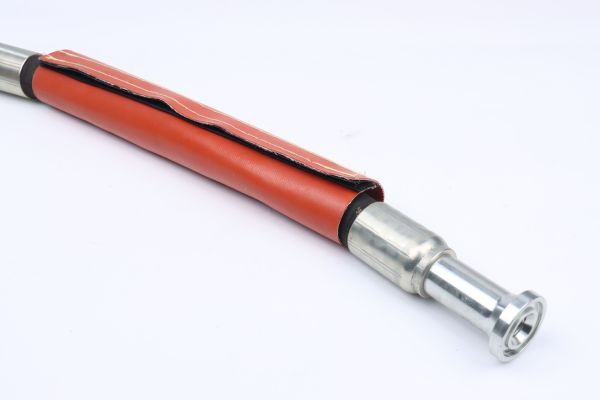
Check the connection at the other end of the fitting as carefully as the hose end. The thread must match the mating port, and the sealing surfaces must be compatible. A thread that screws into a port does not necessarily make a correct hydraulic connection.
The allowable working pressure of the completed assembly depends on its components and connections. Do not assign the hose’s catalog pressure rating to the complete assembly without checking the fitting and mating connection.
Pressure Cycles Create a Different Demand Than a Single Pressure Event
Mobile equipment rarely holds one steady pressure. A cylinder extends, a load shifts, a valve changes position, and the pressure changes again. These repeated cycles load the hose reinforcement, fitting stem, crimped area, seal, and port connection.
A one-time pressure rating does not tell the whole story about repeated operation. Review the hose and fitting manufacturer’s data for the actual combination and intended duty. If the machine experiences frequent pressure spikes, identify their cause and magnitude using the equipment manufacturer’s procedure. Do not assume that a stronger-looking fitting will compensate for uncontrolled system pressure.
Consider where the assembly is installed. A hose on a boom or steering joint may experience pressure changes while it is also bending or moving. That combination makes routing and support especially important.
Keep Hose Movement Away From the Fitting
The hose needs room to move through the machine’s full range of travel. If it is too short, it may pull on the fitting as the equipment extends or turns. If it is too long, it may rub against a bracket, catch on a moving part, or fold into a tight bend.
Pay particular attention to the area immediately behind the ferrule. A sharp bend at this point concentrates stress where the hose enters the fitting. Choose a hose length and fitting angle that allow the hose to leave the connection naturally and meet its specified minimum bend radius.
Check the route at more than one machine position. On an excavator, for example, a hose that looks relaxed with the boom lowered may become taut when the boom and bucket reach full extension. Inspect the route at rest and throughout its normal movement, including positions used during maintenance.
The hose should not twist as the machine moves. A visible lay line or printed stripe on the hose can help reveal twist during installation, but the final check should follow the hose manufacturer’s instructions.
Place Clamps and Supports With Movement in Mind
Clamps help control hose movement, but their location matters. A clamp placed in a section that needs to flex can force the bend toward the ferrule. Too little support may allow the hose’s weight and vibration to pull on the connection.
Review the position of each support against the full movement of the equipment. The hose needs enough freedom to flex where the design calls for movement, while supports should keep it clear of sharp edges, hot surfaces, and other hoses.
Do not use a clamp to force a poorly routed hose into place. If the hose only fits when it is pulled, twisted, or compressed, reconsider its length, fitting orientation, or route.
Choose Straight, Elbow, or Swivel Connections From the Route
A straight fitting creates a simple connection, but it may force the hose into an immediate sharp bend. An elbow can improve the exit angle when space is limited. Neither choice is automatically better for moving equipment.
Compare the installed route with each option. Check the bend radius, available clearance, connection passage, tool access, and how the hose moves. An elbow that gives the hose a natural path may be preferable to a straight fitting that strains the hose. An elbow that points the hose toward a rubbing point creates a different problem.
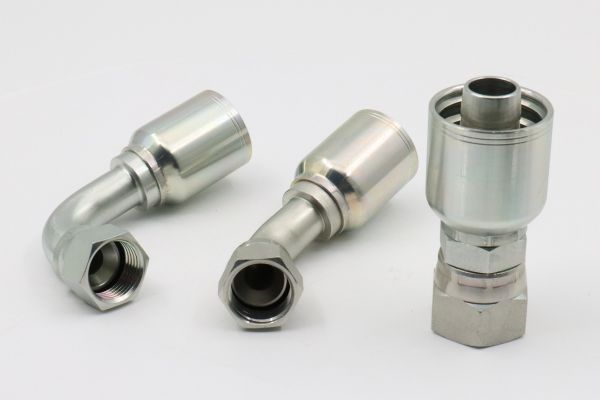
Be precise about what a swivel is designed to do. Some swivel connections help orient the assembly during installation; others are designed for movement under specified conditions. Do not assume that an ordinary swivel connection can continuously absorb hose twisting or machine articulation. Confirm its intended function and operating limits from the component data.
Account for Dirt, Abrasion, and Outdoor Exposure
Mobile equipment often operates around soil, grit, water, and debris. Abrasion can damage a hose cover, while corrosion or contamination can affect a connection during service. A protective sleeve may help at a known contact point, but it should not hide a route that rubs continuously.
Check where the hose contacts the machine and where two hoses touch each other. Also look for crushed guards, damaged clamps, worn sleeves, and areas where debris collects. Protection works best when the hose has a suitable route and enough clearance in the first place.
Keep open hose ends and fittings clean during assembly and replacement. Dirt introduced at a fitting can affect hydraulic components elsewhere in the system. Use the specified cleaning and capping procedure for the assembly.
| Operating condition | What it can do | What to check |
| Repeated pressure cycles | Repeatedly load the hose and connections | Approved hose and fitting combination, system conditions |
| Vibration | Add movement and side load at connections | Supports, clamp condition, hose route |
| Machine articulation | Pull, bend, or twist the hose | Length and clearance through full travel |
| Abrasion and outdoor exposure | Damage the cover or exposed components | Contact points, protection, inspection access |
These conditions often occur together. Review the assembly in its installed position rather than judging the fitting from a catalog photograph.
Inspect the Assembly During Service
An inspection should look beyond visible oil leaks. Damage can begin as a change in hose shape, movement near the ferrule, abrasion on the cover, or a loose support.
After shutting down and safely isolating the equipment, check for:
- oil seepage at the port, seal, or hose end;
- hose movement relative to the fitting;
- a kink or tight bend near the ferrule;
- exposed or damaged reinforcement;
- abrasion, cuts, or a worn protective sleeve;
- loose clamps, damaged brackets, or contact with moving parts;
- corrosion or damage at the mating connection.
Set inspection intervals from the equipment’s duty, operating environment, and manufacturer guidance. A machine working in abrasive conditions with frequent articulation may need closer observation than one used less often. If damage or unexplained movement appears, remove the assembly from service and follow the equipment and component manufacturers’ evaluation or replacement procedure. Never use a hand to search for a leak in a pressurized hydraulic line.
A Practical Selection Checklist
Before approving a one-piece hose fitting for mobile equipment:
- Identify the circuit conditions. Record working pressure, possible spikes, fluid, and temperature range.
- Confirm the hose and fitting combination. Match the exact hose series and size to an approved fitting series and current crimp instructions.
- Verify the port connection. Check the thread, sealing interface, mating part, and applicable rating.
- Review the full hose route. Check length, bend radius, twist, clearance, and movement in every operating position.
- Check supports and protection. Place clamps where they control unwanted movement without restricting intended flexing.
- Define inspection points. Make the ferrule area, seals, clamps, and likely abrasion points accessible for maintenance.
- Record the specification. Keep part numbers, assembly instructions, route details, and inspection requirements together for repeat production or replacement.
If an existing installation has failed repeatedly, inspect the system and route before selecting a replacement. Installing another fitting in the same strained position may repeat the failure.
Conclusion
The best one-piece fitting for high-cycle mobile equipment is part of a correctly specified and routed hose assembly. Check the actual pressure conditions, use a verified hose and fitting combination, match the port and seal, and give the hose room to move without twisting, rubbing, or bending sharply at the ferrule.
For recurring equipment production or distributor supply, keep the approved part numbers, hose series, crimp specification, and routing details with the purchase specification. Those records make it easier to assemble and replace the same verified configuration consistently.
Frequently Asked Questions
Are one-piece fittings automatically suitable for vibration?
No. One-piece construction does not establish a vibration rating for the complete assembly. Check the fitting and hose data, then review routing, support, and movement on the actual machine.
Is an elbow fitting better than a straight fitting on moving equipment?
It depends on the route. An elbow may help the hose leave the connection without a sharp bend. A straight fitting may work better when it gives the hose enough space and a natural path through the machine’s movement.
Can a swivel fitting prevent hose twist?
Only if the specific swivel is designed and approved for the movement involved. Some swivels are intended to help with installation orientation. Confirm the component’s function before relying on it to handle repeated rotation.
Where should a hose clamp be placed near a fitting?
Use the equipment layout and hose manufacturer’s guidance. The clamp should support the hose without forcing a bend at the ferrule or stopping a section that needs to flex.
How often should fittings on mobile equipment be inspected?
Follow the equipment manufacturer’s maintenance schedule and adjust it to the machine’s duty and environment. Frequent movement, abrasion, or a history of hose damage may justify closer inspection.
What information is needed to source a repeat hose assembly?
Provide the hose and fitting part numbers, hose length, end connections, fitting orientation, fluid and operating conditions, and the approved assembly specification. A drawing or a clearly documented existing assembly helps confirm the configuration.