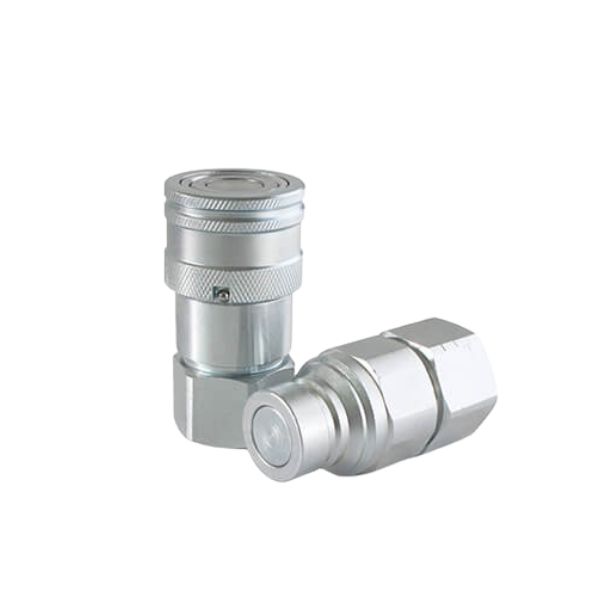
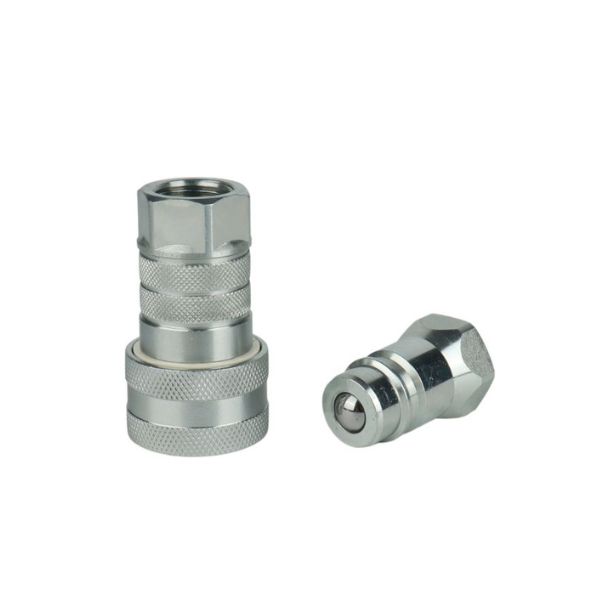
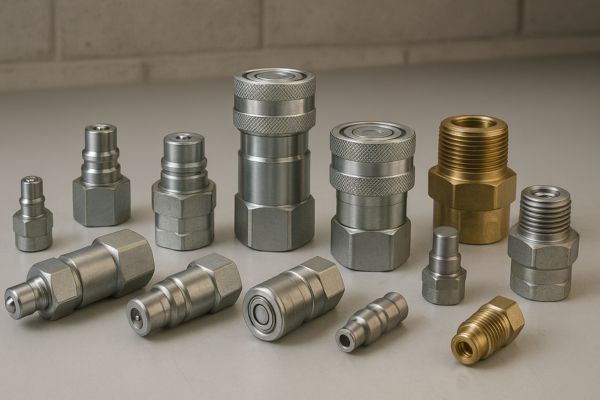
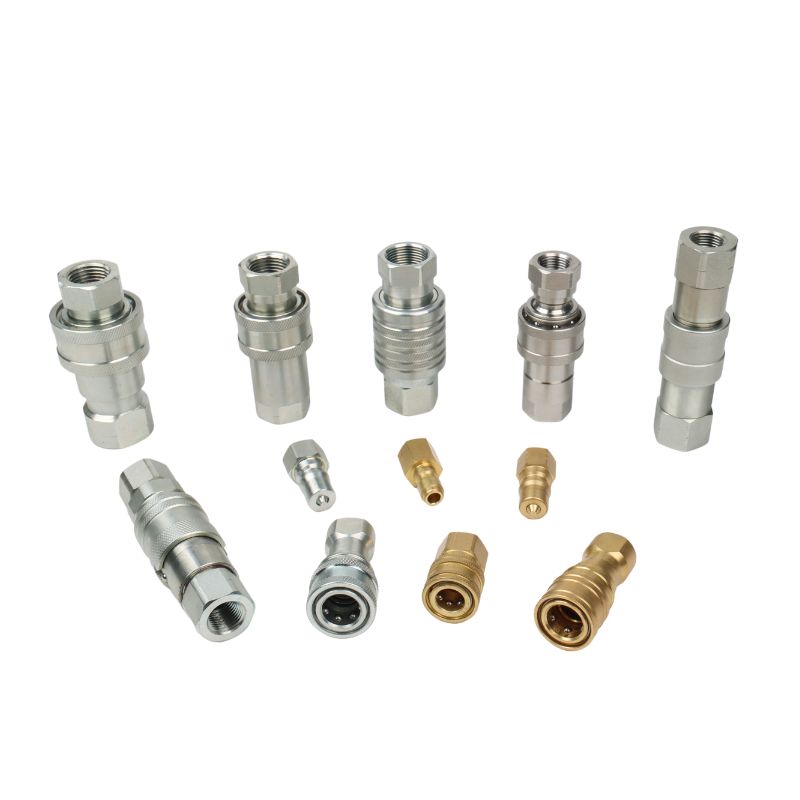
Are you looking for the most cost-effective and most suitable hydraulic coupler manufacturer? Topa is your best choice!
Hot Products
Hydraulic quick couplings connect and disconnect fluid lines at equipment, attachments, and hydraulic tools. Selecting the correct coupling requires a match between the mating interface, body size, locking mechanism, port connection, and operating conditions.
To identify the correct coupling, confirm the series or standard, nominal size, male and female halves, port connection, working pressure, flow requirement, fluid, and operating temperature. For a cross-reference review, send the part number, drawing, or clear photos of both coupling halves.
Thread Flat Face Hydraulic Couplers
Flat Face/flush face poppet valve design, compatible with faster DF series, Parker PD series.
ISO 7241-1 B Series Hydraulic Couplings
Medium pressure type; Compatible with Parker 60 close type hydraulic quick release coupling.
ISO 7241 1 Series A Hydraulic Couplings
Poppet type valve, close type hydraulic coupling; Interchangeable with Parker 6600 series.
ISO 7241 A Series Quick Couplings
ISO 7241 1 Series A close type hydraulic couplings; Interchangeable with Parker 6600 series.
Thread Lock Hydraulic Couplers
Flat face thread lock quick hydraulic couplings.Compatiblity with Voswinkel RK series.
High Flow Unvalved Quick Couplings
High flow unvalved hydraulic quick couplings, made of brass, stainless steel, and steel.
ISO16028 Flat Face Hydraulic Coupler
ISO 16028 series flat face hydraulic coupler, compatible with Parker FE series.
ISO 5675 Agricultural Hydraulic Couplings
Ball valve type agricultural hydraulic quick couplings, compatible with Parker 4000 series.
ISO 7241 1 Series A Hydraulic Coupler
Close type hydraulic quick coupler, ISO 7241 series; Interchangeable with Parker 6600 series.
ISO 7241 1 Series B Hydraulic Coupling
ISO 7241-1 B series close type hydraulic coupler, compatible with Parker 60 series.
ISO 7241 1 Series B Hydraulic Couplings
Brass ISO 7241 1 series B hydraulic couplings, compatible with Parker 60 series.
Screw Type High Quick Disconnect Fitting
Carbon steel screw type high pressure quick disconnect fitting, compatible with Parker 60 series.
High Pressure Hydraulic Quick Coupling
10,000 psi super high pressure quick coupling. Threaded sleeve locking mechanism.
High Pressure Hydraulic Quick Coupling
Close type super high pressure quick coupling. Rated pressure up to 10,000 psi.
Hydraulic Thread End Wing Style Quick Couplers
Carbon steel screw type quick disconnect fitting, compatible with Faster CVE series.
ISO 7241 1 Series A Hydraulic Couplings
Standard ISO 7241-1 A series hydraulic couplings, interchangeable with Parker 6600 series.
ISO 7241 1 Series B Hydraulic Couplings
Poppet type valve, ISO 7241-1series B close type quick release hydraulic coupler.
ISO 5676 Series Quick Coupling
Close type ISO 5676 series hydraulic quick connect fitting. Interchangeable with Faster VF series.
Flush Face Hydraulic Wing Couplers
Thread type wing type hydraulic quick disconnect fitting, compatible with Parker 6100 series.
ISO 5675 Agricultural Hydraulic Couplings
Close type ISO 5675 agricultural hydraulic couplings. Interchangeable with Parker 4000 seres.
Push and Pull ISO 5675 Hydraulic Couplings
Push and pull ISO 5675 agricultural hydraulic couplings, compatible with 4250 series.
Two hydraulic quick couplings may look alike and begin to connect without being interchangeable. A verified match requires the mating halves to share the specified coupling profile and nominal size. Their locking geometry, valve arrangement, sealing surfaces, and connection dimensions must also be suitable for the intended assembly.
A standard or series reference can help identify a possible match, but it does not confirm that every size or model from different product lines will perform the same way. Even when the coupling interface is interchangeable, the products may differ in pressure rating, flow capacity, pressure drop, materials, seal compounds, or performance under pressure spikes. These differences can affect how the coupling works in the hydraulic circuit.
Before approving a cross-reference, compare the complete coupling data:
Standard or coupling series
Nominal body size and mating profile
Male and female halves
Locking mechanism and valve design
Port or hose-end connection
Maximum working pressure and any pressure-spike requirements
Flow requirement and allowable pressure drop
Hydraulic fluid, seal material, and operating temperature
Whether connection or disconnection may occur with residual pressure
Ready to contact us?
Need a specific configuration? Send the Topa series number, existing part number, or drawing, and specify whether you need the socket, plug, or complete coupling pair. Include the port connection and quantity for each item.
Hydraulic quick couplers are typically constructed from high-quality materials such as stainless steel, carbon steel, or brass. These materials are chosen for their exceptional strength and durability, ensuring that the couplers can withstand the rigors of heavy-duty industrial use. Stainless steel, for example, provides excellent resistance to corrosion and wear, making it ideal for environments that are prone to moisture or corrosive substances. This material choice extends the life of the couplers, reduces maintenance requirements, and ensures consistent performance under various operational conditions.
Carbon Steel, Stainless Steel
Leak Resistance
High Quality Solid Bar
Wear Resistance
Topa Quick Coupling
Versatile Connection Methods
Hydraulic quick couplers offer various connection methods, including threaded, push-to-connect, and flat-face designs, each catering to specific requirements and ease of use. Threaded couplers provide a robust and secure connection, ideal for applications where high pressures are common. Push-to-connect couplers offer speed and convenience, allowing for rapid tool changes without the need for tools or significant downtime, which is particularly beneficial in industries where time is critical. Flat-face couplers, on the other hand, are designed to eliminate fluid loss during disconnection, reducing environmental impact and maintaining system cleanliness. This versatility allows users to choose the most appropriate type based on their specific operational needs and environmental conditions, ensuring optimal functionality and efficiency.
Hydraulic quick couplings are used when a hydraulic line must be connected or disconnected without removing the full hose assembly. The right coupling depends on the machine’s connection profile, valve design, nominal size, pressure and flow requirements, and how the line will be connected or disconnected. A coupling that physically fits may still have a different flow capacity, pressure rating, or residual-pressure behavior, so confirm the complete specification before selecting a replacement.
Forestry Equipment
Excavators, loaders, forestry machines, and other mobile equipment use quick couplings on attachment circuits and removable hydraulic lines. These systems can experience high flow demand, pressure spikes, vibration, dirt, and frequent connection cycles.
Agriculture
Tractors and implements use quick couplings to connect hydraulic circuits for functions such as lifting, tilting, steering, and operating attachments. The coupling must match the tractor or implement connection profile, nominal size, port type, and required flow.
Industry
Hydraulic presses, production machinery, and other industrial systems may use quick couplings on removable tools, service lines, or equipment modules. Selection should account for the circuit’s operating pressure and flow, hydraulic fluid, temperature, connection frequency, and the space available for the coupling.
Information to Confirm Before Selecting a Coupling
To identify a hydraulic quick coupling, start with the connection already used on the machine or hose assembly. A part number, drawing, or catalog reference is the clearest starting point. If those are unavailable, provide the details below so the coupling profile, end connections, and operating requirements can be checked together.
Coupling standard, series, or part number: Include the complete marking or reference from the existing coupling, machine documentation, or parts list.
Nominal size and coupling half: Specify the coupling size and whether the required part is the male plug, female socket, or a complete matched set.
Port or hose-end connection: Provide the thread designation, size, and connection type at the back of the coupling, such as a port thread, hose end, or adapter.
Working pressure and pressure spikes: State the system’s normal operating pressure and any known pressure surges. The selected coupling must be checked against the data for its exact series and size.
Required flow rate: Include the expected flow where available. Coupling size alone does not confirm flow capacity or allowable pressure drop.
Hydraulic fluid and temperature: Identify the fluid and normal operating temperature so body, seal, and other wetted materials can be checked for compatibility.
Connection conditions: Note whether either line may retain pressure during connection or disconnection. Some coupling types are not designed to connect or disconnect under residual pressure.
Material or seal requirements: Specify requirements for the coupling body, surface finish, or seal material when these are known.
Quantity by part number: For a multi-item list, show the quantity required for each coupling or adapter reference.
Supporting references: Attach a drawing, catalog page, equipment model, sample details, or clear photos of both coupling halves and their end connections.
Our Services
Topa offers customer service and is committed to making every customer’s shopping experience the most comfortable!
Multiple Coupling Series
Topa offers a range of hydraulic quick couplings, including flat-face, ISO 7241 Series A and B, agricultural, screw-to-connect, and unvalved designs. Available configurations depend on the selected series and size.
Specification Matching
Provide the coupling standard or series, nominal size, connection ends, pressure, flow, fluid, and temperature. These details help confirm whether a configuration suits the hydraulic circuit.
Part Number Review
Existing part numbers, drawings, catalog references, and clear photos can be reviewed to identify the coupling profile and connection details. A reference number is a starting point; compatibility should be confirmed against the actual specifications.
Material and Seal Options
Coupling body and seal materials can be selected according to the series and application requirements. Confirm fluid compatibility, operating temperature, and material availability for the specific configuration.
Quality Control
Product inspection requirements can be aligned with the confirmed specifications and applicable product data. Any testing or documentation details should be confirmed for the relevant coupling series and order.
Support for Repeat Supply
For recurring or multi-SKU requirements, provide a part-number list with quantities by item. Keeping the specifications and references clear helps maintain consistency across repeat orders.
At Topa, every step of the process, from the selection of quality materials to final quality control checks, is carefully designed to ensure the production of robust, reliable and efficient couplers. This process combines advanced technology with stringent quality standards to meet the demanding requirements of a wide range of industrial applications.
Material Selection
The process begins with the selection of raw materials, which typically includes high-grade stainless steel, carbon steel, or brass. The choice of material depends on the required durability, corrosion resistance, and application-specific needs of the finished product.
Cutting
Using precision cutting tools, the selected materials are cut into specific shapes and sizes. Computer Numerical Control (CNC) machines are often employed to ensure accuracy and consistency in this step, which is crucial for the components to fit seamlessly in diverse hydraulic systems.
Machining
After cutting, the components undergo further machining to refine their shapes and add necessary features such as threads or grooves. This step is critical for ensuring that the couplers can withstand high pressures and connect smoothly without leaks.
Surface Treatment
To enhance their durability and resistance to environmental factors, the couplers receive surface treatments such as passivation, electroplating, or coating. These processes help prevent corrosion and wear, extending the lifespan of the couplers even in harsh conditions.
Assembly
The components are then assembled into complete couplers. This step often involves both manual and automated processes to ensure that all parts fit perfectly. O-rings and seals are installed to prevent fluid leaks and ensure efficient operation.
Testing
Finally, each coupler is rigorously tested to ensure it meets all operational specifications and quality standards. Pressure tests, leak tests, and performance evaluations are conducted to guarantee that the couplers perform reliably in real-world applications.
Want to learn about Topa's quick connect products? Need additional hydraulic couplings? We are the best choice for the best price, the best quality products and the most professional service, all at Topa! Contact Topa now, we are ready to go!
Hydraulic quick couplings connect and disconnect fluid lines without removing the entire hose or pipe assembly. They are commonly used on equipment with removable attachments, service lines, or circuits that need regular disconnection. The coupling halves must match in profile, size, connection type, and operating requirements.
How do I identify the correct quick coupling?
Start with the part number, equipment drawing, or coupling standard if available. Then confirm the series, nominal size, male and female halves, port connection, valve design, and mating profile.
Does every hydraulic quick coupling have the same pressure rating?
No. Pressure ratings vary by coupling series, nominal size, material, and design. Check the technical data for the exact model, and consider the operating conditions of the complete hydraulic assembly.
What are the differences between flat-face, screw-to-connect, and push-to-connect couplers?
Flat-face couplers prevent fluid loss and contamination, making them ideal for environments requiring cleanliness. Screw-to-connect couplers offer a durable, leak-free connection suitable for high-pressure applications. Push-to-connect couplers provide the easiest and quickest method for connecting and disconnecting hydraulic lines.
Can couplings from different brands be connected together?
Only when the exact coupling halves are designed to share the same interface and their size and performance requirements have been verified. A similar appearance or a cross-reference to a product family is not enough to confirm compatibility.
How do I install a hydraulic quick coupler?
Installation typically involves aligning the coupler with the hydraulic hose or component and securing it in place, usually by threading or a locking mechanism. Always ensure the system is depressurized before attempting installation.
What maintenance is required for hydraulic quick couplers?
Regular maintenance includes checking for leaks, inspecting for wear and damage, cleaning couplers regularly to prevent dirt and debris accumulation, and replacing seals and O-rings as needed to maintain a tight seal.
Are there any safety concerns when using hydraulic quick couplers?
Safety concerns include ensuring proper connection to avoid accidental disconnection under pressure, using couplers that have safety features to prevent spills, and always following manufacturer guidelines for pressure ratings and usage.
How do environmental factors affect hydraulic quick couplers?
Environmental factors such as temperature, humidity, and exposure to corrosive elements can affect the durability and function of hydraulic couplers. Choose materials and coatings that are suited for the operating environment.
What are common issues with hydraulic quick couplers and how can they be resolved?
Common issues include leaks, difficulty in connecting or disconnecting, and wear over time. Regular maintenance, proper installation, and using the correct type of coupler for the application can help mitigate these issues.
Submit your coupling list, drawings, or existing part numbers with the quantity required for each configuration. Include the mating interface, body size, port connection, and whether each item requires a socket, plug, or matched pair. For application-based selection, add the maximum operating pressure, required flow, fluid, temperature range, and any residual-pressure connection requirements. If a specification is unknown, mark it as unknown and attach photographs or equipment documentation.
Contact Topa
Save 30% on maintenance costs with our easy-install hydraulic fittings. Contact Now!