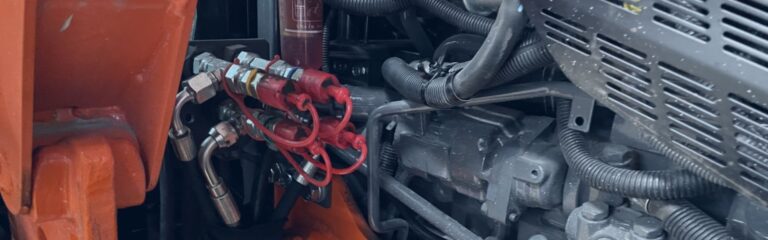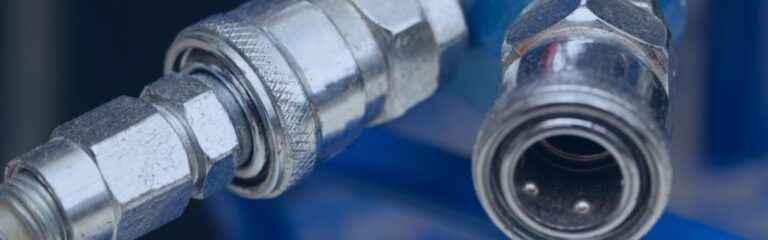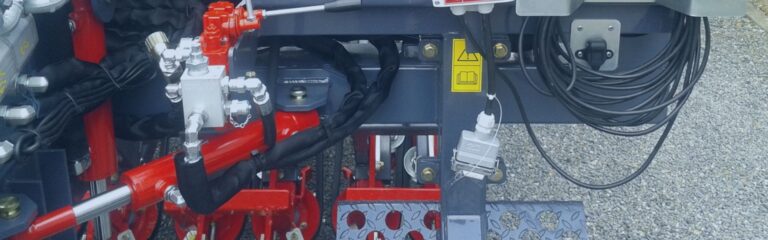
Quick couplings are widely used in hydraulic systems, pneumatic equipment, fluid transfer lines, and automotive applications where fast and secure connections are required. They help reduce connection time, minimize fluid leakage, and improve maintenance efficiency in demanding working conditions.
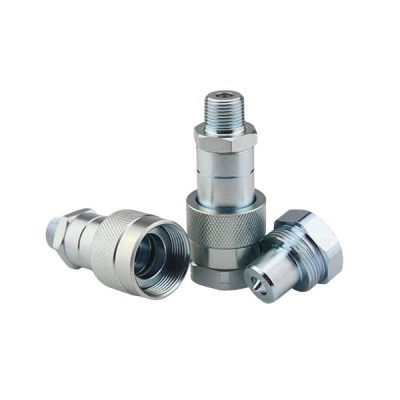
Quick couplings are connectors designed to rapidly connect and disconnect hydraulic, pneumatic, or fluid transfer lines without using special tools. They are commonly used in hydraulic equipment, agricultural machinery, construction machines, industrial systems, and automotive applications where hoses need to be connected frequently during operation or maintenance.
A quick coupling normally consists of two parts:
When connected, the coupling creates a sealed flow path that allows hydraulic oil, air, water, fuel, or other fluids to pass through safely. The internal valve structure helps reduce leakage and prevents contaminants such as dust, dirt, or moisture from entering the system.
The development of quick coupling technologies dates back to the early 20th century, coinciding with the rapid advancement of industrial machinery and equipment. Initially, the need for efficient fluid transfer mechanisms arose in sectors such as automotive and agriculture, where the traditional methods of connecting hoses and pipes proved time-consuming and unreliable. The first quick couplings were relatively simple in design, featuring basic push-to-connect mechanisms that significantly reduced downtime.
As industrial demands grew, so did the sophistication of quick coupling designs. By the mid-20th century, innovations such as threaded couplings, cam and groove couplings, and flat face couplings emerged, each offering specific advantages tailored to different applications. These developments were driven by the need for higher pressure ratings, improved safety features, and greater versatility. The introduction of new materials, such as high-strength plastics and advanced alloys, further enhanced the performance and durability of quick couplings.
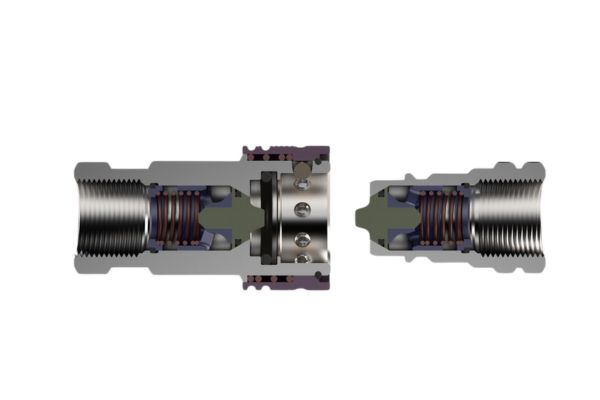
Quick couplings operate through a straightforward yet effective mechanism designed to ensure a secure and leak-proof connection between fluid lines. The fundamental principle involves two main components: the male (plug) and female (socket) parts of the coupling. Here’s a step-by-step breakdown of how they work:
Connection: When the male part is inserted into the female part, the coupling mechanism engages. This can involve a push-to-connect action, threading, or a cam lever, depending on the type of quick coupling used.
Sealing: Once connected, internal seals, often made of high-grade rubber or similar materials, create a tight seal around the connection points. This seal prevents any leakage of the fluid being transferred.
Locking: Many quick couplings feature a locking mechanism that secures the connection. This can be a spring-loaded latch, a locking pin, or a rotating cam that holds the two parts firmly together.
Disconnection: To disconnect, the user typically performs a simple action such as pressing a release button, rotating a collar, or flipping a lever. This disengages the locking mechanism, allowing the male and female parts to be easily separated without the need for tools.
Safety Features: Modern quick couplings often include safety features to prevent accidental disconnection or to handle high-pressure situations. These features ensure that the coupling remains secure even under challenging conditions.
Description and Functionality:
Push-to-connect couplings, also known as push-fit or push-in couplings, are designed for easy and rapid connection and disconnection of fluid lines. These couplings feature a simple mechanism where the user pushes the tubing or hose into the coupling’s socket until it locks in place with an internal collet and seal. The connection is secure, leak-free, and does not require any tools.
Common Applications:
Pneumatic Systems: Widely used in air compressors, pneumatic tools, and airlines due to their ease of use and reliability.
Water Filtration Systems: Common in household and industrial water filters for quick and tool-free connections.
Automotive: Used in fuel lines and air conditioning systems for rapid assembly and maintenance.
Description and Functionality:
Threaded couplings involve a screw-type connection where the male part (with external threads) screws into the female part (with internal threads). This creates a tight, secure connection capable of handling high pressures and extreme conditions. They often include additional sealing elements such as O-rings or Teflon tape to ensure a leak-proof joint.
Common Applications:
Hydraulic Systems: Ideal for high-pressure hydraulic lines where a robust and secure connection is critical.
Gas Lines: Used in propane, natural gas, and other gas applications due to their ability to withstand high pressures.
Industrial Equipment: Common in machinery and equipment where durable and reliable connections are necessary.
Description and Functionality:
Bayonet couplings use a twist-and-lock mechanism where the male part is inserted into the female part and then twisted to lock it in place. This type of coupling is known for its quick and secure connection, often with an audible click to indicate proper engagement.
Common Applications:
Aerospace: Used in fuel and hydraulic systems for their reliability and ease of use in critical applications.
Medical Devices: Common in medical tubing and equipment where quick and secure connections are needed.
Lighting Systems: Used in the connection of bulbs and other electrical components for a secure and quick assembly.
Description and Functionality:
Cam and groove couplings, also known as camlock fittings, consist of a male adapter and a female coupler with cam arms. To connect, the cam arms are pulled down to lock the male adapter into the female coupler, creating a tight and secure seal. This type of coupling is known for its simplicity and speed of connection.
Common Applications:
Liquid Transfer: Widely used in industries like oil and gas, chemical transfer, and water treatment for quick and secure hose connections.
Agriculture: Common in irrigation systems and equipment for easy and rapid connection of hoses.
Food and Beverage: Used in sanitary applications for transferring liquids cleanly and securely.
Description and Functionality:
Flat face couplings feature a flat sealing surface that minimizes fluid loss and contamination during connection and disconnection. These couplings are designed to be easily cleaned and maintain a high level of hygiene, making them ideal for applications where cleanliness is crucial.
Common Applications:
Hydraulic Systems: Used in heavy machinery and construction equipment to prevent fluid loss and contamination.
Pharmaceutical Industry: Ideal for applications requiring high levels of cleanliness and minimal fluid contamination.
Marine Applications: Used in ship hydraulics and other marine equipment for their robust and leak-free design.
Type of | Description | Common Applications | Key Features |
Push-to- Connect | Tool-free,push-in connection | Pneumatic systems,water filtration,automotive | Easy to use,quick connection |
Threaded | Screw-type connection | Hydraulic systems,gas lines, | High pressure,secure |
Bayonet | Twist-and-lock | Aerospace,medical devices, | Quick,secure |
Cam and | Cam arms for locking | Liquid transfer,agriculture,food | Fast,simple,versatile |
Flat Face | Flat sealing surface | Hydraulic systems,pharmaceutical | Leak-free,hygienic, |
Material | Description | Advantages | Disadvantages | Common Applications |
Steel | Iron-carbon alloy with high strength and durability | High tensile strength, wear resistance, cost-effective | Can rust or corrode without coating | Heavy machinery, industrial equipment, high-pressure hydraulic systems |
Stainless Steel | Corrosion-resistant alloy containing chromium and nickel | Strong corrosion resistance, durable, hygienic | Higher cost than carbon steel | Food processing, pharmaceutical equipment, marine systems, medical devices |
Brass | Copper-zinc alloy with good machinability and corrosion resistance | Corrosion resistant, good conductivity, attractive finish | Softer than steel, higher material cost | Plumbing, HVAC systems, pneumatic systems, low-pressure fluid transfer |
Factors Influencing Material Choice:
Application Requirements:
Pressure Ratings: Higher pressure systems often require stronger materials like steel or stainless steel.
Temperature Range: Applications involving extreme temperatures may need materials with specific thermal properties.
Environmental Conditions:
Corrosive Environments: Stainless steel or brass may be preferred for their corrosion resistance.
Exposure to Chemicals: Certain plastics or stainless steel can withstand chemical exposure better than other materials.
Mechanical Properties:
Strength and Durability: For high-stress applications, materials like steel and stainless steel are ideal.
Flexibility: Plastics can offer flexibility where needed but at the cost of strength.
Cost Considerations:
Budget Constraints: While stainless steel offers superior properties, its higher cost might be a limiting factor.
Lifecycle Costs: Initial material costs vs. long-term maintenance and replacement costs.
Regulatory and Safety Standards:
Industry Standards: Compliance with standards like ISO, SAE, or FDA for specific applications.
Safety Requirements: Ensuring materials meet safety regulations for particular uses.
Aesthetic and Hygienic Requirements:
Aesthetics: Brass and stainless steel provide an attractive finish for visible parts.
Hygiene: Stainless steel is preferred in food and pharmaceutical industries due to its easy-to-clean properties.
The manufacturing method affects the coupling’s strength, dimensional accuracy, sealing performance, and production cost. Different quick coupling components may use different production processes depending on material type and application requirements.
Forging Process
Forging is a manufacturing process where metal is shaped under high pressure using forging dies or hammers. This process improves the internal grain structure of the material and increases mechanical strength.
CNC Machining Process
Machining removes material from metal bars or forged blanks using CNC lathes, milling machines, and drilling equipment to achieve precise dimensions and thread specifications.
Injection Molding Process
Injection molding is mainly used for plastic quick couplings. Molten plastic is injected into molds under pressure to form finished parts.
Pressure Ratings:
Importance: The pressure rating of a quick coupling determines its ability to withstand the operating pressures of a system without failure.
Considerations: Ensure that the coupling can handle the maximum pressure of your system, including any potential pressure spikes.
Application Examples: High-pressure hydraulic systems require couplings with higher pressure ratings, whereas low-pressure applications, like pneumatic systems, can use couplings with lower ratings.
Flow Rates:
Importance: The flow rate capacity of a coupling affects the efficiency and performance of the fluid transfer system.
Considerations: Select couplings that support the required flow rate for your application to avoid bottlenecks and ensure optimal system performance.
Application Examples: In hydraulic systems, selecting a coupling with an adequate flow rate ensures efficient power transfer, while in liquid transfer systems, it helps maintain consistent flow and pressure.

Temperature:
Importance: The operating temperature range of a quick coupling must match the environmental conditions it will be exposed to.
Considerations: Choose materials and designs that can withstand the minimum and maximum temperatures of the operating environment.
Application Examples: Stainless steel couplings for high-temperature environments, and plastic couplings for lower-temperature or moderate environments.
Exposure to Chemicals:
Importance: Chemical exposure can degrade materials and compromise the integrity of quick couplings.
Considerations: Select materials resistant to the specific chemicals they will encounter, such as corrosive fluids or cleaning agents.
Application Examples: Brass or stainless steel couplings in corrosive environments, and chemically resistant plastics in laboratory settings.
Ensuring Fit with Existing Systems:
Importance: Quick couplings must be compatible with the existing system components to ensure seamless integration and functionality.
Considerations: Verify that the coupling’s dimensions, thread types, and connection mechanisms match the existing system specifications.
Application Examples: Compatibility with existing hydraulic hoses and fittings, ensuring correct thread type and size for replacement parts.
Standard | Importance | Considerations | Example Applications |
ISO (International Organization for Standardization) | Ensures global quality, safety, and performance consistency | Choose ISO-certified couplings for reliable interchangeability and performance | ISO 7241-1 hydraulic quick couplings used in international hydraulic systems |
SAE (Society of Automotive Engineers) | Provides performance and safety standards for automotive and hydraulic systems | Verify compliance with relevant SAE specifications for the application | SAE J1231 hose fittings for automotive hydraulic and fluid systems |
ANSI (American National Standards Institute) | Establishes safety and reliability standards for industrial applications | Use ANSI-compliant couplings for critical piping and fluid systems | ANSI B16.5 pipe flanges and fittings for industrial piping systems |
Smart Couplings:
Description: Smart couplings integrate sensors and electronic components to monitor and transmit real-time data about the system’s performance.
Features: Include pressure sensors, temperature sensors, and flow meters that provide continuous monitoring.
Benefits: Enhance predictive maintenance, reduce downtime, and improve overall system efficiency by providing early warnings of potential issues.
Applications: Industrial automation, aerospace, and high-precision manufacturing where monitoring and quick response are critical.
Automated Systems:
Description: Automated quick coupling systems are designed to connect and disconnect fluid lines without human intervention, often integrated into robotic and automated production lines.
Features: Utilizes robotics, automated locking mechanisms, and smart control systems.
Benefits: Increases efficiency, reduces manual labor, and enhances safety by minimizing human error.
Applications: Automotive assembly lines, automated manufacturing plants, and hazardous environments where remote operation is essential.
Growing Demand:
Hydraulic Systems: The increasing use of hydraulic systems in various industries, such as construction, mining, and manufacturing, drives the demand for quick couplings that can handle high pressures and extreme conditions.
Pneumatic Systems: The expansion of pneumatic automation in industrial applications leads to a rising need for reliable and efficient quick coupling solutions.
Environmental Concerns: There is a growing emphasis on environmentally friendly quick coupling technologies that minimize leaks and reduce environmental impact.
New Applications:
Renewable Energy: Quick couplings are being adapted for use in renewable energy systems, such as wind turbines and solar power installations, where they help streamline maintenance and improve efficiency.
Medical Field: Advances in medical technology are driving the need for quick couplings in fluid delivery systems, diagnostic equipment, and patient care devices, requiring high precision and sterility.
Agriculture: Innovations in agricultural technology, such as precision farming and automated irrigation systems, are creating new opportunities for quick couplings that offer easy connection and disconnection.
In summary, quick coupling technologies play a vital role in enhancing the efficiency, safety, and reliability of fluid transfer systems across various industries. We encourage you to consider quick couplings for your fluid transfer needs, taking into account the insights and guidelines provided in this comprehensive guide. By doing so, you can leverage the latest advancements in quick coupling technology to enhance the performance and efficiency of your systems.
Quick coupling technologies are devices designed to quickly and securely connect and disconnect fluid lines without the need for tools, facilitating the transfer of liquids, gases, and hydraulic fluids in various industrial applications.
There are several types of quick couplings, including push-to-connect, threaded, bayonet, cam and groove, and flat face couplings, each suited for specific applications and offering unique features.
Selecting the right quick coupling involves considering performance requirements (pressure ratings, flow rates), environmental conditions (temperature, chemical exposure), compatibility with existing systems, and adherence to relevant standards and certifications.
Common materials include steel, stainless steel, brass, and various plastics. The choice of material depends on the specific application requirements, such as strength, corrosion resistance, and cost.
Quick couplings offer numerous benefits, including reduced downtime, enhanced efficiency, improved safety, and versatility across a wide range of applications. They also provide secure, leak-free connections.
Yes, recent advancements include smart couplings with integrated sensors for real-time monitoring and automated systems that enable tool-free connections and disconnections, improving overall system efficiency and safety.