
Metric L vs S One-Piece Fittings What Is the Difference

Metric L vs S One-Piece Fittings: What Is the Difference?

Choose a metric light or heavy one-piece fitting by matching the existing connection and the complete application—not by treating “heavy” as automatically better. Confirm the L or S series, tube outside diameter, metric thread, 24-degree sealing geometry, hose series, fitting dimensions, operating conditions, and valid crimp data. Light and heavy fittings that appear similar may use different threads and dimensions, so they should not be substituted without verification.

What Do Light and Heavy Metric Series Mean?

L and S identify different fitting series

In metric 24-degree connection systems, L normally identifies the light series and S identifies the heavy series. Some product ranges also include an LL, or very light, series. These designations help define a coordinated set of connection dimensions rather than acting as a general description of product quality.

The relevant metric connection system includes 24-degree cone connectors used with cutting rings or O-ring seal cones. ISO 8434-1 specifies general and dimensional requirements for these connections, while ISO 12151-2 covers related hose fittings with ISO 8434-1 24-degree cone connector ends and O-rings. ISO 8434-1:2018 and ISO 12151-2:2022 provide the current standards references.

A one-piece hose fitting normally has its stem and ferrule preassembled or fixed together as one component. This design can reduce separate ferrule-selection errors. It does not change the connection-end requirements or make L and S fittings interchangeable.
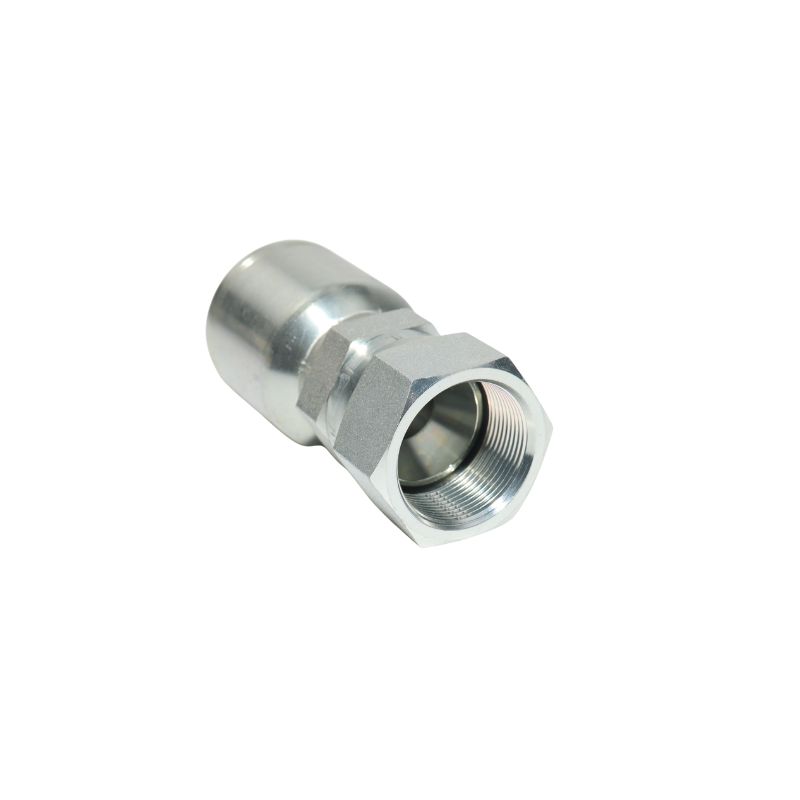
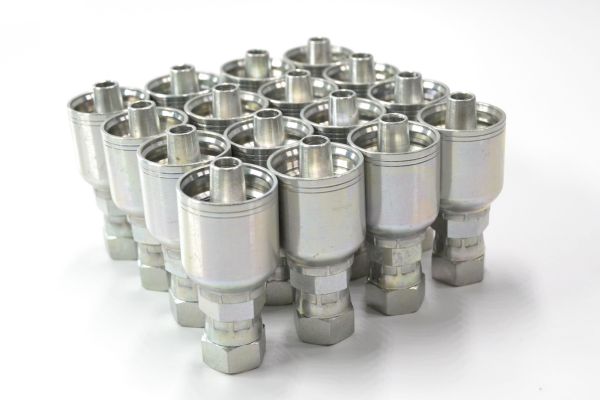
1XU43 metric hydraulic crimp fittings

Heavy series does not simply mean “better”

The heavy series is designed around a different set of dimensions and application requirements. Depending on the size, it may use a different metric thread, connection geometry, wall section, or fitting dimensions from the corresponding light-series connection.

This does not mean every hydraulic application should use the S series. A heavy fitting may be unnecessary, incompatible with an existing L-series port, or too large for the available installation space. Choosing it without checking the mating connection can create an assembly that will not fit or seal correctly.

The correct question is not “Which series is stronger?” It is “Which series matches the existing connection and is approved for the hose assembly and operating conditions?”

Identify the Existing Connection Before Choosing

Find the series marking or technical reference

Begin with the equipment drawing, fitting part number, port specification, or an approved component record. Look for an L or S designation connected to the tube size or product code.

A part number can help identify the series, but manufacturer coding systems differ. Do not assume that the same letters or number sequence mean the same thing across different brands.

If documentation is unavailable, inspect and measure the existing connection. Record:

Clear photographs can help narrow the product family, but they cannot reliably confirm thread pitch, seat dimensions, or the final series.

Do not identify the series from tube size alone

The same nominal tube outside diameter may appear in both light and heavy product ranges, depending on the size and manufacturer’s offering. The associated thread and dimensional relationship may differ.

For this reason, a description such as “metric fitting for 12 mm tube” is incomplete. The buyer must still confirm whether the connection is 12L, 12S, or another defined system and verify the relevant metric thread.

A structured description is more reliable:

Tube outside diameter + L or S series + metric thread + connection style + sealing method

Do not force an unidentified fitting into a port to see whether it fits. Partial thread engagement does not confirm that the pitch, seat, or sealing system is correct and may damage the mating component.

Compare the Connection Dimensions

Check the thread and 24-degree sealing geometry

Metric light and heavy fittings should be identified through the complete connection. Measure the thread diameter and pitch with suitable tools, then compare the results with the applicable technical drawing or dimensional table.

The thread usually provides mechanical engagement, while the 24-degree cone and associated seal create the fluid connection. A fitting with the wrong cone, O-ring arrangement, or mating geometry may not seal even if the thread appears to engage.

Check these features separately:

Thread sealant must not be used to compensate for an incorrect metric thread or damaged 24-degree sealing surface. If the connection is designed to seal at the cone or O-ring, applying sealant to the thread does not correct a geometry mismatch.

Confirm the mating side

A hose fitting connects to a port, tube fitting, adapter, or another component. Both sides must belong to a compatible system.

Inspect the mating component for its series, thread, seat, and sealing features. An existing port may be damaged, deformed, contaminated, or incorrectly identified. Installing a correctly selected new fitting will not repair a scratched cone or damaged thread.

When changing from an existing supplier to an alternative source, compare the proposed fitting with the application specification rather than only with the used part. Wear and previous over-tightening can change the dimensions of the old fitting.

If the supplier proposes an adapter to connect different systems, evaluate the complete arrangement. An additional adapter changes the overall length, introduces another sealing interface, and may affect installation space and potential leak points.

When Is the Light Series Appropriate?

Choose L series when it matches the system

The light series is appropriate when the equipment port, tube connection, or mating component is designed for the corresponding L-series dimensions and the complete assembly meets the application requirements.

L-series connections are commonly found in metric hydraulic systems, but their use in a specific application must be confirmed from the equipment and component information. Do not select L only because the system is described as “medium pressure” or because the fitting costs less.

fitting hydraulic 1CA43 metric

An L-series fitting may be a suitable choice when:

Understand the boundaries of the light series

Do not assume that L-series fittings can replace S-series parts when the tube outside diameter looks the same. A thread or sealing mismatch can prevent assembly or create leakage.

The pressure suitability of the finished hose assembly also cannot be determined from the letter L alone. It depends on the fitting, hose, connection, size, temperature, fluid, pressure impulses, routing, and assembly quality.

Published ratings should be taken from the applicable product and manufacturer data. ISO notes that many factors affect satisfactory system performance and that listed connection pressures should not be treated as universal guaranteed minimums for every application.

L series should not be rejected merely because the equipment experiences high operating demands. If it is the specified connection and the complete approved assembly meets those demands, changing to S without redesigning the mating components provides no automatic benefit.

When Is the Heavy Series Appropriate?

Choose S series when the equipment requires it

Use the heavy series when the existing port or connection is identified as S series, or when the system design and component documentation specifically require it.

S-series fittings may be associated with more demanding applications, but selection must remain tied to the complete technical requirement. The heavier designation does not authorize installation into an L-series port.

An S-series fitting may be appropriate when:

The decision should be supported by documentation rather than a general preference for a heavier component.

Do not upgrade one component in isolation

Changing an L-series hose fitting to an S-series fitting is not a simple pressure upgrade. The mating port, adapter, or tube fitting may also need to change. The new arrangement may require different threads, dimensions, and installation clearance.

The pressure capability of a hose assembly is limited by its lowest-rated relevant component and the conditions under which it operates. Replacing one connection with a heavier-looking alternative does not increase the rating of the hose, port, adapter, or other components.

An isolated change may also create new risks:

If an application needs redesign, review the complete system instead of substituting one fitting at the purchasing stage.

Consider Pressure, Temperature, and Environment

Evaluate the complete operating conditions

Do not choose light or heavy series using working pressure alone. The complete application includes normal pressure, impulse frequency, temperature, fluid, vibration, movement, corrosion, and external mechanical loads.

Provide the relevant conditions when requesting a quotation:

The fitting material and surface treatment must also suit the environment. Carbon steel, stainless steel, and other material options have different conditions of use. No material is automatically the best choice for every L- or S-series connection.

Treat severe applications separately

Safety-critical, regulated, or severe-duty systems require more than a catalog comparison. Applications involving lifting, braking, risks to personnel, extreme pressure impulses, aggressive fluids, or high temperatures may need engineering review and controlled validation.

Do not change the connection series simply because a machine is experiencing hose failures. The actual cause may be incorrect routing, excessive bending, hose abrasion, pressure impulses, contamination, damaged ports, or unsuitable assembly procedures.

Before modifying the fitting, inspect the complete hose assembly and operating environment. Changing from L to S will not correct a hose that is twisted, too short, exposed to abrasion, or assembled with incorrect crimp data.

Choose metric light or heavy one-piece fittings by matching the existing connection, hose system, and complete application. S series is not an automatic upgrade, and L series is not automatically inadequate. Send TOPA your L or S reference, metric thread measurements, hose details, fitting photos, operating conditions, crimping information, and estimated quantity to confirm a suitable sample or trial order.

Frequently Asked Questions

Can an L-series fitting connect to an S-series port?

Not simply because the tube size or general appearance is similar. The metric thread, dimensional relationship, and sealing geometry must match the specified series.

Is S series always rated for higher pressure than L series?

Do not make the selection from the series letter alone. Use the applicable manufacturer’s data for the exact fitting and evaluate the complete hose assembly, including its lowest-rated relevant component.

Can tube outside diameter identify L or S series?

Tube outside diameter helps narrow the options but may not confirm the series by itself. Check the L or S designation, metric thread, pitch, and 24-degree connection dimensions.

Does changing from L to S require different crimp data?

The connection-end designation alone does not define the crimp setting. Use data for the exact hose, fitting series, stem, and ferrule combination; never copy a crimp value based only on L or S.

What information should I send for an unidentified metric fitting?

Send the hose manufacturer and series, tube or hose size, metric thread measurements, pitch, photos of the complete fitting and sealing face, existing part number, application conditions, and critical installation dimensions.
How to Match One-Piece Fittings Without Guesswork

How to Match One-Piece Fittings Without Guesswork

A reliable one-piece fitting cross-reference must compare more than a brand name or part number. Confirm the hose series, fitting configuration, thread, seat, sealing method, critical dimensions, material, finish, application conditions, and valid crimp data.

What Does a One-Piece Fitting Cross-Reference Mean?

A cross-reference identifies a possible alternative

A one-piece fitting cross-reference connects an existing part number with another fitting that may serve the same defined requirement. It is a starting point for technical comparison, not automatic proof that the two products are identical or interchangeable.

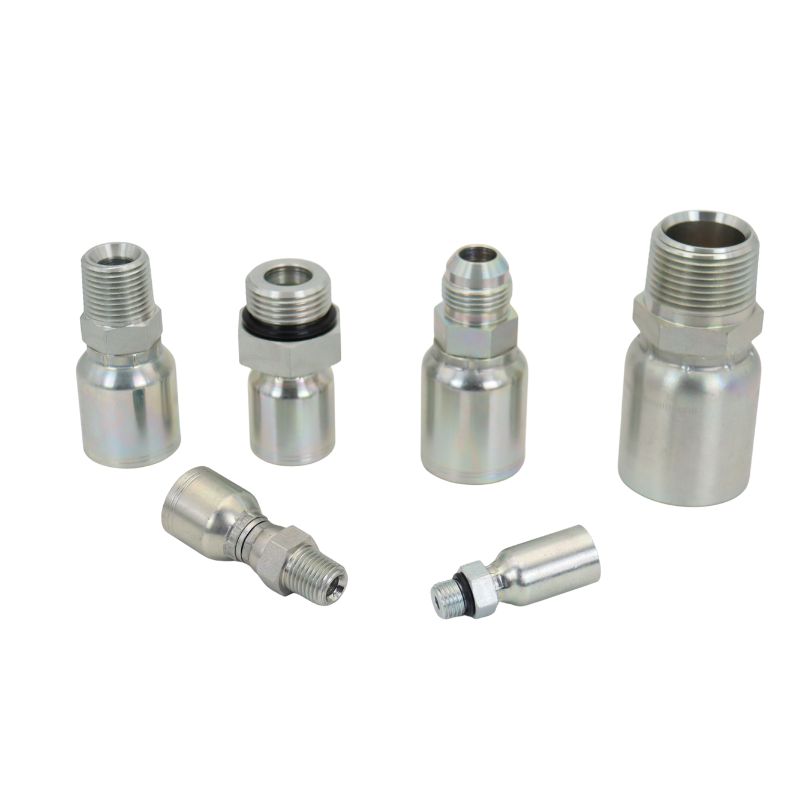
One-piece fittings normally have the fitting stem and ferrule preassembled or fixed together as one component, although the exact structure varies by product series. This design may reduce mistakes caused by selecting a separate ferrule. It does not make all one-piece fittings of the same dash size compatible.

Male Hydraulic Crimp Fitting

A useful cross-reference should answer three questions:

“Looks the same” is not an acceptance criterion

Two fittings can share the same general shape, thread diameter, and hose size while differing in thread pitch, seat angle, sealing method, hose-tail geometry, or ferrule design. These differences may not be visible in a catalog image.

A fitting may even screw into the mating component without creating the correct seal. Partial thread engagement therefore does not prove compatibility.

The risk is greater when buyers rely on an old fitting that is worn, damaged, or missing its seal. Corrosion, deformation, previous over-tightening, and contamination can hide the original dimensions and sealing features.

The correct objective is not to find a part that resembles the original. It is to find a fitting that matches every characteristic required for connection, assembly, installation, and operation.

Decode the Existing Part Number Carefully

Use the code as a reference, not a specification

Part numbers often contain information about the product series, hose size, connection type, thread size, fitting angle, material, or special options. The coding rules are not universal, however, and similar-looking numbers from different manufacturers may mean different things.

Use an official catalog or technical reference to decode the existing number. Avoid interpreting it through a pattern learned from another brand.

Record both the full original number and the proposed alternative number. Do not shorten them by removing suffixes until you know what each suffix represents. A final character may identify a material, coating, drop length, O-ring, or special configuration.

If the existing part number cannot be confirmed, mark it as an unverified reference and continue through physical identification. Do not let an uncertain number control the entire cross-reference.

Collect supporting evidence

Part numbers become more useful when combined with drawings, purchase records, hose details, and clear photographs. Ask for the complete fitting rather than one close-up image.

Useful photographs include:

Photographs support initial screening but cannot reliably confirm thread pitch, seat angle, or internal dimensions. Measurements and technical documents are still required before selecting the final part.

Identify the Thread and Connection Standard

Measure diameter and pitch

Confirm whether the connection is male or female, then measure the relevant outside or inside thread diameter. Use a thread-pitch gauge to determine the pitch or threads per inch, and identify whether the thread is straight or tapered.

Take measurements from an undamaged section. Worn thread crests, coating thickness, and measurement technique can affect the result, so compare several dimensions with a reliable thread-identification reference.

A basic connection record should include:

Keep similar connection families separate

JIC and SAE 45-degree flare connections use different seat angles. BSPP and BSPT have different thread and sealing behavior. Metric connections may use different cones, O-rings, sealing washers, or tube-fitting arrangements.

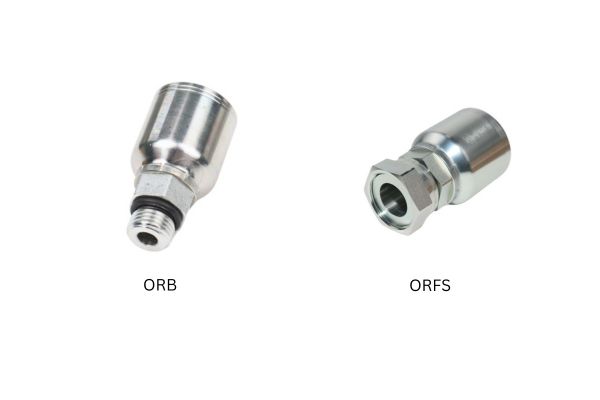
NPT and NPTF may share nominal dimensions but have different design and sealing considerations. An ORFS connection uses a face O-ring and must not be identified only by its straight thread. ORB fittings seal through an O-ring at the port, not through the straight thread itself.

ORFS vs ORB crimp fitting

Do not force an unknown fitting into a port to test compatibility. A partially matching thread may damage the port without proving that the connection seals correctly. Thread sealant must not be used to repair a mismatched thread or damaged sealing surface.

Confirm the Seat and Sealing Method

Determine where the hydraulic seal forms

The thread may hold the parts together while a separate surface creates the hydraulic seal. A correct cross-reference must therefore identify both the thread and the sealing feature.

Inspect whether the original fitting uses:

Measure the seat angle with a suitable method or compare it with confirmed technical documentation. A photograph taken at an angle can make different seats look similar and should not be used as the final evidence.

When replacing an O-ring fitting, confirm the O-ring location, dimensions, and material. O-ring color is not a reliable way to identify the compound. Compatibility depends on the fluid, temperature, and application conditions.

Check the mating component

A fitting cannot be evaluated without considering the port, adapter, tube, or other component to which it connects. If possible, identify both sides of the connection.

A damaged mating seat may continue to leak after the correct replacement fitting is installed. Repeatedly tightening the new fitting can then damage the replacement as well.

If the existing component shows thread damage, corrosion, scratches, or deformation, record that condition separately. Cross-referencing the fitting will not correct a damaged port or incompatible mating surface.

Compare Dimensions That Affect Installation

Verify more than thread size

Even when the hose end and connection are correct, the alternative fitting may not fit the equipment. Overall length, hex size, elbow drop, bend radius, and connection orientation can affect installation.

For straight fittings, compare the dimensions that control clearance and wrench access. For 45-degree and 90-degree fittings, measure the centerline, drop length, and orientation.

Useful dimensional checks may include:

Compare the hose tail and ferrule

The hose side is not interchangeable simply because both fittings accept the same nominal hose ID. Compare the fitting series, stem profile, insertion requirements, and ferrule construction.

Do not remove the ferrule from a one-piece fitting to make it resemble a separate two-piece component. This can damage the fitting and eliminates the controlled relationship between its parts.

If the alternative uses a different stem or ferrule design, obtain the assembly data intended for that fitting. The original fitting’s crimp diameter must not be copied automatically.

Confirm Material, Finish, and Operating Conditions

Match the fitting to the actual environment

A dimensionally correct fitting can still be unsuitable if its material, coating, or seal is incompatible with the application. Confirm the base material and surface finish for both the original requirement and proposed alternative.

No single material is best for every application. Carbon steel with a suitable surface treatment may meet many requirements, while stainless steel or another material may be needed under specific conditions. The decision must remain connected to fluid compatibility, temperature, pressure, and environment.

A coating test result should not be converted directly into a guaranteed service life. Actual corrosion depends on installation damage, humidity, chemicals, temperature, maintenance, and other field conditions.

Check the complete assembly rating

Do not compare only a pressure number in two catalogs. The allowable operating conditions of a hose assembly depend on the lowest-rated relevant component and the approved combination of hose, fitting, connection, and assembly method.

Temperature, impulse, routing, bend radius, fluid, and external loads can further affect suitability. A replacement fitting must meet the requirements of the complete assembly, not simply match the original fitting’s appearance.

Safety-critical, regulated, or severe-duty systems require a more detailed technical review. Do not approve a substitution in these applications solely to reduce purchase cost or avoid a delivery delay.

Validate Crimp Data and Sample Assembly

Use data for the proposed fitting system

A cross-reference is incomplete until valid crimping information is available for the proposed fitting and hose combination. The required data may cover hose preparation, skiving, insertion depth, die selection, target crimp diameter, and final inspection.

There is no universal crimp setting for all fittings of the same dash size. Differences in hose construction, stem geometry, ferrule thickness, and fitting design can require different settings.

Before assembling the alternative, confirm:

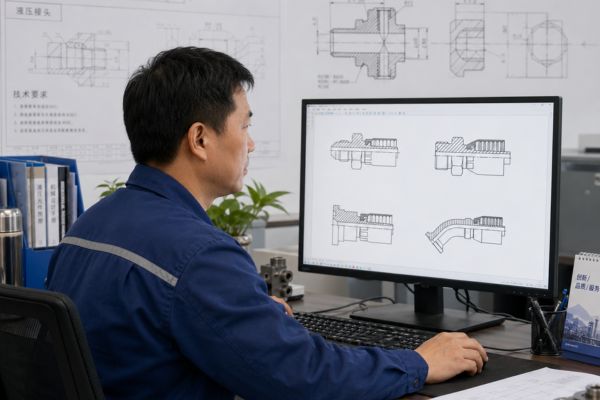
Crimp Hydraulic Fitting CAD

Record sample results

Keep alternative fittings separate from approved inventory while they are being evaluated. Record the original and proposed part numbers, hose details, drawings, measurements, assembly settings, and final result.

If the fitting fails to insert or crimp correctly, stop and investigate. Possible causes include an incorrect hose, fitting series, ferrule, die, insertion depth, preparation method, or crimp specification.

Inspection and testing must follow appropriate safety procedures. Shut down equipment and release hydraulic pressure and stored energy before working on a hydraulic system. Never use a bare hand to search for a pinhole leak or disassemble a pressurized connection.

A successful sample applies only to the tested combination. It does not automatically approve every size or configuration in the alternative product series.

Build a Cross-Reference Record That Can Be Reused

Create one controlled comparison sheet

Record the evidence behind each approved alternative so the next order does not depend on personal memory. The cross-reference sheet should connect purchasing, receiving, warehouse, and assembly information.

Use clear approval statuses

A candidate cross-reference should not enter normal stock until it has a defined status. Use categories such as:

Frequently Asked Questions

Can I cross-reference a fitting using only its part number?

A confirmed part number can identify a candidate, but it should be supported by hose, thread, seat, seal, material, and dimensional information. This protects the order from coding differences, discontinued references, and unverified substitutions.

Are two fittings interchangeable if they have the same thread?

No. Their seat angles, sealing methods, hose tails, ferrules, materials, orientations, or application limits may differ. Confirm the complete connection and hose assembly.

Can photographs confirm a one-piece fitting cross-reference?

Photographs help identify possible product families but cannot reliably confirm thread pitch, seat angle, internal dimensions, or hose compatibility. Use them together with measurements and technical documents.

Can the original crimp setting be used for an alternative fitting?

Not unless the setting is approved for the proposed fitting and hose combination. A different stem or ferrule design may require different tooling, preparation, and crimp dimensions.

When should a cross-referenced fitting be trial-ordered?

Use a trial order when the technical comparison identifies a suitable candidate but the new product or supplier has not been approved. Define the dimensional, assembly, labeling, and acceptance checks before ordering.

How to Start a Trial Order for One-Piece Fittings

How to Start a Trial Order for One-Piece Fittings

A trial order for one-piece fittings should verify compatibility, assembly accuracy, product consistency, and supply suitability before you commit to a larger purchase. The safest approach is to begin with a controlled group of familiar, frequently used part numbers—not an entire catalog—and define how every fitting will be checked before placing the order. This reduces the risk of receiving parts that look correct but do not match your hose, thread, sealing, or crimping requirements.

What Should a Trial Order Actually Prove?

A trial order is a technical and commercial test

The purpose of a trial order is not simply to see whether the supplier can ship a box of fittings. It should help you answer a practical question: can these one-piece hydraulic fittings be identified, assembled, stocked, and reordered without creating unnecessary errors? A useful trial therefore evaluates the complete purchasing process, from part-number confirmation to incoming inspection and hose assembly.

One-piece fittings combine or preassemble the fitting stem and ferrule as one assembly, although the exact construction varies by product series. This structure can reduce the chance of selecting the wrong separate ferrule during picking and assembly. It does not automatically guarantee compatibility with every hose of the same dash size, correct crimping, or a leak-free connection.

order of one piece Fitting

Define the decision before requesting a quotation

Before choosing trial items, decide what will happen after the evaluation. You may expand the order, request corrections, repeat the trial, or stop purchasing that series. Without these decision rules, a trial can become a small purchase that produces no reliable conclusion.

Your evaluation should cover four areas:

A low unit price should not override a failed technical check. The cost of sorting mixed parts, rebuilding hose assemblies, handling complaints, or stopping equipment can exceed the difference between two quotations.

Which Fittings Should You Include in the First Order?

Begin with known and regularly used part numbers

The best trial candidates are fittings whose specifications and normal use are already understood. Familiar parts give you a reference for comparing dimensions, assembly behavior, identification, and finished hose assemblies. If you begin with an unusual fitting that your team rarely handles, it may be difficult to determine whether a problem comes from the fitting, the hose, the crimp setup, or incomplete application information.

Use your own sales, repair, or consumption records to select the initial group. There is no universal number of SKUs that works for every business. A suitable trial range depends on the thread systems used in your market, the hoses you stock, the equipment you support, and the applications in which the assemblies will operate.

Good trial candidates usually have one or more of these characteristics:

Keep unclear and high-risk applications outside the first trial

Do not use a first trial order to make an uncertain substitution in a safety-critical or severe-duty application. Parts for high-pressure impulses, extreme temperatures, aggressive fluids, heavy vibration, or regulated equipment require a more detailed engineering review. An unclear thread or an incomplete hose specification is also a reason to pause rather than guess.

What Information Should You Confirm Before Ordering?

Confirm the complete connection, not only the part name

A request such as “one-piece fitting, size 1/2 inch” is not enough for accurate selection. The same nominal size may exist in several thread standards, fitting series, hose constructions, and end configurations. A supplier may interpret an incomplete description differently from your purchasing or assembly team.

For each trial item, prepare a line-by-line specification that includes:

Thread form, connection standard, seat angle, and sealing method are separate characteristics. A thread may assemble partially while the sealing faces remain incompatible. Thread sealant must not be used to compensate for a mismatched thread or damaged sealing surface.

Match the fitting to the hose and crimp system

The fitting series must be approved for the specific hose construction and size. Matching dash sizes do not prove that the hose tail, ferrule, and crimp requirements are compatible. The assembly team also needs valid information for crimp diameter, die selection, insertion depth, skiving requirements, and inspection.

Do not apply one crimp diameter or assembly procedure to every product. Use current data applicable to the selected hose, fitting, and crimping equipment. If the required information is unavailable, treat that as an unresolved trial condition rather than creating a value from a visually similar part.

How Do You Build a Low-Risk Trial Order?

Separate confirmed items from items that need clarification

Create a simple trial-order sheet with one row for each fitting. Record your internal part number, supplier reference, complete description, drawing revision, quantity, inspection requirements, and intended hose series. Add a status column such as “confirmed,” “awaiting drawing,” or “technical question open.”

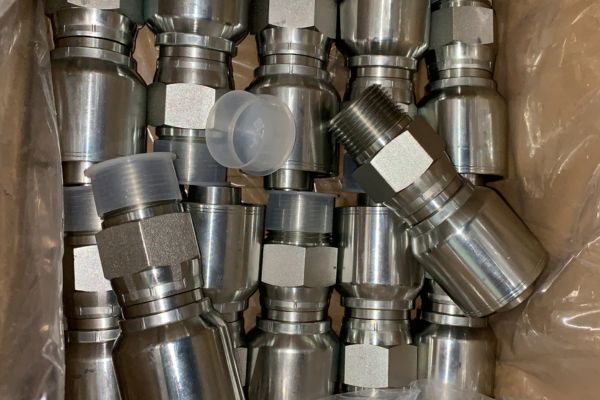
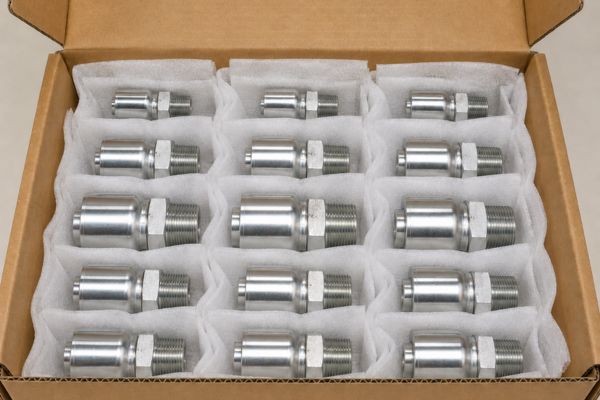
Mixed SKU Packing

This prevents an unresolved fitting from being ordered accidentally with confirmed items. It also gives purchasing, receiving, and assembly teams one shared reference instead of relying on email messages, photos, or handwritten notes.

The following process keeps the trial controlled:

Do not approve the quotation only by comparing the total quantity and price. Check every line because similar descriptions can hide differences in thread pitch, seat type, fitting angle, drop length, material, or hose compatibility.

Define acceptance rules before shipment

Acceptance criteria should be agreed internally before the parts arrive. Otherwise, teams may accept a fitting because it looks usable even though no one has confirmed its critical dimensions or assembly requirements. The criteria should be appropriate to the fitting and its intended application, not copied mechanically across the entire order.

Your inspection plan may include part identification, key drawing dimensions, thread and sealing-face condition, ferrule position, orientation, surface finish, packaging labels, and quantity. Assembly checks should follow the applicable hose and component manufacturer’s instructions. Any performance verification must use an approved procedure suitable for the actual hose assembly and application.

How Should You Inspect and Test the Trial Parts?

Inspect the shipment before mixing it with stock

Keep trial fittings separate from approved inventory until the evaluation is complete. Mixing them too early makes it difficult to trace results or prevent an unapproved part from reaching production, resale, or field repair. Label the storage location and preserve the supplier’s part and batch identification where available.

Start with the documents and packaging. Compare the packing list, labels, quantities, part numbers, and product descriptions with the approved order. Then inspect the parts for transportation damage, corrosion, contaminated sealing surfaces, damaged threads, mixed configurations, or unclear markings.

For each selected sample, verify the dimensions that determine connection and assembly. These may include thread diameter, pitch, seat geometry, sealing features, fitting length, angle, hose-tail dimensions, and ferrule position. Use the approved drawing and appropriate measuring tools; do not rely only on visual comparison with an old fitting.

Evaluate the complete hose assembly

A one-piece fitting should be assessed as part of a hose assembly, not as an isolated metal component. Confirm that the correct hose series, fitting, crimping machine, tooling, and current crimp specification are being used. Record the fitting part number, hose identification, assembly settings, measured crimp result, and inspection outcome.

Before inspection or maintenance, shut down the equipment, release hydraulic pressure and stored energy, and follow the safety procedures provided by the equipment and component manufacturers. Never search for a pinhole leak with a bare hand, disassemble a pressurized connection, or use mismatched components as a temporary way to restore operation.

If a sample does not assemble correctly, stop and determine the cause. Possible causes include an incorrect fitting series, wrong hose construction, incomplete insertion, unsuitable dies, incorrect crimp data, or a dimensional difference. Repeatedly adjusting the crimp setting until the assembly “looks right” does not establish compatibility.

How Do You Record Problems and Decide the Next Step?

Classify deviations instead of giving one pass-or-fail result

A trial order rarely needs one decision for the entire shipment. One part number may be acceptable, another may need a drawing correction, and a third may be unsuitable for the intended hose. Record the outcome for each SKU so that an issue with one item does not hide useful results from the others.

Special Thread or Size Support

Use clear categories such as:

For every deviation, record what was expected, what was received, how the difference was measured, and what action is required. Attach non-sensitive photos of the relevant feature when they help explain the issue. Avoid descriptions such as “quality not good,” because they do not tell the supplier or your team what must change.

Expand only the fittings that passed the defined checks

A successful trial does not mean you should immediately purchase the complete fitting range. Expand first around the approved items that have real demand and clear technical references. Add other thread types, sizes, or configurations only after confirming that your market and customers need them.

When deciding whether to scale the order, consider more than unit price. Review part accuracy, documentation, identification, packaging, assembly consistency, communication during technical confirmation, and the effort required to resolve deviations. A fitting that needs frequent sorting or repeated clarification can create hidden purchasing and operating costs.

Maintain a reference record for future orders. It should connect your internal part number with the approved supplier reference, drawing revision, hose series, crimp data source, inspection result, and purchasing status. This makes repeat orders easier to check and reduces dependence on individual memory.

What Should You Send with a Trial-Order Inquiry?

Give the supplier information that can be checked

A useful inquiry allows both sides to verify the same fitting. Send a structured list rather than a collection of unrelated photos and short messages. If you are evaluating a replacement, make it clear that the existing part number is a cross-reference starting point, not proof of complete interchangeability.

Prepare the following information where it applies:

If some information is unknown, identify it as unknown instead of estimating it. A supplier can then request the necessary measurement or document before quoting. This is slower than guessing during the inquiry, but much faster than correcting a shipment of mismatched parts.

A reliable trial order for one-piece fittings begins with accurate information, familiar part numbers, and written acceptance rules. Correct hose, thread, seal, and crimp compatibility matter more than appearance or the lowest quoted price. Prepare your fitting list, hose details, connection measurements, application conditions, and expected quantities; TOPA can use this information to help you confirm the order details and start with a controlled trial order.

Frequently Asked Questions

How many one-piece fittings should be included in a trial order?

There is no standard quantity for every trial order; choose enough parts to complete receiving inspection and controlled assembly evaluation without creating unnecessary stock. The quantity should reflect your inspection plan, normal demand, application risk, and the number of configurations being checked.

Can I place a trial order using only existing part numbers?

Existing part numbers are useful references, but they should be supported by thread, seat, hose, material, and dimensional information. A cross-reference does not by itself prove that two fittings are fully interchangeable.

Are fittings compatible if the hose and fitting have the same dash size?

No. Dash size helps identify nominal size, but compatibility also depends on hose construction, fitting series, hose-tail design, ferrule, and valid crimp data. Confirm the complete hose-and-fitting combination before assembly.

Should the cheapest fittings be selected for the first trial?

Price can be considered, but the first trial should focus on parts with confirmed specifications and measurable acceptance criteria. A low-priced but unclear item provides little evidence and can increase sorting, rework, and replacement risk.

When is a trial order ready to become a regular order?

A trial item is ready for controlled repeat purchasing after it passes the defined document, dimensional, identification, assembly, and application checks. Approval should remain tied to the confirmed fitting, hose series, specification revision, and intended use.

Contact Topa

Save 30% on maintenance costs with our easy-install hydraulic fittings. Contact Now!