NPSM and NPT are American pipe thread types, but they serve different roles in a connection. NPSM threads are straight and provide mechanical retention. NPT threads are tapered and are used to form a sealed threaded joint with a suitable thread sealant.
For hydraulic fittings, the sealing surface matters as much as the thread. A common female NPSM swivel seals against a matching machined seat on a male NPT or NPTF fitting—not against the threads. This means some NPSM and NPT fittings are designed to work together, but matching the nominal size alone does not establish compatibility.
NPSM threads, or National Pipe Straight Mechanical threads, are a type of straight pipe thread that does not taper. Unlike NPT, an NPSM thread has no intentional taper along its length. Its role is to hold mating components together rather than create a pressure-tight seal through tapered thread interference.
In a common hydraulic arrangement, a female NPSM swivel connects to a male NPT or NPTF fitting with a compatible 30° machined seat. Tightening the swivel nut draws the sealing surfaces together to form a metal-to-metal seal. The straight threads retain the connection and apply the clamping force.
The male fitting must have the correct seat geometry and surface condition. A small chamfer at the bore entrance is not necessarily a suitable sealing seat.
Other NPSM connections may use a gasket or another separate sealing element. Those designs should be identified from the product drawing or manufacturer’s instructions rather than assumed from the NPSM thread designation.
Straight Threads: The primary characteristic of NPSM threads is their straight, parallel threading. This design facilitates a snug fit that relies on an additional sealing method, such as an O-ring or a gasket, to create a leak-proof seal.
Sealing Method: Because NPSM threads are not inherently self-sealing, they typically use O-rings or gaskets to achieve a tight, leak-free connection. This sealing method is beneficial in applications where a reliable, reusable seal is needed.
Thread Design: NPSM threads are designed to match the same thread pitch and diameter as NPT threads, but they do not provide a seal through the threads themselves. Instead, the mechanical strength of the connection is supplemented by the external sealing mechanism.
NPSM threads are widely used in various industries due to their reliable sealing capabilities and ease of maintenance. Common applications include:
Hydraulic Systems: NPSM threads are frequently used in hydraulic systems where precise and reliable connections are crucial for maintaining system pressure and preventing leaks.
Pneumatic Systems: These threads are also popular in pneumatic systems where air-tight seals are necessary to ensure efficient operation.
Automotive Industry: In automotive applications, NPSM threads are used in fuel lines, brake systems, and other critical components that require reliable, leak-free connections.
Examples of Equipment and Systems Utilizing NPSM Threads:
Hydraulic Pumps and Cylinders: NPSM threads are commonly found in hydraulic pumps and cylinders, ensuring secure connections that withstand high pressures.
Pneumatic Tools and Equipment: In pneumatic systems, NPSM threads provide dependable connections for air hoses and tools.
Industrial Machinery: Many types of industrial machinery rely on NPSM threads for various fluid and air connections, ensuring optimal performance and safety.
Easy Assembly: NPSM threads are straightforward to assemble, requiring only basic tools and minimal effort. This ease of assembly reduces installation time and labor costs.
Reliable Sealing: When used with appropriate O-rings or gaskets, NPSM threads provide highly reliable, leak-free connections. This is particularly beneficial in systems where frequent disassembly and reassembly are required.
Reusability: The use of external seals means that NPSM threaded connections can be disassembled and reassembled multiple times without compromising the integrity of the seal.
Versatility: NPSM threads are compatible with a wide range of sealing materials and can be used in various applications, from high-pressure hydraulic systems to low-pressure pneumatic systems.
Need for External Seals: One of the primary limitations of NPSM threads is their reliance on external sealing mechanisms. Without an O-ring or gasket, NPSM threads cannot form a leak-proof connection, which can be a disadvantage in some applications.
Not Suitable for All Environments: The effectiveness of the seal in NPSM threads depends on the material and condition of the O-ring or gasket. In environments with extreme temperatures or aggressive chemicals, these sealing materials may degrade, leading to potential leaks.
Maintenance Requirements: Regular inspection and maintenance of the sealing elements (O-rings or gaskets) are necessary to ensure ongoing leak-free performance. This can increase the overall maintenance burden compared to self-sealing thread types like NPT.
Pressure Limitations: While NPSM threads are suitable for many high-pressure applications, they may not be the best choice for the highest-pressure systems where the integrity of the seal is paramount.
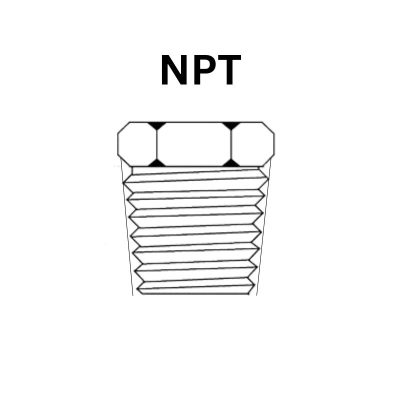
NPT threads, or National Pipe Tapered threads, are a type of pipe thread used widely in North America. They have a taper of 1° 47′ 24″ (1.7899°) resulting in a 1/16 taper over one inch of length. This tapering design helps create a tight seal through the interference fit between the male and female threads.
Tapered Threads: The key characteristic of NPT threads is their taper. As the threads advance, they become tighter, creating a seal through the deformation of the threads.
Sealing Method: The primary sealing method for NPT threads involves the interference fit and deformation of the threads. This often requires the use of a thread sealant, such as Teflon tape or pipe dope, to ensure a leak-proof connection.
Thread Design: NPT threads are designed to tighten as they are screwed together, with the tapered nature of the threads increasing friction and creating a seal that holds pressure effectively.
An NPT connection seals at the engaged tapered threads. The sealant helps close potential leakage paths through the threaded joint. Its compatibility with the fluid, temperature, fitting material, and system requirements must be checked before assembly.
PTFE tape and liquid thread sealants are common options, but they are not interchangeable in every application. Follow the component and sealant manufacturers’ instructions, including any restrictions intended to prevent contamination.
NPT threads are used extensively across a variety of industries due to their robust sealing capabilities. Common applications include:
Oil and Gas Industry: NPT threads are widely used in pipelines, drilling equipment, and other high-pressure applications in the oil and gas sector.
Water Supply Systems: They are frequently employed in plumbing and water supply systems for their reliable sealing properties.
HVAC Systems: NPT threads are utilized in heating, ventilation, and air conditioning systems to ensure secure connections in various components.
Examples of Equipment and Systems Utilizing NPT Threads:
Piping Systems: NPT threads are commonly used in piping systems for both liquid and gas transport.
Pressure Vessels: In pressure vessels and tanks, NPT threads provide secure connections for gauges, valves, and other fittings.
Hydraulic Equipment: NPT threads are also used in hydraulic equipment where reliable sealing under high pressure is critical.
Strong Sealing: The tapered design of NPT threads creates a strong, pressure-tight seal through the deformation of the threads, which is effective for high-pressure applications.
Widespread Use: NPT threads are standardized and widely recognized, making them easily available and understood by professionals across various industries.
No Need for External Seals: Unlike NPSM threads, NPT threads do not necessarily require O-rings or gaskets, relying instead on thread deformation and sealant for leak-proof connections.
Cost-Effective: The simplicity of NPT threads often makes them a cost-effective solution for many applications, reducing the need for additional sealing components.
Thread Deformation: The primary sealing method for NPT threads involves thread deformation, which can make the fittings difficult to disassemble and reassemble. Over time, repeated assembly and disassembly can wear down the threads, leading to potential leaks.
Installation Challenges: Proper installation of NPT threads requires experience and skill to ensure a tight seal without over-tightening, which can damage the threads. The use of sealants like Teflon tape must be done correctly to prevent leaks.
Compatibility Issues: NPT threads are not compatible with other types of threads, such as NPSM, without the use of adapters. This can limit their use in systems where different thread types are required.
Sealant Dependency: While NPT threads do not require external seals, they often depend on thread sealants to achieve a leak-proof connection. Incorrect application of sealants can compromise the integrity of the seal.
NPTF (National Pipe Tapered Fuel) Threads
NPTF Threads: Also known as Dryseal threads, NPTF threads are designed to create a pressure-tight seal without the use of sealants.
Key Characteristics: NPTF threads have the same taper as NPT threads but are manufactured to stricter tolerances. The threads deform slightly to create a seal when tightened, eliminating the need for additional sealing materials.
Applications of NPTF Threads:
NPS (National Pipe Straight) Threads
NPS Threads: NPS, or National Pipe Straight threads, are straight threads that do not taper. They are designed for mechanical joining rather than for sealing fluids.
Key Characteristics: NPS threads maintain a constant diameter throughout their length. They rely on a gasket or O-ring for sealing rather than the threads themselves.
Applications of NPS Threads:
Some can, but only as a correctly designed mating pair.
A female NPSM hydraulic swivel can connect to a male NPT or NPTF fitting when the male fitting has the matching machined sealing seat and both components are specified for that connection. In this arrangement, the seal forms between the mating seats—not between the straight female thread and the tapered male thread.
Not every male NPT fitting has the required seat. The fact that two parts can be screwed together does not confirm that they will seal or safely retain pressure.
Before pairing the fittings, check:
The nominal thread size and pitch.
The male and female connection types.
The sealing seat geometry and surface condition.
The manufacturer’s stated mating requirements.
The pressure, temperature, material, and fluid requirements of the complete connection.
This arrangement should not be reversed by assumption. An NPSM male fitting is not a direct substitute for an NPT male fitting in a female NPT port.
A seat-sealed NPSM swivel does not use its threads as the sealing surface. Thread sealant cannot compensate for a missing, damaged, or incompatible seat.
If an adapter has an NPSM swivel connection at one end and an NPT port connection at the other, assess each end separately. The swivel end seals at its seat; the NPT end requires the appropriate threaded-joint assembly procedure.

Pressure Levels: Consider the pressure levels of the application. NPT threads are often preferred for high-pressure applications due to their tapered design that creates a strong, pressure-tight seal.
Sealing Needs: If the application requires a robust, leak-free connection without additional sealants, NPT threads might be more suitable. Conversely, if the system can accommodate an external sealing method like an O-ring or gasket, NPSM threads can be a good choice.
Mechanical Connections: For applications where frequent disassembly and reassembly are required, NPSM threads are preferable due to their straight design and ease of reuse.
Temperature and Chemical Exposure: Evaluate the operating environment, including temperature fluctuations and exposure to chemicals. NPT threads may provide better sealing in harsh environments, whereas NPSM threads with appropriate seals can offer flexibility.
Corrosion Resistance: Consider the material of the fittings and the potential for corrosion. Both NPT and NPSM threads are available in various materials, so choose one that offers the best resistance to environmental conditions.
Assembly Complexity: If ease of installation is a priority, NPSM threads might be preferred due to their straight threading, which simplifies alignment and assembly.
Maintenance Requirements: Consider the long-term maintenance needs. NPSM threads, with their external seals, might require regular inspection and replacement of O-rings or gaskets, whereas NPT threads may have less frequent maintenance needs if properly installed.
NPSM Threads:
Use of Seals: Ensure that appropriate O-rings or gaskets are used to achieve a leak-free connection. Verify that the seals are compatible with the fluid and the operating conditions.
Proper Alignment: Align the threads carefully to avoid cross-threading, which can damage the threads and compromise the seal.
Tightening: Do not overtighten NPSM connections. Tighten until the O-ring or gasket makes contact and forms a seal, then apply a final torque to ensure the connection is secure.
NPT Threads:
Thread Sealant: Apply a suitable thread sealant, such as Teflon tape or pipe dope, to the male threads. Ensure even coverage without excess sealant that could contaminate the system.
Correct Tightening: Tighten the connection until hand-tight, then use a wrench to apply additional turns as recommended (usually 2-3 turns). Avoid over-tightening to prevent thread deformation.
Inspection: After assembly, inspect for any signs of leakage and make adjustments as needed. Ensure that the sealant is properly applied and the threads are not damaged.
Treating Thread Engagement as Proof of Compatibility
Start the connection by hand to check alignment, but do not take smooth engagement as proof of a correct match. Verify the thread designation and sealing interface before tightening.
Using Sealant to Repair an NPSM Seat Problem
On a seat-sealed NPSM swivel, inspect the mating surfaces before assembly. Thread sealant will not repair a scratched cone or create a missing seat. Follow the manufacturer’s instructions for tightening and any specified lubrication.
Applying a Universal Tightening Rule to NPT
Use the fitting manufacturer’s assembly procedure. Do not apply one torque value or a fixed number of additional turns to every NPT connection. Size, material, component design, and sealant affect assembly requirements.
Reassembling Without Inspection
Before reuse, inspect threads and sealing surfaces for damage, wear, and contamination. Replace components that do not meet the manufacturer’s reuse criteria.
The main difference between NPSM and NPT is how the connection is held together and sealed. NPSM uses straight threads for mechanical retention; common hydraulic swivel designs seal at a matching seat. NPT uses tapered threads and an appropriate thread sealant to form a sealed threaded joint.
A female NPSM swivel can work with a correctly seated male NPT or NPTF fitting, but matching the nominal size is only the first check. Confirm the seat, component ratings, and manufacturer’s mating requirements before assembly.
For help identifying a TOPA replacement fitting, provide photographs of both mating ends and their sealing surfaces, along with the size, working pressure, fluid, and temperature requirements.
NPSM threads are straight threads used primarily for mechanical connections, often requiring O-rings or gaskets to achieve a leak-proof seal.
NPT threads are tapered threads that create a tight seal through thread deformation, commonly used in high-pressure applications.
Use NPSM threads when you need easy assembly and disassembly, especially in applications that require external sealing elements like O-rings or gaskets.
NPT threads are ideal for applications requiring strong, pressure-tight seals without additional sealing materials, such as in high-pressure piping systems.
Generally, NPSM and NPT threads are not compatible without adapters, as NPSM threads are straight and NPT threads are tapered.
NPSM is a straight pipe thread used for mechanical retention. NPT is tapered and seals at the threaded joint with a suitable sealant. Common hydraulic NPSM swivels seal at mating metal seats rather than at the threads.