
High replacement frequencies are typically caused by poor maintenance practices, incorrect fitting selection, or excessive environmental stress on the lines. Imagine a high-pressure line suddenly bursting on your primary excavator during the peak of a construction project. This failure doesn’t just stop work; it creates a cascade of costs from lost labor hours to expensive fluid cleanups. To solve these recurring issues, you must implement a rigorous strategy for hydraulic hose assembly replacement that identifies hidden wear before it leads to disaster.
When Should You Replace Your Hydraulic Hose?
A proactive hydraulic hose assembly replacement should occur whenever you detect visible reinforcement wire, permanent kinks, or when the component exceeds its five-to-seven-year recommended service life. Relying on “run-to-failure” management is a high-risk strategy that compromises safety.

Is Your Maintenance Schedule Frequent Enough?
You need to establish a routine that aligns with your specific equipment duty cycle.
- Perform visual checks daily.
- Conduct deep inspections monthly.
- Schedule total system refreshes annually.
Think about it: most failures occur because small issues were ignored for too long. If you stay ahead of the wear cycle, you save significantly on emergency repairs.
How To Determine The Exact End Of Life?
Monitoring the manufacture date printed on the hose layline is essential for you to track aging.
- Check for brittle outer covers.
- Look for loss of flexibility in cold weather.
- Monitor for weeping at the crimp points.
Here is why: rubber naturally degrades over time regardless of use. Maintaining a log of every installation ensures you never run an expired line.
| Component | Lifespan Factor | Action Required |
| Rubber Hose | 5-7 Years | Periodic Replacement |
| Reinforcement | Stress Cycles | Visual Inspection |
| Inner Tube | Fluid Heat | Compatibility Check |
Keeping precise records of installation dates allows you to predict failure points with much higher accuracy.
What Are The Warning Signs Of Hose Failure?
Identifying signs of failure early is critical for a timely hydraulic hose assembly replacement and maintaining the integrity of your hydraulic hose fitting. You must look for external symptoms that indicate internal structural breakdown.
Are You Seeing Physical Bulges Or Blisters?
When you see a blister on the hose cover, it usually means the inner tube has failed and fluid is trapped under the outer layer.
- Immediately depressurize the system.
- Replace the entire assembly.
- Check for high-pressure spikes.
But that’s not all; these blisters are ticking time bombs that can burst without warning. If you ignore them, you are risking a high-pressure fluid injection injury.
What Does Visible Wire Reinforcement Mean?
Seeing the steel braid means the protective outer cover has worn away, leaving the structural core of your system vulnerable to rust.
- Inspect for abrasion points.
- Install protective sleeves.
- Reroute hoses away from moving parts.
Look at it this way: the wire provides the strength to hold thousands of PSI. Once moisture reaches that metal, corrosion will quickly lead to a catastrophic burst.
| Warning Sign | Risk Level | Immediate Step |
| Cover Abrasion | Medium | Install Guard |
| Exposed Wire | High | Immediate Change |
| Fluid Weeping | Critical | System Shutdown |
Visual indicators are your first line of defense in preventing equipment damage and ensuring operator safety.
How Does Environmental Stress Impact Hose Life?
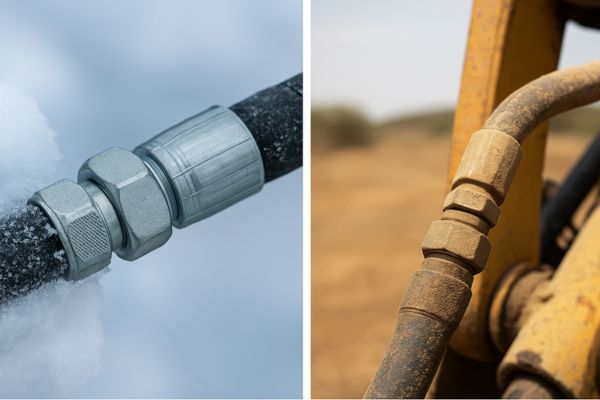
Environmental conditions often accelerate the need for hydraulic hose assembly replacement by degrading the chemical bonds of the rubber. You must account for temperature extremes and UV exposure when calculating your maintenance intervals.
How Does High Ambient Heat Damage Hoses?
If you operate machinery in high-heat environments, the rubber in your hoses will eventually harden and crack.
- Use heat-reflective shields.
- Ensure proper airflow around lines.
- Select high-temperature rated materials.
Believe it or not, a small increase in operating temperature can cut a hose’s life in half. You must monitor your fluid coolers to protect your rubber components.
Can Cold Weather Cause Premature Cracking?
Extreme cold makes rubber brittle, meaning any flex or vibration can cause the outer cover of your lines to shatter.
- Warm up systems slowly.
- Use low-temperature specialized hoses.
- Avoid sharp bends in cold climates.
Here is the deal: if you force a frozen hose to move, you are creating microscopic fractures. These cracks will grow under pressure and lead to early failure.
| Stress Factor | Effect on Hose | Solution |
| UV Radiation | Surface Cracking | Protective Sleeving |
| High Heat | Inner Tube Hardening | Improved Cooling |
| Chemical Exposure | Cover Softening | Compatible Materials |
Environmental protection is just as important as pressure ratings when you want to extend the life of your assemblies.
Why Does Incorrect Installation Lead To Failure?
Poor installation technique is a leading driver of premature hydraulic hose assembly replacement and often damages the JIC hydraulic fitting connections. You must ensure that every line is routed with enough slack to handle pressure-induced length changes.
Is Your Bend Radius Too Tight?
When you bend a hose beyond its manufacturer-specified limit, you put immense stress on the wire reinforcement.
- Check the minimum bend radius.
- Use 90-degree adapters to reduce strain.
- Ensure hoses don’t pull tight under load.
It’s a simple fact: a tight bend restricts flow and creates a localized hot spot. You will see failure at the outside of the bend much faster than expected.
Are Your Lines Twisted During Assembly?
Twisting a hose during installation significantly reduces its ability to withstand high pressure and vibration.
- Use two wrenches for tightening.
- Follow the layline for alignment.
- Ensure swivel joints move freely.
Make no mistake; even a small twist can weaken the reinforcement structure. You must keep the layline straight to ensure the hose can expand and contract naturally.
| Installation Error | Structural Impact | Preventive Measure |
| Over-tightening | Damaged Threads | Use Torque Specs |
| Hose Twisting | Internal Stress | Follow Layline |
| Excessive Length | Abrasion Risk | Secure with Clamps |
Proper routing and securing techniques prevent the mechanical friction that causes most premature hose failures in heavy machinery.
What Role Does Operating Pressure Play In Wear?
Constant pressure fluctuations dictate the frequency of your hydraulic hose assembly replacement schedule. You must ensure your components are rated for the maximum surge pressure, not just the working pressure.
Are Pressure Spikes Killing Your Hoses?
If your system experiences frequent surges, you are stretching the reinforcement wires until they eventually fatigue.
- Install pressure relief valves.
- Use multi-wire spiral hoses for surges.
- Monitor system gauges for spikes.
Here is the truth: a single spike over the rated limit can permanently damage the inner tube. You need to select hoses with a high safety factor to handle these events.
How Does Vibration Affect Crimp Joints?
High-frequency vibration from pumps and valves can cause the hose to “saw” against the fitting, leading to leaks.
- Use vibration-dampening clamps.
- Install flexible hose tails.
- Check for loose mounting brackets.
Think about it: every vibration cycle is a tiny bit of wear on the assembly. If you don’t secure your lines, you will see the fittings blow off prematurely.
| Pressure Type | Impact on Assembly | Requirement |
| Constant Pressure | Gradual Wear | Standard Rating |
| Surge Pressure | Instant Failure | Spiral Reinforcement |
| Pulse Pressure | Fatigue Cracking | High Cycle Rating |
Matching your hose’s pressure and pulse rating to your actual machine output is the best way to prevent unexpected blowouts.
Are Your Hydraulic Fittings Causing Early Leaks?
Using the wrong metric hydraulic fittings will result in a leak that forces an unnecessary hydraulic hose assembly replacement. You must verify thread types and sealing surfaces before completing any assembly.

Are You Mixing Different Thread Standards?
Trying to force incompatible threads together will destroy the seal and lead to high-pressure leaks.
- Use thread gauges for identification.
- Avoid mixing Metric and BSP standards.
- Check for seat angle compatibility.
You might not notice the mismatch immediately, but it will fail under load. If you want a leak-free system, you must be 100% sure of your fitting types.
Is Corrosion Eating Your Fitting Seats?
Corroded fittings prevent a proper metal-to-metal seal, making it impossible for you to stop a leak even with tightening.
- Use plated or stainless steel fittings.
- Check for salt spray damage.
- Replace fittings with pitted surfaces.
But that’s not all; a corroded fitting can also contaminate your entire hydraulic oil supply. You need to use high-quality, corrosion-resistant components in harsh environments.
| Fitting Issue | Resulting Problem | Solution |
| Thread Galling | Permanent Leak | Lubricate Threads |
| Seat Damage | Fluid Spray | Replace Fitting |
| Wrong Size | Connection Failure | Verify with Calipers |
Selecting the correct, high-quality fitting ensures the hose remains the only wear item in your system, rather than the connection point.
How Can Regular Inspection Save Your Equipment?
Implementing a strict inspection routine significantly lowers the total cost of hydraulic hose assembly replacement over the long term. You should view inspection as an investment in uptime rather than a chore.
What Should You Look For Daily?
Spending five minutes walking around your machine can prevent hours of downtime later in the day.
- Check for oil puddles on the ground.
- Look for shiny spots on the hose cover.
- Touch connections to feel for dampness.
Here is why: small leaks are warnings that a bigger failure is coming. If you catch a weep now, you can plan the repair during scheduled downtime.
How Do You Document Hose Health?
Keeping a digital or paper log of every hose inspection helps you identify patterns of failure across your fleet.
- Record the hours on the machine.
- Note the location of any wear.
- Track the brand of components used.
When you see a specific line failing every 500 hours, you know it’s a design issue rather than a component fault.
| Inspection Task | Frequency | Objective |
| Visual Walkaround | Daily | Find Major Leaks |
| Hand Inspection | Weekly | Identify Abrasion |
| Pressure Test | Annually | Verify Integrity |
Consistent monitoring is the only way to move from reactive repairs to a truly proactive and cost-effective maintenance strategy.
Why Is Material Compatibility Critical For Safety?
Using a hydraulic adapter or hose that is incompatible with your fluid will necessitate a rapid hydraulic hose assembly replacement. You must ensure the inner tube material is rated for the specific oil or chemical in your system.

Is Your Hydraulic Fluid Eating Your Hose?
Some biodegradable or specialized fluids can chemically break down standard rubber inner tubes from the inside out.
- Verify the fluid type in use.
- Consult manufacturer compatibility charts.
- Watch for “spongy” hose syndrome.
Here is the deal: if the fluid is incompatible, the hose will swell and eventually block the flow entirely. You need to match the rubber compound to your specific hydraulic oil.
Can External Chemicals Cause Cover Failure?
Exposure to grease, cleaning agents, or battery acid can soften the outer cover of your hoses, leaving them vulnerable.
- Keep hoses clean of debris.
- Wipe away spilled chemicals quickly.
- Use specialized covers for harsh areas.
Think about it; the cover is the only thing protecting the reinforcement from rust. If you let chemicals sit on the rubber, you are inviting a burst.
| Material | Compatible Fluids | Warning |
| Nitrile | Mineral Oils | Check Temp Limits |
| EPDM | Brake Fluids | Not for Petroleum |
| Stainless Steel | Corrosive Chemicals | High Cost Factor |
Ensuring chemical harmony between your fluids and your rubber components is a fundamental step in preventing internal structural failure.
Can Proper Storage Prevent Premature Aging?
The way you store your spares directly impacts the performance of your next hydraulic hose assembly replacement. You must protect bulk hose and finished assemblies from “shelf aging” caused by the environment.
Are You Storing Hoses In Sunlight?
UV rays are the primary enemy of rubber and will cause your stored hoses to crack before they are ever installed.
- Store hoses in dark areas.
- Use opaque plastic wrapping.
- Keep inventory away from windows.
Best of all, proper storage can extend the shelf life of your parts by several years. If you leave them out in the sun, you are throwing money away.
Does Humidity Affect Your Fittings?
High moisture levels in your warehouse can lead to surface rust on your fitting threads and sealing seats.
- Use desiccant packs in bins.
- Keep parts in original packaging.
- Store fittings off the floor.
Here is why: even light surface rust can prevent a perfect seal. You must keep your connection points pristine to ensure a successful installation.
| Storage Factor | Risk | Best Practice |
| Temperature | Rubber Hardening | Maintain 50°F – 75°F |
| Ozone | Premature Cracking | Keep away from Motors |
| Position | Permanent Kinking | Store Flat or Large Coils |
Maintaining a climate-controlled and dark storage environment ensures that your replacement parts are as reliable as the day they were manufactured.
How Do Quality Components Reduce Replacement Costs?
Investing in high-grade parts from a trusted about us source reduces the overall labor and downtime associated with hydraulic hose assembly replacement. You should focus on the total cost of ownership rather than the initial purchase price.
Why Do Cheap Hoses Cost More?
A low-cost hose often fails twice as fast, meaning you pay for labor and lost production twice as often.
- Compare cycle test ratings.
- Check for international certifications.
- Invest in reputable manufacturers.
But that’s not all; cheap hoses often have inconsistent wall thickness, leading to weak spots. If you buy quality, you only have to do the job once.
Can Better Fittings Save Your System?
High-quality fittings offer tighter tolerances and better plating, preventing leaks and making them easier for you to install.
- Look for precision-machined threads.
- Choose high-salt-spray-rated plating.
- Ensure compatibility with crimp tools.
It’s simple: a fitting that doesn’t leak saves you from wasting expensive hydraulic oil. You will see a fast return on investment through reduced fluid consumption.
Conclusion
Reducing your replacement frequency by 30% or more requires a disciplined approach to maintenance, installation, and component selection. By identifying the warning signs of failure early—such as abrasions, bulges, and corrosion—you can move away from reactive repairs and toward a predictive system that maximizes uptime. Remember that environmental protection, correct routing, and material compatibility are not just suggestions; they are the foundations of a safe and efficient hydraulic operation.
At Topa, we are dedicated to providing the highest quality hydraulic components that stand up to the most demanding industrial environments. Our vision is to empower your business with reliable, long-lasting solutions that minimize downtime and maximize productivity. Stop settling for frequent failures and start building systems that last. To upgrade your system and lower your costs, contact us today for a consultation on your hydraulic needs.
FAQ
Can I reuse hydraulic fittings on a new hose?
No, it is generally not recommended for permanent crimp fittings as the metal is deformed during the initial installation. Reusing them can lead to a weak connection and a high risk of blow-offs.
What’s the best way to prevent hose abrasion?
Using protective sleeves or plastic coil guards is the most effective way to shield the outer cover from rubbing against metal surfaces. Proper clamping also prevents the movement that causes friction.
How do I know if my hose is “shelf-aged”?
You should look for fine cracks when the hose is bent or a chalky appearance on the surface. If the rubber feels hard or brittle rather than flexible, the hose has exceeded its safe storage life.
Can I mix different brands of hoses and fittings?
No, you should avoid mixing brands because crimp specifications and tolerances vary between manufacturers. Using matched components from the same supplier ensures a secure, leak-proof seal.
How do I identify a metric thread versus a standard thread?
The most accurate judgment is to use a thread gauge and calipers to measure the pitch and diameter. Visual inspection alone is often misleading and can result in damaged threads.