R7 thermoplastic hoses kink in tight routing because their internal structural reinforcement collapses when the hose is bent beyond its physical flexibility limits. You deal with the frustration of sudden hydraulic failure and system downtime whenever a hose line folds and blocks flow. This structural damage leads to permanent performance degradation and potential safety hazards for your operators. Bottom line: understanding the mechanics of an R7 thermoplastic hose kink allows you to design safer, more efficient routing systems that stand the test of time.
What Is A Thermoplastic Hose Kink?
An R7 hose kink is a permanent deformation where the internal core tube collapses and creates a sharp flow restriction. An R7 thermoplastic hose kink occurs when the synthetic fiber reinforcement cannot maintain the circular profile of the hose under stress.
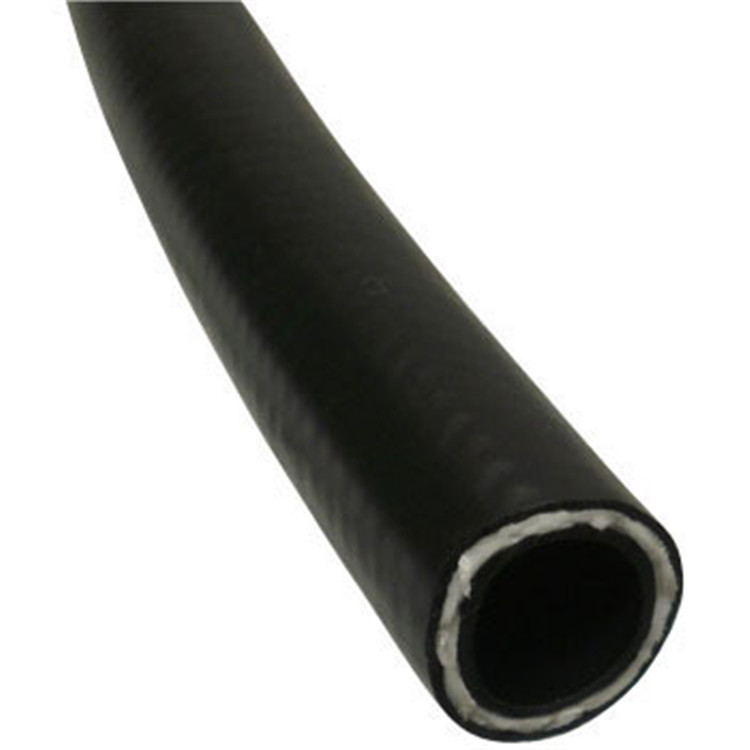
Signs Of Structural Deformation
You can identify a kink by looking for a flattened or pinched section along the hose body. This usually happens at the apex of a sharp turn where the material has reached its limit.
Consequences Of Internal Collapse
The internal core of an R7 hose is designed for smooth fluid passage. When it collapses, it creates turbulence and heat that further weakens the thermoplastic material.
- Kinks cause immediate pressure drops across the system.
- Structural memory prevents the hose from returning to its original shape.
- Flow velocity increases at the restriction point, leading to erosion.
| Damage Type | Visual Indicator | Operational Impact |
| Internal Kink | Flattened profile | Reduced flow and increased heat |
| Outer Cover Crack | Whitening of plastic | Potential for external leaks |
| Fiber Separation | Localized bulging | High risk of catastrophic burst |
Why Does Reinforcement Material Matter?
The reinforcement material in an R7 hose dictates how much stress the assembly can take before it loses its shape. Every R7 thermoplastic hose kink is essentially a failure of the polyester or nylon braids to support the inner tube. These fibers are strong but have less elastic recovery compared to the steel wire used in rubber hoses.
Fiber Braid Stress Limits
Synthetic braids provide high tensile strength for pressure resistance. However, they lack the rigidity to prevent the hose from folding when forced into a radius smaller than intended.
Thermoplastic Material Memory
Thermoplastic hoses are known for their “memory,” which can be both a benefit and a drawback. Once the hose is bent into a kinked position, the plastic tends to stay in that deformed state permanently.
- Nylon and polyester braids are lightweight but susceptible to compression.
- Unlike steel, synthetic fibers do not spring back after a severe fold.
- High-quality reinforcement reduces the likelihood of “necking” during tight turns.
Choosing a hose with superior braid density ensures that the internal core stays open even when the routing is close to the limit.
| Material Feature | R7 Performance | Comparison to Wire |
| Fiber Density | High for pressure | Low for crush resistance |
| Elasticity | Moderate | Lower than rubber/steel |
| Weight | Very Lightweight | Significant weight savings |
How Does Bend Radius Affect Kinking?
Exceeding the minimum bend radius is the most common reason for a structural collapse in a thermoplastic line. If you ignore the manufacturer’s radius specifications, an R7 thermoplastic hose kink is inevitable during the first few cycles of operation. Proper measurement is the only way to ensure the hose operates within its mechanical boundaries.
Defining The Minimum Bend Radius
The minimum bend radius is the tightest curve a hose can reach before its service life is significantly shortened. Going below this number puts immense tension on the outer fibers and compression on the inner core.
Measuring Curves In Tight Spaces
When you measure a bend, you must do so from the inside of the curve to the center of the hose. This ensures you are calculating the actual stress being applied to the reinforcement layers.
- Always check the manufacturer’s data sheet for the specific R7 radius.
- Use a radius gauge to verify the curve in tight compartments.
- Allow for extra length to prevent the hose from pulling tight during movement.
What Role Does Hose Length Play?
Choosing the wrong hose length often forces the assembly into unnatural angles that lead to kinking. An R7 thermoplastic hose kink frequently occurs when an assembly is too short, causing it to pull taut against the fittings. Conversely, a hose that is too long might sag and fold over itself during operation.

Dangers Of Short Hose Assemblies
When a hose is too short, it lacks the slack needed to accommodate system pressure changes. This tension pulls the hose flat at the nearest bend point, creating a permanent restriction.
Problems With Excessive Hose Slack
Excessive slack can be just as dangerous as a hose that is too short. The extra material can loop and eventually fold under its own weight or get caught in moving parts.
- Proper length accounts for the “travel” of moving machinery parts.
- A well-sized hose maintains a natural catenary curve.
| Length Error | Mechanical Result | Correction Method |
| Too Short | High tension and pulling | Increase length by 5-10% |
| Too Long | Sagging and looping | Use clamps or adjust routing |
| Twisted | Torsional stress | Align laylines during install |
Does High Pressure Increase Kink Risk?
High internal pressure can actually help a hose maintain its shape, but pressure spikes can cause sudden kinking. If the system experiences a surge while the hose is already at a sharp angle, an R7 thermoplastic hose kink can form as the hose attempts to straighten itself. This dynamic movement under load is a major cause of failure in poorly routed systems.
Impact Of Pressure Spikes
Sudden surges of hydraulic fluid create mechanical shock within the hose walls. If the hose is already strained by a tight bend, this shock can force the reinforcement to buckle.
Pressure-Induced Hose Movement
As pressure increases, thermoplastic hoses tend to change in length and diameter slightly. If there isn’t enough room for this expansion, the hose will twist or bend sharply to compensate.
- Hoses can contract or expand up to 4% in length under pressure.
- High-pressure pulses vibrate the hose, potentially leading to abrasion kinks.
- Ensure the routing allows for the hose to “breathe” during load cycles.
| Pressure State | Hose Behavior | Risk Factor |
| Static | Remains in fixed position | Low risk |
| Full Load | Length and diameter change | Moderate risk at bends |
| Pressure Spike | Rapid mechanical shock | High risk of kinking |
Why Do Machine Movements Cause Kinks?
Dynamic machinery movement constantly changes the routing path of your R7 assemblies. An R7 thermoplastic hose kink is common in applications where the hose must flex across a pivot or move with a cylinder. If the routing doesn’t account for the full range of motion, the hose will eventually be pulled into a sharp, destructive angle.
Pivot Point Stress Management
Hoses crossing a pivot point are subject to constant bending and unbending. Without enough slack, the hose will pull tight and kink at the center of the pivot during full extension.
Dynamic Routing Strategies
Effective dynamic routing involves using clamps and guides to control how the hose moves. This prevents the hose from “stacking” or folding over itself as the machine retracts.
- Always test the routing through the machine’s full range of motion.
- Use swivel joints if the hose must rotate as well as bend.
- Ensure clamps are tight enough to hold but loose enough to avoid pinching.
| Movement Type | Kink Risk | Prevention Strategy |
| Linear Extension | Pulling/Flattening | Add 10% extra slack |
| Pivot/Rotation | Torsional kinking | Use swivel adapters |
| Multi-Axis | Complex folding | Install hose guides/carriers |
Are Temperature Variations A Factor?
Extreme temperatures change the flexibility and structural stiffness of the thermoplastic materials. An R7 thermoplastic hose kink is more likely to occur in high-heat environments where the plastic becomes softer and more prone to collapsing. Conversely, extreme cold can make the hose brittle, causing it to crack rather than bend when stressed.
Effects Of High Operating Temperatures
When the hydraulic fluid or the surrounding environment gets too hot, the thermoplastic cover and core lose their rigidity. This makes the hose much easier to kink, especially under vacuum or low-pressure conditions.
Cold Temperature Brittleness
In very cold conditions, thermoplastic loses its elasticity. If you try to force a cold hose into a tight bend, the reinforcement may snap or the cover may develop permanent stress marks.
- Standard R7 hoses are usually rated from -40°F to +212°F.
- Operating at the limits of these ranges increases the risk of deformation.
- Heat shields can protect hoses in high-temperature engine bays.
| Temperature Condition | Material Effect | Kinking Risk |
| Extreme Heat | Softening/Collapse | Very High (Low pressure) |
| Extreme Cold | Brittleness/Cracking | High (During movement) |
| Ideal Range | Optimal flexibility | Low (If radius is met) |
How Can External Protection Help?
External accessories can provide the structural support needed to keep a hose from folding. An R7 thermoplastic hose kink can be prevented by using spiral wraps or spring guards that physically limit how tight the hose can bend. These tools act as an external skeleton, ensuring the hose always maintains a safe radius.
Using Spiral Wraps For Radius Control
Heavy-duty plastic spiral wraps add a layer of rigidity to the outside of the hose. They are designed to resist bending beyond a certain point, making them excellent for “forcing” a safe bend radius.
Bend Restrictors At Connection Points
Bend restrictors are sleeves that slide over the hose at the fitting. They provide a graduated transition from the rigid fitting to the flexible hose, preventing sharp folds at the crimp.
- Spring guards protect against both kinking and external abrasion.
- Textile sleeves can bundle multiple hoses to prevent individual sagging.
- Plastic wraps are easy to install on existing assemblies.
| Protection Method | Primary Benefit | Ease of Install |
| Plastic Spiral Wrap | Prevents sharp folds | Easy (Slide-on) |
| Steel Spring Guard | Maximum crush resistance | Moderate (Pre-crimp) |
| Bend Restrictors | Protects fitting joint | Moderate (Pre-crimp) |
What Is The Best Replacement Strategy?
When a kink is discovered, the only safe option is immediate replacement. An R7 thermoplastic hose kink is a sign of permanent structural failure, and the hose will never regain its original pressure rating. Reusing a kinked hose is a gamble that often results in expensive oil spills and dangerous equipment failures.

Why You Cannot “Fix” A Kink
Once the internal fibers have been over-stretched or snapped, the hose’s ability to contain pressure is gone. Even if the hose looks straight after being moved, the internal “bruise” remains a major weak point.
Selecting A More Flexible Variant
If your application keeps kinking standard R7, you may need to look for a “High-Flex” version. These specialized R7 hoses use different braiding techniques to achieve a tighter bend radius without collapsing.
- Never attempt to straighten a kinked hose and put it back in service.
- Keep spare assemblies on hand for critical machine paths.
- Document where kinks occur to improve future routing designs.
A proactive replacement strategy ensures that your operations are never halted by a predictable and preventable hose failure.
| Observation | Recommended Action | Future Prevention |
| Small Kink | Replace assembly | Increase bend radius |
| Outer Cover Wear | Inspect internal layers | Add abrasion sleeve |
| Kink at Fitting | Replace and add restrictor | Use angled fittings |
Conclusion
Failure in tight routing doesn’t have to be your reality. We have explored how proper bend radius, fitting selection, and external protection can eliminate the risks of hose collapse. Our team specializes in engineering high-durability thermoplastic solutions that survive the toughest environments. From custom-length assemblies to specialized kink protection, we provide the components you need for a reliable fluid power system. To optimize your machine’s performance and prevent costly downtime, contact us today . We are committed to advancing the standards of the hydraulic industry through precision engineering and unmatched product reliability.
FAQ
Can I use a heat gun to straighten a kinked R7 hose?
No. Applying heat to a kinked thermoplastic hose will further degrade the molecular structure of the core and reinforcement. This makes the hose even more prone to bursting under pressure and does not fix the internal damage.
What’s the best way to prevent kinking during installation?
The best way is to use the layline (the printed line on the hose) as a guide to ensure the hose isn’t twisted. A twisted hose is much more likely to kink when it is pressurized or moved.
Can I run R7 hoses through tight metal conduits?
Yes, but you must ensure the conduit itself has a radius larger than the hose’s minimum bend radius. If the conduit is too tight, it will force the R7 hose into a permanent kink that you cannot see from the outside.
What’s the best fitting for a tight 90-degree turn?
A forged 90-degree elbow fitting is the best choice because it provides a solid, pre-formed turn. This allows the hose to remain completely straight at the connection, removing all kinking stress from the assembly.
Can I use spring guards on all R7 hose sizes?
Yes. Spring guards are available for almost every diameter of R7 hose and are highly recommended for any application where the hose might be pulled or stepped on, as they prevent the hose from flattening.