
One-piece fitting downtime reduction depends on faster identification, fewer hose-end selection errors, and better repair records. A one-piece hydraulic hose fitting can shorten repair work when the fitting stem, ferrule, hose series, thread type, sealing face, and crimp data are confirmed before assembly, but it cannot make an uncertain thread or unknown hose automatically safe.
Why Downtime Often Starts Before the Hose Is Crimped
Missing information slows the whole repair
A failed hydraulic hose rarely arrives with perfect information. The hose may be dirty, the fitting may be damaged, the thread may be covered with sealant, and the equipment may already be stopped. In that moment, the repair delay often comes from identification work rather than the actual cutting and crimping of the hose.
One-piece fittings help because the fitting body or stem and ferrule are already combined as one assembly. That removes one common decision: which separate ferrule belongs with which stem. The repair still depends on confirming the hose ID, hose construction, connection type, thread pitch, sealing method, and crimp specification. If those details are guessed, the repair may be fast at the bench but slow in the field because the hose has to be remade.
The wrong fitting creates repeat downtime
A hose assembly that leaks after installation usually costs more time than a hose that took longer to identify correctly. A wrong thread can damage the port. A wrong sealing face can leak even when the fitting feels tight. A wrong crimp can cause hose pull-off, cover damage, or early failure under pressure cycling.
For repair work, the practical target is not only speed. The target is a repair that can be installed once, checked once, and recorded for the next service event. One-piece fitting downtime reduction comes from removing avoidable decisions while keeping the technical checks that protect the assembly.
Where One-Piece Fittings Save Time
They reduce hose-end picking mistakes
The main time-saving value of a one-piece fitting is on the hose-end side. With a two-piece fitting system, the stem and ferrule must be selected as a correct pair for a specific hose series and size. In a rushed repair, a similar ferrule can be picked by mistake, especially when multiple fitting families share close-looking sizes.
A one-piece fitting reduces that picking risk because the ferrule is already matched to the fitting stem within that product series. This can make the assembly process more direct, especially for common hose sizes that are repaired repeatedly. It also reduces the chance that a fitting is delayed because the stem is in stock but the matching ferrule is missing.
They do not remove crimp responsibility
The time-saving boundary matters. A one-piece fitting still needs the correct hose series and valid crimp data. The crimp diameter, die selection, insertion depth, skive or no-skive requirement, and inspection method must come from the applicable hose, fitting, and crimping equipment data.
Do not treat one-piece construction as a universal compatibility statement. The same dash size does not prove that the fitting suits every hose with that nominal ID. Before crimping, confirm the hose marking, fitting series, and available crimp specification.
Identify the Connection Before Cutting the Hose
Thread and seal checks prevent return trips
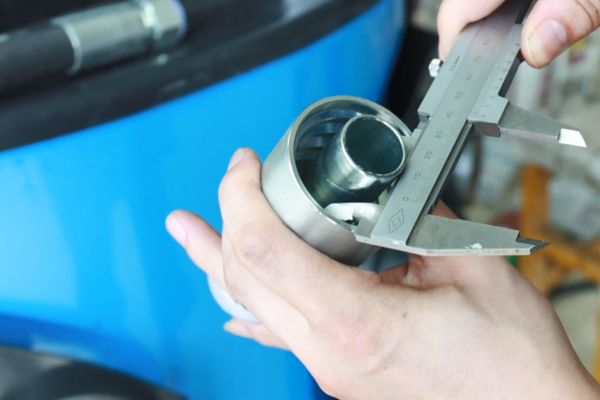
A fast repair fails if the connection cannot be installed at the machine. Before the hose is cut, identify the thread and sealing system. Measure male thread outside diameter or female thread inside diameter, confirm pitch or TPI, and check whether the thread is straight or tapered.
The sealing method is just as important as the thread. JIC, ORFS, BSPP, BSPT, NPT, NPTF, Metric, DIN, SAE, and JIS connections can look similar when viewed quickly, but they seal in different ways. Some seal on a flare seat, some on an O-ring face, some under the hex with a washer, and some through tapered thread engagement. A fitting that starts into the port is not automatically correct.
Photos help, but measurement decides
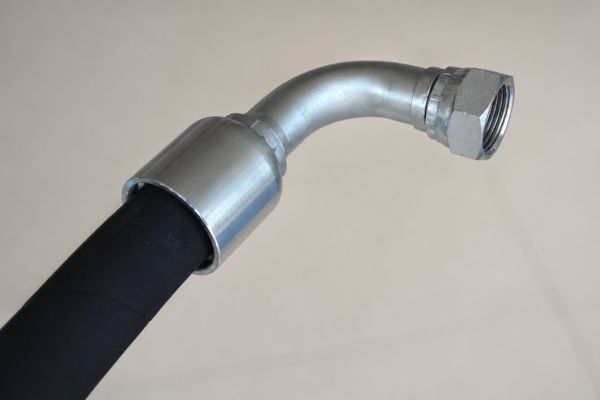
Photos are useful when the failed hose is still on the equipment or when the repair starts away from the bench. Take photos of the complete hose assembly, both fitting ends, the thread, the sealing face, the hose marking, and the routing. These images help confirm orientation and reduce the risk of crimping a 45-degree or 90-degree fitting in the wrong direction.
Photos cannot replace measurement. A picture may show that a fitting is likely BSP, metric, JIC, or ORFS, but it usually cannot confirm pitch, seat angle, or sealing condition. If the old fitting has damaged threads, excessive sealant, crushed washers, or tool marks on the sealing face, treat it as a warning that the previous repair may not have been correct.
Build a Field-to-Bench Information Routine
Bring back the old part and the missing details
Downtime falls when the person collecting the failed hose knows what the assembly bench needs. The old hose assembly is valuable because it gives length, orientation, fitting style, and possible part references. The equipment side is also valuable because it confirms the mating port and the installation conditions.
Before the hose leaves the machine area, collect these details:
- Equipment model or asset number and the hose location
- Clear photos of routing, clamps, guards, and both fitting ends
- Hose marking, hose ID or dash size, and approximate length
- Fitting angle and orientation at both ends
- Thread diameter, pitch or TPI, and straight or tapered thread form when accessible
- Sealing method, such as flare seat, O-ring face, bonded seal, cone seat, or tapered thread
- Working pressure range if known, fluid type, temperature exposure, movement, and abrasion points
Do not skip safety steps under time pressure
Urgent repair work often happens because equipment is needed immediately. That pressure should not lead to loosening fittings under pressure or checking leaks by hand. Shut down the equipment, release hydraulic pressure and stored energy, and follow the equipment and component manufacturer’s safety procedures before inspection or removal.
A hose failure can leave residual pressure trapped in a line, cylinder, accumulator, or attachment. If the repair process starts with unsafe removal, the time saved is not worth the risk. A controlled removal also protects the fitting and port from extra damage, which makes identification easier later.
Stock the Fittings That Actually Reduce Downtime
Common repairs deserve confirmed stock
A large fitting catalog does not automatically reduce downtime. The useful stock is the set of one-piece fittings that match the equipment, hose series, thread systems, and repair frequency actually seen in the work area. High-turn items should be identified from repair history, equipment population, and seasonal demand, not from a universal list.
For each commonly repaired hose, record the hose series, fitting style, thread standard, sealing method, angle, and crimp data reference. This makes it easier to decide which one-piece fittings should be stocked and which should remain special-order items. It also prevents inventory money from being tied up in fittings that look useful but do not match local equipment.
Rare fittings need a sourcing plan
Not every fitting should sit on the shelf. Some low-frequency or equipment-specific fittings may be better handled through a backup purchasing source, cross-check procedure, or planned maintenance kit. The key is to identify those parts before a breakdown occurs.
For rare fittings, keep enough information to quote or order accurately: thread measurements, sealing method, photos, hose series, material or finish requirement, and equipment location. This avoids the weak request that says only “send one BSP hose fitting” or “need metric 90-degree fitting.” Better records turn an emergency search into a controlled replacement process.
Crimp Accuracy Protects the Time You Saved
Fast assembly still needs inspection
The purpose of using one-piece fittings is not to rush past inspection. It is to simplify selection so the technician can spend attention on the checks that matter. After crimping, verify final crimp diameter at the specified location, insertion depth, orientation, and visible hose condition.
If the fitting has rotated during crimping, the hose may not route correctly. If the crimp is uneven, undersized, oversized, or made with the wrong die, the assembly may fail even though the thread and seal are correct. A short inspection at the bench can prevent a much longer second trip to the machine.
Use current data for the actual hose and fitting
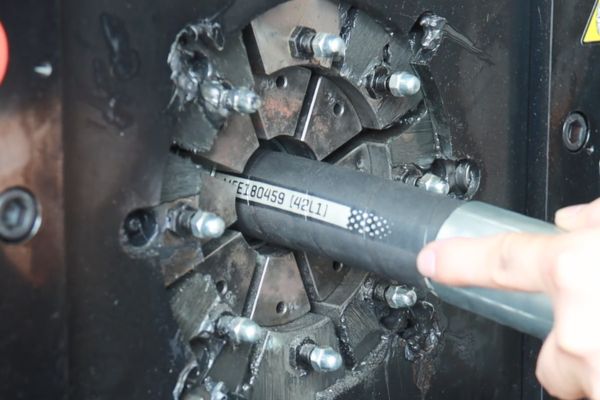
Crimp charts are specific. They depend on the hose, fitting family, size, and equipment used to make the assembly. Do not apply one crimp setting across different hose brands, reinforcement types, or fitting series. If the hose marking is missing and the construction cannot be verified, the repair risk increases.
When data is uncertain, stop and check the hose, fitting, or crimping equipment manufacturer’s information. This is especially important for high-pressure impulse service, lifting functions, steering, braking, mining equipment, agricultural peak-season repairs, and production lines where a second failure can create a larger shutdown.
Record the Repair So the Next One Is Faster
A useful record is more than a part number
The best downtime reduction often happens at the next repair, not the first one. If the completed hose assembly is recorded clearly, the next replacement can start from verified information instead of fresh identification. A useful record includes the hose series, hose size, fitting style, fitting orientation, thread standard, sealing method, crimp data reference, and equipment location.
Part numbers are helpful, but they should not be the only record. A part number may change, come from one supplier’s catalog, or be entered incorrectly. Technical descriptions let another person check whether a proposed replacement is truly the same type of assembly.
Mark exceptions and failure clues
If the old hose showed unusual wear, routing strain, twisted installation, abrasion, heat exposure, or evidence of previous mismatch, record that too. Replacing the hose without recording the cause can lead to repeated downtime. Sometimes the fitting was not the original problem; the hose may have been too short, twisted during installation, rubbing against a bracket, or exposed to movement beyond its bend capability.
A short note after repair can guide the next action. It may show that a clamp needs adjustment, a guard is missing, a hose length should be reviewed, or a different fitting orientation is needed. These notes are not extra paperwork when they prevent the same machine from stopping again.
A Practical Downtime Reduction Checklist
Use this before releasing the assembly
A one-piece fitting repair should be released only when the key checks are complete. The checklist does not need to be long, but it must cover the points that commonly cause a failed installation.
Before the hose assembly is installed, confirm:
- Hose ID, hose series, and pressure suitability for the application
- Fitting series and one-piece fitting style
- Thread standard, gender, pitch, and straight or tapered form
- Seat angle, sealing face, O-ring, washer, or tapered thread seal method
- Fitting angle and orientation compared with the removed assembly
- Crimp diameter, insertion depth, die selection, and inspection location
- Cleanliness of fitting ends, caps or plugs if needed, and visible damage check
- Equipment safety procedure completed before installation and testing
Know when not to improvise
Some repairs should not be solved with a visually similar fitting. Do not improvise when the port is damaged, the thread standard is uncertain, the sealing surface is unclear, or the hose application affects lifting, steering, braking, or personnel safety. Do not use thread sealant to correct a wrong thread or a damaged sealing face.
If a temporary decision is being considered only because the equipment is down, check the risk again. A wrong fitting can turn a hose repair into a damaged valve, damaged cylinder port, contaminated system, or repeated shutdown. The safer approach is to verify the connection and crimp data before returning the equipment to service.
FAQ
Do one-piece fittings always reduce repair time?
No, they reduce time mainly when the fitting series, hose series, thread, sealing method, and crimp data are already known. If the connection is uncertain, identification still has to come first.
Can a repair team stock only one-piece fittings?
Not always. One-piece fittings are useful for common crimped hose assemblies, but some applications may require other fitting styles, special materials, or equipment-specific connections.
What causes the most downtime in hose fitting replacement?
The most common delay is incomplete identification, including unknown thread type, missing hose series, unclear sealing method, and unavailable crimp data. These problems often appear before the crimping work begins.
Is copying the old hose assembly enough?
Only if the old assembly is known to be correct and undamaged. If there are signs of thread damage, heavy sealant, leakage, poor routing, or repeated failure, the assembly should be verified against the equipment port and hose data.
What should be recorded after a repair?
Record hose series, size, fitting type, thread standard, sealing method, orientation, crimp data reference, equipment location, and any failure clues. This makes the next replacement faster and easier to check.