
Pass/fail criteria must be agreed before a trial order because a sample has no decision value unless both sides know what will be checked, how it will be checked, and what happens after a deviation. Appearance, a single successful assembly, or a general statement that a fitting “works” cannot establish repeatable acceptance. Hydraulic fitting trial order criteria should connect product identity, dimensions, threads, sealing features, material evidence, finish, marking, documents, and controlled assembly checks to approved references.
Undefined Trials Produce Conflicting Conclusions
A trial becomes an argument when the buyer and source evaluate different evidence. One side may focus on appearance and price while the other expects drawing conformity, traceable material, or assembly data that was never requested.
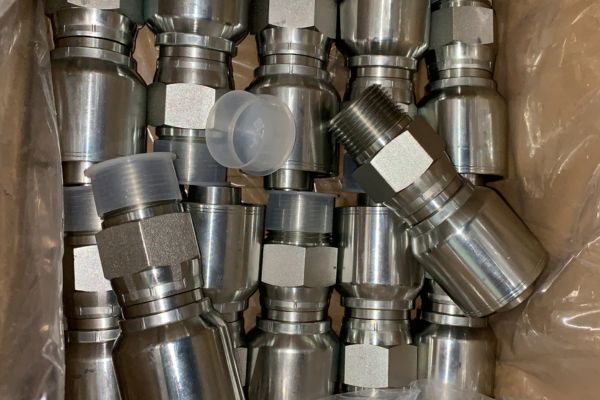
“Looks acceptable” is not reproducible
Subjective impressions vary by reviewer, lighting, comparison sample, and experience. A fitting can look close while its pitch, sealing face, hose stem, ferrule, orientation, or finish requirement differs. Without named characteristics and references, the same sample may be accepted at receiving and rejected during assembly.
Objective criteria identify a feature, requirement, method, and allowable decision. They make disagreement visible before money, inventory, or field risk expands. Subjective observations can still be recorded for appearance, but the acceptance description should be specific enough for another reviewer to apply consistently.
“Worked once” has narrow meaning
One successful connection or crimp does not demonstrate stable dimensional output, batch repeatability, material conformity, pressure suitability, or long-term application performance. It may show only that one identified sample completed one controlled activity under particular conditions.
The trial plan should state whether its purpose is document review, dimensional confirmation, assembly-process evaluation, limited application validation, or several separate stages. Do not let a narrow result become an unsupported claim of complete interchangeability.
Define the Product and Approved References First
Criteria cannot be stronger than the technical definition behind them. Before ordering, establish exactly which fitting configuration and revision are under evaluation and which documents control acceptance.
Complete product identity
Record the part number or cross-reference term, connection type, port and hose size combination, hydraulic fitting series, male or female end, straight or elbow orientation, material and finish requirement, and intended hose series where relevant. Parker or 43 Series terms may support identification, but they do not prove origin or compatibility.
The trial should also identify the proposed lot or sample IDs and expected markings. If several sizes or configurations are included, each requires its own criteria and results rather than a single blanket approval.
Reference hierarchy
Use approved drawings, specifications, applicable standards, equipment requirements, hose and crimp data, and written purchase requirements. If two references conflict, resolve the hierarchy before inspection. A supplier catalog or old sample can help comparison but should not silently replace the governing document.
Reference control should include document number, revision, issue status, and who may approve changes. Never invent a tolerance when an approved reference is missing; mark the characteristic unresolved and obtain a technical decision.
Select Characteristics That Drive the Decision
The checklist should cover the features that control identity, assembly, sealing, installation, and evidence requirements. Not every fitting needs the same list, but omitting a high-consequence feature makes the trial incomplete.
Dimensional and connection characteristics
Relevant checks may include thread form, size, pitch or TPI, straight or tapered construction, seat or sealing face, O-ring location, hose-side stem and ferrule geometry, key overall dimensions, elbow centerline, orientation, and installation clearance. The drawing should identify nominal requirements and tolerances where applicable.
A caliper cannot fully verify a thread standard. Define when thread plug or ring gauges, pitch methods, angle or profile measurement, fixtures, or other instruments are required. Photos may support the record but cannot replace measured data.
Material, finish, marking, and packaging
Material acceptance may require a certificate linked to the delivered heat or batch, while coating or plating needs separate evidence. A generic material statement or finish color does not prove the specified grade or surface system. Corrosion-related test records should be reviewed against the required procedure and sample identity, not used as universal field-life predictions.
Marking, labels, inner packages, and cartons should preserve part and batch identity. Packaging criteria can address segregation, protection, quantity, and required label fields without turning cosmetic preference into an undefined defect.
Link Every Criterion to a Method and Evidence
Acceptance criteria state what must be true; inspection methods explain how the evidence will be obtained. Leaving the method open can produce results that are not comparable or capable of resolving the requirement.
Practical planning table
| Area | Requirement source | Method or evidence | Decision record |
| Product identity | Order line and approved description | Label and configuration reconciliation | Match, mismatch, or unresolved |
| Dimensions and threads | Drawing or specified thread reference | Suitable instruments and gauges | Individual results and pass/fail |
| Seal and hose side | Drawing and assembly data | Visual, dimensional, and document checks | Condition and conformity status |
| Material and finish | Material and surface requirements | Traceable certificates or approved tests | Linked evidence and exceptions |
| Marking and packaging | Purchase specification | Defined visual and record review | Lot-level result |
| Assembly or application | Controlled validation plan | Approved procedure and current data | Limited result with stated scope |
Method capability and records
For each measured characteristic, identify the instrument or gauge, its required status, units, sample identity, and reporting precision. For document evidence, define the identifiers that link the record to the trial batch. For visual checks, describe the defect or required condition instead of writing “good appearance.”
Inspection reports should preserve individual results where individual conformance matters. Averages can hide a failed sample and should not replace the stated acceptance decision.
Plan Dimensional, Material, and Order Controls
A balanced trial evaluates both the fitting and the information system needed to order it again. A technically acceptable sample can still create repeat-order risk if part descriptions, batch links, or revision control are unreliable.
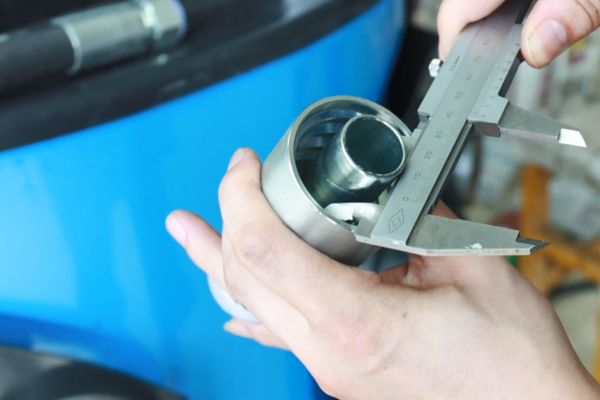
Dimensional and document package
Request a dimensional report that connects each characteristic to nominal requirement, tolerance when available, measured result, method, instrument identity, sample, and pass/fail status. Include thread and sealing checks suitable for the connection. Do not accept a few unlabeled caliper numbers as a complete report.
Material, finish, and batch records should link to the same sample or lot. Review part-number mappings, drawings, labels, carton contents, inspection documents, and purchase order line descriptions for consistency.
Quantity and sampling decisions
Sample quantity and acceptance rules depend on the trial purpose, characteristic risk, lot definition, destructive testing needs, supplier history, and contractual requirements. No fixed number is suitable for every trial. Define the quantity and selection method before receipt so failed pieces are not replaced informally until a pass appears.
Useful pre-trial fields include:
- Trial purpose and intended decision
- SKUs, configurations, lot definition, and sample identities
- Characteristics, references, methods, and acceptance criteria
- Required documents, labels, and traceability links
- Failure response, timing, and responsible reviewers
Keep Assembly and Application Validation Within Safe Limits
Assembly or application checks can add evidence only when the components and procedure are already sufficiently verified for the test. A high-risk field installation is not an appropriate place to discover whether an unknown fitting is safe.
Hose and crimp controls
Before assembly, confirm the exact hose manufacturer, hose series, construction, ID, fitting series, ferrule design, crimp machine, die, and current crimp specification. Matching dash sizes or physical insertion does not establish compatibility. Do not invent a crimp diameter, skive requirement, insertion depth, or pressure value for the trial.
The assembly record should identify components, equipment, settings from the approved data, observations, measurements, and inspection result. Its conclusion applies only within that verified combination.
Controlled application evaluation
Where application validation is required, define the environment, fluid, temperature, pressure and impulse conditions, routing, installation, duration, monitoring, and stopping criteria through competent technical procedures. Safety-critical validation may require specialized facilities and current manufacturer or equipment data.
Stop equipment, isolate hydraulic energy, secure raised loads, and follow lockout and manufacturer procedures during installation or inspection. Never touch a suspected high-pressure leak or approve a hydraulic fitting merely because urgent equipment restart is desired.
Record Deviations and Nonconformities Before They Occur
The plan should explain what happens after a failed or unresolved result. Without a pre-agreed response, commercial pressure can turn a clear failure into an undocumented exception.
Distinguish failure, deviation, and unresolved data
A failure does not meet the approved criterion. A deviation is a known difference proposed for authorized review, not an automatic pass. Unresolved data means the requirement or evidence is insufficient to decide. These statuses should remain separate in the report.
For each issue, record the affected part, sample, lot, characteristic, requirement, actual result, containment, review, and final disposition. Photos may illustrate the issue, but numerical or gauge failures need their underlying records.
Containment and corrective action
Hold affected material and prevent mixing with accepted stock. The agreed response may include expanded inspection, revised documentation, root-cause review, corrective action, replacement samples under a new plan, return, or rejection. Do not silently sort until enough passing pieces remain unless an approved containment procedure explicitly allows and records it.
Corrective evidence should address the cause and affected batch, not only promise that the next order will be better. A new sample should be evaluated against the same controlled criteria or a formally revised plan.
Convert Results Into Expand, Revise, or Stop Decisions
The trial is complete only when the evidence leads to a documented commercial and technical decision. Price should be considered after unacceptable technical risk has been screened out, not used to redefine conformity.
Decision paths
Expand when required criteria pass, records are complete, repeat-order controls are credible, and any limited validation supports the intended scope. Revise when gaps are correctable but prevent current approval, such as an incomplete report, unclear mapping, or approved design change still under evaluation. Stop when critical requirements fail, traceability is unreliable, compatibility is unverified, or corrective action does not resolve the risk.
A conditional decision should state conditions, owner, deadline, affected SKUs, and release limits. Avoid phrases such as “generally acceptable” that leave inventory status unclear.
Preserve the approval baseline
Store the approved drawing revision, sample IDs, reports, certificates, photos, nonconformities, corrective actions, and decision record together. Future receipts should be compared with this baseline and current requirements, not only with the appearance of a retained sample.
Repeatability differs from one acceptable sample. It requires consistent identity, process controls, batch records, inspection evidence, and order accuracy across later lots.
Pre-trial agreement checklist
Before ordering, confirm the complete fitting identity, approved references, trial purpose, lot definition, sample selection, dimensions, threads, sealing features, hose-side geometry, material and finish evidence, marking, labels, packaging, and document set. Assign a method, acceptance rule, evidence format, and responsible reviewer to every required characteristic.
Define safe assembly or application boundaries, unresolved-data handling, containment, deviation authority, corrective-action expectations, and the exact expand, revise, or stop decision. Preserve original data and traceability. If a safety-critical requirement lacks verified technical data, remove it from field trial scope and resolve the evidence gap first.
Conclusion
A trial order creates value only when it answers a decision that was defined in advance. Establish the exact product, approved references, characteristics, methods, evidence, sample identity, and failure response before parts arrive. Separate objective dimensional, thread, sealing, material, finish, marking, and document criteria from subjective impressions. Treat one successful assembly as limited evidence, not proof of repeatability or complete compatibility. Record deviations openly, contain affected lots, and require authorized disposition and corrective action. Then use the combined result to expand, revise, or stop with clear scope. Before release, prepare the drawings, inspection plan, traceability fields, safe validation procedure, and decision owners. Those controls turn hydraulic fitting trial order criteria into a reliable purchasing tool.
Frequently Asked Questions
Can a retained sample serve as the only acceptance standard?
No, a retained sample can support comparison but may not define tolerances, material, or hidden characteristics. Pair it with approved drawings, specifications, methods, and traceable records.
Should price be part of pass/fail criteria?
Price can inform the commercial decision after technical conformity and risk are evaluated. It should not turn a failed safety, compatibility, or specification requirement into a technical pass.
How many pieces should a fitting trial include?
There is no universal quantity. The purpose, lot size, characteristic risk, destructive checks, history, and contractual requirements should determine the approved sample plan.
Does one successful crimp approve the replacement fitting?
No, it provides limited evidence for one identified combination and procedure. Current hose, fitting, ferrule, machine, die, and crimp data plus broader acceptance criteria remain necessary.
What if the drawing has no tolerance for a critical dimension?
Mark the criterion unresolved and obtain an approved technical requirement. Do not invent a tolerance or use visual similarity as the acceptance limit.