Record the port dash and hose dash as two separate, verified fields on every hydraulic fitting order. A fitting-series name alone cannot define both ends, and the connection-side size may differ from the hose-side size. If either value is missing, a quotation can look correct while its fitting connects to the wrong port, accepts the wrong hose, or lacks valid assembly data. The safest hydraulic fitting order specification carries both dash values from the approved drawing into the part description, order line, label, and inspection record.
Why the Fitting Series Alone Is Incomplete
A fitting series describes a product family or construction system, not every characteristic needed to order one exact configuration. It may narrow the hose-stem and ferrule design, but it does not independently establish the connection standard, connection size, hose size, orientation, material, or applicable crimp information.
A family name leaves two interfaces unresolved
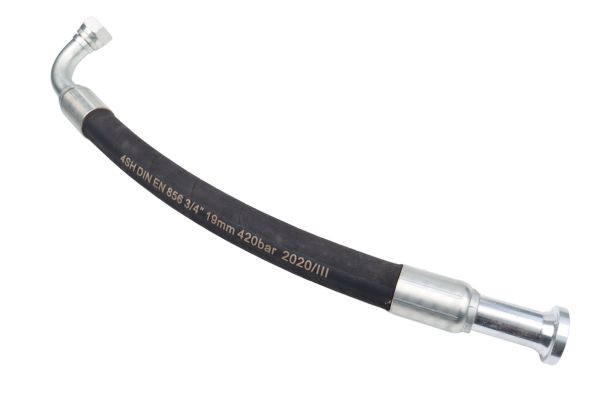
Every hose fitting must be considered at two interfaces. The port side connects to a port, adapter, tube end, flange, or mating fitting and must have the correct thread form, nominal connection size, seat, sealing face, gender, and orientation. The hose side must match the intended hose ID, construction, fitting stem, ferrule, preparation method, and current crimp specification. Naming a fitting series without naming both sides leaves the order open to more than one physical part.
A one-piece fitting illustrates this limit. Its stem or body and ferrule are retained together, but that construction does not prove which port connection or hose series is approved. Series identification remains one field, not a complete interface definition.
The order must describe a configuration, not a category
An order line such as “one-piece elbow, Series X” identifies a category. A controlled order line needs the verified connection type and size, hose-side size, angle or form, and any other characteristics needed to distinguish the SKU. If the connection is a swivel, the description must also identify the actual connection and sealing method; “female swivel” alone does not define the thread, seat, or seal.
This distinction affects more than purchasing. A vague category can be interpreted differently during quotation, order entry, picking, receiving, and inspection. Once an incomplete description is copied into several documents, people may assume that the repeated text has been verified even though the missing interface was never defined.
Port Dash, Hose Dash, and Mixed Combinations
Port dash and hose dash serve different identification roles. The port dash identifies the nominal size assigned to the connection side under the applicable product or connection convention, while the hose dash relates to the nominal hose ID or hose-side fitting size used by the applicable hose-and-fitting system.
Similar notation does not create the same meaning
A dash value is shorthand, not a self-contained technical specification. The same printed number can appear in different connection standards, hose systems, or catalogs without proving identical thread geometry, sealing features, dimensions, or application. Port identification still requires the connection standard, thread or flange details, male or female form, seat or sealing face, and other required references. Hose identification still requires the hose manufacturer or accepted specification, hose series, construction, ID, reinforcement, and matching fitting data.
Even when the two dash values happen to match, compatibility has not been established. Matching numbers do not prove that the thread standard is correct, that the hose stem belongs to the intended fitting series, or that a valid crimp specification exists. Treat each dash as a value within its named system and verify the underlying interface rather than relying on numerical resemblance.
Different port and hose dashes may be intentional
A fitting can legitimately combine different nominal connection and hose-side sizes. The equipment interface, routing, or approved assembly specification may require it. The difference must remain visible and verified; copying one dash value into both fields can create the wrong SKU.
Mixed combinations create particular risk when order-entry software, spreadsheets, or human reviewers expect one “size” field. The user may type the port value, the hose value, or a combined notation without defining the order. A reliable record uses separate fields named Port Dash and Hose Dash, while the displayed description states which value belongs to which side.
Where Both Dash Values Must Remain Visible
Both values should travel together through every document that defines, authorizes, identifies, or verifies the fitting. This creates a traceable chain from technical approval to the physical carton and prevents a correct drawing from being separated from an incomplete commercial description.
Carry the approved combination through the document chain
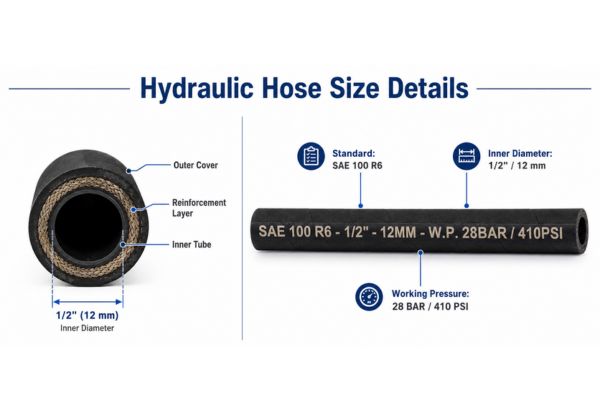
Start with a controlled product drawing, verified technical record, or other approved reference that distinguishes the connection end from the hose end. Copy the values into structured quotation and order fields rather than retyping an unlabeled pair. The purchase order, acknowledgment, receiving record, and inspection report should preserve the same relationship and reference the same part number or controlled description.
At minimum, review the following locations:
- product drawing or approved specification, including the connection standard and hose-side definition;
- quotation, purchase order, order acknowledgment, and each affected order line;
- internal SKU record, cross-reference record, and revision-controlled part description;
- inner-package and carton labels, especially where similar combinations are stored together; and
- receiving check, dimensional or thread inspection record, and any nonconformity record.
Keep physical labels linked to the order line
A carton label should show enough controlled identity to connect the contents to the correct order line. When practical within the labeling system, this includes the part number, unambiguous description, port dash, hose dash, quantity, and relevant lot or batch reference. If the label displays only a family name and one unlabeled dash value, warehouse personnel cannot reliably tell whether the number describes the connection or the hose side.
When cartons are split, inner packaging should retain the controlled identity. Otherwise, similar SKUs with one different interface can be mixed after the outer label is removed. Labeling supports identification but does not itself prove conformity.
A Practical Part Description and Order-Line Format
A useful order description names each interface explicitly and follows one consistent field order. The format may be adapted to the company’s ERP, spreadsheet, or drawing system, but the labels must remain clear enough that another reviewer can reconstruct the intended configuration.
Use labeled fields instead of an unexplained number pair
A neutral description can follow this pattern: [Fitting Series] — [Port Connection and Port Dash] — [Hose Dash and Approved Hose Reference] — [Form or Orientation] — [Material or Finish, if required]. This is an explanatory format, not a universal industry part-number rule. The actual values must come from an approved drawing, current product data, or another controlled source.
| Order element | Controlled entry | Main verification source | Risk if omitted |
| Fitting identity | Approved part number and revision, when applicable | Controlled SKU record or drawing | Similar configurations may share an informal name |
| Port side | Connection standard, gender, sealing form, and labeled port dash | Approved drawing and connection data | Wrong thread, seat, seal, or connection size |
| Hose side | Labeled hose dash, hose series or accepted specification, and fitting series | Current hose-and-fitting data | No proven stem, ferrule, or crimp compatibility |
| Geometry | Straight, 45-degree, 90-degree, or other approved form and orientation | Drawing or approved sample record | Installation or routing interference |
| Traceability | Order line, label identity, revision, and lot or batch reference when required | Order and receiving controls | Difficult containment and investigation |
Keep the SKU code separate from its meaning
An organization may encode fields in a local SKU such as SERIES-Pxx-Hyy-FORM, where Pxx represents a controlled port field and Hyy represents a controlled hose field. This example only demonstrates separation; it does not define real dash numbers, brand coding, or an industry standard. A data dictionary must explain every segment, permitted value, revision rule, and source of truth.
The human-readable description and drawing should expose the same relationship so a reviewer can detect a transposition. Preserve an undecodable legacy number as a cross-reference rather than guessing its meaning.
Verify the Dash Combination Before Order Approval
Order approval should compare the commercial line with the technical source and the intended hose assembly. The purpose is not simply to confirm that both fields are filled; it is to confirm that each value refers to the correct interface and that the complete combination is supported.
Review from the port toward the hose
Use a repeatable sequence so an early assumption does not control the rest of the check:
- Confirm the mating port or connection standard, gender, thread or flange form, sealing method, and required nominal connection size.
- Confirm the selected fitting’s port dash against the approved drawing or current connection data.
- Identify the hose manufacturer or accepted specification, hose series, construction, hose ID, dash size, reinforcement, fluid, temperature, and application requirements.
- Confirm that the fitting stem, ferrule, and hose dash belong to an approved hose-and-fitting combination.
- Check current instructions for hose preparation, insertion, crimping machine, die set, crimp specification, and inspection criteria.
- Compare the drawing, part description, quotation, order line, label layout, and inspection plan for the same port-and-hose combination.
Do not assemble a fitting when hose-side compatibility or valid crimp data is unclear. A stem entering the hose and a ferrule fitting over the cover are not evidence of approval. The current hose, hydraulic fitting, and crimp-equipment data for the exact combination must govern assembly, and the complete hose assembly remains limited by its lowest-rated component.
Use an independent approval check for high-risk ambiguity
A second review is valuable when two combinations differ by one field, a legacy description has an unlabeled size, or a mixed combination appears unusual. Compare the source documents and resolve differences before releasing the purchase order.
When an old fitting is used for identification, measurements and markings support screening but do not replace verified data. Do not force a candidate fitting into a port as a thread test. If equipment inspection is required, stop and isolate the machine, release hydraulic pressure and stored energy, secure raised loads, follow applicable lockout procedures, and use the equipment manufacturer’s instructions.
Common Order-Entry and Labeling Mistakes
Most dash-size errors arise from lost context, copied defaults, or ambiguous field names. They are preventable when the system separates the interfaces and requires evidence for any change.
Copying one value into both sides
A common shortcut is to enter one “dash size” and let it populate the port and hose fields. This may pass unnoticed when many SKUs use equal-looking values, then fail on a mixed combination. Another mistake is reversing an unlabeled pair during manual entry, especially when drawings, quotations, and labels display the values in different orders.
Other recurring errors include:
- treating a fitting-series name as a complete part description;
- assuming equal dash numbers mean equal standards or physical dimensions;
- dropping the port or hose label when text is shortened for a carton;
- copying a prior order without checking drawing revision or hose-series requirements;
- merging different port-and-hose combinations under one SKU or storage location; and
- approving a substitution from appearance, nominal size, or an unverified cross-reference.
Detect mismatches before receiving inspection
Automated checks can flag blank fields, reversed field order, or an order line that conflicts with the controlled SKU record, but software cannot prove technical compatibility by itself. The approved source must still establish the connection and hose-side requirements. A warning should trigger review rather than automatically rewriting one value to match the other.
Receiving inspection should compare the label, order line, drawing, and physical features specified by the inspection plan. If the part identity or dash relationship is uncertain, segregate the affected material and resolve the record before it reaches assembly. Relabeling without confirming the physical part only converts a visible discrepancy into a hidden one.
Neutral Order-Information Checklist
A release-ready record should let purchasing, receiving, inspection, inventory, and assembly identify the same fitting without oral clarification. Unknown information should remain visibly unresolved until it is verified; it should not be replaced with the most familiar dash value.
Technical and document fields to confirm
Prepare and reconcile:
- approved part number, revision, fitting series, and straight or angled configuration;
- connection standard, male or female form, labeled port dash, thread details, seat, sealing face, and O-ring location as applicable;
- labeled hose dash, hose manufacturer or accepted specification, hose series, construction, hose ID, reinforcement, and fitting-stem or ferrule series;
- current hose preparation, insertion, crimp-equipment, die, crimp, and inspection data for the exact assembly combination;
- material, surface finish, fluid, temperature, pressure, application, and other verified requirements relevant to the order; and
- matching values across the drawing, description, quotation, purchase order, acknowledgment, package label, receiving record, and inspection report.
Conclusion
A reliable hydraulic fitting order preserves two separate interface decisions: what connects to the port and what connects to the hose. Record the connection standard, sealing form, and port dash independently from the hose series, construction, ID, fitting stem, ferrule, and hose dash. Then carry that verified combination through the drawing, SKU description, quotation, order line, package label, receiving check, and inspection report. A series name, matching dash numbers, or an old code can support identification, but none proves the complete configuration or crimp compatibility. Before release, reconcile every document with current technical data and resolve blank or conflicting fields. This disciplined treatment of port dash and hose dash prevents ambiguity from becoming an incorrect order or unsafe assembly.
FAQ
Can the port dash and hose dash be different on one fitting?
Yes, one fitting can intentionally use different nominal sizes on its connection and hose sides. The combination must be supported by approved technical data and recorded with labels that show which dash belongs to each interface.
Does the same dash number mean the port and hose are compatible?
No, matching dash numbers do not prove compatibility. The connection standard, thread and seal, hose construction, fitting series, ferrule, and current crimp data must still be verified.
Is a fitting-series name enough for a repeat order?
No, a fitting-series name is not a complete repeat-order description. Confirm the controlled part number or drawing revision, port connection and dash, hose dash, geometry, and applicable assembly data before copying the order.
Which document should be the source of truth for dash values?
Use the approved technical record designated by the organization, such as a controlled drawing or verified SKU specification. Commercial documents and labels should reproduce its values and revision rather than becoming independent sources.
What should happen when the carton label and purchase order disagree?
Segregate the affected material and resolve the discrepancy before release to inventory or assembly. Compare the physical part, controlled drawing, order line, and inspection requirements; do not relabel it based on an assumption.