
Reliable one-piece fitting warehouse picking depends on controlled product identity, not visual recognition. Similar fittings can differ in thread standard, sealing feature, port dash, hose dash, fitting series, angle, material, or finish while sharing nearly the same silhouette. If descriptions, bins, inner labels, cartons, and picking records do not use the same fields, a correct order can receive the wrong component. The practical solution is to maintain one SKU identity from receipt through final packing, separate easily confused attributes, and verify exceptions before substitution.
Similar Fittings Are Easy to Mispick
One-piece construction keeps the stem or body and ferrule preassembled, attached, or retained together, which can reduce separate ferrule selection. It does not make different series or connections visually distinguishable and does not prove hose compatibility.
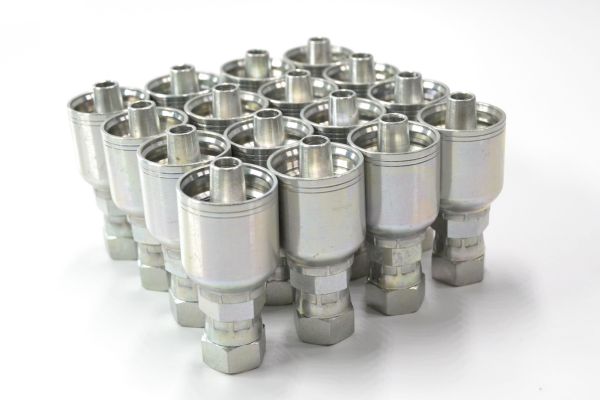
Appearance hides functional differences
Two fittings may share body shape and nominal size while using different thread form, pitch or TPI, taper, seat, sealing face, or O-ring location. Straight, 45-degree, and 90-degree configurations can also have different installation envelopes even when both ends appear similar. Color and finish appearance are weak identifiers because lighting, surface treatment, storage condition, and batches can change how parts look.
Port dash and hose dash create another common trap. They refer to different ends and may be unequal on a reducer. A label showing only “-8” leaves staff guessing which side it describes. The fitting series must also remain visible because identical hose dash values do not establish the same stem, ferrule, hose construction, or crimp data.
Mixed stock multiplies ambiguity
Broken packages, returns, loose pieces, and overflow stock can introduce a different SKU or batch into a bin. Once mixed, counting accuracy does not restore identity. Segregate uncertain parts and verify connection, dimensions, hose side, markings, and traceability before returning them to usable stock. Never place a close-looking fitting into a bin merely because its expected location is nearby.
Receiving and replenishment can create the same risk before an order is picked. Verify the inbound carton and inner package against the purchase line before filling a forward-pick location, and do not top up a bin while questionable pieces remain inside. When stock from different batches may share a location, define how lot identity will be preserved through partial picks. A location count proves quantity only; it does not prove that every piece belongs to the expected SKU or traceable batch.
Picking Records Need Complete SKU Fields
A picking list should show the few technical fields that distinguish adjacent SKUs. A part number remains essential, but it is safer when paired with a controlled description rather than treated as a code workers must memorize.
This also allows a second checker to verify the selection without relying on the first picker’s assumptions or product memory.
Define one unambiguous identity
The master item should include connection standard, gender, port dash, hose dash, fitting series, configuration, material, finish, and revision where applicable. Add seat or sealing method when similar connections could be confused. Customer or legacy references may be searchable aliases, but they should resolve to one controlled internal identity instead of replacing it.
Avoid free-text abbreviations that change between sales, purchasing, and warehouse systems. If one record uses “size 8 female elbow” and another uses a part number with no decoded fields, the picker cannot independently check the requested part. Consistent field order also makes differences easier to notice.
Design the picking line for verification
Useful picking fields include:
- Controlled SKU and revision or approved cross-reference
- Connection standard, gender, seat or sealing method
- Port dash and hose dash displayed separately and clearly labeled
- Straight, 45-degree, or 90-degree configuration and orientation detail
- Fitting series, material, finish, quantity, and bin location
- Batch requirement or customer-specific marking when relevant
Do not overload the line with unrelated data. The goal is to expose high-confusion attributes at the decision point. If a required technical field is unknown, stop the order line for clarification rather than using the most similar available SKU.
Bin, Inner-Pack, and Carton Labels Must Agree
Every physical level should point to the same controlled item. Label alignment prevents a correct inner pack from being placed in a carton bearing another SKU and helps detect product that entered the wrong bin.
Use a common label source
Bin labels, inner labels, carton labels, and packing documents should be generated from or checked against the same master data. Human-readable text should accompany a barcode so staff can verify identity when scanning fails or the code is damaged. A barcode does not guarantee accuracy if it encodes the wrong SKU or is attached to the wrong product.
| Label field | Why it matters | Typical error prevented |
| Controlled part number | Connects all records | Alias or memory-based substitution |
| Connection and port dash | Identifies equipment side | Wrong thread or port size |
| Hose dash and series | Identifies assembly side | Hose or ferrule mismatch |
| Configuration | Shows straight or elbow form | Installation interference |
| Material and finish | Preserves specified condition | Incorrect environmental selection |
| Batch or lot | Supports containment | Loss of complaint traceability |
Control relabeling and damaged packs
Relabeling should require confirmation of the physical part, original identity, batch, and reason. Printing a replacement from the expected bin record can perpetuate an earlier mix. Keep damaged or incomplete packs in a controlled location until verification is finished. When repacking is allowed, preserve required quantity, SKU, and batch information.
Display Port Dash and Hose Dash Separately
Dash ambiguity deserves its own control because it can survive several reviews. Staff may recognize the connection correctly but still select the wrong hose tail.
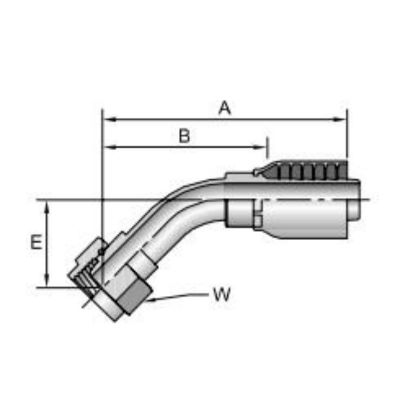
Avoid one generic size field
Use explicit names such as Port Dash and Hose Dash, and keep their order consistent on screens, labels, and documents. If the connection standard uses a nominal pipe size or another designation, do not convert it casually into a hose dash. Record the applicable naming system accurately.
For reducers and uncommon combinations, highlight both values without relying on color alone. Color may help scanning but must not carry the only meaning. Workers with monochrome documents, faded labels, or visual limitations still need readable text.
Verify the complete assembly requirement
Correct dash display does not approve a hose assembly. Suitability depends on hose manufacturer or compatible specification, hose series, construction, size, fitting series, ferrule, crimp equipment, dies, and current crimp instructions. Never substitute a fitting because port and hose dash match while the series or assembly data differs.
Scanning Supports but Does Not Replace Picking Judgment
Barcode or scan verification can compare the requested SKU with the picked label and location. Its value depends on accurate master data, correctly labeled stock, and deliberate exception handling.
Scan independent points
A practical workflow can scan the picking line, bin or product label, and pack destination. The comparison should reject mismatched codes and prevent silent overrides. Scanning the bin label twice does not verify the product inside it, so use the most independent product or inner-pack identity available.
When quantities are split, returns are processed, or stock is moved, update the inventory location and batch relationship through the controlled transaction. Unrecorded movement creates correct scans at incorrect physical locations.
Cycle counting should include identity checks where confusion risk is high. A count that merely confirms the system quantity can miss a bin holding the correct total of two different fittings. Compare the bin label, representative product or inner-pack labels, batch information, and master description. Escalate damaged labels and unexpected loose parts rather than assigning them to the location just to close the count.
Control exceptions visibly
Do not invent system capabilities or assume software blocks every error. Document what happens when a barcode is missing, duplicated, unreadable, or inconsistent with the part. Manual approval should record the verifier, evidence, corrected identity, and disposition. An unavailable ordered SKU is not authorization to scan or ship a similar alternative.
Final Verification Before Packing
The final check should compare the physical item and its inner label with the order line and carton label. It is most useful when independent from the original pick and focused on attributes likely to be confused.
Verify product, quantity, and traceability
Read the controlled part number and compare connection, both dash values, series, configuration, material or finish, quantity, and batch. Inspect packaging for mixed labels or loose pieces. If the product lacks usable marking, verify its identity through approved dimensions, gauges, drawings, or receiving records rather than visual confidence.
Final checks should not become an excuse for weak upstream control. Record mispicks by cause—master data, location, mixed bin, label, scan exception, or human selection—so the process step can be corrected.
For orders with several similar lines, check each line independently and keep verified groups separated until packing is complete. Do not rely on a correct total carton quantity. A swap between two lines can preserve the total while giving both lines the wrong parts. Controlled staging positions or clearly identified temporary containers can support separation without requiring one universal warehouse layout.
Protect safety when an error is found
Do not ship or install a similar-looking fitting to avoid delay. A mispick can create thread damage, wrong sealing contact, installation interference, incompatible hose assembly, leakage, or pull-off. If a suspected error is found after installation, stop equipment, isolate the system, release pressure and stored energy, secure loads, and follow applicable manufacturer and lockout procedures before inspection. Never check a high-pressure leak by hand.
Prevent Recurrence With Warehouse Records
Picking data should improve locations, labels, and master descriptions. The objective is not to blame the last handler but to remove the ambiguity that allowed the error.
Review error patterns
Repeated confusion between the same two SKUs may justify clearer descriptions, physical separation, location warnings, or an extra scan comparison. Repeated dash errors suggest the display order is unclear. Repeated mixed batches may point to repacking, returns, or replenishment practices. Select the control that addresses the observed entry point.
Use a neutral warehouse checklist:
- Confirm the master SKU distinguishes connection, port dash, hose dash, series, angle, material, and finish
- Align bin, inner-pack, carton, and order identities
- Segregate loose, returned, damaged, relabeled, or mixed stock
- Scan independent product and destination identities where the workflow supports it
- Require technical approval for substitutions and visible records for exceptions
- Complete a final product, quantity, label, and batch comparison
- Record mispick causes and update the responsible process control
Conclusion
Warehouse accuracy starts with one controlled product identity carried through every record and package. Make connection standard, port dash, hose dash, fitting series, configuration, material, finish, and batch visible wherever they distinguish similar parts. Keep uncertain, loose, returned, or damaged stock out of normal bins until identity is restored. Scanning can strengthen comparison, but only accurate master data, correct physical labels, and controlled exceptions make it trustworthy. The final pack check should compare the product and inner pack with the order and carton, then feed any error back to its source. A disciplined one-piece fitting warehouse picking process reduces wrong shipments without relying on appearance, memory, or unsafe substitution.
Frequently Asked Questions
Can fittings with the same color be stored as one SKU?
No, color does not confirm thread, seal, dash combination, series, material, or finish specification. Each controlled technical identity needs appropriate segregation.
Should a barcode contain every technical detail?
Not necessarily, but it should resolve reliably to the controlled SKU. Important human-readable fields should remain visible so staff can detect mislabeled or inconsistent stock.
Is scanning the bin enough to verify a pick?
No, a correct bin label cannot prove that the contents are correct. Compare an independent product or inner-pack identity with the requested order line whenever practical.
How should loose fittings be handled?
Segregate them until identity and traceability are re-established through approved records, measurements, gauges, or markings. Do not return them to a bin based only on shape.
Can matching port and hose dash confirm compatibility?
No, fitting series, hose construction, ferrule design, equipment, dies, and current crimp data also control assembly suitability. Matching dash values are only part of identification.