
Select a high-temperature fitting as part of a verified hose assembly and installation, not as an isolated metal component. Select one-piece fittings for high-temperature hydraulic applications must be checked against fluid temperature, ambient air, radiant heat, heat cycling, hose construction, seals, O-rings, coating, fluid chemistry, routing, and current crimp data. The complete assembly is limited by its lowest-rated component, and a metal body that tolerates heat does not approve the hose or sealing materials. A reliable selection begins by mapping every heat source and exposure duration, then confirming product-specific limits and protective measures without assuming that brief, continuous, storage, and operating temperatures are interchangeable.
Map Every Temperature Exposure
Temperature should be described at the component, not only at the machine or room level. Fluid flowing through the assembly, hot air, nearby exhausts, radiant surfaces, process equipment, and cycling between operating and shutdown conditions can produce different limits and failure mechanisms.

Separate fluid, ambient, and radiant heat
Fluid temperature acts from inside the hose and fitting, while ambient air affects outer surfaces and heat dissipation. Radiant heat can warm one side of an assembly even when measured air temperature appears acceptable. Record measurement location, operating state, duration, and expected peaks so a general “high temperature” label does not hide the controlling exposure.
Distinguish continuous and intermittent conditions
A component may have different allowances for continuous operation, short excursions, storage, or non-operating handling. Frequent heat cycles can matter even when each exposure is brief. Use equipment and component documentation to define the applicable condition; do not average peaks into a lower temperature or assume that a short excursion is acceptable without stated approval.
Collect the following operating picture:
- Normal and abnormal fluid temperatures at relevant points.
- Ambient temperature near the entire hose route, not only the fitting.
- Radiant sources, shields, insulation, airflow, and distance.
- Continuous, intermittent, startup, shutdown, and cleaning exposure.
- Expected cycling, inspection access, and consequences of overheating.
Review Metal, Plating, and Surface Treatment
The fitting body, ferrule, nut, and any swivel components need verified material and finish suitability, but their approval cannot be transferred from a generic metal-property table. Exact design, size, connection, material condition, and surface system influence the usable product data.
Metal suitability is product specific
Carbon steel, stainless steel, and other materials include multiple grades and conditions. Strength, corrosion behavior, thermal expansion, and interaction with adjacent parts may differ. Confirm the current rating and application guidance for the exact fitting rather than assuming stainless steel always tolerates more heat or that carbon steel has one universal limit.
Coatings face combined heat and environment
Elevated temperature can interact with plating, passivation, topcoats, contaminants, condensation, and cleaning chemicals. A finish selected for corrosion resistance under ordinary conditions may require separate evidence near heat. Coating color or salt-spray duration does not establish temperature suitability, pressure rating, or field life.
Check whether installation tools, clamps, or repeated thermal movement can damage the finish at exposed locations. Evidence from an untouched sample may not represent a scratched elbow or a ferrule beside a hot, wet guard. The inspection plan should address these combined conditions without inventing a universal service interval.
Seals and O-Rings May Set the Limit
Elastomeric seals often control a connection before the metal body reaches its limit. Material family, formulation, fluid, temperature, compression, aging, and cycling all influence behavior, so a visual match or generic O-ring name is insufficient.
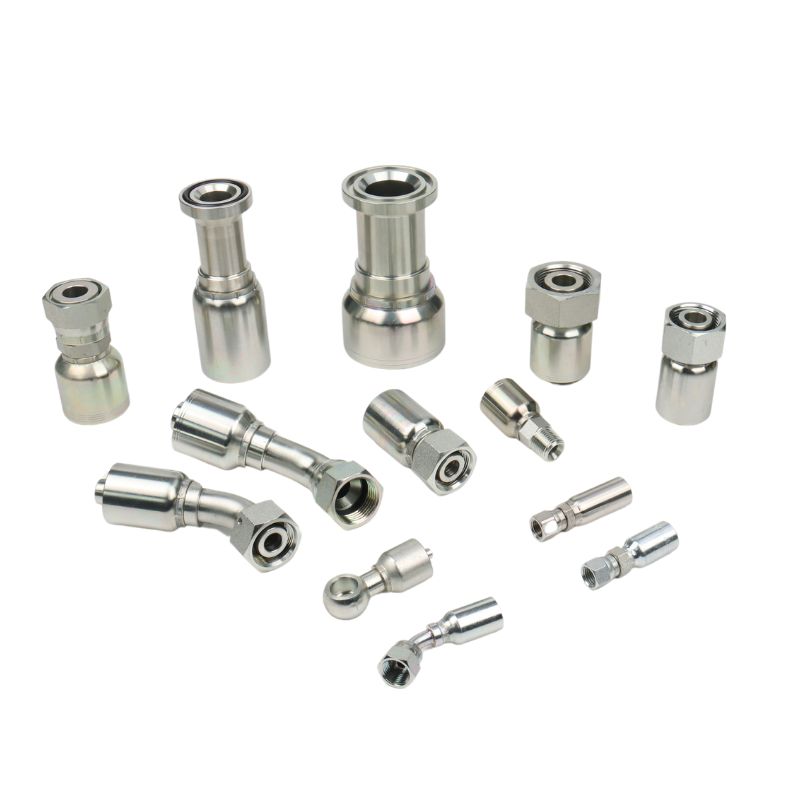
Identify every sealing element
Determine where sealing occurs: tapered thread, flare seat, flat face, cone, bonded seal, O-ring face, port O-ring, or another designed interface. Record each O-ring and seal material, including seals in adapters, ports, valves, and nearby components. A fitting can be mechanically correct yet unsuitable because one unverified seal is exposed to the hot fluid.
Check fluid and heat together
Compatibility tables must be relevant to the exact fluid, concentration, additives, temperature, and exposure duration. Heat can accelerate material degradation or change compression behavior. Do not substitute seal materials or mix compounds to solve a temperature problem without approval from the applicable component and equipment data.
| Review area | Question to answer | Evidence needed |
| Fluid temperature | What reaches the internal surfaces, and for how long? | Measured duty profile and current component limits |
| Ambient and radiant heat | What heats the outside of the assembly? | Route survey, source condition, and product data |
| Metal and finish | Is the exact fitting design suitable? | Part-specific material, coating, and rating information |
| O-rings and seals | Which elastomers contact heat and fluid? | Exact compound identity and compatibility data |
| Hose construction | Which tube, reinforcement, and cover are used? | Current hose-series temperature and fluid data |
| Crimp assembly | Does the exact combination remain approved? | Current fitting, hose, equipment, die, and crimp specification |
Hose Construction and Crimp Data Are Essential
The hose frequently controls high-temperature assembly performance. Tube, reinforcement, cover, adhesive systems, and outside dimensions can respond differently to heat, and matching dash size alone does not establish compatibility.
Verify the exact hose series
Identify the hose manufacturer or accepted specification, series, construction, hose ID, dash size, reinforcement, tube, and cover. Confirm the allowed internal and external temperature conditions with the actual fluid. A cover exposed to radiant heat may have a different risk from the tube carrying hot fluid, so both sides require review.
Use current assembly instructions
Heat can affect hose condition and the long-term behavior of an assembly, but the response is not permission to change preparation or crimp settings. Skive or no-skive method, insertion, die set, crimp diameter, and inspection criteria must come from current data for the exact hose-and-fitting combination and equipment. An approximate crimp measurement is not proof of approval.
The assembly record should identify the data revision used by the shop and keep it linked to the finished hose. This matters when two hoses share a dash size but use different construction or fitting series. Marking, work instructions, and final inspection should prevent an operator from selecting a familiar setting that belongs to another combination. If current data cannot be located, quarantine the configuration instead of reconstructing a procedure from an old assembly.
Account for Fluid, Routing, and External Heat
Selection improves when temperature control is addressed through system layout as well as component rating. Fluid condition, pressure loss, routing, airflow, shielding, and proximity to hot surfaces may create or reduce heat exposure.
Fluid condition changes the problem
Mineral oil suitability does not prove compatibility with water-containing, synthetic, biodegradable, or specialty fluids. Viscosity, oxidation, contamination, and additive behavior can change with temperature, affecting the system beyond the fitting. Use current fluid, equipment, hose, seal, and fitting sources together rather than relying on one compatibility statement.
Routing can prevent avoidable heating
Keep hoses away from heat sources where the approved design allows, preserve the required bend radius, avoid torsion, and protect against abrasion. Heat shields or sleeves must be selected and installed under suitable procedures; a cover can trap heat or interfere with inspection if used incorrectly. Never reroute a safety-critical line without considering motion, pressure loss, support, and equipment requirements.
Routing review should address:
- Distance and line of sight to radiant sources.
- Airflow, shielding, insulation, and heat retention.
- Bend radius, flexing, torsion, clamps, and fitting stress.
- Abrasion, contamination, cleaning, and inspection access.
- Failure consequences and safe replacement access.
Follow a Step-by-Step Selection Process
A repeatable process prevents the fitting material from receiving attention while a hose, seal, or route remains unverified. Keep assumptions visible and stop approval when required data is missing.
Screen the complete configuration
First identify connection standard, gender, size, seat or sealing method, orientation, hose side, fitting series, material, and finish. Then document fluid, pressure duty, temperature sources, duration, cycling, environment, and installation geometry. Reject a visual cross-reference as final evidence because similar fittings can have different materials, passages, seals, and ratings.
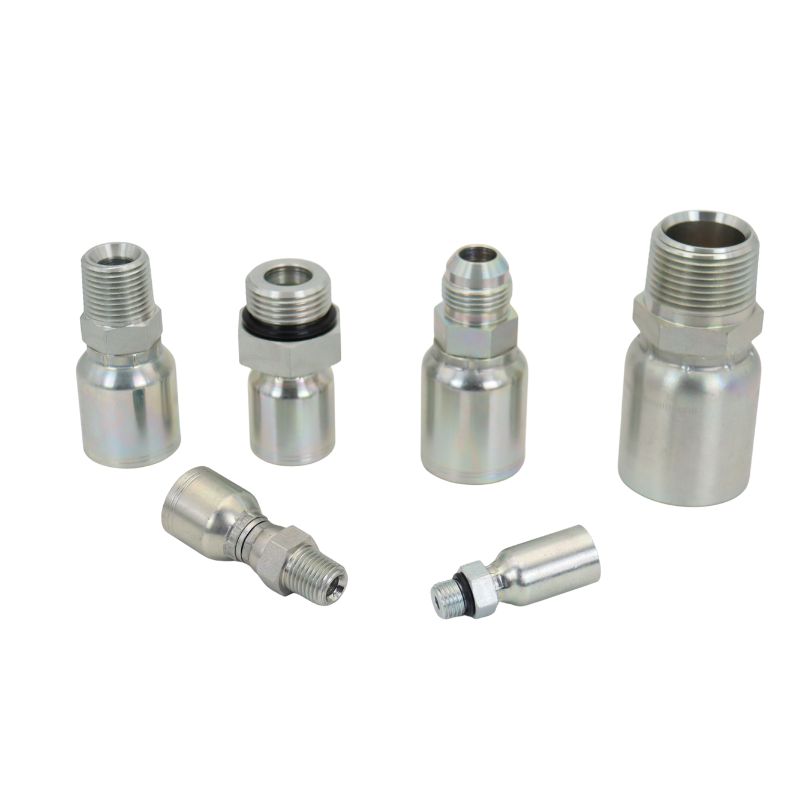
Confirm and record the lowest-rated component
Compare current limits for the hose, fitting, ferrule, seals, adapter, port, valve, and other affected components under the same stated condition. Confirm the approved crimp procedure and any temperature-related routing or protection requirement. The usable assembly limit cannot exceed the lowest applicable limit, and changes require review rather than automatic inheritance.
Verification should also consider the interaction between temperature and pressure duty. Static pressure, pressure impulses, vibration, and thermal expansion can load a connection differently, while hot fluid may change hose or seal behavior. Do not use a room-temperature pressure rating as the only approval evidence unless the applicable source explicitly covers the actual temperature and duty. Record any derating or conditional limit exactly as issued rather than creating a local estimate.
Finally, plan how the condition will be checked after installation. A route survey, temperature measurement method, inspection interval, and clear rejection criteria help confirm that the design assumption remains true. Maintenance records should capture hardening, discoloration, leakage, cover damage, coating change, shield movement, or contact with a heat source. These observations support timely review but do not authorize touching a suspected high-pressure leak or inspecting an energized system by hand.
Avoid Common High-Temperature Mistakes
Most errors come from treating “metal fitting temperature” as the whole decision. Other failures arise from confusing storage with operation, ignoring radiant heat, or using a generic seal description.
Do not approve by the strongest component
A heat-resistant fitting body cannot raise the allowed condition of a lower-rated hose, O-ring, adapter, or port. Likewise, a hose description cannot approve the attached fitting and crimp. Burst pressure, room-temperature data, and a previous successful installation should not be substituted for the current operating approval.
Do not improvise temporary operation
Do not continue above rated conditions because exposure seems brief, wrap an assembly with unapproved material, or change seals and crimp settings without verified procedures. If overheating is suspected, stop and isolate equipment, release pressure and stored energy, secure loads, and follow lockout and manufacturer instructions before inspection.
Conclusion
High-temperature selection succeeds only when the complete assembly and installation are reviewed under the same operating condition. Separate fluid temperature from ambient and radiant heat, and document duration, cycling, and abnormal exposure. Verify the exact fitting metal and finish, every seal and O-ring, the hose tube and cover, fluid compatibility, routing, shielding, and current crimp data. The lowest-rated hose, fitting, seal, adapter, port, or other component sets the usable limit; a capable metal body cannot raise it. Never improvise operation above approved conditions. Before approving one-piece fittings for high-temperature hydraulic applications, prepare the full temperature profile, product revisions, fluid, pressure duty, connection details, assembly procedure, route survey, and evidence source for each affected component, and preserve the approved installation boundary.
FAQ
Is fluid temperature the same as ambient temperature?
No, fluid acts on internal surfaces while ambient air affects external heat transfer. Both can differ from radiant exposure near an exhaust or hot process surface.
Are stainless-steel fittings always best for high heat?
No, stainless grades and fitting designs vary, and the complete assembly may be limited elsewhere. Use current part-specific pressure, temperature, fluid, hose, and crimp data.
Can a heat shield raise a hose assembly rating?
No, a shield may reduce a defined external exposure but does not change component ratings. Its material, installation, heat retention, movement, and inspection effects require approval.
Does intermittent heat need to be reviewed?
Yes, repeated or short exposures can still affect materials and may have separate limits. Confirm the stated intermittent condition rather than averaging it into normal operation.
Can an existing crimp setting be reused for a high-temperature hose?
Only when current data approves the exact hose, fitting, preparation, equipment, die, and crimp specification. Similar size or appearance does not establish the combination.