
Choose plating by defining the real corrosion environment and the evidence required for approval, not by coating color or a salt-spray claim alone. Corrosion-resistant plating for one-piece hydraulic fittings must be evaluated as a coating system on a specific base material, with attention to passivation, topcoat, threads, sealing areas, handling damage, storage, and service exposure. Standard zinc may be appropriate for controlled conditions, while zinc-nickel or another confirmed approach may be justified where exposure is more demanding. No finish independently establishes pressure capability or field life.
Define the Environment Before Naming a Coating
The application environment determines which corrosion mechanisms and damage routes matter. “Indoor,” “outdoor,” or “marine” is too broad for approval because exposure frequency, moisture retention, contaminants, cleaning, temperature cycling, and physical abrasion can differ sharply within each label.
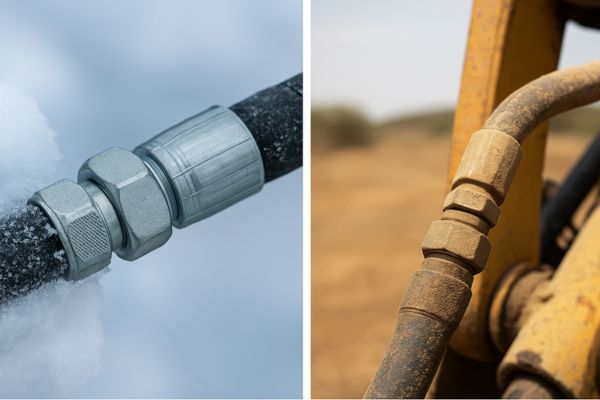
Identify how moisture and contaminants reach the fitting
Record whether the assembly faces condensation, rain, spray, washdown, salt, fertilizer, industrial chemicals, or persistent humidity. Note whether exposure is continuous, intermittent, or followed by long drying periods. A fitting inside a guarded machine can experience a different risk from an exposed fitting on mobile equipment even when both operate in the same region.
Include mechanical and maintenance conditions
Tools, clamps, moving debris, installation contact, and repeated cleaning can damage a protective layer. Thread engagement, wrenching, hose movement, and storage handling may affect local areas differently from an untouched test panel. Selection should therefore consider how the coating will be installed, inspected, cleaned, and replaced, not merely how it performs before assembly.
Temperature cycling also deserves attention because it can create condensation when equipment moves between warm and cold areas. Water may remain in guards, clamps, or poorly drained spaces long after an exposed surface appears dry. Record these microenvironments separately; a general ambient description can miss the local wet condition that actually governs corrosion around a fitting.
Create an exposure description that covers:
- Moisture source, wet duration, drying opportunity, and condensation.
- Salt, washdown chemicals, process fluids, dirt, and airborne contaminants.
- Indoor, sheltered outdoor, fully exposed, mobile, marine, or industrial location.
- Abrasion, impact, tool contact, vibration, and cleaning practices.
- Storage duration, packaging, transport route, and expected inspection access.
Understand What Standard Zinc Can and Cannot Do
Standard zinc systems are widely used to protect carbon-steel fittings, but the term does not describe one universal finish. The deposit, passivation, topcoat, process control, component geometry, and acceptance criteria all influence the evidence needed for a particular item.
Zinc acts as a protective system
The zinc layer can provide sacrificial protection to the steel substrate, while conversion layers or topcoats can change corrosion behavior and handling characteristics. The coating may first show corrosion products associated with the protective layer before corrosion of the base metal appears. That distinction matters when a report separates white corrosion from red rust, but the exact interpretation must follow the stated test method and acceptance criteria.
Practical limits come from exposure and damage
Standard zinc may suit controlled indoor service or moderate exposure when product-specific evidence supports the application. It may be less suitable where salt, persistent moisture, aggressive washdown, or repeated abrasion overwhelms the protection expected from the approved system. Color is not proof of deposit chemistry, passivation, or topcoat, so visual inspection cannot identify the coating specification by itself.
Evaluate Zinc-Nickel and Higher-Resistance Options
Zinc-nickel and other higher-corrosion-resistance approaches can offer additional protection under confirmed conditions, but the label alone does not guarantee superior field performance. Approval should examine the full specification, process evidence, component design, and intended exposure.
Higher resistance still requires a defined system
Ask what base material, deposit system, passivation, topcoat, coverage, and process control apply to the exact fitting. Review how threads, recesses, edges, and contact areas are treated, because geometry can influence coverage and testing. Claims from another component or a flat coupon should not automatically be transferred to a one-piece fitting with different shape and handling.
Balance protection with functional requirements
A coating choice must remain compatible with thread fit, sealing interfaces, assembly procedures, material requirements, and any regulatory constraints. More coating is not automatically better if it changes fit or creates an unapproved condition. Commercial availability and lot consistency also matter, but price or lead time should not substitute for technical evidence where corrosion could affect safe inspection or component condition.
| Service condition to review | Evidence to request | Selection caution |
| Controlled indoor use | Exact coating specification and normal receiving criteria | Indoor condensation may still matter |
| Outdoor moisture | Component-level corrosion evidence and damage controls | Test duration is not field life |
| Washdown exposure | Chemical, frequency, and coating compatibility evidence | Cleaner concentration and contact time can change risk |
| Salt-bearing environment | Defined test method, specimen identity, and acceptance criteria | Cut edges and tool damage may behave differently |
| Abrasive mobile service | Coating plus handling and inspection plan | Laboratory exposure may not reproduce abrasion |
| Long storage or transport | Packaging, humidity, and preservation controls | A suitable service coating can still arrive damaged |
Consider Special Treatments or Alternative Materials
Some applications may justify a different surface treatment, a different base material, added physical protection, or a combined strategy. This decision should follow the failure mechanism and application requirements rather than a general belief that stainless steel or a specialty coating solves every corrosion problem.
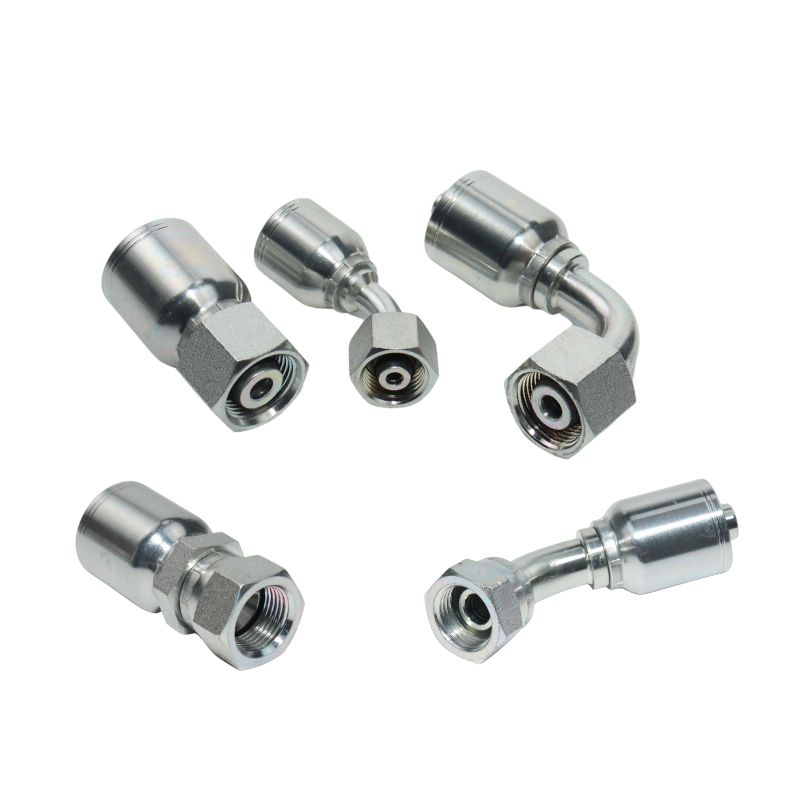
Know when plating may not be the only control
Severe chemical exposure, frequent coating damage, inaccessible inspection points, or requirements imposed by the equipment designer may exceed what an ordinary plated carbon-steel selection can address. Alternative materials, protective routing, guards, improved drainage, compatible covers, or revised maintenance intervals may be relevant. Each option still needs verified pressure, fluid, temperature, mechanical, and environmental suitability.
Avoid switching materials by assumption
Stainless steels vary, and their behavior depends on grade, environment, fabrication, surface condition, and contact with other materials. A material change can also affect availability, strength, galling behavior, connection requirements, and cost. Do not approve an alternative material without current product data simply because it is described as corrosion resistant.
Questions that may trigger a broader review include:
- Does corrosion repeatedly begin where tools or clamps damage the finish?
- Is the fitting exposed to chemicals not represented by the available coating evidence?
- Is inspection difficult enough that degradation could remain hidden?
- Does the equipment or industry requirement specify a material or treatment?
- Would routing, shielding, drainage, or storage control reduce exposure more reliably?
Control Handling, Storage, and Installation Damage
Coating performance begins before the fitting enters service. Poor packaging, mixed metal contact, trapped moisture, careless binning, or installation damage can remove the expected protection from the very areas that need it.
Protect functional surfaces through logistics
Packaging should keep threads, sealing faces, swivels, and coated surfaces from striking each other or contacting persistent moisture. Labels should preserve coating identity and lot traceability so a visually similar finish is not substituted. Receiving inspection should look for scratches, blistering, discoloration, corrosion products, contamination, and damage without assuming every cosmetic variation has the same significance.
Installation can create local weak points
Approved tools and procedures should minimize unnecessary wrench slips, jaw marks, and contact with sealing surfaces. Threading or tightening may alter coverage in engaged areas, while bends and clamps can expose the fitting to continued rubbing. A damaged item should be evaluated under the applicable acceptance criteria; touch-up should not be improvised on a pressure-containing component without an approved procedure.
Compare Coating Evidence Before Approval
Useful evidence connects a defined coating system and test result to the exact product or representative specimen. A statement such as “high corrosion resistance” is not enough to compare suppliers, batches, or finishes.
Read the test conditions and acceptance language together
Review the named method, specimen preparation, component identity, exposure conditions, evaluation intervals, corrosion type, excluded areas, and pass/fail criteria. Determine whether the report addresses white corrosion, red rust, coating defects, or another outcome. Salt-spray duration is a controlled comparison input, not a calendar conversion to outdoor service life.
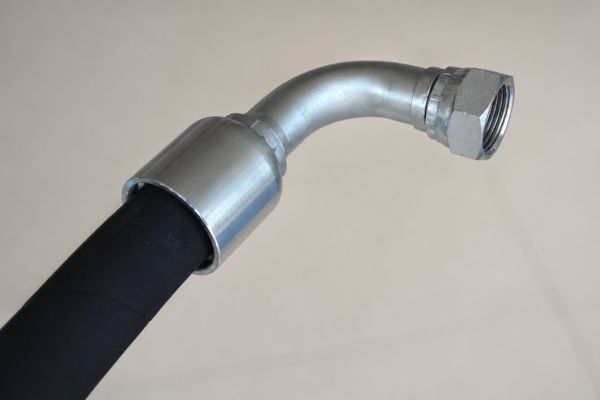
Verify production and receiving controls
Ask how the approved finish is identified on drawings, purchase documents, labels, and inspection records. Confirm which evidence applies to routine production and how changes in coating chemistry, passivation, topcoat, process source, or base material are controlled. Incoming inspection can verify identity and obvious condition, but it cannot reconstruct every process parameter from appearance.
An evidence package may include:
- Exact base material and coating-system specification for the part revision.
- Test method, specimen identity, preparation, exposure, and acceptance criteria.
- Clear distinction between coating corrosion and base-metal corrosion.
- Defined critical surfaces, exclusions, and handling condition.
- Lot identity, change-notification rules, and receiving acceptance method.
Avoid Common Plating-Selection Mistakes
The most common mistakes reduce a multidimensional decision to color, a single test-hour claim, or the word “zinc.” These shortcuts hide differences in environment, coating system, specimen condition, and acceptance criteria.
Do not convert laboratory hours into service life
A controlled salt-spray exposure does not reproduce every cycle of wetting, drying, ultraviolet light, temperature, abrasion, chemicals, dirt, and maintenance found in service. More reported hours may be useful only when tests are comparable and the criteria are clearly defined. It cannot guarantee that a fitting will last a stated number of months or years.
Do not let coating evidence replace product approval
Corrosion performance does not prove thread accuracy, sealing, hose compatibility, crimp suitability, material strength, or pressure rating. A fitting with strong coating evidence can still be wrong for the hose assembly or application. Severely corroded, pitted, cracked, or otherwise damaged fittings should not be accepted merely because their original finish had an impressive claim.
Neutral Plating-Selection Checklist
A selection record should connect exposure, product requirements, evidence, and inspection. It should also state what the coating evaluation does not approve.
Information to prepare
- Exact fitting, base material, geometry, thread, seal, and revision.
- Moisture, salt, chemical, temperature, abrasion, impact, and storage exposure.
- Proposed coating system, passivation, topcoat, and documented process controls.
- Component-relevant test method, specimen details, corrosion criteria, and results.
- Packaging, handling, installation, inspection, and change-control requirements.
- Separate pressure, hose, crimp, fluid, temperature, and application approvals.
If evidence is incomplete, define the missing information and keep the item under review. A technically cautious decision is more useful than ranking finishes from unconnected marketing descriptions.
Conclusion
Corrosion protection should be selected from the actual exposure and the evidence for the exact fitting, not from color or a salt-spray number. Standard zinc, zinc-nickel, special treatments, and alternative materials each have useful applications and important limits. Compare the base material, complete coating system, component geometry, corrosion criteria, handling damage, storage, installation, and change control. Treat laboratory testing as comparative evidence under stated conditions rather than a promise of field life. Also keep coating approval separate from pressure, thread, sealing, hose, and crimp suitability. Before choosing corrosion-resistant plating for one-piece hydraulic fittings, prepare the service environment, product revision, coating specification, report details, packaging requirements, and inspection plan so the decision remains traceable and application specific under actual operating conditions.
FAQ
Can coating color identify zinc or zinc-nickel plating?
No, color alone cannot confirm the deposit chemistry, passivation, or topcoat. Verify the drawing, purchase specification, label, and supporting process evidence for the exact part.
Does red rust mean the same thing as white corrosion?
No, they generally describe different corrosion products and may have different acceptance significance. Use the definitions, surfaces, and criteria stated in the applicable test method and report.
Is zinc-nickel always required for outdoor equipment?
No, outdoor exposure varies widely and must be described in practical terms. The suitable system depends on moisture, salt, chemicals, damage, inspection, product data, and equipment requirements.
Can damaged plating be repaired after installation?
Only under an approved procedure that addresses the component and application. An improvised touch-up may hide damage or fail to restore the specified protection, especially near threads or sealing surfaces.
Does a corrosion-resistant finish increase pressure rating?
Not by itself. Pressure suitability requires verified data for the exact fitting, size, connection, material, hose, crimp, port, temperature, fluid, and complete assembly.