
Before accepting a repair, a responsible hose shop asks one practical question: Can we reliably complete this assembly? The answer depends on more than an open slot on the crimping machine or enough technician hours. The shop must identify the hose and both end connections, validate the hose-and-fitting combination, obtain current crimp data, and know that the required components can be supplied when promised.
A reliable one-piece fitting supplier helps a hose shop support a broader range of work only when that supply is connected to technical control. More fitting choices are useful when the shop can distinguish thread, sealing method, port dash, hose dash, fitting series, material, configuration, and compatibility. They are dangerous when availability encourages a visually similar or unsupported substitution.
Job Capacity Is More Than Machine Throughput
A crimper may be available, but the shop has no job capacity for an assembly it cannot specify. Technician skill cannot compensate for an unidentified sealing face, an uncertain hose series, or missing crimp instructions. Practical capacity is the set of jobs the shop can identify, source, assemble, inspect, and release under controlled requirements.
Fitting availability often becomes the limiting factor because a hose assembly needs the correct configuration at both ends. One unavailable elbow or uncommon connection can stop the complete job even when the hose, other fitting, tooling, and labor are ready. The constraint can also be informational: stock has little value if the shop cannot connect the part code to verified dimensions and assembly data.
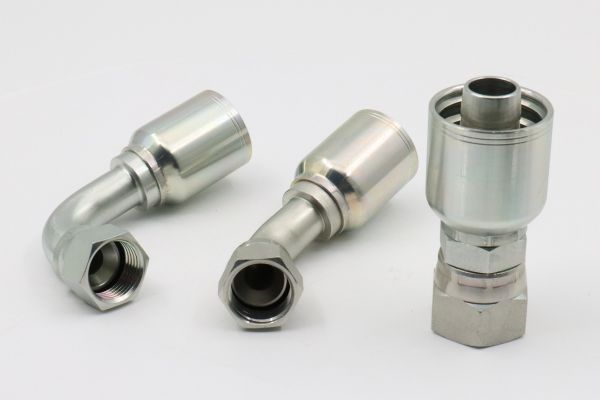
This means “take more jobs” should describe a controlled expansion of service categories, not a promise to accept every failed hose. The shop increases capability when it can repeatedly move a defined job from identification through sourcing and assembly without improvisation.
Fitting Availability Defines Practical Service Coverage
The equipment population around a shop creates a pattern of hose sizes, connection standards, fitting angles, materials, and repair urgency. A shop serving common agricultural machinery may need a different fitting range from one serving industrial power units or mixed mobile equipment. Physical shelf space alone does not define useful coverage; the stocked or accessible configurations must correspond to real local jobs.
For each assembly, the shop may need to confirm the hose specification, hose ID or dash, connection type, thread, sealing method, port dash, hose dash, fitting series, straight or elbow configuration, orientation, material, valid crimp data, and actual fitting availability. A gap in any one of these fields can turn an apparently familiar job into an uncontrolled one.
Dependable external replenishment extends coverage beyond immediate stock. A less-common fitting can be sourced for a planned repair if the shop can identify it correctly and obtain a reliable availability answer. Urgent work demands a stronger path: verified local stock, reserved inventory, or a source whose confirmation and dispatch status are sufficiently dependable for the customer’s decision.
Inventory Breadth and Depth Solve Different Problems
Inventory breadth is the number of different fitting configurations available. Inventory depth is the quantity held for each configuration. Broad inventory can cover more connection types and hose sizes, while deep inventory supports repeated demand for the same SKU. Expanding service does not mean increasing both breadth and depth for every item.
A shop can keep meaningful depth in core fittings with stable demand, hold limited quantities of less-common but critical parts, and use external replenishment or special ordering for configurations that do not justify local stock. This approach preserves service options without committing excessive working capital to every catalog item. It also makes the required supply reliability different by category: core stock needs consistent replenishment, while unfamiliar jobs need strong identification and technical response.
Breadth without control creates duplicate or ambiguous stock. Similar-looking parts may differ in thread form, seat, sealing method, hose-end geometry, or material. Depth without demand creates aging inventory. The useful combination is evidence-based: enough variety to support chosen job categories and enough quantity to meet their actual frequency and consequence.
The Four-Stage Service-Capability Ladder
The ladder lets a shop expand only after the technical and supply controls for the previous stage are stable. The stages are not certifications or universal maturity levels; they are a way to test whether broader job acceptance is supported by evidence.
Stage 1 — Core Repeat Jobs
These are known assemblies for recurring local equipment. The shop needs controlled hose and fitting codes, repeatable orientation and length records, current crimp data, and adequate stock or replenishment for the common configurations. Inventory exposure is concentrated because demand history supports depth. Weak supply causes repeat-order stockouts and undermines confidence in the shop’s basic service promise.
Stage 2 — Broader Connection Coverage
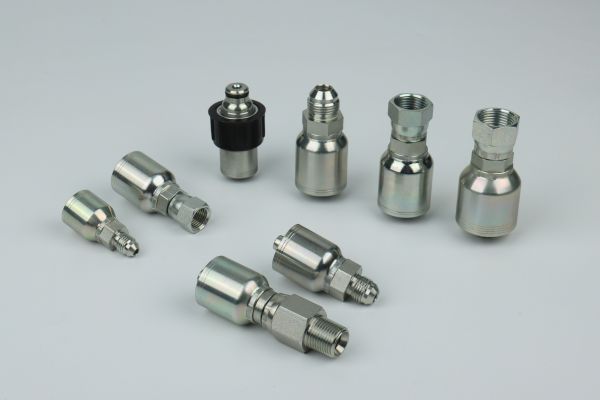
The shop adds selected connection standards, sizes, or elbow forms supported by observed inquiries. It needs thread and sealing identification tools, controlled descriptions, drawings, and a way to distinguish port dash from hose dash. Inventory breadth grows, but depth should remain selective. Weak replenishment can leave many shallow bins empty, while poor coding creates duplicates that appear to expand coverage without increasing usable capability.
Stage 3 — Unfamiliar Replacement Jobs
The shop accepts some work for equipment it has not previously supported. Old-part identification, clear photographs, measurements, application information, cross-reference evidence, and technical review become central. Inventory exposure can remain limited because verified external sourcing supplements the shelf. Weak supply support leads to unsupported matches, repeated clarification, or parts that arrive but do not fit the application.
Stage 4 — Urgent or Complex Jobs
These jobs combine time pressure with uncommon fittings, difficult orientation, important equipment, or uncertain original data. The shop needs a disciplined intake process, rapid access to controlled technical information, verified availability, and clear stop conditions. Inventory may include selected emergency-critical items, but stocking every possibility is unrealistic. Weak reliability creates promises the shop cannot keep and pressure to substitute without validation.
What Each Stage Requires
| Job Capability | Fitting Requirement | Supply Requirement | Main Risk |
| Core repeat assemblies | Known codes, hose series, sizes, orientations, and crimp data | Consistent replenishment of common SKUs | Routine job rejected because repeat stock is unavailable |
| Broader connection coverage | Controlled descriptions across selected standards and sizes | Breadth with reliable item data and practical replenishment | Duplicate, mislabeled, or shallow stock creates false coverage |
| Unfamiliar replacements | Qualified identification, dimensions, sealing method, and cross-reference evidence | Technical support plus access to non-stock configurations | Appearance-based match or unsupported equivalence |
| Urgent or complex repairs | Complete application data, verified assembly system, and stop rules | Confirmed availability and realistic dispatch information | Urgency overrides technical control or customer promise fails |
The progression should be supported by results. Before moving upward, the shop should know that its core fitting records are accurate, stock balances are dependable, and technicians can retrieve the correct crimp specification. Expanding a weak foundation increases the number of ways a job can fail.
Accurate Identification Is Equal to Physical Availability
A warehouse containing a candidate fitting does not guarantee that the shop can use it. The connection must be identified beyond general appearance. Thread diameter and pitch, male or female form, straight or tapered thread, seat angle or sealing face, O-ring arrangement, port dash, hose dash, fitting series, and material may all affect the decision.
One-piece construction reduces the separate selection of a stem and ferrule for product systems designed that way, but it does not make all one-piece fittings compatible with all hoses or crimpers. The shop still needs the approved hose construction and size, fitting series, tooling, insertion or preparation instructions, and current crimp data. A supplier code that arrives quickly is not useful if the shop cannot validate how it belongs in the assembly.
Reliable support therefore includes information continuity. Drawings, part descriptions, code revisions, and cross-references should remain controlled across repeat purchases. When the same customer returns, the shop should be able to reproduce the validated assembly record rather than restarting from a photograph.
Repeat Supply Supports Recurring Equipment Customers
Fleet and equipment customers often value repeatability because the same machines create related repair needs. Predictable supply lets the hose shop build controlled records around known assemblies and replenish the associated fitting families. It does not guarantee demand or revenue, but it reduces uncertainty about whether a previously supported job can be completed again.
The relevant evidence is consistency between orders. Does the repeated fitting retain the same approved description, dimensions, hose-series relationship, and material requirement? Can the shop obtain it again within a planning window that matches the customer’s maintenance needs? Are code changes or revisions communicated clearly enough to prevent an assumed substitution?
When repeat supply is weak, the shop may carry deeper safety stock to protect service, commit more working capital, or refuse dates it cannot support. When replenishment is dependable, less-common configurations can sometimes be accessed externally rather than stocked deeply. The correct balance depends on actual issue frequency, lead time, sourcing difficulty, and downtime consequence.
One Source or Multiple Sources Still Requires Part Control
A second or third source can improve options when one channel lacks stock or a configuration. It can also introduce different coding systems, part descriptions, dimensional conventions, hose compatibility rules, and cross-reference assumptions. Without technical control, the shop may create duplicate SKUs or treat two non-equivalent parts as interchangeable.
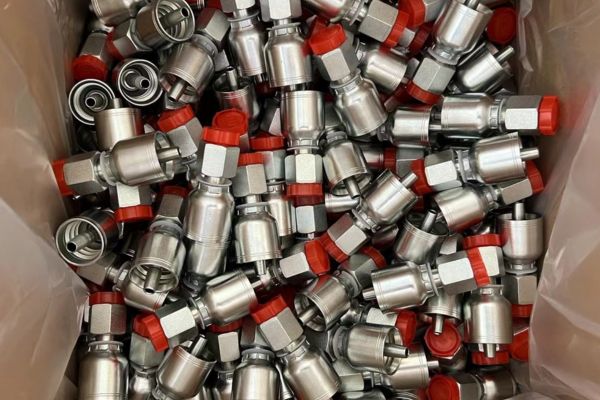
Using one source is not universally safer, and using multiple sources is not universally more resilient. The key question is whether each supplied fitting can be mapped to a verified requirement. The shop should preserve the evidence used for connection, sealing method, hose compatibility, material, pressure suitability, and crimp specification rather than relying on a familiar brand name or similar part code.
Source changes deserve the same technical review as any replacement decision. A fitting should not be approved solely because the correct configuration is unavailable from the usual channel. If the proposed hose, fitting, ferrule, or crimp data cannot be validated together, additional sourcing options do not create legitimate job capacity.
When the Shop Should Still Decline the Job
Broader access is valuable only with clear stopping rules. A responsible hose shop should decline or pause a job when essential information or a verified component path is missing. Common reasons include:
- the fitting cannot be confidently identified; the hose-and-fitting combination cannot be validated; current crimp data is unavailable; the required material or configuration cannot be supplied; application or operating information is insufficient; or an urgent deadline would require an unsupported substitution.
Declining a job can protect both the customer and the shop. The customer may be frustrated by the delay, but a wrong thread, sealing method, hose series, or crimp setup can create leakage, separation, equipment damage, or injury. The shop should explain the unresolved requirement and the evidence needed to reconsider the work.
Before accepting additional job categories, review actual successful and failed inquiries, inventory accuracy, repeat-supply history, technical-response quality, controlled drawings and part descriptions, staff identification capability, current crimp-data access, and the number of jobs stopped by missing information. Capability is demonstrated by controlled completion, not by the number of fitting codes in a catalog.
Evidence for a new category should include:
- repeatable identification and assembly records for representative jobs;
- confirmed access to the required fitting configurations;
- current hose, fitting, tooling, and crimp instructions; and
- a documented escalation or decline path when information is incomplete.
Conclusion
Reliable one-piece fitting supply can help a hose shop accept a broader range of jobs, but only when availability is joined to identification, assembly data, and inventory discipline. Build capability in stages: stabilize core repeat work, add selected connection breadth, develop a controlled path for unfamiliar replacements, and approach urgent or complex jobs with explicit stop conditions. Keep depth where demand supports it and use replenishment to supplement less-common stock. Whether the shop uses one source or several, preserve consistent part descriptions, drawings, compatibility evidence, and crimp requirements. The right measure of expansion is not more fittings on shelves; it is more job categories the shop can complete responsibly and repeatably.
Frequently Asked Questions
Does better fitting supply mean a hose shop should accept every job?
No. The shop should accept only jobs it can identify, source, assemble, and verify using appropriate technical data. Availability cannot replace compatibility or application information.
Does expanding service require stocking more fittings?
Not always. The shop can deepen core stock selectively and use verified external replenishment or special ordering for less-common configurations.
How can a shop handle fittings for unfamiliar equipment?
Collect the old part, photos, measurements, hose data, connection and sealing details, application information, and any readable code. Obtain controlled identification and assembly data before approval.
Is using multiple fitting suppliers better than using one?
Neither approach is universally better. Multiple sources expand options but require stronger code mapping, dimensional review, cross-reference control, and hose-compatibility verification.
When should a hose shop decline a repair job?
Decline or pause when the fitting is uncertain, the hose-and-fitting system cannot be validated, current crimp data is unavailable, the required component cannot be sourced, or application data is insufficient.