
Repairing the same machine family again should become faster because the shop already knows the approved hose assembly, not restart as a new sourcing project. One-piece fitting supply consistency matters for repeat repair jobs because the recorded fitting identity must remain available and technically valid when the next assembly arrives. If a previously approved SKU disappears, changes without notice, or cannot be traced, staff must identify, compare, and approve the replacement again. A repeat-job system therefore needs both reliable supply and controlled product records, while still checking current hose, fitting, and crimp data before each assembly.
The First Repair Establishes the Technical Baseline
The first successful repair should create a reusable, verifiable record. Its value is not that staff can copy an old number blindly, but that the next technician has a documented starting point for confirming the current assembly.
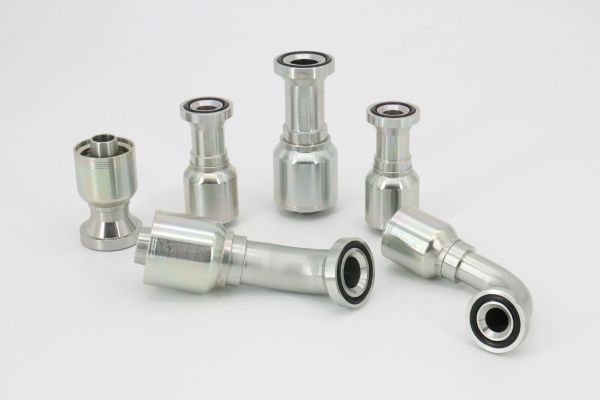
Record the approved part identity
A one-piece fitting has a stem or body and ferrule retained or preassembled, although exact construction varies by series. Record the complete SKU and description rather than a generic label such as “JIC elbow.” Include connection standard, size, thread characteristics, seat or seal, orientation, hose-side size, fitting series, material or finish requirement, and the source of applicable crimp data.
The assembly record should also identify hose manufacturer or approved specification, hose series, construction, ID, reinforcement, crimper, dies, preparation method, verified crimp specification, finished length reference, and end orientation. Same dash size or familiar appearance is not enough to reproduce a safe assembly.
Preserve evidence from the completed job
Keep the work-order identifier, fitting codes, hose data, revision or catalog reference, inspection result, and any approved deviation. Clear photos can support later screening, but they do not replace measurements or technical data. Avoid customer-identifying details in shared analysis records.
A useful repeat-repair record contains:
- equipment family or anonymous asset identifier;
- complete hose and fitting part identities;
- connection, seal, angle, and critical dimension data;
- assembly equipment and current specification source;
- completion date and product revision known at that time;
- inspection status and any controlled approval note.
Stable SKU Coding Makes Reordering Repeatable
A stable code lets purchasing request the same defined item and lets receiving determine whether the delivered product matches. Supply continuity becomes difficult when descriptions change, aliases multiply, or one code is reused for different constructions.
One code should represent one controlled identity
Internal item masters should connect supplier code, shop code, full description, drawing or dimensional record, approved hose combination, and revision. If an alternate code is introduced, preserve the cross-reference and approval basis rather than overwriting the original history.
Descriptions should distinguish thread form, diameter, pitch or TPI, straight or tapered thread, gender, seat angle, sealing face, O-ring location, elbow orientation, hose tail, and fitting series where relevant. These fields prevent a familiar family name from hiding a different interface.
Revision records explain apparent sameness
A code may remain commercially familiar while a drawing, ferrule, plating, marking, packaging, or compatible hose range changes. Record revision identifiers and effective dates when available. Receiving staff can then determine whether a repeat order is truly the same controlled item or needs review.
Do not assume the old job record proves present compatibility. Hose products, crimp tables, equipment, and applications can also change. The record accelerates confirmation; it does not eliminate it.
Reordering Tests Supply Continuity
Supply continuity means the approved fitting can be obtained again within a useful planning window. It affects whether the shop can accept recurring work confidently and replenish before the next fleet repair.
A disappearing fitting reopens the job
If the prior SKU is discontinued, unavailable, or offered only under an unclear replacement code, purchasing cannot simply select the nearest-looking part. Technical staff must compare connection, seal, dimensions, hose compatibility, ferrule design, crimp requirements, material, finish, and application limits.
That recheck adds quotation time, sample review, documentation, and possibly a controlled trial. A repeat customer then experiences the same identification delay that the original record was supposed to prevent. The operational cost is repeated approval work, not merely a later shipment.
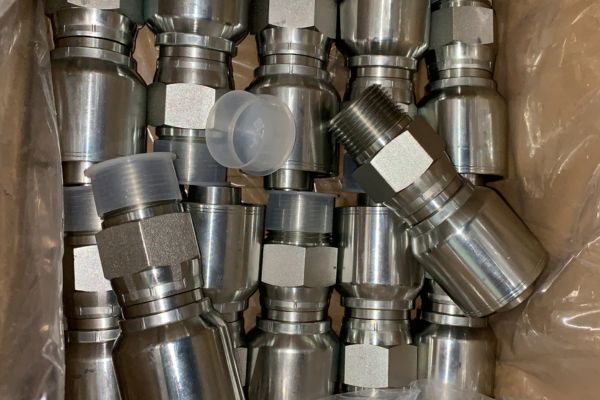
Reorder visibility supports preparation
Track on-hand quantity, reserved stock, open orders, confirmed availability, expected arrival, and affected recurring assets. If supply uncertainty appears before a known maintenance period, the shop can decide whether to reorder, validate an alternative, or communicate a realistic completion plan.
Avoid buying unlimited depth solely to compensate for uncertainty. Demand frequency, equipment population, lead time, technical criticality, and obsolescence risk should determine the response.
Batch Consistency and Supply Continuity Are Different
Both matter, but they answer different questions. Batch consistency asks whether units received at different times conform to the controlled identity; supply continuity asks whether that identity remains obtainable when needed.
| Control question | What should remain stable | What may change under control | What triggers recheck |
| Is the same SKU available? | code and defined product identity | availability date or packaging | discontinuation, replacement code, unclear description |
| Does a new batch match? | critical dimensions, interfaces, approved construction | batch and trace codes | dimensional, marking, finish, or assembly-data difference |
| Is the old assembly still valid? | verified application requirement | hose, equipment, or service condition | any current-data or application change |
| Can the shop repeat the job? | complete record and usable stock | technician or production date | missing evidence, damaged stock, revised instructions |
Availability does not prove conformity
A supplier may consistently have stock, but the delivered item still requires receiving verification. Check labels, quantity, condition, trace information, ordered revision, connection features, critical dimensions, and other agreed inspection points. A stocked but changed fitting does not preserve repeatability.
Consistency does not prove future availability
Several conforming batches do not guarantee the SKU will remain offered. Review open-order performance, discontinuation notices, substitution practices, and lead-time behavior separately from incoming quality. Do not invent or rely on continuity guarantees that have not been provided.
Controlled Changes Require Notification and Reapproval
Any change affecting identity, interface, hose compatibility, crimping, material, or application suitability can invalidate the shortcut created by the original record. The safest workflow makes change visible before the fitting reaches production.
Define changes that require review
Review is warranted for a new part code, drawing revision, stem or ferrule change, critical dimension change, sealing-face change, material or finish change, manufacturing identity change, hose compatibility update, crimp-table update, or altered marking that weakens traceability. Packaging-only changes may be lower risk, but label clarity and protection still matter.
The reapproval depth should match the change and application risk. It may include document comparison, dimensional inspection, assembly review, and verification against current hose, fitting, crimper, and equipment information. Do not treat a supplier statement of “same” as the entire technical evaluation.
Keep old and new identities linked
Never erase the historical SKU when approving a replacement. Record the supersession relationship, effective date, reason, evidence reviewed, limitations, and which recurring assemblies are covered. This allows staff to understand old work orders while ordering the current item.
If evidence is incomplete, place the change in review and communicate the resulting lead time. Fast uncontrolled substitution undermines the repeatability the system is meant to create.
Repair History Should Drive Future Replenishment
Recurring-machine records turn actual service demand into stocking evidence. They show which precise fitting combinations return, how often availability blocked work, and whether the same item supports several assets.
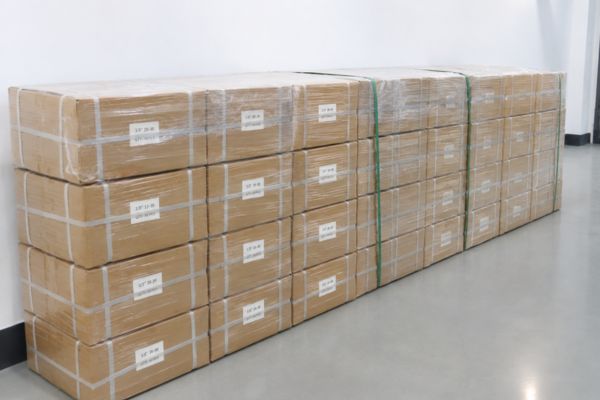
Analyze exact combinations
Review demand by full SKU, not only thread family or hose dash. A straight end and an elbow with the same thread may have different routing functions. A fitting with the same connection may belong to another hose series or crimp system.
Useful history fields include repair date, asset family, quantity used, urgency, stockout outcome, replenishment time, and next expected service event. Patterns can justify a reorder trigger, a reserved service quantity, or advance validation of a controlled alternative without imposing a universal stock level.
Standardize fleets carefully
Fleet standardization can reduce variation only when equipment interfaces, routing, hose requirements, pressure suitability, environment, and manufacturer instructions support the common design. Do not force different machines onto one fitting merely to simplify inventory.
Pressure suitability remains limited by the lowest-rated component in the complete assembly and depends on current application conditions. Standardization is a verified engineering and maintenance decision, not a purchasing shortcut.
Protect Recurring Assemblies During Storage and Use
Repeat supply has little value if stored fittings lose identity or condition. Long-held stock needs labeling, segregation, protection, and inspection before it enters another repair.
Maintain traceability on the shelf
Keep the supplier code, internal code, batch or receipt reference, revision, and bin label readable. Separate similar-looking standards and quarantined material. Preserve sealing faces, threads, O-rings, and finishes from damage, contamination, moisture, and mixed returns.
Before issue, verify that the fitting is the approved identity and remains suitable for the current hose and application. Old stock with missing labels, corrosion, damage, or uncertain provenance should be isolated for review, not used because it once occupied the correct bin.
Repeat the safety gate every time
Before removing a failed hose, stop equipment, isolate the hydraulic system, release pressure and stored energy, secure raised loads, and follow lockout and manufacturer procedures. Never inspect a suspected high-pressure leak by hand.
The next assembly must still follow current preparation, insertion, die, and crimp instructions. A repeated job never justifies reusing damaged fittings, bypassing inspection, or relying on remembered settings.
Use a Repeat-Job Continuity Checklist
The final control connects the first repair, record, reorder, receipt, and next repair. It should be brief enough to use and specific enough to stop an uncontrolled change.
Confirm continuity before promising the job
Check the following:
- exact internal and supplier SKU plus current revision;
- approved hose series, construction, size, fitting series, and crimp-data source;
- connection standard, thread, seat or seal, angle, and critical dimensions;
- usable on-hand quantity, reservations, open orders, and confirmed availability;
- change or discontinuation notices and approved supersessions;
- stored condition, traceability, and receiving inspection status;
- current equipment, routing, fluid, pressure, temperature, and service requirements.
If any field changed, route it to the appropriate technical review before assembly. If availability changed but identity did not, adjust replenishment and the customer promise without weakening verification.
Close the lifecycle after completion
Update the record with the actual fitting used, revision, batch or receipt reference where appropriate, current assembly data, inspection result, and stock transaction. Record shortages, unexpected changes, or clarification loops so the next reorder improves.
This closed loop makes repeat work progressively easier while preserving evidence. It also shows whether the shop’s problem is product identity, incoming consistency, future availability, storage control, or internal records.
Conclusion
One-piece fitting supply consistency supports repeat repair jobs when a verified product identity can move reliably from the first assembly record through reorder, receipt, and the next repair. Stable SKU codes and revision histories reduce repeated identification, while change notification prevents an altered item from slipping into an old approval. Batch conformity and future availability must be reviewed separately, and neither removes the need to check current hose, fitting, crimp, equipment, and application data. Use recurring-machine history to plan sensible replenishment, preserve traceability in storage, and retain old-to-new cross-references when a SKU changes. A repeat-job continuity checklist then converts past work into faster, controlled service without assuming that an old part number guarantees present compatibility.
Frequently Asked Questions
What should a shop do when an approved fitting SKU is discontinued?
Treat the proposed replacement as a controlled technical change. Preserve the old record, compare all interfaces and assembly requirements, document the evidence, and approve only the applications actually covered.
Does a new batch of the same fitting require inspection?
Yes, receiving should verify identity, condition, trace information, revision, and agreed critical features. The depth of inspection may reflect risk and history, but the repeated code alone is not proof.
Can an old job record be used without rechecking the assembly?
No, it is a starting point that reduces repeated discovery. Confirm current hose, fitting, crimp, equipment, and application information before reproducing the assembly.
Does fleet standardization eliminate fitting compatibility checks?
No, standardization works only across machines whose verified interfaces and service requirements support the same assembly. Differences in routing, ports, hose, or operating conditions can require separate designs.
Can a similar substitute be used when repeat supply fails?
Only after a controlled comparison and approval establish suitability for the specific connection, hose, crimp system, material, environment, and application. Visual similarity or a cross-reference claim alone is insufficient.