A fitting that has remained in a stock bin for a long period should be released by condition and evidence, not by age alone. Before assembly, inspect one-piece fittings from long-term stock for positive identity, traceability, protected connection surfaces, seal condition, corrosion, packaging history, and current hose-and-crimp compatibility. Long storage does not automatically make a part unusable, but an unknown storage history can hide mixed SKUs, missing caps, damaged plating, contaminated seats, or obsolete instructions. The correct outcome may be release, hold, expanded re-inspection, or rejection, depending on the approved criteria and the significance of what is found.
Make the Release Decision at the Stock Bin
Do not move old stock directly from a shelf into an active crimping job. Create a controlled review point where the material remains segregated until its identity, condition, and technical basis are accepted.

Define the unit being assessed
Identify whether the review covers a sealed carton, opened inner pack, mixed tote, individual fitting, or defined lot. Keep original labels, packing information, and any date or batch records with the material. If pieces from different containers have already been combined, record that loss of separation because it affects the confidence of any sampling or traceability decision.
Avoid describing the material only as “old fittings.” Record why it is being reviewed: routine release, urgent repair demand, inventory relocation, damaged packaging, a missing cap, visible discoloration, or an incomplete label. The reason helps determine which evidence and inspection depth are appropriate.
Do not assign a universal shelf life
Metal fitting bodies, finishes, O-rings, protective materials, and packaging do not all age in the same way. Storage environment, contamination, moisture, temperature, sunlight, chemical exposure, carton condition, handling, and seal material can matter more than elapsed time alone. Use manufacturer data, contractual requirements, and the organization’s approved shelf-life rules where they exist.
A date code may establish traceability without functioning as an automatic expiration date. Conversely, a recent date does not excuse corrosion, a damaged sealing face, or an unidentified part. The release decision must combine applicable time controls with actual condition and current technical documentation.
Recover Identity and Traceability Before Inspection
Condition checks cannot approve a fitting whose exact SKU is unknown. Similar one-piece fittings may differ in connection, seat, dash size, stem geometry, ferrule design, material, or crimp requirements while appearing nearly identical.
Verify the part against controlled records
Compare the carton and inner-pack labels with the item master, purchase record, controlled drawing, or other approved product definition. Confirm the full SKU, description, connection, size, straight or elbow form, hose-side series, material or finish when relevant, and lot or batch link required by the quality system.
Use product markings and physical features to support the comparison, but do not reconstruct identity from appearance alone. A photo, thread engagement, or approximate dimension can narrow candidates; it cannot establish the final fitting model when multiple products share visible features.
Treat label gaps as a hold condition
Faded labels, handwritten substitutions, partial codes, separated inner bags, or disagreement between carton and part markings require clarification. Do not relabel a container from memory or copy the code from a nearby bin. Preserve the existing evidence, identify the source location, and place the material in a controlled hold area.
Traceability requirements depend on the product and application, but the decision should be explicit. If identity can be recovered through approved measurements and records, document who made that determination and what evidence was used. If it cannot, the fitting must not enter a pressure-containing assembly merely because it physically resembles active stock.
Examine Threads, Seats, O-Rings, and Machined Faces
Connection and sealing surfaces deserve careful inspection because small damage can affect engagement or leakage. Assess them under suitable lighting and with the inspection methods permitted by the product specification.
Inspect without altering evidence
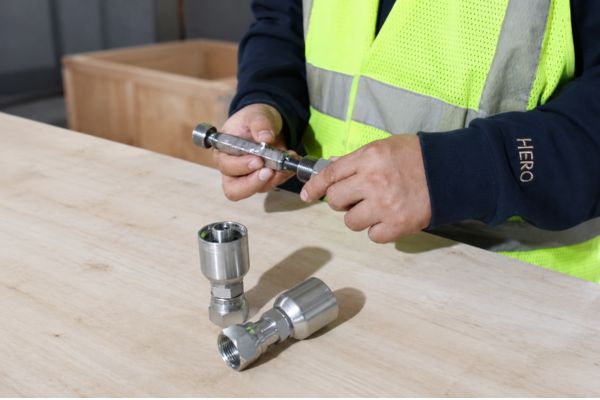
Look for damaged thread entry, flattened or crossed flanks, dents, burrs, embedded debris, corrosion, impact marks, or contamination. On flare, cone, flat-face, or other sealing interfaces, check for scratches, nicks, raised damage, staining, and missing protection. For O-ring designs, verify that the seal is present only when the product definition requires it and inspect accessible condition without stretching or removing it unnecessarily.
Do not chase threads, polish seats, scrape corrosion, add lubricant, or replace an O-ring unless an approved rework or maintenance instruction authorizes the exact action and replacement material. Unauthorized cleaning can remove evidence, damage finishes, introduce contamination, or create an assembly that no longer matches its released configuration.
Distinguish appearance from possible functional damage
Light color variation or a packaging rub may be cosmetic in some specifications, while corrosion at a sealing face, damaged thread entry, or a cut O-ring can be functionally important. The inspector should describe location, extent, and type of condition rather than label everything “rust” or “scratch.” Compare observations with approved visual standards, drawings, and acceptance criteria.
When the distinction is uncertain, hold the item for technical evaluation. Do not create an acceptance limit by eye. The absence of a visible defect also does not prove thread form, seat angle, material, or pressure suitability; those characteristics still depend on identity and controlled data.
Review Plating, Corrosion, and Protective Caps
The surface finish and protective closures show how the fitting may have interacted with its storage environment. Their condition helps determine whether inspection should remain routine or expand to more parts and features.
Map corrosion to functional locations
Observe the fitting body, wrench flats, ferrule, threads, sealing area, crevices, and hose-side openings. Record whether a condition is isolated, repeated across the package, associated with a torn bag, or concentrated near a missing cap. Do not treat a stated salt-spray result as a prediction of storage or field life; actual exposure and damage still need examination.
Surface discoloration away from functional areas may have a different consequence from pitting, flaking, or corrosion near a seal, thread, retention feature, or pressure boundary. Acceptance requires the applicable specification. Never approve visibly damaged pressure-containing hardware simply because the defect can be wiped or hidden.
Treat caps as evidence, not decoration
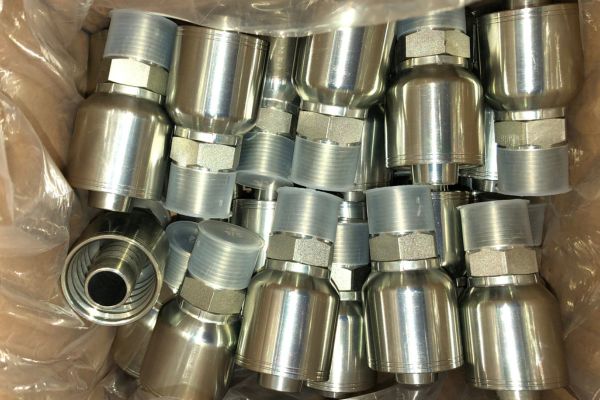
Protective caps and plugs help shield threads, seats, O-rings, and internal passages from impact and contamination. Check that the correct areas remain covered, that closures are intact, and that no cap material has degraded or transferred to the fitting. A missing cap is not automatic proof of damage, but it increases the need to inspect the exposed area and understand the opened-package history.
Do not install an unidentified cap that may contact or deform a sealing feature. If protection must be restored, use the approved packaging instruction after the fitting has been evaluated and its disposition recorded.
Reconstruct Packaging and Opened-Carton History
Packaging condition can reveal moisture, dust, impact, mixing, or repeated handling that is not obvious from one top-layer sample. Review the package before removing or cleaning parts.
Inspect the container as part of the evidence
Check carton integrity, inner bags, dividers, labels, desiccants or protective materials when specified, water marks, oil or chemical contamination, crushing, punctures, and foreign material. Photograph relevant conditions before disturbing them. Compare the number and identity of inner packs with inventory records when available.
An intact outer carton does not guarantee that an inner bag remained sealed, and a damaged carton does not prove every fitting is unusable. Use the pattern of exposure to choose a risk-based inspection scope under the approved plan. Do not invent a universal sample size.
Conditions that justify closer review include:
- Torn inner packaging or missing protective closures
- Water marks, chemical residue, or foreign material
- Loose parts separated from their original labels
- Repeated handling with no reliable opened-carton history
Account for repeated opening and movement
Find out whether the carton was previously issued, partially returned, transferred between warehouses, stored near washdown or chemicals, or opened for earlier inspections. Repeated access can separate parts from labels and introduce mixed SKUs even when no corrosion is present.
Keep inspected and uninspected pieces separated during the review. If the history is unavailable, record it as unknown rather than assuming ideal storage. Unknown history may justify expanded inspection or technical review depending on application risk.
Confirm the Technical Data Are Still Current
A physically sound fitting can still be unsuitable if the product definition or approved hose combination has changed. Release must connect the stored SKU to current drawings, compatibility information, and assembly instructions.
Check drawing and product revision status
Confirm that the stored part matches the current controlled drawing or that an approved change record defines continued use of the older revision. Review connection geometry, sealing features, stem and ferrule configuration, material or finish requirements, and any changed identification marks relevant to the SKU.
Do not assume that old and new revisions are interchangeable. A change may affect only documentation, or it may alter a functional characteristic. The responsible technical authority should determine applicability when the revision history is unclear.
Reconfirm hose and crimp compatibility
Match the fitting to the exact hose manufacturer, hose series, construction, size, and current approved crimp process. Verify preparation, insertion, machine, die set, measurement method, and acceptance data as required. Same dash size does not prove that a long-stored fitting remains approved with today’s hose stock or tooling.
If the compatibility chart or crimp instruction is missing, obsolete, or conflicting, hold the fitting for clarification. Do not revive an old handwritten setting or substitute data from a neighboring fitting series.
Assign a Controlled Disposition
Use explicit outcomes so material does not drift from inspection back into active bins without authorization. The actual disposition authority and criteria must come from the quality system and product requirements.
| Outcome | Appropriate condition | Required action |
| Release | Identity, traceability, condition, and current technical basis satisfy approved criteria | Mark inspection status and return to the correct controlled bin |
| Hold | Evidence is incomplete, conflicting, or awaiting technical interpretation | Segregate, preserve records, and name the missing decision |
| Re-inspect | Findings or exposure history require a broader or specialized review | Define added scope, method, acceptance source, and responsible reviewer |
| Reject | Approved criteria identify unacceptable damage or identity cannot be established for use | Isolate and process through the controlled nonconformance disposition |
Never use “clean and use,” “looks acceptable,” or “probably the same” as an undocumented fifth category. If sorting is authorized, maintain separation between accepted, rejected, and unevaluated pieces and retain the relationship to the original lot.
Before releasing long-term stock, confirm:
- Full SKU, lot or batch link, and container identity
- Thread, seat, sealing face, O-ring, stem, ferrule, and internal cleanliness condition
- Plating, corrosion, caps, bags, carton, and exposure history
- Current drawing or approved revision disposition
- Current hose compatibility and crimp instructions
- Inspection scope, observations, decision, reviewer, and release marking
Conclusion
Long storage should trigger an evidence-based condition review, not an automatic pass or failure. Establish the exact SKU and traceability first, then inspect threads, sealing surfaces, O-rings, exposed machined areas, finish, corrosion, caps, and package history without altering the evidence. Confirm that the drawing revision, hose combination, and crimp instructions still apply to the stored part. Cosmetic variation and functional damage must be separated through approved criteria, never invented limits. Use clear release, hold, re-inspect, or reject outcomes and keep each population segregated until disposition is complete. To inspect one-piece fittings from long-term stock responsibly, prepare the identity records, storage history, current technical documents, inspection observations, and authorized decision before any fitting reaches the crimper.
Frequently Asked Questions
Do one-piece fittings have a universal shelf life?
No, shelf-life controls depend on the product, seals, packaging, storage environment, manufacturer information, and applicable quality requirements. Use approved product-specific rules rather than a single age limit.
Can light discoloration be cleaned off before inspection?
Not unless an approved procedure permits that action. Record the original condition first because cleaning may hide corrosion, damage the finish, or contaminate sealing surfaces.
Should an old O-ring be replaced automatically?
No, replacement requires the correct seal identity and an authorized procedure for the fitting. An unapproved seal or installation method can create a new compatibility and leakage risk.
Is intact plating enough to release an old fitting?
No, plating condition is only one part of the decision. Identity, threads, sealing features, internal cleanliness, packaging history, current drawings, and hose-and-crimp compatibility also require review.
What should happen to fittings with missing labels?
Place them on hold until identity and traceability can be established through an approved method. Do not release them based only on appearance, approximate dimensions, or the neighboring stock location.