
A customer leaves a failed hose after being told it will be ready at a stated time. When that time passes and the job is still waiting for a fitting, the customer experiences one result: the repair is unfinished. They may not distinguish an empty bin from a late carton, wrong pick, mislabeled fitting, or unconfirmed substitute. One-piece fitting supply problems affect customer trust when internal uncertainty becomes an inaccurate external promise. Shops protect credibility by promising from verified stock and confirmed arrival evidence, communicating changes clearly, and refusing unsafe substitutions even when a deadline is at risk.
Customers Experience an Expectation Gap
Trust is affected by the difference between what the shop promised and what it can deliver, not merely by the existence of a supply problem. A technically acceptable fitting delivered later still creates a service failure if the completion date was presented as certain.
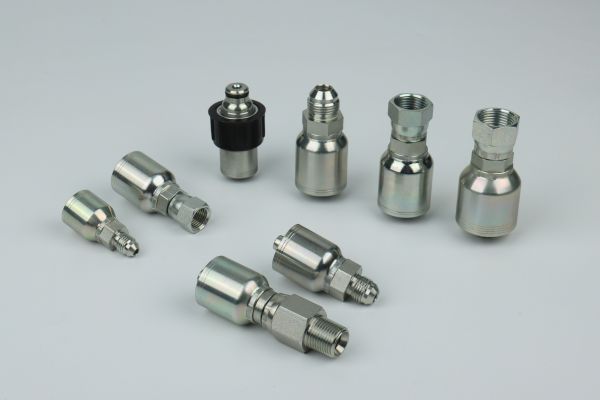
The customer sees the incomplete job
Internally, staff may know that the order was dispatched, the carrier delayed it, or receiving found the wrong angle. To the customer, those distinctions matter less than lost equipment time and a missed collection plan. Explanations become useful only when they support a realistic next step.
Set expectations at intake from usable stock, reserved quantity, current order confirmation, remaining assembly work, and technical certainty. A system balance or hopeful shipment estimate should not become a firm completion promise.
One delay differs from repeated uncertainty
An unusual, clearly explained disruption can occur in a controlled operation. Trust erodes faster when the date moves repeatedly, staff give inconsistent answers, or the customer must call to discover the delay. The preventable pattern is uncertainty presented as certainty.
Record the original promise, evidence used, status changes, updates provided, and actual completion. This allows the shop to improve promise accuracy without inventing customer-satisfaction scores.
Different Supply Failures Look the Same Outside
Stock inaccuracy, backorders, wrong shipments, and internal picking errors require different fixes, but all can prevent the assembly from being released. The customer-facing message should be clear while the internal record remains specific.
Identify the real internal failure
| Internal supply problem | What the customer experiences | Prevention control |
| System stock is not physically usable | promised job cannot start | free-stock checks, reservations, and cycle counts |
| Correct fitting is backordered or late | completion date moves | confirmed milestones and early exception alerts |
| Wrong SKU is shipped or picked | work stops after expected availability | controlled descriptions and identity checks |
| Carton waits in receiving | part appears delivered but job remains open | blocked-job receiving priority |
| Proposed alternative is unresolved | staff cannot confirm safe completion | structured technical comparison before promise |
Distinguish true shortages from false stockouts, late external supply from internal receiving delay, and order error from technical data gaps. Buying more will not fix an incorrect bin, vague description, or slow inspection path.
Keep the customer update outcome-focused
State that a required component is not yet verified or available, give the present confirmed milestone, explain the effect on completion, and provide the next update time. Avoid blaming a supplier or exposing internal speculation. The customer needs a dependable decision point.
Promise Dates Must Use Real Evidence
A credible promise includes more than an estimated delivery date. The fitting must arrive, match the order, pass receiving checks, become available to the job, and leave enough production time for correct assembly and inspection.
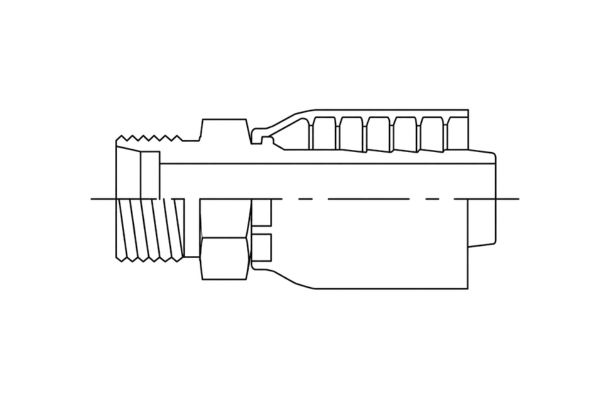
Confirm material before committing
For stock jobs, check exact SKU, free quantity, reservations, condition, revision, and traceability. For incoming material, check confirmed quantity, dispatch or arrival milestone, split-shipment status, and internal receiving capacity. Treat unconfirmed orders separately from usable stock.
A one-piece fitting has a retained or preassembled stem or body and ferrule, with construction varying by series. A neighboring part that looks similar is not equivalent. Promise only after connection, hose side, fitting series, and assembly data are sufficiently resolved.
Build uncertainty into the wording
When evidence is incomplete, provide a conditional estimate and identify what must be confirmed. Do not conceal uncertainty to win an urgent job. A customer can make a better equipment decision from an honest constraint than from a confident date that repeatedly fails.
Review promise accuracy by job type and cause. If same-day language is repeatedly used before stock verification, fix intake and scheduling rather than relying on apology scripts.
Wrong Picks and Shipments Damage Confidence
An error corrected quickly still signals that the shop may not control part identity. It can be more damaging than a transparent shortage because the customer believed the job was ready to proceed.
Similar-looking fittings require precise identity
Confirm thread form, connection standard, diameter, pitch or TPI, straight or tapered form, gender, seat angle, sealing face, O-ring location, and orientation. JIC, SAE flare, BSP, NPT, ORFS, ORB, Metric, DIN, JIS, and flange connections are not interchangeable by appearance.
On the hose side, confirm hose manufacturer or approved specification, series, construction, ID, reinforcement, fitting series, ferrule, crimp equipment, dies, preparation, and current crimp specification. Same dash size does not guarantee compatibility.
Stop the error before the bench
Use controlled SKU descriptions, separated bins, readable labels, reservations, purchase-order checks, and receiving verification. Quarantine unclear, damaged, or different material. An urgent carton should not bypass identity and condition checks.
If the wrong item reaches a job, record whether the cause was ordering, supplier picking, receiving, internal storage, or issue. Correct the root cause instead of treating every event as generic “supply trouble.”
Communication Failure Is Not the Same as Supply Failure
Physical availability and communication quality are separate controls. A shop can handle an unavoidable delay well, or it can turn a manageable shortage into a trust problem through vague or late updates.

Communicate before the missed deadline
Update the customer when evidence changes, not after the promised time passes. Use one current source of truth so purchasing, scheduling, and service staff do not give conflicting dates. Assign an owner and next update point for each blocked job.
A useful update contains:
- the confirmed status of the required fitting;
- whether the job has other unresolved technical requirements;
- the present effect on completion;
- the next milestone and update time;
- safe options, if any, that have already been technically verified.
Avoid vague reassurance
Phrases such as “it should be here soon” provide no decision value. Give the confirmed milestone and what remains after it. If no date is confirmed, say so and explain when new evidence will be sought.
Communication cannot replace supply control, but it prevents uncertainty from becoming deception. Likewise, a good explanation cannot justify an unsafe assembly.
Technical uncertainty must remain visible. Preserving a deadline never overrides compatibility or safety. An unverified fitting can produce leakage, hose pull-off, contamination, equipment damage, and a more serious loss of trust than an honest delay.
Verify alternatives before offering them
Compare the original and proposed fitting across connection, seal, dimensions, angle, hose tail, ferrule, material, finish, pressure suitability, environment, and current crimp data. A cross-reference or photo supports screening but does not guarantee interchangeability.
Pressure suitability is limited by the lowest-rated component in the complete assembly and affected by application conditions. Do not make universal claims from the fitting category alone.
Apply repair safety boundaries
Before removing or inspecting a failed assembly, stop equipment, isolate the hydraulic system, release pressure and stored energy, secure raised loads, and follow lockout and manufacturer procedures. Never check a suspected high-pressure leak by hand or reuse damaged components.
If verification cannot finish inside the promised window, revise the promise. Technical uncertainty should appear in the internal status and customer decision, not be hidden by schedule pressure.
Root-Cause Records Improve Future Reliability
Trust improves when the shop prevents the same expectation gap from recurring. That requires records connecting each missed promise to the actual supply or communication cause.
Capture observable facts
Record exact missing or wrong SKU, stock status at promise time, order milestones, receiving outcome, internal pick result, technical clarification, promise changes, and final completion. Use neutral cause codes and protect customer identity in shared analysis.
Group events by SKU, fitting family, process stage, and promise source. A few recurring descriptions, bins, or confirmation gaps may cause many disappointments. Avoid assuming every delay requires more inventory.
Test controls on recurring causes
Possible actions include free-stock verification at intake, clearer descriptions, earlier reorder review, exception alerts, blocked-job receiving priority, or standardized updates. Test a control on a small set of frequent jobs, then compare repeat events.
The review should distinguish detection from prevention. A status board may reveal a delayed job earlier, but it does not correct the stock record or ordering practice that created the problem. Pair each visibility control with an owner who investigates the physical cause, then confirm that the change works on later jobs before declaring the issue closed.
Also examine whether staff incentives encourage promises before verification. If service performance is judged only by accepting urgent work, employees may commit dates without checking reservations or technical data. Measure promise accuracy and controlled updates alongside job intake so the process rewards credible service, not optimistic wording.
Marketing language should follow operational improvement, not precede it. A claim of reliable service cannot compensate for unchanged stock records, repeated wrong picks, or unsupported completion dates.
When a recurring failure is corrected, update work instructions, item records, and training examples. A fix known only to one experienced employee will not protect the next shift or the next customer.
Use a Customer-Promise Control Checklist
The final check should occur before the first promise and whenever supply evidence changes. It connects technical readiness, material readiness, schedule capacity, and communication ownership.
Confirm before stating a completion time
Check:
- exact fitting identity and usable quantity;
- reservations, quarantine, and open-order status;
- current confirmed arrival and split-shipment details;
- hose, fitting, ferrule, tooling, and crimp-data compatibility;
- remaining receiving, assembly, inspection, and cleaning work;
- customer urgency and safe equipment status;
- update owner, channel, and next decision time.
Close the loop after the job
Record actual completion, the fitting used, cause of any delay, updates provided, and prevention action. If a customer was affected, follow through on the next promised contact rather than replacing one missed date with another vague commitment.
Use the resulting evidence to improve future promise language. The goal is not to eliminate every disruption; it is to prevent known uncertainty from being misrepresented and repeated.
Conclusion
One-piece fitting supply problems affect customer trust when a shop converts uncertain stock, arrival, or technical information into a firm repair promise. Customers experience backorders, wrong picks, and receiving delays as the same practical result: an unfinished job. Protect credibility by checking free stock and reservations, using confirmed milestones, allowing receiving and production time, and updating the customer before evidence makes the original date impossible. Record internal causes precisely so inventory, ordering, picking, and communication receive the correct fixes. Never preserve a deadline with an unverified connection or hose combination. A short customer-promise control checklist makes service commitments more accurate, transparent, and repeatable even when an unavoidable supply disruption occurs.
Frequently Asked Questions
What should a shop tell a customer about a delayed fitting shipment?
State the current confirmed milestone, its effect on completion, and the next update time. Avoid unsupported arrival claims or blame, and revise the promise when evidence changes.
How should the shop respond after discovering a wrong SKU?
Stop the job, isolate the item, verify the correct requirement, and communicate the revised status. Record whether ordering, supply, receiving, storage, or picking caused the error.
Should a promised date be based on a supplier estimate?
Only with clear uncertainty and enough time for receipt, verification, assembly, and inspection. A firm promise should not treat an unconfirmed estimate as usable stock.
How should urgent customers be handled during a shortage?
Give them accurate options and decision points based on verified material and technical data. Urgency does not justify hiding uncertainty or installing a mismatched fitting.
Can an alternative fitting protect the original deadline?
Only if it is technically verified for the exact connection, hose, ferrule, crimp system, material, environment, and application. Similar appearance or a quick claim is not sufficient.