
One piece fitting bore cleanliness and sealing-face protection should be confirmed before a commercial order enters usable inventory. A correct-looking TP43-style reference can still contain machining chips, metal particles, oil residue, dust, fibers, or handling contamination, while an exposed flare seat, ORFS face, thread, or O-ring groove may be scratched during packing and transport. These conditions can create first-use concerns, inspection delays, and contamination risk, even when the requested model appears correct.
Internal Cleanliness Matters Before First Use
The fitting bore is part of the fluid path, so material left inside it may move into the hose assembly or hydraulic circuit. Receiving inspection should prevent visibly questionable fittings from being binned with accepted stock, but the required cleanliness level must come from the application and approved contamination-control requirements.
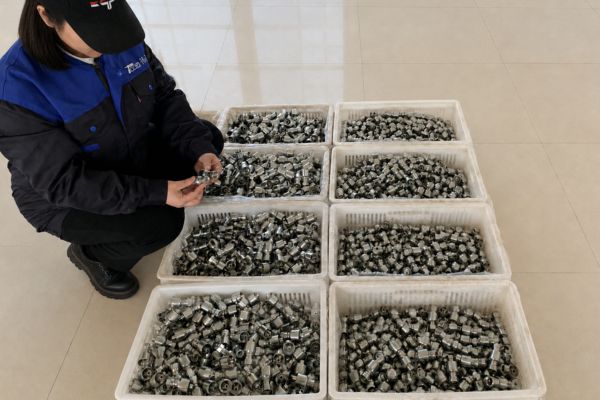
Contamination can travel beyond the fitting
Loose chips or particles may migrate during unpacking, assembly, flushing, or equipment operation. Depending on the circuit, foreign matter can contribute to seal damage, restricted passages, valve problems, surface wear, or repeated cleaning work.
A clean external surface does not show the full condition of an internal passage. Elbows, transitions, cross-drilled areas, deep bores, and hose-side features may hide debris from a quick front view. Lighting, magnification, access, and the geometry of the particular fitting influence what an inspector can see, so the method should be defined rather than reduced to a glance.
Clean-looking is not contamination-free
Visual screening can find obvious chips, dust, fibers, pools of oil, or damaged protection. It cannot prove that microscopic particles, incompatible residues, or material trapped beyond the viewing path are absent. When an application requires a specified contamination-control process, acceptance must rely on the appropriate procedure and evidence, not on appearance alone.
The decision also depends on what happens after receiving. A fitting may be cleaned, assembled, flushed, or handled under a controlled process, but those later steps do not justify accepting unknown residue without review. The receiving baseline should state what condition is expected on arrival and what approved preparation remains necessary before installation.
Identify the Source and Type of Contamination
Machining residue, storage contamination, and handling damage are different problems. Correct classification directs the investigation toward production cleaning, packaging integrity, warehouse practices, or transport protection.
Machining and process residue
Metal chips, small curls, abrasive particles, thread-forming debris, or residue near intersecting passages may originate during manufacturing. Oil or process fluid can be intentional for corrosion control or left from machining, but its acceptability depends on the agreed condition and application. An inspector should record location, apparent form, mobility, and affected batch without declaring chemical identity from sight or smell.
Burrs are not the same as loose contamination. A burr remains attached to an edge and may affect flow, assembly, or downstream cleanliness if it breaks away. Do not scrape, pick, or remove it during routine receiving unless an approved inspection or rework procedure authorizes that action.
Storage and handling contamination
Dust, carton fibers, damaged bag fragments, moisture evidence, fingerprints, or mixed loose parts often point toward exposed storage or handling. A protective cap that has fallen off can allow debris to enter even if the fitting left production clean. Compare inner packaging, cap fit, bag closure, carton condition, and the location of contamination to understand when exposure may have occurred.
Handling damage can produce new contamination as well as scratches. Metal-to-metal contact between loose fittings may abrade threads, ferrules, nuts, or sealing faces and create particles inside a shared bag. Because the result can affect several pieces, inspect the package as a unit instead of cleaning one visible fitting and returning it to stock.
Common contamination observations include:
- Loose metallic chips or flakes in a bore, thread, or package
- Oil, grease, or unidentified residue on a fluid-path surface
- Dust, fibers, plastic fragments, or carton particles
- Moisture, staining, corrosion products, or damaged barrier packaging
- Attached burrs or rough edges that may release material
- Debris transferred from mixed or unprotected parts
Protect the Surfaces That Create the Connection and Seal
The highest inspection priority belongs to features that guide assembly, carry a seal, or provide a sealing interface. Cosmetic marks on a nonfunctional area and damage on a flare seat should not receive the same decision.
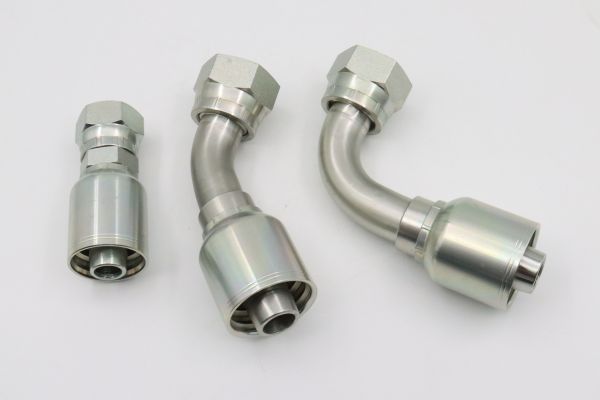
Threads and sealing faces need different checks
Male and female threads should be protected from impact, crushing, cross-contact, and embedded debris. Thread condition affects engagement, but normal start-up by hand does not prove the standard, pitch, taper, or dimensional conformity. When identity or geometry is in question, use the current drawing and appropriate inspection method rather than forcing a mating part.
Flare seats, flat ORFS faces, cone seats, flange faces, and other sealing surfaces require clean, undamaged contact areas. Scratches, dents, raised material, corrosion, or contamination may disrupt the intended seal. Thread sealant cannot correct a damaged face, wrong seat angle, or mismatched connection standard.
O-ring grooves and seals require coordinated protection
An O-ring groove should be screened for debris, edge damage, corrosion, and anything that may pinch or cut the specified seal. If an O-ring is supplied, also inspect its presence, position, and visible condition without claiming that appearance identifies its material. Protective plugs or caps should shield the area without pressing, scraping, or displacing the seal.
The fitting style changes which surfaces are exposed. A female swivel may protect some geometry inside the nut while leaving threads, the seat, or the nut edge vulnerable to embedded debris and impact. A flange can present a broad face vulnerable to abrasion. The inspection plan should map the actual connection, not use one generic view for every SKU.
| Inspection area | Main concern | Evidence or action |
| Internal bore and passages | Chips, residue, fibers, hidden debris | Defined viewing or cleanliness method and batch record |
| Male or female thread | Impact, contamination, deformation | Protection check plus applicable identity or gauge inspection |
| Flare or cone seat | Scratches, dents, raised material | Clean close view and controlled surface criteria |
| ORFS or flange face | Abrasion, corrosion, embedded particles | Face protection and incoming condition record |
| O-ring and groove | Missing seal, dirt, nicks, displaced seal | Specification reference and nondamaging inspection |
| Hose-side stem and ferrule | Debris, impact, mixed parts | Product identity, packaging separation, and condition review |
Packaging and Handling Preserve the Accepted Condition
Cleaning controls are ineffective if the fitting is exposed or damaged after inspection. Packaging should keep the product identifiable, separated where necessary, protected at critical surfaces, and reasonably isolated from dust, abrasion, impact, and moisture expected in the agreed distribution route.
Match protection to the connection
A cap or plug should fit the intended connection without cutting threads, contacting a sealing surface improperly, or displacing an O-ring. One cap design is not automatically suitable for every thread, angle, or face. The buyer should specify the required protected condition and let the approved packaging solution reflect product geometry and transport risk.
Inner bags, dividers, trays, wraps, or other methods can reduce metal-to-metal contact, but no single material is universally required. Consider part weight, sharp edges, swivel movement, carton loading, shipment method, storage duration, humidity, and warehouse handling. Packaging that looks neat but allows heavy fittings to strike each other does not control the critical risk.
Maintain protection through warehouse handling
Receiving staff should avoid opening every package in a dusty area or leaving caps off after inspection. If a sample must be removed, define how accepted fittings are reprotected and relabeled. Broken packaging, loose components, or mixed SKUs should remain controlled until identity and condition are restored.
Counter sales and partial-carton picking can change the condition long after arrival. Use storage bins and handling steps that protect the bore and connection face, keep model labels with the product, and prevent returns or used parts from entering new inventory. Shipping protection is therefore a chain, not a one-time factory photograph.
Request Evidence That Answers a Specific Question
Pre-shipment evidence should show product identity, critical surfaces, cleanliness controls, and protection, not merely a closed carton. The request can be proportionate to order risk and does not need a fixed number of photographs for every SKU.
Useful pre-shipment evidence
Ask for overview images that link the product to its model and batch, plus close views of the bore, connection end, sealing face, hose side, cap or plug, inner packaging, and carton label where relevant. A documented inspection record may identify the method, sample scope, result, batch, and reviewer. If a specified cleanliness test or process is required, request the agreed record rather than interpreting a photograph as a test.
Image file names or grouped references should map to purchase-order lines. Mixed parts in a single image can hide whether the correct connection, cap, label, and quantity belong together. The evidence should make questions easier to resolve before shipment, while recognizing that it cannot replace the buyer’s receiving inspection.
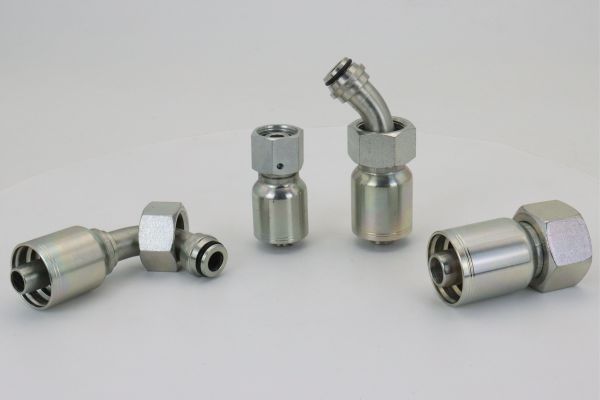
Avoid unsupported conclusions
Do not treat an inspection photo as proof that every unit is clean. Do not infer material, pressure capacity, or hose compatibility from surface appearance. A document titled “quality report” is useful only when its product, revision, method, batch, and results correspond to the order being reviewed.
When evidence is incomplete, record the open item and decide whether shipment, receiving hold, or additional inspection is appropriate under the purchase agreement. Silent assumptions are especially risky in multi-SKU orders because a strong record for one model may not apply to another.
Incoming Inspection Should Prioritize Risk
Incoming inspection should first confirm identity and packaging integrity, then inspect the areas most likely to carry contamination or functional damage. A risk-based plan can use SKU history, batch changes, connection type, packaging damage, and application criticality, but its frequencies and acceptance limits must be approved rather than invented.
Sequence the inspection
Start with purchase order, packing list, SKU label, batch reference, and carton condition. Open packages in a suitable area, preserve separation, and review protection before removing it. Inspect bores and passages with appropriate light and viewing access, then examine threads, seats, faces, grooves, O-rings, swivel nuts, stems, and ferrules without forcing or modifying the assembly.
If visible debris is present, do not blow it toward people or into the workplace. Follow the approved containment, cleaning, and personal-protection procedure for the suspected material and application. A fitting should not be declared acceptable merely because an inspector removed the visible particle.
Document and contain findings
Record the exact SKU, batch, package, feature, and condition. Use clear photographs that show both context and detail. Keep accepted, uninspected, held, and rejected quantities distinct so an uncertain piece cannot return to a saleable bin.
Investigate patterns across related packs before deciding the scope. A damaged carton may indicate transport exposure, while repeated chips in intact packages may point elsewhere. The aim is to find and control the source, not to assign blame from appearance alone.
Common Mistakes Hide Cleanliness and Protection Risk
The most common mistakes occur when receiving teams use speed as a substitute for defined acceptance. A brief check can be useful screening, but it should not claim more than it demonstrates.
Weak acceptance practices
Checking only the shiny exterior misses internal passages. Wiping a sealing face before photographing it removes evidence. Forcing threads to “test fit,” scraping a burr, removing an O-ring, or spraying an unknown cleaner can damage the product or create an incompatible residue.
Other errors include accepting mixed unlabeled parts, assuming oil always means contamination, assuming any oil is acceptable corrosion protection, and treating intact cartons as proof of intact faces. The correct response depends on the agreed condition, application, evidence, and inspection method.
Neutral cleanliness and protection checklist
Before releasing the fitting to inventory, confirm:
- Purchase-order line, SKU, connection, batch, and drawing revision
- Inner packaging, cap or plug, and carton integrity
- Internal bore and accessible passages are screened by the approved method
- Threads, flare seats, ORFS faces, flange faces, and grooves are protected
- O-ring presence and visible condition are reviewed when applicable
- Debris, residue, moisture, corrosion, burrs, and impact marks are recorded
- Findings link to the correct package and batch
- Cleaning or rework follows an approved, application-appropriate procedure
- Technical compatibility and contamination requirements remain separately verified
Conclusion
One-piece fitting bore cleanliness and sealing-face protection should be controlled from final inspection through packing, transport, receiving, storage, and picking. Visual screening can reveal chips, fibers, residue, corrosion, damaged caps, or scratched faces, but it cannot prove that a fitting is contamination-free or ready for every circuit. Buyers should distinguish machining residue from storage exposure and handling damage, prioritize fluid passages and sealing features, and link evidence to the correct SKU and batch. Before accepting stock, verify product identity, packaging integrity, bore and passage condition, threads, seats, faces, grooves, O-rings, and any required cleanliness process. Preserve the original evidence, contain uncertain items, and follow application-specific cleaning and acceptance requirements rather than relying on appearance alone.
FAQ
Can a new fitting contain oil and still be acceptable?
Yes, some residue may reflect an agreed process or corrosion-control condition. Its identity and acceptability must be verified against the purchase specification and application rather than assumed from appearance.
Are protective caps proof that the bore stayed clean?
No, caps reduce exposure but do not prove cleanliness. Check cap fit, package integrity, internal condition, and any required cleanliness evidence.
Should receiving staff use compressed air to clean a fitting?
Only under an approved and safe cleaning procedure. Uncontrolled air can propel debris toward people, spread contamination, or move particles deeper into a passage.
Does a scratched outer surface require rejection?
Not automatically, because location and severity matter. Distinguish a cosmetic mark from damage to a thread, sealing face, groove, flange face, or other controlled feature.
Can shipment photos replace incoming cleanliness inspection?
No, photographs support pre-shipment review but do not establish every unit’s arrival condition. Receiving must still verify packaging, identity, critical surfaces, and the specified cleanliness requirements.