Plan hydraulic fitting replenishment by identifying what each branch actually uses, standardizing part records, and setting replenishment rules around demand and the time needed to receive usable stock. A shared catalog alone cannot tell you whether the right connection, hose fitting series, or elbow is available where the next job will happen. One location may hold excess straight fittings while another cannot complete an assembly because its required swivel is missing. The goal is to make approved parts available at the correct location without filling every shelf with the entire product range or treating similar-looking fittings as interchangeable.
Start With Local Demand, Then Build a Shared Stock Plan
Use branch-level consumption to decide placement, and network-level information to coordinate replenishment.
Separate Completed Work From Unfilled Requests
Sales and assembly records show what left the shelf, but they do not reveal every request that could not be filled. Record missing part numbers, jobs postponed for unavailable connections, and requests fulfilled through transfers, then separate recurring demand from one-time projects that would distort a normal replenishment pattern. Check these records against the equipment serviced locally and upcoming maintenance periods, because a branch supporting agricultural machinery can have a different demand pattern from one handling industrial maintenance. A full catalog shows possible combinations; a useful stock plan identifies which approved combinations repeatedly support actual work.

Classify Parts by Use and Consequence
A frequently used fitting usually deserves a different policy from an unusual elbow ordered for one machine, yet frequency alone should not determine priority. A low-volume part can warrant a reserve when its absence prevents an important assembly from being completed and no approved alternative is readily available. Classify each SKU by demand regularity, interruption consequence, replenishment difficulty, and availability elsewhere in the network before deciding its stocking location.
| Stock category | Demand and service condition | Possible replenishment approach |
| Recurring local use | Repeated consumption at one branch | Maintain local stock and review its replenishment trigger against current usage. |
| Shared network use | Several branches need the same approved part | Coordinate purchases while assigning quantities according to branch demand. |
| Infrequent but consequential | Low consumption, substantial interruption if unavailable | Evaluate a limited reserve or central holding against transfer time and actual risk. |
| Project-specific | Requirement tied to identified equipment work | Order against the confirmed job and keep its quantity separate from normal stock. |
| Unresolved identification | Connection or assembly compatibility remains uncertain | Hold outside available inventory until identification and approval are complete. |
Give Every Fitting a Consistent, Verifiable Identity
Create one controlled part record before combining quantities across branches.
Define the SKU Beyond Its Thread Name
Descriptions such as “half-inch female elbow” leave too much unresolved for reliable purchasing or picking. Use a hydraulic fitting identification guide to record the connection family, thread size and pitch, gender, seal, configuration, and material, plus the manufacturer and series where these determine hose compatibility. For hose ends, keep hose size separate from connection size, since a single fitting may combine different sizes at its two ends.
Keep Similar Connections and Unapproved Alternatives Separate
Two fittings with similar threads can require different sealing faces, and parts with matching connection ends can have different hose attachment requirements. A one-piece hose fitting combines or secures its stem and ferrule beforehand, reducing separate sleeve selection; it does not establish compatibility with every hose of the same nominal size. Keep different series and unapproved alternatives in separate records and bins, because convenience at the picking stage cannot justify an uncertain assembly combination.
Use these fields as the minimum working identity for each relevant SKU:
- Internal identifier and source reference: Keep the internal part number stable, with the manufacturer part number and verified drawing revision attached.
- Connection and seal: Record the full thread designation, connection gender, straight or tapered form, and the sealing face or required seal.
- Hose attachment: For hose ends, record the approved hose manufacturer, series, size, fitting series, and applicable assembly data.
- Physical configuration: Distinguish straight, 45-degree, and 90-degree forms, as well as dimensions or orientations that affect installation clearance.
- Material and status: Record the specified material, finish, included seals, and whether the item is approved, awaiting review, or blocked from use.
Set Reorder Points Around Usable Replenishment Time
Trigger replenishment before expected consumption exhausts usable stock.
Distinguish the Trigger From the Reserve
A reorder point is the inventory position at which you start replenishment, while safety stock is a reserve intended to cover defined uncertainty in demand or replenishment time. For reasonably regular consumption under continuous review, a starting model is expected demand during replenishment lead time plus safety stock, using consistent time units and checking the result against observed shortages and surplus. Inventory position should include usable stock and confirmed incoming quantities, less allocations and outstanding demand, with double-counting prevented by the inventory system.
Allow for Review Frequency and Irregular Demand
If stock is reviewed only periodically, the planning horizon must cover both the replenishment interval and the time until the next review; a continuous-review trigger cannot simply be copied into that process. Use the time from an authorized order to accepted, available inventory, including receiving checks and internal distribution, rather than only a quoted dispatch interval. Intermittent demand needs separate treatment because an average can conceal long quiet periods followed by a specific maintenance requirement, and a low average does not establish that zero reserve is appropriate. Scheduled work, seasonal changes, and unusual projects should therefore be visible adjustments, with a recorded reason and a date for reconsidering them.
Decide What Stays Local and What Can Be Shared
Shared inventory is useful only when the receiving branch can obtain and use it in time.
Compare Local Holding With Central Availability
Keep recurring parts close to the work when repeated transfers would create avoidable waiting, handling, and transport expense. Central stock may suit some low-frequency parts, but the decision depends on transfer time, operating hours, transport availability, and whether another branch has already committed the same quantity to a job. A network total can therefore overstate availability: a part on another shelf may be reserved, awaiting identification, or too far away to meet the requirement. Compare the cost of local holding with the consequence of waiting, and avoid describing centralized stock as immediately available unless the transfer arrangements support that claim.
Control Transfers as Carefully as Purchases
A transfer should reduce one branch’s available quantity and create a traceable incoming quantity at the receiving location, with its arrival and acceptance recorded. Keep the source part number, approved series, lot information where required, and connection description attached to the movement so a loose fitting does not become an unidentified item on arrival. For two-piece assemblies, verify that the required stem and compatible hydraulic ferrule are both available in their approved combination, rather than moving a sleeve that merely looks suitable. Count transfer demand separately from final consumption, or the same fitting can appear to have been used once at the sending branch and again at the receiving branch.
Before authorizing a transfer, confirm:
- Actual availability: The sending location has checked the usable quantity and excluded reserved, damaged, and blocked parts.
- Technical identity: The receiving location needs the exact approved item, including hose fitting series and any separate assembly components.
- Arrival requirement: The proposed transport and receiving hours can support the job’s required availability time.
- Stock impact: The transfer will not create an unmanaged shortage at the sending location; record any replenishment it triggers.
- Receipt closure: A named internal owner will confirm the quantity, identity, and condition before the system marks it available.
Compare Total Replenishment Cost Without Hiding Errors
Evaluate purchasing, handling, and shortage consequences alongside unit price.
Capture Costs That the Invoice Does Not Explain
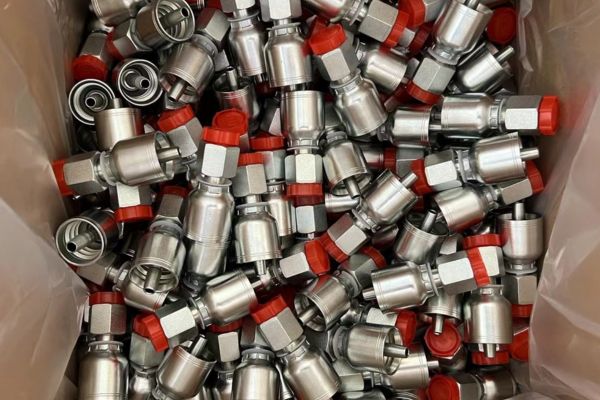
A lower unit price can be outweighed by repeat freight charges, extra sorting, wrong-item returns, blocked inventory, and assemblies that must be remade after incorrect parts were selected. Track these costs against their causes rather than assigning an unsupported percentage to every order or assuming that all inexpensive fittings create problems. Record a transfer’s transport and handling separately, identify whether a shortage actually postponed work, and distinguish documented internal costs from estimated consequences that require further evidence. Comparing orders on the same scope, specification, delivered quantity, and cost basis makes the result more useful than treating the cheapest quoted line as the least expensive replenishment option.
Investigate Why Stockouts and Surplus Occur Together
A shortage of one SKU alongside excess of another often calls for a record or allocation review before an increase in purchasing. Check for duplicate identifiers, pack-versus-piece errors, unposted transfers, quantities assigned to the wrong branch, and substitute items that were received under the original part number without approval. Also distinguish a genuine rise in demand from stock that exists physically but remains unavailable because of damaged threads, missing identification, or pending technical review.
| Observed problem | What to verify first | Decision after verification |
| Frequent emergency transfers | Branch allocation, recurring usage, and replenishment timing | Adjust local holding if demand and transfer costs justify it. |
| Surplus despite repeated shortages | Duplicate SKUs, wrong series, and stock status | Correct identity and availability before raising order quantities. |
| High sorting or picking workload | Label consistency, bin separation, and purchase descriptions | Improve records and location controls before adding more variants. |
| Repeated small replenishment orders | Review cadence, lead time, and quantity units | Consolidate where appropriate without delaying required parts. |
| Slow-moving stock accumulates | Project demand, equipment changes, and prior assumptions | Reduce future purchases or relocate approved parts where demand exists. |
Test the Process Before Expanding the Stock Range
Start with a defined group of parts whose demand and specifications you can verify.
Choose a Pilot That Reveals Process Problems
Select a manageable group of recurring SKUs and participating branches based on available records, then document their starting quantities, current approval status, replenishment times, and known identification problems. The pilot should test the inventory process using approved products, rather than quietly introducing unfamiliar fitting alternatives under existing stock numbers. Track availability at the time of request, unfilled demand, transfer frequency, picking corrections, and excess that remains after expected work is completed. Choose the review period around the relevant replenishment and consumption cycles, because an arbitrary calendar interval may end before a normal receipt or seasonal requirement provides meaningful evidence.
Expand Only When the Evidence Supports It
Compare pilot results with the starting condition and examine whether the change came from better replenishment or from temporarily carrying more stock. Expansion is justified when records are reliable, receipts are usable, recurring demand supports the additional variants, and the network can maintain the same identification discipline across more locations. If shortages persist, check the assumed lead time and recorded lost demand; if surplus grows, revisit project quantities, branch allocations, and demand assumptions before adding more SKUs.
Prepare a Replenishment List That Can Be Checked
Resolve technical uncertainty before treating an item as routine replenishment.
Confirm the Part and the Conditions of Use
For hose ends, approval must cover the exact hose, fitting, and assembly procedure, including the applicable crimper and tooling; nominal size alone is insufficient. Pressure, temperature, fluid compatibility, and application limits also require the relevant component data, with a hose assembly limited by its lowest applicable rated component. The manufacturer’s hose safety guide illustrates why selection and assembly require product-specific instructions; if identification requires removing an installed assembly, shut down, isolate and release hydraulic pressure and stored energy under the equipment procedure; never use a hand to search for a pinhole leak.
Prepare the following information before the next replenishment review:
- Approved part identity: Internal number, manufacturer reference, current drawing, connection and seal, hose fitting series where relevant, and material requirements.
- Demand evidence: Consumption by branch, unfilled requests, confirmed maintenance work, and project quantities kept separate from recurring demand.
- Stock position: Usable quantities, reservations, blocked stock, open orders, and transfers with realistic availability dates.
- Replenishment assumptions: Time to usable receipt, review frequency, demand variation, reserve rationale, and quantity units.
- Order requirements: Quantity by SKU, receiving branch or central location, required availability date, and any unresolved specification questions.
Make the Next Order Support the Next Job
Hydraulic fitting replenishment works when stock records describe parts that people can identify, locate, and use in approved applications; buying every catalog option cannot compensate for uncertain thread identification, missing hose compatibility records, or quantities that are invisible between branches, so before adding inventory, establish which recurring jobs are being delayed, which approved items those jobs require, and how long replenishment takes to become usable stock, then assign local and shared quantities, verify the reorder rules, and review actual results after normal replenishment cycles. Correct matching matters more than a low unit price or a close visual resemblance because an unusable fitting does not restore availability; start the next review with verified part records, branch demand, open-order dates, and clearly identified exceptions.
FAQ
Should inventory turnover be measured in pieces or value?
Use a consistent financial basis for financial turnover, commonly cost of goods sold divided by average inventory value over the same period. Piece movement is useful for individual SKU planning, but adding unlike parts together can hide a slow-moving expensive item.
How should stock on a service vehicle be recorded?
Treat each vehicle as a separate inventory location with recorded issues, returns, and replenishment. A part loaded onto a vehicle has moved location; it has not necessarily been consumed on a completed job.
Can returned fittings go directly back into available stock?
Only return parts to available stock after identity, condition, and traceability requirements have been checked. Used, previously crimped, damaged, or uncertain components require separate disposition under the applicable product instructions.
How do you plan inventory for a new branch without usage history?
Begin with verified equipment and service requirements, supported by comparable branch records where appropriate. Treat initial quantities as provisional and review actual consumption and unfilled requests before expanding them.
Should different finishes share one stock number?
Use separate identities when finish is a specified requirement or affects approval for the application. A controlled grouping may support reporting, but it must not erase differences that matter when parts are picked.