A one-piece fitting part number should be treated as a technical identifier, not as proof that the requested item is correct. Before ordering, connect that number to the manufacturer, product series, hose compatibility, connection standard, size, orientation, material, and current crimp data. This verification prevents visually similar parts from becoming leaks, rework, unusable inventory, or an extended equipment shutdown.
Why a Part Number Alone Is Not Enough
The number only works inside its own catalog system
A manufacturer part number may encode fitting family, end connection, hose size, thread size, elbow angle, material, or other options. The code has meaning only when read with the correct manufacturer’s current catalog and revision. The same sequence can mean something different in another product line, while punctuation, prefixes, suffixes, and leading zeros may distinguish products that are not interchangeable.
Data copied from an old invoice, handwritten bin label, or worn fitting may also be incomplete. A missing suffix can change material or seal, and a transposed size code can produce a fitting that looks plausible until assembly. Record the number exactly as shown, including spaces and symbols, but label its source so an unverified transcription is not mistaken for manufacturer-confirmed data.
Cross-references are search aids, not final approval
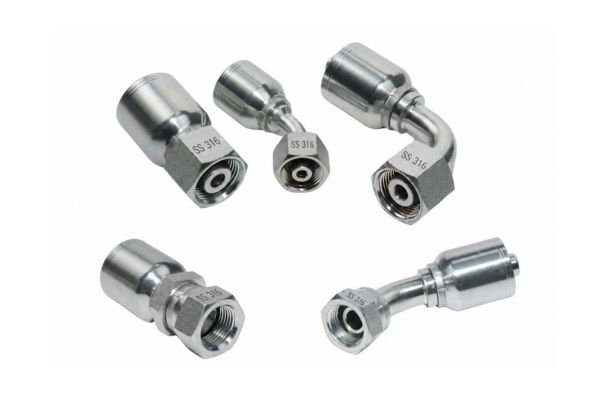
A cross-reference can identify a possible alternative, but it rarely proves every feature required for a safe hose assembly. It may compare only a connection description and nominal size while omitting hose construction, ferrule design, stem profile, crimp specification, material, finish, pressure suitability, or dimensional differences. Brand part numbers should therefore be used for identification and comparison, not as unsupported declarations of complete interchangeability.
The practical question is not “Does the alternative resemble the old part?” It is “Does documented evidence show that this exact fitting will connect to the port, crimp to the specified hose, and meet the actual service requirements?” If the answer depends on an assumption, the line item is not ready to order.
Decode the Complete One-Piece Fitting Description
Confirm both ends of the fitting
A one-piece hydraulic hose fitting combines or permanently retains the fitting body or stem and ferrule as one assembly component. That construction reduces the risk of ordering or picking a separate ferrule from the wrong family. It does not eliminate two independent compatibility checks: the connection end must match the equipment port, and the hose tail must match the exact hose series and applicable crimp data.
Build a plain-language description beside every part number. It should state whether the connection is male or female, rigid or swivel, straight or elbow, and identify the thread or flange standard, nominal connection size, hose size, fitting series, material, finish, and seal where applicable. This description gives reviewers something concrete to compare instead of asking them to approve an opaque code.
Read suffixes and variants as technical requirements
Similar base numbers may branch into carbon steel, stainless steel, alternative plating, different O-ring compounds, special drop lengths, or nonstandard orientations. Do not silently replace a missing option with the version normally kept in stock. Fluid compatibility, corrosion exposure, temperature, regulatory constraints, and mating-component material can make that convenient substitution unsuitable.
Elbow geometry needs more detail than “45-degree” or “90-degree.” Check the catalog’s dimensional drawing, drop length, overall envelope, swivel or rigid form, and orientation convention. Two elbows with the same thread and hose size may install differently, interfere with surrounding components, or impose an unacceptable bend immediately behind the ferrule.
Verify Thread, Seat, and Seal Before Ordering
Similar outside diameters can hide different standards
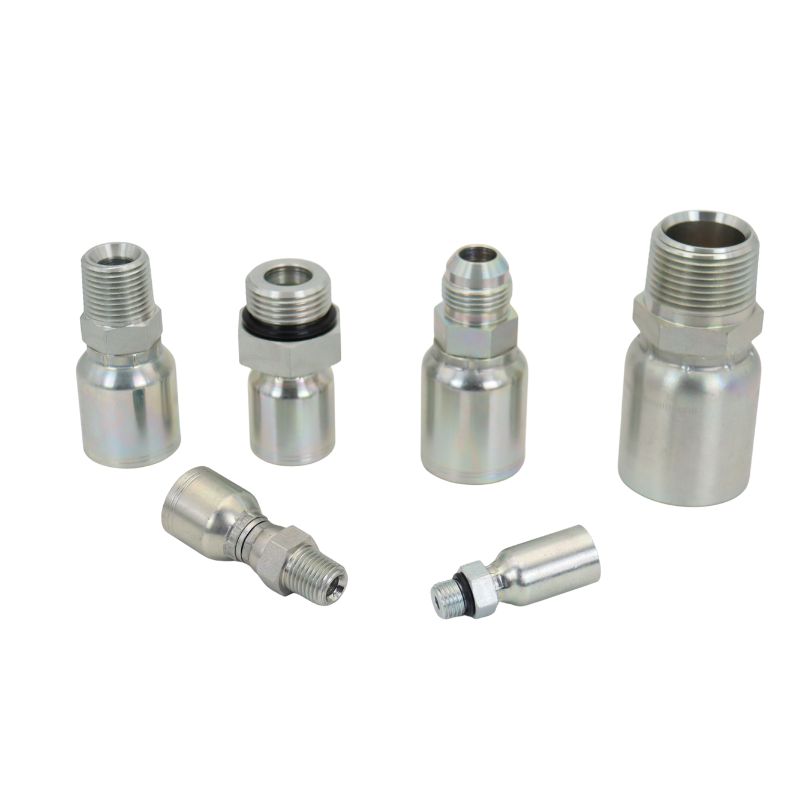
Thread identification requires more than a photograph or a nominal size. Confirm male or female form, outside or inside diameter, pitch or threads per inch, straight or tapered form, and the defined connection standard. NPT/NPTF, BSPP, BSPT, JIC, SAE 45-degree, ORFS, ORB, metric, DIN, and JIS connections cannot be declared interchangeable from appearance alone.
Measure a clean, undamaged sample with suitable tools and compare the result with reliable dimensional data. Use a thread-pitch gauge, and check taper at more than one point where access permits. A photograph remains useful for screening and documentation, but scale, viewing angle, wear, coatings, and contamination make it inadequate for final fitting identification.
Locate the actual sealing surface
The thread may retain and tighten a connection while another feature creates the fluid seal. Identify the seat angle, O-ring location, flange face, bonded seal, tapered thread interface, or other sealing method, and inspect the matching port or adapter. A nut that screws on smoothly does not prove that the sealing faces will contact correctly.
Record seal material and size when the fitting includes or requires a replaceable seal. Thread sealant cannot repair a mismatched seat, damaged O-ring groove, wrong thread form, or cracked port. When the sealing method is uncertain, request the equipment or component drawing instead of converting the most likely appearance into an order code.
Match the Part Number to the Hose and Crimp System
Hose size is necessary but not sufficient
The fitting series must be approved for the exact hose manufacturer, hose series, construction, and size. Two hoses with the same dash size may differ in cover thickness, reinforcement layers, tube material, outside diameter, and deformation under crimping. A fitting can enter both hose bores yet provide inadequate retention in one and damaging over-compression in the other.
Obtain current compatibility and crimp data before approving a new or alternative part number. The applicable instructions may define hose preparation, skive or no-skive procedure, insertion depth, die selection, target crimp diameter, tolerance, measurement location, and inspection method. There is no universal crimp value based only on dash size or the fitting’s connection thread.
Check the available production equipment
A technically suitable fitting is not ready for use if the assembly location lacks the specified dies, crimper capability, measurement method, or controlled procedure. Confirm which machine and die set will make the assembly and whether the cited crimp specification applies to that setup. If a supplier proposes a fitting-and-hose combination outside the existing system, include tooling and process validation in the purchasing decision.
This check prevents an apparently economical order from creating stranded inventory. It also keeps technicians from approximating a crimp with the nearest available die or an old chart. Any first-piece or sample process should use the intended production components, equipment, instructions, and inspection criteria.
Use a Layered Part Number Verification Workflow
Move from identity to application approval
A reliable part number check separates facts that can be read or measured from decisions that require technical data. Assign one status to each line item: confirmed, conflicting, or missing. “Looks right” and “probably equivalent” are missing information, not confirmation.
- Capture the requested part number exactly and record whether it came from a manufacturer label, current catalog, equipment list, old invoice, bin, photograph, or removed component.
- Confirm the manufacturer and product family, then obtain the current description and drawing for that exact code and revision.
- Decode the connection type, gender, thread or flange standard, connection size, hose size, fitting series, shape, orientation, material, finish, and seal.
- Compare those features with measured port, mating component, hose, and routing information rather than with the old part number alone.
- Verify documented hose compatibility and the current crimp procedure for the intended machine, dies, and inspection tools.
- Check working pressure, impulse, temperature, fluid, corrosion, movement, installation access, equipment function, and applicable safety requirements.
- Resolve every conflict in writing, then preserve the approved manufacturer number, internal stock code, revision, and supporting documents together.
Use independent evidence for legacy assemblies
An installed or removed fitting can provide useful evidence, but it may not represent the equipment’s intended specification. Previous repairs may have introduced a different thread, adapter, material, or hose family. Identify the equipment port and hose requirements independently, then determine whether the old assembly agrees with them.
When the original code is obsolete, ask for the formal successor or replacement path and compare both descriptions. A superseding part may require a different hose, die set, crimp diameter, seal, adapter, or installation procedure. Do not assume that “replaced by” means a drop-in change under every production condition.
Control Substitute and Cross-Brand Decisions
Compare attributes, not marketing descriptions
For an alternative fitting, create a side-by-side technical comparison that exposes gaps. Unit price belongs in the decision only after the required connection and hose-assembly attributes are confirmed. Otherwise, the lower-priced line can generate rework, emergency freight, returns, port damage, downtime, and stock that cannot be safely issued.
| Verification field | Evidence required | Do not accept as proof |
|---|---|---|
| Connection | Standard, gender, size, thread dimensions, seat or seal drawing | Similar photograph or thread engagement |
| Hose side | Exact hose series and size listed as compatible | Same dash size or similar stem profile |
| Crimp process | Current preparation, dies, diameter, tolerance, and inspection data | A generic crimp chart |
| Material and finish | Declared specification suited to fluid and environment | Similar color or finish name |
| Application suitability | Ratings and conditions for the complete assembly | Fitting rating considered alone |
| Geometry | Controlled dimensions, elbow angle, drop, and orientation | Same broad style description |
A proposed alternative with missing data should remain unapproved even if a sample can be screwed into the port. For safety-critical functions, unclear specifications, or high-consequence failures, use the equipment owner’s and responsible technical authority’s approval process. Purchasing pressure is not evidence of compatibility.
Validate a limited order before expansion
Where substitution is permitted, begin with a controlled sample or limited order selected from clearly defined, traceable applications. Verify labeling, dimensions, thread and seat geometry, hose insertion, production crimp results, orientation, packaging protection, and required documentation. Testing, if required, must follow an approved method with suitable equipment, guarding, acceptance criteria, and traceable results.
Record every deviation and decide whether it requires correction, conditional acceptance, or rejection. Expand purchasing only when the reviewed product and subsequent deliveries can be linked to the approved specification. A successful sample does not authorize uncontrolled changes to material, dimensions, manufacturing revision, or labeling.
Prevent Picking and Reordering Errors After Approval
Link the technical identity to the stock location
Part number verification loses value if the approved fitting is stored under an ambiguous label. Use a unique internal stock code linked to the full manufacturer number and revision, and print enough plain-language detail for a picker to distinguish adjacent bins. Separate visually similar thread systems, hose series, and material variants where a quick picking mistake is likely.
Barcode or digital controls can improve accuracy, but the master record must still be correct. Avoid one generic description such as “1/2-inch female elbow” for several standards. The label should expose the attributes most likely to cause a hazardous mix-up without becoming too dense to read at the workbench.
Preserve traceability through receiving and assembly
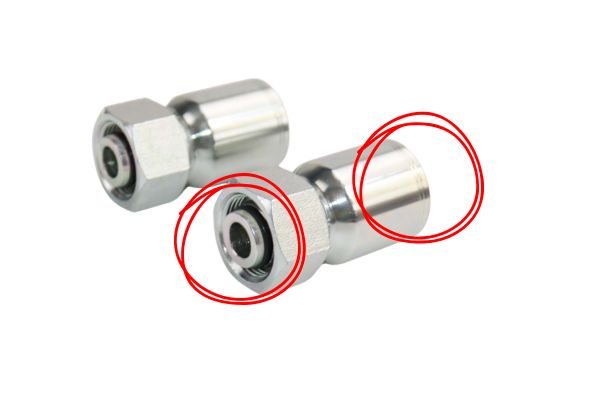
Receiving inspection should compare the purchase order, packing identification, manufacturer labels, quantities, and visible product features with the approved record. Quarantine mixed, damaged, relabeled, or uncertain material rather than correcting labels from memory. Where required, retain lot, material, finish, certificate, or inspection information with the inventory record.
At assembly, the work order should call out the verified hose, fitting part numbers, crimp specification, and orientation. Recording the machine, dies, measured crimp result, date, and assembly identifier makes future replacement faster and failure analysis more useful. It also prevents a verified purchasing decision from being undone by an obsolete chart on the shop floor.
Information to Prepare Before Requesting a Quote
A complete request produces a comparable answer
Send enough information for the recipient to confirm the technical requirement rather than infer it. Mark every unknown clearly and request a drawing or clarification when the answer could change compatibility. The following package fits most one-piece fitting part number checks:
- Exact existing part number, manufacturer or source, catalog revision if known, and clear photos of the complete fitting and all markings.
- Hose manufacturer, exact series, hose ID or dash size, hose legend, and required fitting series.
- Fitting style and orientation, male or female connection, thread diameter, pitch or TPI, straight or tapered form, seat angle, and sealing method.
- Material, surface finish, seal material, working pressure, temperature, fluid, equipment function, routing, movement, and environmental conditions.
- Crimping machine, available dies, current crimp specification, inspection method, estimated quantity, and whether the order is for stock, repair, resale, or equipment production.
Approve the Specification Before Releasing the Order
A dependable one-piece fitting part number check links the code to a verified connection, hose system, crimp process, application, and controlled drawing or catalog description. Correct matching matters more than visual similarity, an attractive cross-reference, or the lowest unit price. Before releasing the order, resolve missing suffixes and conflicts, attach current technical evidence, and state how receiving staff will verify that the delivered fitting is the approved item.
Frequently Asked Questions
Can I order from a clear photograph if the part number is unreadable?
No; photographs support initial screening but cannot establish thread pitch, taper, seat geometry, hose compatibility, material, or crimp data. Add measurements, hose identification, port details, and application requirements before final selection.
Does the same dash size mean the fitting will work with my hose?
No; dash size identifies nominal hose size, not the complete hose construction or approved stem-and-ferrule interface. Verify the exact hose series, fitting series, and current crimp specification.
Is a supplier cross-reference enough to approve a substitute?
Not by itself; treat it as a candidate identification. Compare controlled drawings, connection and sealing details, hose compatibility, materials, ratings, crimp data, and application limits.
What should I do when the old and new catalog descriptions conflict?
Stop the order and request written technical clarification tied to the exact manufacturer number and revision. Do not choose the description that best matches the available stock.
Should internal stock numbers replace manufacturer part numbers?
Internal numbers can simplify inventory control, but each must remain linked to the full approved manufacturer identity and specification. That link is essential when catalogs change, alternatives are reviewed, or failures are investigated.