
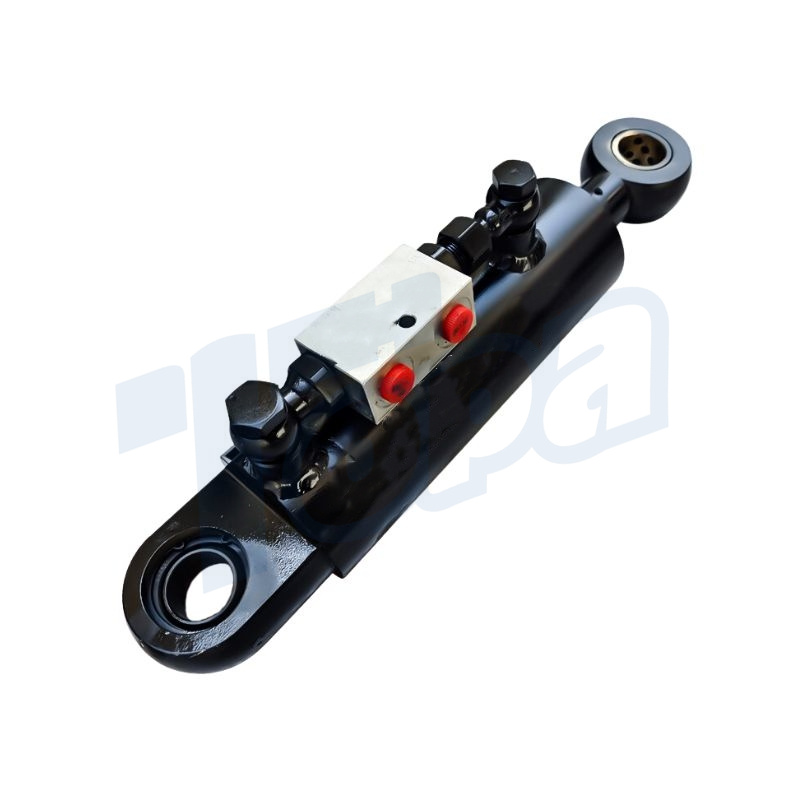

Description
A telescopic hydraulic cylinder provides a long working stroke within a compact retracted length. Its nested stages extend to achieve the required travel.
Selecting a cylinder requires more than matching the stroke. Check the closed length, mounting dimensions, operating pressure, force requirements throughout the stroke, and return method against your equipment.
For a quotation, send your application details, required stroke, mounting drawing, load information, and hydraulic system specifications.
Applications
Construction Equipment: Ideal for compact loaders and other machinery used in construction for lifting and moving materials.
Industrial Machinery: Used in various industrial settings for tasks that require the lifting, tilting, or dumping of heavy loads.
Material Handling: Suitable for forklifts and other material handling equipment where space is limited but high lifting capacity is needed.
Agricultural Equipment: Employed in compact farming machinery for tasks like lifting and dumping soil, feed, or harvested crops.
Advantages
Single Ear Mount: The unique single ear mounting system allows for easier installation and alignment, making it highly suitable for confined spaces and specialized machinery.
Extended Stroke Length: The telescopic design enables these cylinders to achieve long stroke lengths, providing the ability to lift heavy loads to significant heights while maintaining a compact retracted size.
High Load Capacity: Engineered to handle substantial lifting forces, these cylinders are ideal for heavy-duty applications such as construction, material handling, and industrial machinery.
Durable Construction: Made from high-strength materials, these cylinders are designed to withstand harsh operating conditions, ensuring a long operational lifespan.
Specifications and Mounting Dimensions
Use the cylinder drawing to check the mounting dimensions and available clearance in both the retracted and extended positions.
For cylinder selection, confirm:
Specification | Details to Confirm |
Cylinder action | Single-acting or double-acting |
Number of stages | Required telescopic configuration |
Total stroke | Travel needed by the equipment |
Retracted mounting length | Length measured between the specified mounting points |
Mounting arrangement | Connection type and dimensions at both ends |
Operating pressure | Working pressure and relevant system limits |
Force requirements | Required cylinder force throughout the stroke |
Hydraulic ports | Connection type, size, position, and access |
Operating conditions | Fluid, temperature range, and working environment |
Topa's Customized Services
TOPA reviews your equipment dimensions and operating requirements to define a suitable cylinder configuration. Send your drawing, load details, working pressure, and required stroke so we can confirm the available options.
Materials and Surface Finish: Specify the working environment and corrosion protection requirements so suitable materials and finishes can be evaluated.
Stroke and Dimensions: Define the total stroke, retracted mounting length, stage dimensions, and installation clearance to match your equipment.
Seal Selection: Provide the hydraulic fluid, operating temperature range, and pressure requirements so a suitable seal configuration can be selected.
Hydraulic Ports: Specify the port type, size, and position to suit your hydraulic connections and hose routing.
Mounting Configuration: Provide the mounting dimensions at both ends, including pin diameters and mounting widths. The single-eye connection must suit the equipment’s movement and alignment requirements.
Final specifications and customization availability are confirmed after reviewing your application.

Telescopic Single Ear Hydraulic Cylinder
At Topa, the manufacturing process of hydraulic cylinders is a blend of cutting-edge technology and skilled craftsmanship. We start with a detailed engineering design phase where our team of experts collaborates with clients to understand their specific needs. Once the design is finalized, we utilize state-of-the-art machinery, including CNC machines and advanced welding equipment, to fabricate each component with the highest level of precision. High-quality materials are sourced to ensure durability and performance, and each part is machined to exact specifications.
After the initial assembly, each hydraulic cylinder undergoes a series of rigorous tests, including pressure tests, leak tests, and performance evaluations, to ensure they meet our stringent quality standards. This meticulous attention to detail extends to the final stages of production, where cylinders are coated with corrosion-resistant finishes and prepared for shipping.
Other Products


