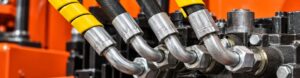
Hydraulic hoses fail in cold weather because low temperatures cause the rubber compounds to lose their flexibility, leading to severe embrittlement, inner tube cracking, and eventual structural blowout under high operating pressures. Imagine a freezing winter morning where a heavy excavator engine is fired up, and the operator immediately engages the hydraulic controls to lift a dense bucket of frozen earth. The sudden rush of high-pressure oil hits a rigid, stiff fluid line, causing the unyielding outer cover to fracture cleanly down to the steel reinforcement wire. This breakdown ruins your daily schedule and creates massive operational downtime.
Why Do Hydraulic Hoses Fail in Freezing Temperatures?
Hydraulic hoses fail in freezing environments because extreme thermal contraction reduces the elastic window of elastomer compounds, forcing them to crack during simple bending movements. When heavy industrial machinery operates in arctic climates, the ambient cold rapidly saps the structural integrity of general-purpose rubber lines.
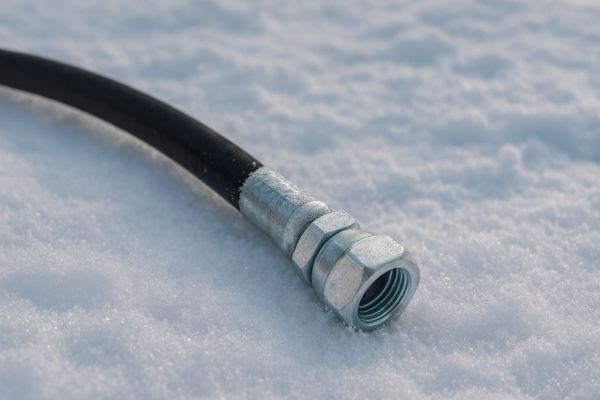
- The internal pressure spikes against an unyielding wall.
- The cross-linked polymer matrix becomes highly susceptible to localized stress fractures.
- Regular inspection prevents catastrophic high-pressure blowouts on the job site.
Can Extreme Arctic Wind Amplify Microscopic Fatigue?
Arctic wind rapidly accelerates the cooling rate of exposed rubber jackets, which induces deep thermal shock across the structural layers. When your equipment stands idle in open fields, high-velocity freezing air strips residual heat from the assembly much faster than still air.
- Rapid temperature drops cause uneven contraction between the inner core and outer jacket.
- This imbalance introduces permanent micro-fissures along the flexible zones.
- Microscopic structural fatigue compromises the maximum burst pressure rating over time.
- Wind chill exposure testing verifies that shielded routing prevents early jacket splitting.
- Fleet operators must deploy defensive thermal sleeves to isolate critical plumbing blocks.
What Happens to Molecular Elasticity under Stress?
Molecular bonds within standard industrial polymers lock into rigid positions when ambient conditions drop past operational limits. The long hydrocarbon chains lose their capability to slide past one another during high-pressure routing cycles.
- Stiffened molecules fail to absorb the mechanical energy of regular system pulses.
- Internal shear stresses accumulate at the tightest bends of the assembly.
- The material behaves more like glass than a flexible conveyance medium.
How Does Sub-Zero Cold Alter Rubber Material Properties?
Sub-zero cold alters rubber material properties by driving the elastomeric compounds toward their specific glass transition point, where the hose loses all pliable characteristics. As a result of this deep molecular solidification, any external flexing or internal pressure pulsing will immediately fracture the unyielding tube walls. When hydraulic hoses fail under these thermal conditions, the root cause is always tied to an incorrect material specification that cannot withstand high-density arctic configurations.
- Elastomers exhibit high volumetric contraction when chilled.
- Internal molecular friction increases significantly during system warm-up cycles.
- Choosing specialized low-temperature synthetic compounds preserves your field uptime.
Why Do Standard Elastomers Reach Their Glass Transition?
Standard nitrile and neoprene mixtures possess chemical formulations that harden rapidly when exposed to prolonged freezing conditions. This physical threshold transforms a highly flexible fluid conduit into a brittle, glass-like pipe structure.
- Plasticizers leach out of the compound during extended low-temperature exposure.
- The polymer backbone becomes completely immobilized under regular mechanical tension.
- Internal fluid pressure pushes against a wall that cannot expand safely.
- High-purity synthetic compounds lower the glass transition point by several degrees.
- Thermal testing ensures that the inner tube remains pliable during cold starts.
What Controls Flex Fatigue Life at Low Operating Ranges?
Flex fatigue life in sub-zero environments is controlled by the chemical purity of the base polymer and the structural design of the wire reinforcement braid. High-quality reinforcement layout distributes operational bending stresses evenly along the longitudinal axis of the assembly.
- Cheap composite jackets exhibit localized stress concentration points near the crimped ends.
- Regular high-amplitude bending quickly splits the stiffened outer rubber cover.
- Moisture penetrates the exposed wire braid and initiates hidden rust patterns.
What Causes Embrittlement in Outer Hose Jackets?
Embrittlement in outer hose jackets is caused by the combined degradation of prolonged ultraviolet exposure and low-temperature thermal contraction, which strips the elastomeric cover of its essential flexible compounds. Once these vital plasticizers are lost, the surface area develops deep cracks that compromise the underlying wire reinforcement.
- Weathering weakens the external defense layer.
- Frozen jackets cannot tolerate abrasion against structural machine frames.
- Heavy-duty protective shielding guards against premature environmental cracking.
How Does Daily UV Exposure Degrade Frozen Compounds?
Sunlight breaks down the molecular bonds of external rubber covers, creating a dry surface area that fractures instantly when exposed to sub-zero temperatures. This chemical degradation creates microscopic fissures along the entire length of the fluid line.
- Solar radiation alters the polymer chain structure during summer operations.
- The weakened cover hardens significantly when the first winter freeze arrives.
- Normal vibration cycles quickly widen these superficial surface blemishes into deep splits.
- UV-resistant outer coatings prevent solar degradation across long field seasons.
- Regular visual inspections reveal early chalking or surface dullness before failures occur.
Why Do External Impact Forces Snag Rigid Covers?
Frozen outer jackets lose their impact resistance, causing them to crack wide open whenever they hit hard objects like frozen tree branches or falling rocks. A rigid cover lacks the compliance needed to deflect external mechanical energy safely.
- An external blow delivers high energy to a non-compliant rubber surface.
- The shock wave shatters the brittle jacket down to the steel braid.
- Corrosive winter salts easily enter the newly formed structural crack.
Protecting your plumbing lines with heavy plastic wraps or textile sleeves significantly lowers the risk of localized impact shattering. Ensuring that the external cover remains shielded from both solar rays and physical strikes preserves the structural barrier that protects your high-pressure steel reinforcement layers.
How Do Pressure Spikes Accelerate Cold Weather Fractures?
Pressure spikes accelerate cold weather fractures by hitting the rigid, non-compliant inner tube with a sudden hammer-like force that exceeds the modified tensile strength of the frozen rubber compound. When an operator activates frozen valves on a freezing morning, the rapid fluid displacement generates massive shock waves. Under these punishing conditions, hydraulic hoses fail because the stiffened internal wall cannot expand safely to cushion the hydraulic pulse.
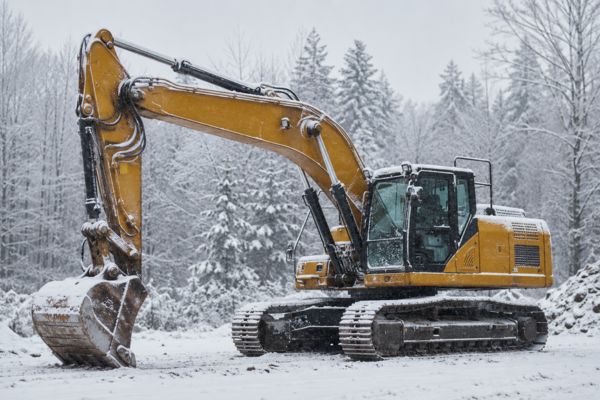
- Cold hydraulic oil exhibits highly elevated flow viscosity.
- High-viscosity fluids generate immense friction against the inner liner walls.
- Installing slow-start bypass valves protects vulnerable plumbing from destructive pressure surges.
Can Cold Fluid Viscosity Induce Shock Waves?
Thick, unwarmed hydraulic oil moves sluggishly through tight orifices, creating a massive localized backup pressure that sends shock waves back through the plumbing network. This fluid hammer effect stresses every junction in your equipment.
- The thick fluid acts like a solid slug against internal tube bends.
- Peak system pressures rise far beyond the design limit of standard reliefs.
- Brittle inner tubes fracture instantly along the high-velocity flow path.
- Pre-heating system oil balances fluid viscosity before heavy operations begin.
- Smooth valve actuation reduces the amplitude of dangerous system pressure spikes.
| Oil Temp (°C) | Viscosity (cSt) | Relief Valve Delay (ms) | Peak Pressure Ripple (PSI) |
| 40 | 32 | 15 | 3,200 |
| 0 | 250 | 85 | 4,800 |
| -20 | 1,200 | 320 | 6,500 |
Why Does Core Tube Cracking Cause System Infiltration?
Core tube cracking causes system infiltration because internal wall splits allow high-pressure oil to pass directly through the reinforcement layers, which ruins the hydraulic circuit and introduces outside dirt into your system lines. When the inner liner loses its fluid-tight seal, the escaping fluid washes away internal adhesives and rusts the steel braid.
- The core tube must stay perfectly fluid-tight.
- Cracked liners let pressurized oil escape into the outer jacket layers.
- Using high-purity inner liners keeps your oil clean and contained.
How Does Inner Liner Breakdown Bypass Braided Support?
When the inner rubber liner develops deep fissures, pressurized fluid enters the wire braid gaps, which separates the rubber cover from its metal reinforcement. This internal fluid path quickly causes large blisters on the outside of the line.
- Escaping oil travels along the steel wires toward the crimped fittings.
- The constant fluid pressure causes the outer jacket to swell and burst.
- System pressure drops rapidly as oil leaks through the structural split.
- Advanced inner linings resist micro-cracking during cold machine startups.
- Regular oil analysis tracks fine rubber particles from degrading inner liners.
What Signals Contaminated Oil in Severe Conditions?
Cloudy or dark hydraulic fluid indicates that external water or dirt has entered the system through cracked outer covers and damaged tube walls. This contamination quickly ruins expensive pumps and control valves.
- Moist air enters the line when the system cools down at night.
- Trapped water creates ice crystals that damage internal valve seats.
- Abrasive dirt particles wear out your cylinder seals very quickly.
- Desiccant breathers stop outside moisture from entering your main oil tank.
- Double-lip rod wipers scrape freezing mud off your cylinder rods effectively.
Replacing cracked assemblies right away stops dirt from entering your system, which protects your expensive components and avoids high repair bills.
| Infiltration Source | Primary Particle Type | Component Damage Target |
| Cracked Inner Liner | Elastomer Flakes | Proportional Valve Orifices |
| Rusted Wire Braid | Iron Oxide Scales | Piston Pump Rotating Groups |
| Torn Outer Cover | Fine Silica Mud | Cylinder Rod Seal Packings |
What Role Does Poor Routing Play in Cold Failures?
Poor routing plays a major role in cold failures because tight bends and twisted configurations force the stiffened rubber structure to support extreme mechanical loads that quickly split the brittle jacket. When plumbing layouts overlook winter hardening effects, normal machine movements overstress the unyielding lines.

- Stiffened rubber lines need much larger bend radii in winter.
- Rigid lines transfer mechanical loads directly into your crimped connections.
- Using smart routing layouts keeps your winter plumbing safe from early failures.
Why Do Tight Bend Radii Stress Rigid Assemblies?
Bending a frozen fluid line past its recommended limits creates high tension along the outer wall, which quickly splits the stiffened rubber cover. A cold jacket lacks the flexibility needed to handle tight configurations safely.
- Tight bends force the internal wire braid into an oblong shape.
- This distortion creates high stress areas right behind your fittings.
- The outer cover splits open the moment the machine moves under load.
- Increasing your bend layout space by fifty percent prevents winter jacket failure.
- Angled adapters help create clean, low-stress plumbing paths on your machines.
How Do Torsional Forces Shear Frozen Reinforcements?
Twisting a cold fluid line during installation creates high torsional stress that easily snaps the rigid steel wires when the system pressurizes. Stiffened wire reinforcements cannot slide or adjust to relieve twisting forces in cold weather.
- Twisting forces separate the inner tube from its protective wire braid.
- The misplaced steel wires rub together and cut through the rubber wall.
- The entire line bursts open under normal system operating pressures.
- Clear laylines help technicians spot and fix twisted configurations during assembly.
- Split clamps hold your lines securely and stop dangerous twisting movements in the field.
Using large bend curves and keeping lines perfectly straight prevents structural cracking, which helps your heavy equipment survive the toughest winter conditions without unexpected downtime.
| Installed Configuration | Localized Structural Stress | Winter Lifespan Expectancy |
| Minimum Specified Bend | High Tension Load | 3 Months Short-Term |
| Expanded Bend Curve | Low Balanced Load | 24 Months Extended |
| Twisted Alignment Path | Extreme Shear Load | 1 Month Critical |
How Can Operators Track Early Signs of Severe Thermal Strain?
Operators can track early signs of severe thermal strain by performing a quick daily walkaround to spot hairline cover cracks, weeping fittings, and stiff configurations before they turn into major field failures. Catching these small issues early lets maintenance teams replace worn components during scheduled service breaks rather than dealing with costly emergency shutdowns.
- Hairline jacket splits always point to deep internal stress.
- Wet, oily dust around your fittings signals that a crimp joint is loosening up.
- Upgrading to smart diagnostic tools simplifies your winter maintenance tracking.
What Visual Discoloration Hints at Core Blistering?
A milky or faded look on the outside cover often means that high-pressure oil has broken through the inner core and is bubbling up under the jacket. This discoloration tells you the line is about to fail.
- The outer cover changes color right where the line bends tightly.
- Small, fluid-filled bubbles form along the length of the line.
- The entire section hardens up and feels totally rigid to the touch.
- Wipe tests with clean rags help technicians spot tiny pinhole leaks early.
- Color-coded wrap systems make it easy for operators to track the age of your lines.
How Do Ultrasonic Scans Detect Wire Braid Chafing?
Using portable ultrasonic tools reveals the hidden sound of steel wires rubbing together inside the frozen cover, which alerts you to internal structural wear before the line bursts. This non-destructive test checks your plumbing health without taking anything apart.
- Internal wire chafing produces a distinct high-frequency acoustic signature.
- Handheld sensor probes locate hidden wire damage in less than a minute.
- Operators print out clear wear reports to plan your winter maintenance.
- Regular acoustic scanning tracks internal wear on your critical plumbing lines.
- Infrared cameras spot hot friction zones caused by fluid restrictions in the cold.
Using visual checks along with simple scanning tools lets you find and fix weak lines early, keeping your equipment reliable and safe all winter long.
| Visual Warning Signal | Internal Structural State | Recommended Action |
| Surface Cover Chalking | Superficial UV Polymer Breakdown | Monitor Next Service Cycle |
| Deep Horizontal Splits | Localized Elastomer Embrittlement | Replace Assembly Immediately |
| Wet Crimp Collar Bases | Shifting Thermal Seal Boundaries | Recrimp or Swap Fitting |
What Is the Correct Field Procedure for Cold Weather Storage?
The correct field procedure for cold weather storage is to store all spare lines flat in a temperature-controlled area away from direct sunlight, ensuring the rubber remains stress-free and ready for winter deployment. Protecting your replacement stock from extreme temperature swings stops materials from hardening and cracking before they ever get installed on a machine.
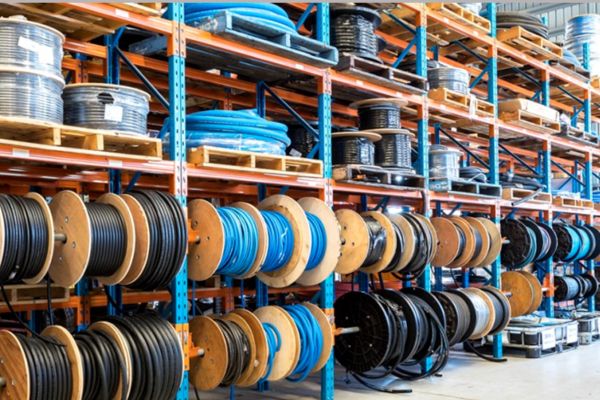
- Tight coiling puts permanent stress on cold rubber covers.
- Sealing your line ends keeps moisture and dirt out during storage.
- Following smart storage rules preserves your parts investment for peak season.
Why Is Static Hanging Preferable to Tight Coiling?
Hanging your spare lines in large, loose loops stops stress from building up along the outer wall, which prevents the rubber from taking a permanent, rigid set in cold storage. Storing lines in tight coils can crack the stiffened jacket.
- Tight coils force the outer rubber layer into a constant high-tension stretch.
- Cold warehouse temperatures freeze this stretched shape into the material.
- The line splits open the first time you try to straighten it out for installation.
- Large-diameter storage racks support your lines safely without creating kinks.
- Keeping storage rooms at moderate temperatures preserves the plasticizers in your rubber.
How Do Pre-Heating Warm-Up Cycles Protect New Lines?
Running your machine engines at idle speed for fifteen minutes circulates warm oil through the system, which gently thaws the cold lines before they see full working pressures. This simple warm-up step prevents sudden thermal shock fractures.
- Warm oil raises the temperature of the inner tube slowly and safely.
- The stiffened rubber regains its natural flexibility before doing heavy work.
- System relief valves warm up too, ensuring quick protection against surges.
- Automatic warm-up systems manage oil temperatures safely before operations begin.
- Clear cab warning labels remind operators to avoid high loads until the system is warm.
Storing your parts correctly and warming up your equipment gently stops early cold weather failures, keeping your machinery dependable and productive on every winter job site.
| Storage Method | Internal Material Tension | Storage Life Expectancy |
| Tight Wire Coiling | High Continuous Strain | 6 Months Reduced |
| Flat Rack Layout | Zero Tension Load | 36 Months Full |
| Outdoor Exposed Laydown | High Environmental Degradation | 2 Months Critical |
Conclusion
Severe sub-zero conditions require robust material specifications and precise field procedures to ensure optimal fluid power performance. By addressing the root causes of elastomeric embrittlement, fluid viscosity spikes, and thermal expansion discrepancies, fleet operators can effectively systematically eliminate premature component blowouts. Upgrading your high-pressure lines to low-temperature thermoplastics and using large bend curves protects your machinery from unexpected winter breakdowns. For expert assistance with your plumbing layouts, custom low-temperature component kitting, or detailed failure analysis reports, contact us today to connect with our senior application engineers and secure your field operations against costly seasonal downtime.
Frequently Asked Questions
Can I install standard hydraulic hoses on machinery operating in arctic climates?
No, you should not install standard fluid lines in arctic conditions because general-purpose rubber compounds rapidly harden and lose their elasticity at temperatures below -20°C, which leads to immediate outer cover splitting and inner core cracking during normal equipment operations.
What’s the best way to prevent hose blowouts during cold morning machine starts?
The best approach is to implement a mandatory fifteen-minute low-idle system warm-up cycle to safely circulate low-pressure hydraulic fluid through the entire plumbing network, which gradually raises the temperature of the internal elastomer liners above their critical glass transition point before the lines experience full working pressures or high-amplitude pressure spikes.
How do I know if a cold weather hose leak is caused by a bad crimp or thermal shrinkage?
You can identify the cause by inspecting the base of the metal collar for wire slippage or uneven die tracks. If the line is cleanly backing out of the sleeve, the fault stems from an incorrect crimp diameter specification; however, if you observe light oil weeping around the fitting collar during early morning startups that stops once the machine warms up, the issue is caused by low-temperature thermal expansion discrepancies where the rubber cover shrunk away from the metal sleeve.
Can I field-straighten a hydraulic hose that has frozen into a coiled position?
No, you must never force a frozen, coiled line straight because sub-zero exposure drives the elastomeric layers into a rigid, highly brittle state where any sudden structural deflection will instantly fracture the internal core tube and split the outer jacket down to the wire reinforcement.
How do I know if my inner core tube has cracked if the outer cover looks fine?
You can track hidden internal core tube failures by checking for the sudden appearance of localized external blisters or soft bubbles along the body of the assembly, which indicate that pressurized oil has broken through the inner liner and is traveling along the wire braid reinforcement.