How to Verify Parker One-Piece Fittings Before Replacement

How to Verify Parker One-Piece Fittings Before Replacement?

Before approving a Parker one-piece fitting replacement, verify the exact original part, hose and fitting series, connection geometry, sealing method, material, operating conditions, and applicable crimp data. A part number or a similar-looking 43 Series fitting can identify a candidate, but it does not prove that another part is interchangeable. The replacement must work on both sides: it must mate correctly with the equipment port and form a documented hose assembly with the specified hose, ferrule, crimper, dies, and procedure. If any safety-critical link remains unsupported, stop the substitution rather than treating a cross-reference as approval.

Why Is a Cross-Reference Not Final Approval?

A part number narrows the search

The complete catalog number is the best starting point because it can identify the fitting family, end configuration, connection size, hose size, material option, and geometry associated with the original product. Record the number exactly, including every prefix or suffix, and compare it with the current catalog rather than relying on a bin label or shortened internal code. A number copied from an old invoice may refer to a different revision, material, market, or hose assembly than the part now on the bench. If the number is incomplete, keep the line open and combine catalog research with measurements, photos, hose markings, and mating-port evidence instead of filling the missing characters from a visually similar item.
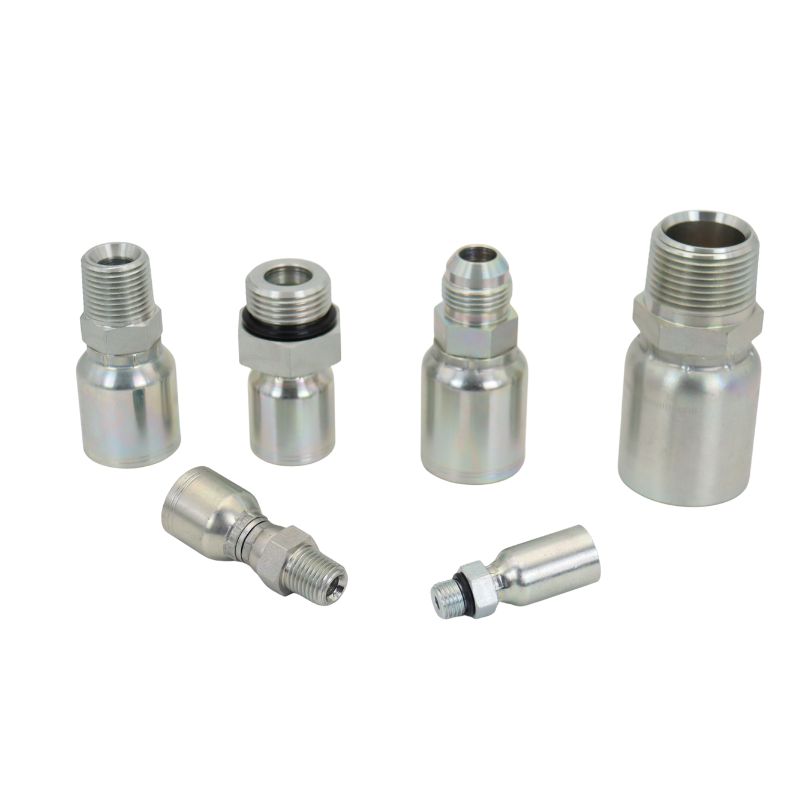
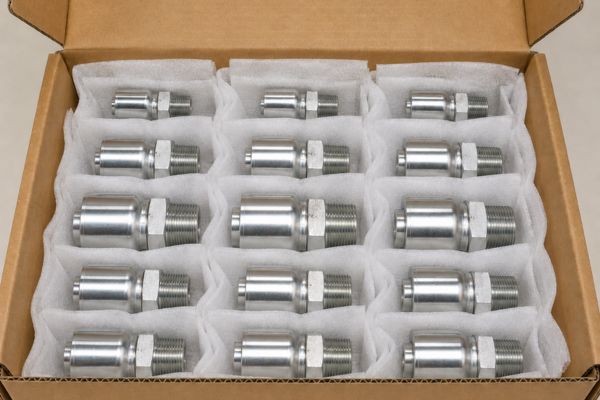
Male Hydraulic Crimp Fitting

Interchangeability requires evidence for the complete assembly

A cross-reference table normally compares commercial identifiers; it cannot by itself confirm the hose tail, ferrule behavior, crimp process, seal material, or application limits. Treat the result as a candidate to be checked, not as permission to assemble or sell the part. The one-piece fitting cross-reference process should show what is confirmed, what differs, and what remains unresolved before purchasing makes an equivalence claim.

Which Original Parker Details Must Be Identified?

Confirm the product series and construction

Do not assume that every permanent one-piece fitting belongs to the same family. Catalogs distinguish fitting series and connect them to defined hose ranges, end configurations, and assembly equipment; common catalog references may include different families for braided, spiral, thermoplastic, PTFE, or other hose constructions. Determine whether the original is a permanent crimp fitting, field-attachable fitting, adapter, or another component, because these categories use different structures and procedures.

Record the original identity before searching for a candidate:

Inspect the old part without assuming it was correct

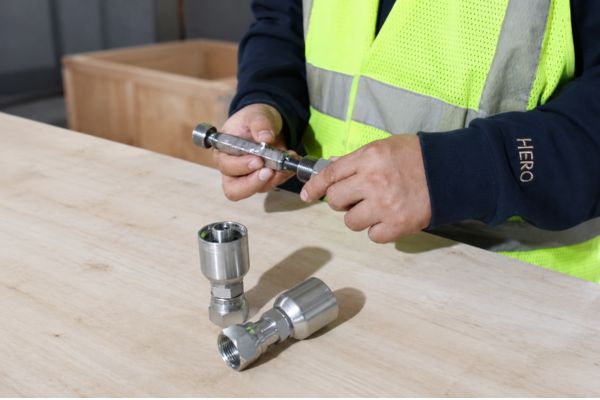
The removed fitting is useful physical evidence, but it may be worn, deformed, mislabeled, or part of an earlier incorrect repair. Photograph the entire fitting, thread, sealing face, ferrule, hose layline, and installed orientation before disposal, then inspect the mating port as well. If the old part conflicts with the equipment parts list or current data, resolve that conflict instead of copying the visible component automatically. Preserve witness marks and damage notes separately from nominal dimensions, because cross-threading, over-tightening, corrosion, or a crushed seal can change the geometry you are trying to identify.

Does the Replacement Match the Equipment Connection?

Verify thread, seat, and seal as separate attributes

Identify whether the connection is male or female, then measure the relevant thread diameter and pitch or TPI and determine whether it is straight or tapered. Separately identify the seat angle, face geometry, flare, cone, O-ring groove, bonded seal, washer, or thread-interference sealing method. JIC, ORFS, NPT/NPTF, BSPP/BSPT, Metric, DIN, JIS, ORB, and flange connections are not interchangeable merely because the threads start or their nominal sizes appear close.

Use a controlled comparison with these fields:

A fitting that screws in can still be wrong

Partial engagement can hide a thread-form or pitch mismatch, while full thread engagement can still pull together the wrong sealing surfaces. Forcing the joint may damage the equipment port, flatten a metal seat, cut an O-ring, or produce a narrow contact line that leaks after pressure, impulse, or vibration begins. Follow a measured one-piece fitting thread-mismatch check and never use sealant to compensate for an incorrect thread, seat, face, or damaged port.

Is the Hose Side an Approved Combination?

Match the exact hose and fitting series

Confirm the hose manufacturer, full series designation, construction, hose ID or dash size, reinforcement, cover, and required preparation. Equal dash size does not prove that two hoses use the same stem profile, ferrule design, insertion depth, crimp diameter, or skive procedure. A one-piece format only means the fitting stem and ferrule are preassembled or fixed as one component; it does not make the hose side universal.

Its guidance warns against assembling hose with another manufacturer’s fitting unless the combination has the required approval and validation. Therefore, “Parker-style” dimensions or the same series number used by another source cannot replace documented hose-and-fitting authorization.
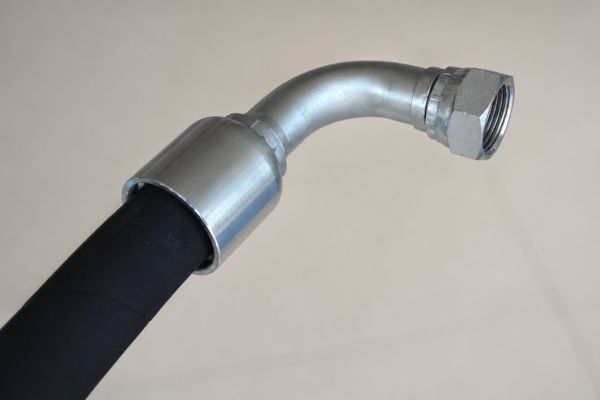
identify connection

Use the correct crimper, dies, and current data

Crimp diameter, measurement position, die selection, insertion depth, skive or no-skive preparation, and inspection criteria must come from current data for the exact hose, fitting, size, and assembly equipment.

Do Material and Service Conditions Still Match?

Compare material, finish, seals, and fluid

Verify the body, nut, ferrule, plating or other finish, and every elastomeric seal against the original requirement and application. Carbon steel, stainless steel, brass, and different coating systems are not ranked by one universal “best” choice; selection depends on fluid compatibility, corrosion exposure, temperature, mechanical load, conductivity, contamination limits, and regulatory requirements. A similar salt-spray claim or visual color does not establish equal field life or equivalent material performance. Request traceable material and finish evidence when the specification requires it, and make sure the candidate’s O-ring or other seal compound is suitable for the fluid and temperature rather than assuming equal dimensions mean equal compatibility.

Rate the complete assembly, not the fitting alone

Working suitability depends on the lowest-rated component or interface and on pressure, impulse, temperature, fluid, routing, bend radius, vibration, external load, and environment. Compare the candidate’s documented limits with the actual application and the equipment manufacturer’s requirements. Do not transfer a catalog pressure value from one size, end configuration, material, or fitting family to another, and do not assume that a successful low-pressure connection check qualifies the assembly for service.

How Should a Candidate Replacement Be Verified?

Inspect samples against written acceptance criteria

Before ordering production quantities, define what a sample must prove and keep each piece linked to its source code, candidate part number, drawing revision, and inspection status. Check markings, packaging identity, critical dimensions, thread gauges, seat and seal geometry, material or finish documentation where required, stem, ferrule, bore, edges, contamination, and visible defects. Keep approved reference samples or measurement reports under controlled identification so later receipts can be compared without repeating the original search. The controlled trial-order method for one-piece fittings prevents an unresolved candidate from entering normal inventory.

Prepare the sample review before parts arrive:

Test only under an applicable procedure

Do not invent a pressure, burst, impulse, or pull-test value as a shortcut to qualification. Any required testing must follow the applicable hose, fitting, equipment, regulatory, or approved internal procedure and use suitable guarded equipment and trained personnel. A candidate that assembles smoothly may still lack evidence for fatigue, impulse, fluid, temperature, or environmental suitability, so record the exact scope of what the sample test did and did not prove.

What Should the Replacement Approval Record Contain?

Link the approved use to specific conditions

The record should connect the original reference, replacement code, drawings, verified dimensions, connection standard, hose manufacturer and series, fitting series, crimp specification, material, finish, seals, application limits, sample or validation evidence, and approval owner. State any restrictions by hose size, machine, equipment, fluid, temperature, pressure, or end configuration. This prevents an approval for one specific combination from being extended silently to every size or shape in a related commercial family. Add revision control and a reapproval trigger for changes in source, drawing, hose construction, crimp data, material, finish, seal, tooling, or application so an older decision cannot authorize a materially different product.

Stop when the evidence chain is incomplete

Reject or quarantine the candidate when the original cannot be identified, the hose-and-fitting combination lacks the required authorization, connection measurements conflict, crimp data is missing, or the service conditions exceed documented limits. Also stop if a damaged old fitting is the only reference or if a brand cross-reference is offered without drawings and traceable technical data. The cost difference between parts cannot justify an unsupported substitution in a high-consequence hydraulic assembly.

Final Replacement Decision

A reliable one-piece fitting replacement starts with the exact original series and part number but does not end there. Verify the equipment-side thread, seat, seal, shape, and clearances; then confirm the hose manufacturer and series, fitting family, crimper, dies, current crimp data, materials, seals, and service conditions. Treat a cross-reference as a candidate until written specifications, sample inspection, and the applicable approval or validation route agree. Before requesting a quote, prepare the original number, photos, drawing, hose layline, connection measurements, operating conditions, equipment details, material requirements, expected quantity, and acceptance plan; if one critical link remains uncertain, do not approve the substitution.

Frequently Asked Questions

Does the same Parker-style part number prove interchangeability?
No. A similar numbering pattern can help identify geometry, but interchangeability still requires verified connection, hose, crimp, material, application, and approval evidence.

Can another fitting be crimped onto Parker hose with a crimper?
Not based on physical fit alone; follow Parker’s current written guidance, listed tooling and combinations, and any required authorization, analysis, and validation before mixing manufacturers.

Can one approved replacement cover every size in the same series?
No. Each SKU or formally defined family needs evidence covering its size, end configuration, hose relationship, crimp data, material, and intended service.

Is the old fitting enough to identify the replacement?
No. Use it as evidence, but confirm the mating port, hose layline, part number, drawings, and current manufacturer data because the old assembly may be damaged or previously mismatched.

Can a permanentfitting be removed and reused?
Not to reuse permanent crimped or swaged fittings or their parts; inspect and replace the complete assembly according to the applicable procedure.
What Is the Best Low MOQ Restocking Plan for One Piece Fittings

What Is the Best Low MOQ Restocking Plan for One Piece Fittings?

Low MOQ hydraulic fittings can help a small repair shop refill proven fast-moving items without committing cash to a broad catalog. The benefit comes from smaller, more frequent, evidence-based orders—not from buying a few pieces of every thread and size. Start with fittings that repeatedly support the hoses, equipment, and connection standards seen at your bench, then set a reorder rule for each SKU. This keeps common repairs moving while limiting slow stock, incorrect substitutions, emergency freight, and bins filled with parts that cannot be assembled under valid crimp data.

What Does Low MOQ Actually Solve?

It reduces order size, not inventory uncertainty

A low minimum order quantity lowers the number of pieces you must buy on one purchase line, which can make frequent replenishment and small-scale testing more practical. It does not tell you which fittings are common, whether demand will repeat, or whether the part matches your hose system. If a SKU is technically unclear or rarely used, a smaller purchase creates less excess than a large one but still consumes cash, bin space, receiving time, and attention.

order of one piece Fitting

One-piece fittings simplify only part of the workflow

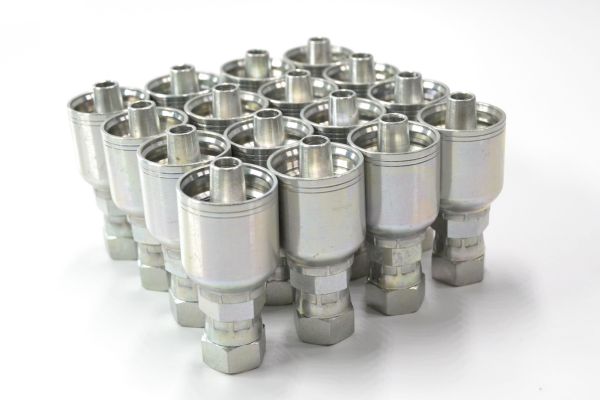
A one-piece hydraulic hose fitting normally has the fitting body or stem and ferrule preassembled or fixed as one component, although construction varies by series. This can reduce the warehouse and assembly error of pairing a stem with the wrong loose ferrule. It does not make the connection end, hose series, dash size, pressure suitability, or crimp setting universal, so low MOQ purchasing still needs a verified part specification.

Which Common Fittings Should Be Refilled First?

Let completed jobs and missed sales define “common”

Review a useful period of repair tickets, hose assembly records, sales, stockouts, lost jobs, returns, and emergency purchases. Group demand by complete fitting SKU rather than broad labels such as “JIC fitting” or “Metric elbow,” because the same connection family contains different sizes, orientations, hose tails, and seals. The fittings that recur across several jobs and remain technically supported form the first refill list; the method for building fast-moving one-piece fitting stock should guide this decision. Where records are incomplete, begin logging every issued, unavailable, substituted, returned, and urgently purchased fitting before expanding the range, since memory tends to overvalue recent emergencies and overlook steady routine use.

Capture enough detail to distinguish a usable stock item:

Include service impact without confusing it with popularity

A fitting used every week normally deserves different treatment from one used twice a year, but frequency is not the only signal. A moderate-use SKU may still justify a small service quantity when its absence repeatedly stops a repair, the replenishment time is long or unreliable, and no approved substitute is available. Record that reason explicitly; otherwise, every urgent request can be misclassified as a permanent fast mover. Also separate broad demand from one-machine demand: a frequently ordered fitting tied to a single scheduled account or piece of equipment may need job-linked stock rather than an unrestricted local minimum.

How Should a Small Shop Divide Its SKU List?

Use three action classes instead of one “common” bin

Divide the list by repeat demand, technical certainty, replenishment time, and service consequence. The classes are decisions, not fixed volume thresholds, so each shop should set them from its own records. A simple structure keeps low MOQ from turning into a reason to stock every attractive catalog item. Give every classification a review date and an owner, because a core fitting can become slow after the local equipment mix changes, while a former special item can become a repeat requirement after several verified repairs; record the reason whenever the class changes.

Keep similar-looking standards physically distinct

Separate JIC, NPT/NPTF, ORFS, BSPP/BSPT, Metric, DIN, and JIS items by controlled descriptions and bin labels rather than color or memory. Two fittings may have close diameters yet use different pitches, thread forms, seats, or seals. Low quantities do not reduce mismatch risk if several standards are mixed in one drawer; they can make identification harder because the label and reference sample are easier to lose.

How Do You Set Reorder Points Without Overbuying?

Base the trigger on demand during replenishment

For each core SKU, estimate expected consumption while a replacement order is in transit, then consider justified protection for demand or lead-time variation. The reorder point is the stock position at which purchasing must begin, not the quantity to buy and not automatically the same as minimum stock. Use actual order intervals and supplier lead-time performance instead of a generic number copied across all fitting sizes. Track stock position as usable on-hand quantity plus confirmed inbound supply minus committed demand, because counting quarantined returns, unidentified parts, or overdue purchase orders as available can postpone replenishment until the shelf is effectively empty.

Special Thread or Size Support

The basic record should show:

Choose order quantity from the next review cycle

Order enough to cover expected demand until the next planned review or replenishment opportunity, plus any justified safety stock, then subtract usable stock and confirmed inbound supply. A low MOQ gives you freedom to order closer to this requirement, but freight, receiving work, pack quantities, and payment terms still affect the economic choice. Do not enlarge every line merely to obtain a lower unit price; compare the saving with carrying cost, slow-stock risk, and the chance that demand or specifications will change.

How Can Low-MOQ Lines Be Combined Efficiently?

Consolidate compatible replenishment needs

Create a regular review day and combine the core and justified service items that have reached their reorder triggers. Consolidation can reduce repeated quotation, freight, receiving, and payment work while preserving line-level quantities based on demand. Keep each fitting as a separate controlled line with its full part description; a combined purchase order must not become a mixed box that receiving staff cannot trace to the correct bin.

Before releasing a combined order, verify:

Compare total replenishment cost, not MOQ alone

An offer with a smaller MOQ can still be expensive if it requires frequent urgent freight, creates many receiving transactions, uses unclear packaging, or supplies parts that need repeated dimensional sorting. A slightly larger line may be reasonable when demand is stable and the total landed and handling cost is lower, while even one piece is too many for an unresolved specification. Evaluate price, freight, payment charges, inspection work, carrying time, mismatch exposure, and stockout impact together. Keep these costs at SKU or order-line level where practical; otherwise, low-volume items can appear profitable because their emergency freight, sorting time, and write-offs are hidden inside the cost of faster-moving lines.

What Must Be Confirmed Before a Fitting Enters Stock?

Verify both the equipment connection and hose side

Confirm male or female form, thread diameter, pitch or TPI, straight or tapered thread, seat angle, sealing face, and any O-ring, bonded seal, or washer. Then verify the hose manufacturer and series, hose ID or dash size, construction, fitting series, and required preparation. A brand number, photograph, or similar outside diameter can narrow a search, but the one-piece fitting cross-reference process must keep unconfirmed attributes visible until measurements and technical data agree.

Use current crimp data for the exact combination

Crimp diameter, measurement location, insertion depth, die selection, skive or no-skive preparation, and inspection method must apply to the actual hose, fitting, size, and crimping equipment. Parker’s hydraulic hose and fitting catalog likewise separates hose type, fitting series, end configuration, connection size, and hose size in its ordering logic. Complete the one-piece fitting hose-compatibility checks before a low-MOQ sample becomes routine stock; a small quantity of an unsupported combination is still a technical risk.

What Is the Simplest Repeatable Restocking Workflow?

Test uncertain items before normal replenishment

When a new source, cross-reference, finish, or fitting series is proposed, keep it out of normal stock until a controlled sample or small trial has passed the defined document, dimensional, labeling, assembly, and application checks. The one-piece fitting trial-order checklist helps separate confirmed lines from open technical questions. Record deviations by SKU and do not use a successful sample from one size or configuration to approve every related item automatically.

Review, refill, and remove on a fixed cycle

At each review, update usage, stockouts, returns, emergency purchases, open orders, lead-time performance, and any technical changes. Recalculate the action when demand shifts: raise protection only where the record supports it, move intermittent items to service stock, and stop automatic replenishment for obsolete or repeatedly idle SKUs. A fitting can remain technically valid while no longer earning local shelf space, so technical approval and stocking approval should stay as two separate decisions.

Final Restocking Decision

Low MOQ hydraulic fittings help a small repair shop when they support more frequent replenishment of proven core and service SKUs. They do not replace demand records, complete part descriptions, hose compatibility, or current crimp data. Build the refill list from actual jobs and stockouts, classify each item, set its reorder trigger from consumption and lead time, and combine only the lines that are genuinely due. Before ordering, prepare fitting part numbers, connection and seal details, hose manufacturer and series, sizes, material and finish, crimping equipment, crimp-data source, stock class, estimated use, and receiving requirements; remove automatic replenishment when evidence no longer supports the shelf space.

Frequently Asked Questions

What is a good MOQ for a small hydraulic fitting order?
There is no universal good MOQ; the useful quantity is the amount that fits verified demand, the replenishment cycle, pack constraints, inspection needs, freight economics, and acceptable carrying risk.

Should every commonly requested thread family be kept in stock?
No. Keep the complete SKUs that recur in your actual work and can be assembled under verified technical data, not one token item from every JIC, BSP, Metric, ORFS, or NPT family.

Can adapters reduce the number of hose fittings held locally?
Approved adapters can cover some verified transitions, but they add connections, length, and sealing interfaces; use them only when pressure, material, routing, and equipment requirements allow the specific arrangement.

How often should fitting reorder points be reviewed?
Review them on a consistent cycle and after meaningful changes in demand, lead time, equipment mix, seasonality, source, or part specification rather than following one fixed interval for every shop.

Does a one-piece fitting always reduce inventory?
It can reduce separate stem-and-ferrule combinations and related picking errors, but total inventory still depends on how many hose sizes, fitting series, thread standards, orientations, materials, and service needs the shop supports.

How to Choose One-Piece Fitting SKUs for a Trial Order

How to Choose One-Piece Fitting SKUs for a Trial Order

A one-piece hydraulic fitting trial order should start with familiar, repeatedly needed SKUs whose hose compatibility, connection geometry, crimp data, and application limits can all be verified. Do not begin with an entire catalog or select parts only because their unit prices are attractive. The first group should represent real demand while remaining simple enough to inspect, assemble, label, and reorder without unresolved assumptions. This approach makes the trial useful: it tests whether each fitting can move safely from purchase specification to incoming inspection, hose assembly, stock control, and repeat ordering.

What Should the First Trial Order Prove?

Test a repeatable purchasing process, not a box of samples

The trial should prove that a defined fitting can be specified, received, identified, assembled, inspected, and reordered consistently. A sample that looks correct on arrival has not yet passed this test. The purchasing record, label, part number, physical dimensions, hose-side compatibility, and assembly instructions must describe the same item, or a larger order will multiply uncertainty rather than reduce cost.

one piece Fitting cross reference

Keep the limits of one-piece construction clear

A one-piece hydraulic hose fitting normally combines or fixes the fitting body or stem and ferrule as one assembly component; the exact construction varies by series. This arrangement can reduce errors caused by selecting a separate loose ferrule, but it does not make the fitting compatible with every hose of the same dash size. It also does not prove the connection end, material, pressure suitability, or crimp setting, so the one-piece fitting trial-order process must verify the complete assembly system.

Which SKU Categories Belong in the First Trial?

Start with proven, technically complete demand

The best starting candidates are existing parts with repeated sales, repair, or production demand and a specification that can be checked without guessing. Use order history, service records, equipment population, local connection standards, and seasonal demand to identify the recurring group. A SKU is not ready merely because it is common elsewhere; it must fit the hoses, ports, crimping equipment, and applications your operation actually supports.

Prioritize candidates with all of the following evidence:

Favor configurations that make comparison easy

Among equally relevant candidates, straight fittings with familiar end connections are often easier to measure, assemble, store, and compare than elbows, unusual drops, jump sizes, or special port combinations. Common local hose sizes and connection families such as JIC, ORFS, NPT/NPTF, BSPP/BSPT, or Metric may belong in the trial, but only where your records support them. The practical goal is a compact, representative group—not an arbitrary number of SKUs—and the method used to identify fast-moving one-piece fitting stock should determine which configurations deserve priority.

Which Models Should Be Excluded at the Start?

Delay high-consequence and poorly defined applications

Do not use the first trial to resolve safety-critical, high-impulse, unusually hot, chemically aggressive, highly corrosive, or otherwise high-consequence applications unless an established qualification process already covers them. The same caution applies when failure could create uncontrolled movement, injection-injury exposure, environmental release, or extensive equipment damage. These parts require application-specific engineering and verification, not a commercial sample check built around price and appearance.

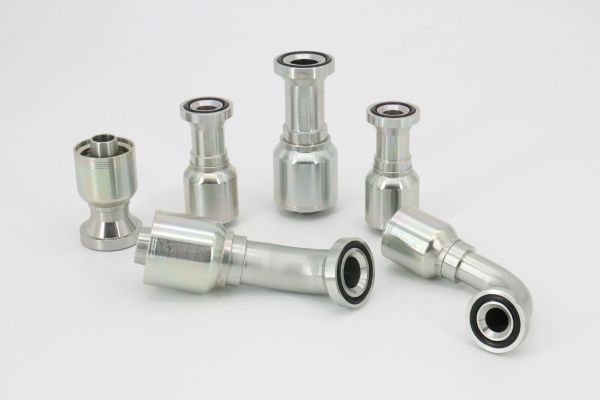
Special Thread or Size Support

Exclude or quarantine candidates with these gaps:

Avoid rare complexity until the basic process works

Special elbows, uncommon orientation requirements, mixed standards, nonstandard lengths, unusual materials, and low-frequency sizes may be legitimate products, but they create more variables during a first evaluation. Introduce them after the basic receiving, identification, assembly, and traceability process has worked on simpler recurring items. If a rare part has urgent commercial importance, give it a separate validation plan instead of letting it distort the acceptance criteria for ordinary stock.

How Do You Turn Demand Data Into a Shortlist?

Rank evidence, value, and risk separately

Build the shortlist from internal facts rather than supplier catalog order. Review demand frequency, number of applications served, stockout consequences, replenishment difficulty, current error history, and technical completeness. Keep commercial value separate from technical readiness: a high-volume candidate with missing crimp data is commercially important but not yet approved for a trial assembly. Use a simple scorecard that shows both the evidence and its source, and do not let a high total score hide a failed mandatory check such as unknown hose compatibility, an uncertain sealing method, or unavailable crimp instructions.

Define every SKU beyond its short description

“Female JIC -8 straight” is not a complete purchasing specification. The record should connect the end configuration and connection size to the hose size, fitting series, stem and ferrule design, material, finish, applicable drawing or standard, and packaging label. If a branded part number is used for cross-reference, treat it as a search key rather than proof of interchangeability; the one-piece fitting cross-reference method still requires a controlled dimensional and functional comparison.

What Must Be Verified Before the Order Is Placed?

Confirm the hose side and crimp system first

The fitting series must be supported for the exact hose construction and size. Record the hose manufacturer and full series, hose ID or dash size, reinforcement, required preparation, fitting family, crimping machine, die set, insertion requirement, crimp diameter and measurement location, plus any applicable inspection limits. Parker’s hydraulic hose and fitting catalog likewise explains that hose tails and ferrules are not automatically standardized across manufacturers, so a similar-looking component does not establish compatibility.

Use the current technical source for the exact combination rather than copying a diameter from a related SKU. Equal dash size does not mean equal wall, reinforcement position, stem profile, ferrule compression, or assembly procedure. The six hose-compatibility checks for one-piece fittings should be completed before any candidate is released for crimping.

Confirm the connection and application independently

Define male or female form, thread outside or inside diameter, pitch or TPI, straight or tapered form, seat angle, sealing face, O-ring or washer arrangement, and fitting orientation. Then confirm working pressure, temperature, fluid, impulse, vibration, corrosion exposure, routing, and applicable equipment requirements. The finished assembly is limited by its lowest-rated component or interface and by service conditions, not by the fitting’s catalog rating alone.

How Should Trial Samples Be Inspected and Assembled?

Use written incoming checks before crimping

Establish acceptance criteria before the shipment arrives, then keep each sample tied to its inquiry line, drawing revision, part number, and inspection status. Verify quantity, labels, markings, material or finish documents where required, critical dimensions, thread and seat geometry, seal details, stem, ferrule, bore, plating coverage, contamination, deformation, and protective packaging. The sample quantity should follow the inspection and validation plan for that part rather than a universal rule, because a dimensional comparison, an assembly evaluation, and any formally required testing may consume or preserve samples differently. Do not mix approved samples with general inventory until the evaluation record is complete.

The incoming check should answer three questions:

Assemble only under the defined procedure

Use the specified hose, preparation method, crimper, dies, insertion depth, crimp target, and inspection method. Record actual observations without inventing a pressure, burst, impulse, or pull test; any required test must follow the applicable hose, fitting, equipment, regulatory, or controlled internal procedure and use suitable guarded equipment. Shut down and isolate hydraulic pressure and stored energy during service work, and never use an operating machine as an improvised test stand for an unapproved fitting.

When Should the Trial Expand, Change, or Stop?

Approve each SKU on evidence, not an average result

One successful item cannot approve the rest of the trial order because different sizes, ends, hose tails, and orientations can have different failure paths. For every SKU, record whether dimensions, marking, hose fit, assembly behavior, finished inspection, packaging identity, and required documentation passed. Classify deviations by their actual effect; a wrong seat or unsupported crimp combination is not balanced out by acceptable appearance on other lines.

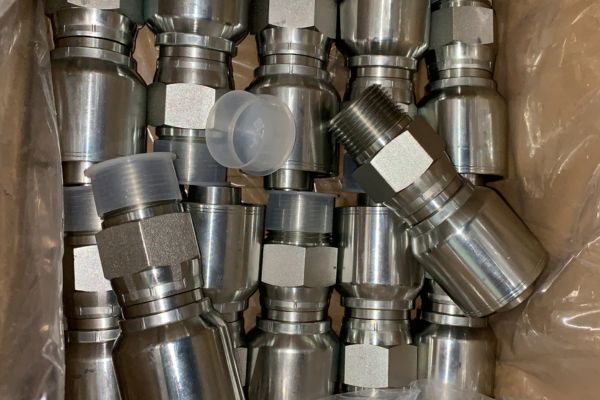
Mixed SKU Packing

Use a simple disposition:

Convert approval into controlled stock data

An approved record should link the purchasing code, source code, complete technical description, hose range, crimp-data source, inspection characteristics, label format, storage location, and limitations on use. Keep the approved sample or measurement report under the chosen traceability process so later receipts can be compared against the same reference. Assign ownership for updating the record when a drawing, source, hose series, crimp specification, material, finish, or packaging identification changes, since an earlier approval does not automatically cover a revised product. This step prevents a technically successful trial from failing commercially through mixed bins, ambiguous descriptions, or repeat orders placed from an incomplete shorthand name.

Final Trial-Order Decision

The first one-piece hydraulic fitting trial order should contain recurring, fully specified SKUs that work with a known hose-and-crimp system and can be inspected using defined criteria. Let demand records choose the thread families, sizes, and orientations; let technical evidence decide whether each candidate is ready. Delay unusual, safety-critical, or poorly documented models until a suitable qualification route exists. Before requesting the order, prepare the complete fitting list, hose manufacturer and series, connection dimensions, seat and seal details, material and finish requirements, operating conditions, crimping equipment, current crimp data, expected future quantity, and acceptance record; expand only the SKUs that pass individually and remain commercially useful.

Frequently Asked Questions

How many one-piece fitting SKUs should be included in the first trial?
There is no universal number; choose the smallest group large enough to represent verified recurring demand and produce a clear purchase decision without overloading the inspection and assembly process.

Should the trial include both straight and elbow fittings?
Include elbows only when demand and orientation data justify them; where demand is similar, straight fittings usually remove drop length and angular orientation variables from the first comparison.

Can the lowest-priced high-volume fitting be tested first?
Only if its complete specification, hose compatibility, crimp data, application limits, and acceptance method are already defined; price does not compensate for missing technical evidence.

Can one approved sample authorize all sizes in the same fitting series?
No. Each ordered SKU needs the required dimensional, labeling, assembly, and documentation checks because size and end-configuration changes can introduce different requirements.

When is a trial order unnecessary?
A new commercial trial may add little value when the exact SKU is already approved under a current controlled process, but changes in source, design, material, finish, hose system, or application can require renewed evaluation.

Why Do Mismatched Threads Cause Hydraulic Fittings to Fail

Why Do Mismatched Threads Cause Hydraulic Fittings to Fail?

Mixing hydraulic fitting thread types causes problems because JIC, NPT, ORFS, BSP, and Metric connections do not share one thread form or one sealing method. Two parts may begin to screw together, yet their pitch, taper, seat, or seal can still be incompatible. That false fit can damage a port, cut an O-ring, leave the real sealing surfaces apart, or create a connection that leaks after pressure, impulse, or vibration begins. A reliable repair therefore requires identification of the complete connection—not a visual match or a successful first turn of the nut.

Why Thread Engagement Does Not Prove Compatibility

The thread may only provide clamping force

Many hydraulic connections do not seal on the thread. A JIC connection uses straight UN/UNF threads to pull matching 37-degree flare surfaces together, while ORFS uses straight threads to compress an O-ring between flat faces. In both cases, the threads retain and load the joint, but the seat or O-ring contains the fluid. Matching the thread diameter while ignoring the sealing face can therefore produce full-looking engagement with no valid fluid seal.

Tapered pipe connections work differently. NPT or NPTF and BSPT develop interference as the male and female threads tighten, but they use different thread forms and may use different pitches for apparently similar nominal sizes. A parallel BSPP connection is different again: the thread normally provides retention while a cone, bonded seal, O-ring, or another specified face arrangement performs the sealing. Treating every “pipe thread” as the same connection confuses both geometry and seal location.

parallel thread Fitting Types

A one-piece fitting solves only the hose-side handling problem

A one-piece hydraulic hose fitting normally has its fitting body or stem and ferrule preassembled or fixed as one component, although the retention design varies by series. This can reduce the chance of picking a loose ferrule that does not belong with the stem. It does not identify the equipment port, make different thread standards interchangeable, or prove that the fitting series matches the hose and crimp specification. The one-piece fitting seal-mismatch check should therefore be completed before the fitting becomes permanently attached to the hose.

How JIC, NPT, ORFS, BSP, and Metric Connections Differ

Compare the sealing system, not just the name

Each label describes a particular family of thread and sealing geometry. The table is an identification starting point, not an interchange chart; exact size, pitch, seat dimensions, seals, and applicable standard still require confirmation from controlled technical data.

“Metric” and “BSP” are families, not complete specifications

Calling a fitting Metric does not tell you whether it uses a DIN/ISO 24-degree cone, a metric O-ring port, a metric flare, or another system. Likewise, BSP must be separated into BSPP and BSPT, then further identified by the actual sealing arrangement. Even when two families use straight threads, the pitch, flank form, seat angle, and seal location may disagree. Use a detailed hydraulic fitting standards identification process instead of converting a regional label directly into a part number.

What Actually Happens When Different Thread Types Are Mixed

Partial engagement can deform the threads and port

Close diameters and pitches can let mismatched threads start, especially when a worn part, contamination, or limited access hides the resistance. Continued tightening does not correct the mismatch; it can cross-thread the connection, flatten thread crests, distort the female port, or concentrate load on only a few threads.

Port damage matters because replacing the hose fitting alone may no longer restore the joint. The mating adapter, valve, cylinder, or manifold can retain deformed threads or a damaged spotface, so the next correct fitting may also leak or fail inspection. Unusual resistance, shallow engagement, or a need for excessive torque is a stop signal, not evidence that a different standard can be made to fit.

uncompact thread

The wrong surfaces never create the designed seal

A connection may tighten while the sealing elements remain misaligned. A JIC seat can contact the wrong cone at a narrow edge; an ORFS O-ring can be cut, extruded, or left without the correct face; a BSPP connection can lack its specified washer or cone; and mismatched tapered threads can engage unevenly. The result may be an immediate leak, or partial contact may appear dry during assembly and open later under working pressure, temperature change, impulse, or vibration.

Adding sealant cannot manufacture a missing 37-degree seat, correct a 55-degree versus 60-degree thread form, or repair a damaged O-ring face. Over-tightening can briefly reduce visible seepage while increasing deformation. These shortcuts also make the next diagnosis harder because witness marks no longer show the original geometry clearly.

How to Identify an Unknown Hydraulic Connection

Isolate the equipment and collect physical evidence

Shut the equipment down, release hydraulic pressure and stored energy, and follow the equipment and component manufacturers’ safety procedures before removing or inspecting a connection. Never use a hand to search for a pinhole leak or loosen a line to see whether it is pressurized. Once the part is safe to handle, clean it without changing the thread or sealing surfaces and collect evidence from both the old fitting and the mating port.

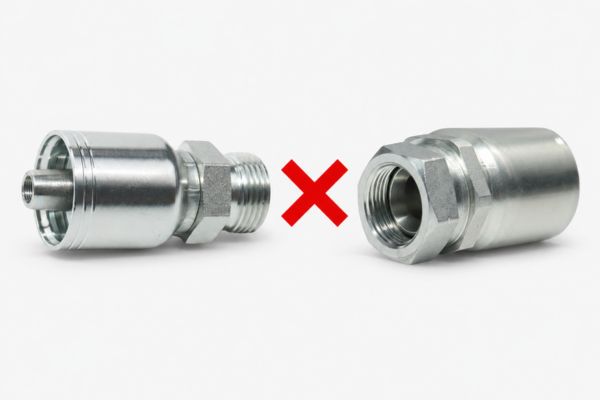
check connection side

Record the features that can separate one standard from another:

Measure in a fixed sequence and cross-reference the result

Start by deciding whether the thread is parallel or tapered, then measure pitch and diameter rather than estimating them from a photo. Next, locate where the joint is designed to seal and inspect that surface for damage. Finally, compare the complete set of findings with an applicable standard chart, controlled drawing, parts list, or current manufacturer data. This sequence is also explained in a practical guide to identifying hydraulic fittings.

Use the following release order:

Why a Correct Port End Can Still Produce a Bad Hose Assembly

The hose tail must match the exact hose construction

Choosing the correct JIC, ORFS, NPT, BSP, or Metric connection only resolves the equipment side. The fitting stem and ferrule must also match the hose manufacturer and series, reinforcement construction, hose ID or dash size, and required preparation. Equal dash size does not prove compatibility because hoses with the same nominal bore can have different wall, reinforcement, cover, and fitting requirements. Use the six one-piece fitting hose-compatibility checks before assembly.

The one-piece format removes one loose-component decision, but the preassembled fitting can still belong to the wrong hose family. Selecting by stem appearance or bin label can produce difficult insertion, incorrect compression, hose damage, inadequate retention, or an assembly that cannot be validated. The complete fitting series and part number must be tied to the identified hose in current technical data.

Crimp data belongs to a specific assembly system

Crimp diameter, die selection, insertion depth, skive or no-skive preparation, crimp position, and inspection limits must apply to the actual hose, fitting series, size, and crimping equipment. A value from a similar fitting or another series is not a safe substitute. Verify full insertion and inspect the completed assembly using the documented procedure; a final diameter within a familiar range cannot rescue a hose assembled from incompatible components.

Pressure suitability also belongs to the complete assembly. The controlling limit may be the hose, fitting, port, adapter, or another interface, and service depends on fluid, temperature, impulse, routing, vibration, and installation. Do not assign a universal pressure rating merely because two parts share a thread label or nominal size.

The Safe Way to Connect Two Different Standards

Approve an exact match or use a specified transition

If the hose end and equipment port use different standards, do not force one into the other. Use a purpose-designed inter-series adapter whose two ends are each correctly specified, pressure-suitable, and compatible with the fluid, temperature, material, and environment. An adapter creates a controlled transition; it does not make the original standards interchangeable.

Before releasing the repair, verify:

More adapters create more interfaces to inspect

Avoid stacking several adapters merely to reach the needed geometry. Each added joint creates another sealing interface, changes installed length, and may increase bending load or interfere with routing. If a transition would require several pieces, or if the application is safety-critical, obtain an approved assembly design from the relevant equipment, hose, fitting, or connection manufacturer instead of improvising at the bench.

What Information Should Be Recorded Before Replacement?

Build a reusable connection record

A verified record prevents the next repair from starting with the same unknown fitting. Store the equipment location, mating-port designation, hose manufacturer and series, hose ID or dash size, fitting series and complete part number, connection sex, thread diameter, pitch or TPI, taper, seat angle, sealing method, fitting orientation, and approved crimp-data source. Add clear photos of the full fitting, thread, sealing face, hose layline, and installed routing without including sensitive customer information.

For the specific replacement, also record:

Stop when critical evidence is missing

If a damaged seat cannot be measured, the old fitting conflicts with the equipment record, or the hose layline and fitting series cannot be verified, do not guess from the closest sample. Preserve the old part and mating-port evidence, then obtain current data from the equipment, hose, fitting, port, or crimp-equipment manufacturer as applicable. Correct identification carries more weight than speed, unit price, or the fact that two threads seem to start.

Final Matching Decision

Mixing hydraulic fitting thread types fails because JIC, NPT, ORFS, BSP, and Metric connections combine different threads with different seats and seals; a part that screws in may still damage the port or leave the intended sealing surfaces apart. One-piece construction reduces stem-and-ferrule handling errors, but it cannot correct the wrong connection end, hose series, or crimp data. Before approving a replacement, identify thread diameter, pitch, taper, seat angle, sealing method, mating port, hose series, fitting series, and the applicable assembly procedure. When two standards must meet, use a fully specified adapter or approved design—not force, extra sealant, or visual similarity.

Frequently Asked Questions

Can NPT and BSPT fittings be used together if they tighten?
No. Their thread forms and pitches can differ even when their nominal sizes appear similar, so engagement does not establish a correct or pressure-suitable seal.

Can a JIC fitting seal against any 37-degree-looking cone?
No. Confirm the complete standard, thread designation, measured seat geometry, mating component, and condition of both metal sealing surfaces before treating the parts as compatible.

Does ORFS thread size identify the O-ring I need?
Not by itself. Use the fitting standard and manufacturer data to verify the correct O-ring dimensions, material, hardness where specified, and fluid and temperature compatibility.

Can thread sealant stop a leak caused by mixed fitting standards?
No. Sealant cannot correct a mismatched thread form, seat angle, face geometry, damaged sealing surface, or missing designed seal; its use must follow the verified connection specification.

Is a photo enough to identify a Metric or BSP hydraulic fitting?
No. A photo can narrow the possibilities, but final identification requires diameter, pitch or TPI, straight-versus-tapered form, seat angle, sealing method, and mating-port evidence.

Contact Topa

Save 30% on maintenance costs with our easy-install hydraulic fittings. Contact Now!