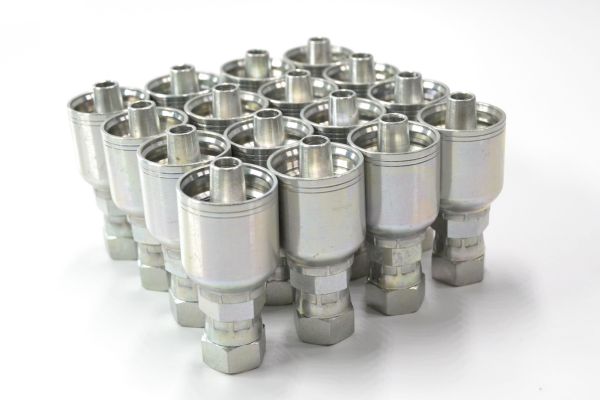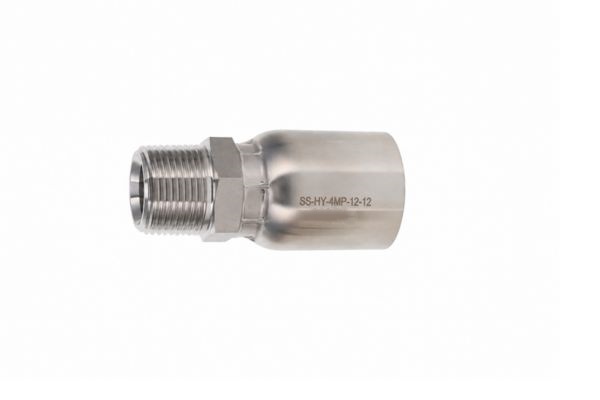

Parker 43 series replacement landed cost is more useful than unit price alone because an imported one-piece fitting order also carries packaging, freight, insurance, clearance, handling, receiving, inspection, error, rework, and inventory costs. Heavy products and multi-SKU mixes can make two similar quotes produce very different commercial outcomes after arrival. The calculation also depends on destination, Incoterms, transport method, local requirements, and order structure, so no universal rate or percentage applies.
Unit Price Covers Only One Cost Layer
The quoted price per fitting describes the product line under stated commercial terms. It does not automatically include the cost of moving, documenting, clearing, receiving, checking, storing, and correcting the order.
Scope changes the apparent price
A quote may include different packaging, export handling, inland transport, freight points, insurance responsibilities, documents, or delivery terms. One price may apply at a factory or port, while another may include transport farther along the route. Comparing the numbers without identifying the Incoterm, named place, currency, validity, payment basis, and included services creates a false difference.
Clarify whether protective caps, inner labels, carton marks, inspection reports, sample charges, special packing, or separate SKU packaging are included. These items are not automatically valuable in every order, but they affect the comparison when the buyer requires them. Record exclusions and assumptions instead of treating silence as inclusion.
Technical scope affects commercial risk
Two lines with the same Parker reference may not describe the same alternative. Confirm product description, connection standard, port dash, hose dash, angle, fitting series, material, finish, O-ring, and delivery scope. A lower price for a technically different part is not a saving.
Reference numbers support identification and cross-reference discussion; they do not prove interchangeability. Before cost comparison, establish a common technical baseline and define the evidence required for the trial or commercial order. Otherwise, freight calculations may become precise while the product comparison remains invalid.
Weight and SKU Mix Shape Freight Cost
Hydraulic fittings are dense, and small unit-price differences can be overshadowed by shipment weight and the way quantities are distributed across many models. Freight decisions should use actual packing data for the proposed mix.
Product and packaging weight both matter
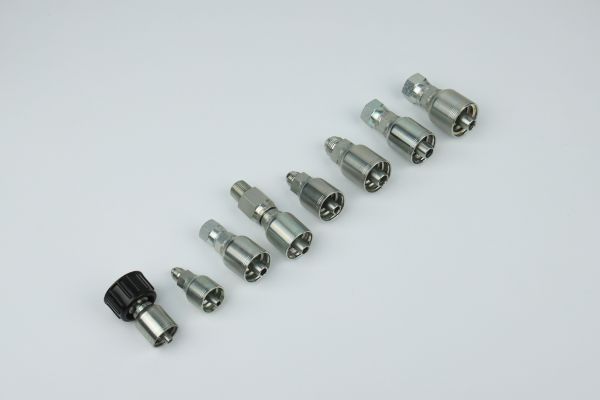
Calculate or request the expected net product weight and gross packed weight by SKU or carton. Elbows, flanges, swivel assemblies, and larger dash sizes may change average weight substantially. Do not apply one assumed unit weight across a mixed catalogue unless verified data supports it.
Gross weight includes caps, bags, dividers, cartons, pallets, and other shipping materials. Protection can reduce damage and sorting cost but increases packed weight or volume. The goal is not the lightest possible package; it is a suitable balance between transport efficiency, product protection, identification, and handling.
SKU mix changes consolidation efficiency
A few high-volume models may pack efficiently, while many small trial quantities require more inner packs, labels, carton separation, and partial cartons. Minimum quantities or carton patterns can also create excess stock beyond immediate demand. Compare the proposed mix, not just a headline price list.
Freight method depends on total weight, volume, urgency, route, and available services. Dense fittings may reach weight limits before filling volume, while protective arrangements for bulky models may increase carton space. Obtain current logistics quotations for the actual shipment rather than inventing a universal freight factor.
Useful freight inputs include:
- Net weight by SKU and proposed quantity
- Inner-pack and carton quantity
- Gross carton weight and dimensions
- Total carton or pallet count
- Packaging and pallet weight
- Pickup and delivery locations
- Transport method and estimated schedule
- Incoterm, insurance scope, and handling points
Packaging and Shipment Structure Affect Total Cost
Packaging is a cost and a risk control. Poor protection may reduce quoted packing cost but increase damaged surfaces, mixed SKUs, receiving time, and disputes; excessive packing may add weight and labor without proportional benefit.

Protection should match product geometry
Threads, flare seats, ORFS faces, O-ring areas, swivel nuts, flange faces, stems, and ferrules face different impact and contamination hazards. A cap or plug should match the connection without damaging it, and heavy fittings may need separation that prevents harmful metal-to-metal contact. There is no single packaging material or configuration suitable for every order.
Specify the arrival condition and identity controls rather than prescribing an unexamined package. Review inner labels, carton labels, batch links, carton strength, movement, moisture exposure, and the ability to re-protect partial stock. A package that supports fast receiving and correct binning can reduce downstream labor.
Shipment design changes handling
Palletized and loose-carton shipments may differ in handling, space, and local charges. Mixed cartons can improve physical consolidation but increase verification and sorting effort if inner packs are unclear. A large number of small cartons may simplify SKU separation while increasing handling and receiving transactions.
Use the packing proposal to estimate warehouse work. Consider unloading, carton identification, movement to inspection, repacking, pallet disposal or storage, and bin replenishment. These costs are organization-specific; quantify them from the buyer’s real process rather than using invented industry averages.
| Cost component | Information to compare | Common hidden difference |
| Product price | Same SKU, revision, quantity, currency, and term | Different technical or packing scope |
| Freight | Net/gross weight, volume, route, method, timing | Assumed weight instead of actual mix |
| Packaging | Caps, separation, labels, cartons, pallets | Damage risk or unnecessary material |
| Documentation and clearance | Included records, responsibilities, local needs | Missing or inconsistent shipment data |
| Receiving and inspection | Cartons, SKU complexity, evidence, sample plan | Extra sorting, holds, and recounting |
| Error and rework | Misidentification, damage, shortages, nonconformity | Replacement freight and labor |
| Inventory | Demand, turnover, excess, stock duration | Cash tied in slow-moving SKUs |
Documentation, Inspection, and Errors Add Cost
Administrative and quality work consumes time even when it does not appear on a supplier invoice. Multi-SKU orders magnify the effect of inconsistent descriptions, quantities, labels, and records.
Document reconciliation requires labor
Purchase-order lines, commercial invoice, packing list, model descriptions, quantities, units, carton numbers, weights, dimensions, shipping marks, and transport documents should connect. Exact import requirements vary by destination and shipment, so confirm them with qualified local customs and logistics professionals. This article does not provide tariff classification, tax, or legal advice.
When documents disagree, staff may need clarification, revised pages, recounts, or holds before clearance and receiving. Track the actual hours and external charges associated with document correction where the organization can do so reliably. A quote that anticipates the agreed document set may reduce uncertainty, but detail alone does not prove manufacturing capability.
Inspection and nonconformity have consequences
Incoming inspection requires space, trained staff, gauges or tools, records, and stock segregation. A first commercial order may need more intensive review than an established repeat order. Include the planned inspection effort in the comparison without inventing a universal inspection frequency.
Wrong SKUs, damaged threads, missing O-rings, contaminated bores, mixed cartons, or inconsistent labels can cause sorting, rework, replacement, return, disposal, customer delay, or emergency freight. Do not assume every error has the same cost or that a low quoted defect allowance resolves technical risk. Use actual historical process data when available and keep uncertain impacts visible.
Slow-Moving Inventory Changes Margin
Gross margin is not protected simply because the purchase price is low. Inventory that does not sell ties up cash, occupies bins, creates recount work, and may become harder to identify or protect over time.

Demand matters more than catalogue breadth
Build the SKU mix from sales history, repair frequency, local equipment population, thread systems, seasonal demand, service commitments, lead time, and current stock. Fast-moving fittings may justify deeper replenishment, while rare models may be better handled through controlled low quantities or planned sourcing. No universal number of TP43 SKUs or pieces fits every distributor.
Large minimum quantities can lower unit price while increasing slow stock. Compare the expected consumption period, not only the discount. When demand evidence is weak, a smaller technically verified trial may protect cash and reveal packing, labeling, and customer-acceptance issues before expansion.
Stock condition carries ongoing cost
Open packages require caps, clean storage, labels, batch identity, and periodic review. Corrosion, missing protection, mixed bins, and obsolete descriptions can turn apparent assets into questionable stock. Warehouse transfers and counter returns add further identity risk.
Estimate stockholding through the buyer’s own finance and operations method. Consider cash use, space, insurance where applicable, counting, handling, damage, and obsolescence without inventing a percentage. The purpose is consistent comparison, not a false single-number precision.
Compare Quotations on the Same Basis
A usable comparison normalizes technical scope, quantity, commercial terms, packing, logistics, and internal processing. It also keeps estimates, confirmed values, and contingencies visibly separate.
Build a landed-cost worksheet
Create one row per SKU and additional sections for shipment-level costs. Use the same currency and an explicitly dated exchange-rate source where conversion is necessary. Allocate shared costs through an approved method such as verified weight, volume, line count, or another driver that reflects the expense; different cost types may need different drivers.
Do not allocate every charge by product value simply because it is convenient. Freight may follow weight or volume, while inspection labor may follow SKU complexity or sampling effort. Document the allocation rule so purchasing, finance, and sales can understand why a model’s estimated landed cost changed.
Separate confirmed, estimated, and excluded amounts
Mark supplier-confirmed product and packing values, carrier quotations, local estimates, tax or duty inputs obtained from qualified professionals, internal labor estimates, and excluded contingencies. Include the date and validity because freight, currency, and service charges can change. Use ranges or scenario comparisons when uncertainty is material rather than hiding it in one precise figure.
The lowest calculated landed cost is not automatically the best decision. Review technical conformity, evidence quality, change control, traceability, delivery risk, inventory fit, and the cost of failure. Safety-critical fitting selection must not be traded away for a spreadsheet advantage.
Comparison steps should include:
- Normalize product identity, revision, quantities, and evidence scope
- Confirm Incoterm, named place, currency, validity, and inclusions
- Reconcile net weight, gross weight, volume, cartons, and pallets
- Obtain route-specific freight and local handling information
- Include documentation, receiving, inspection, and storage work
- Model error, replacement, delay, and slow-stock exposure transparently
- Test alternative SKU mixes or shipment structures
- Review technical risk before approving the lowest commercial result
Avoid Common Landed-Cost Comparison Mistakes
The most common errors create an apparently exact total from mismatched inputs. A simple, documented model with honest uncertainty is more useful than a complex worksheet built on assumptions.
Mistakes that distort the decision
Do not compare unit prices under different Incoterms, use catalogue weights for an unverified mix, ignore packaging weight, or apply old freight rates without dates. Avoid combining duties, taxes, or local charges from another destination. Confirm exact requirements with local specialists instead of treating this article as customs or tax advice.
Do not omit receiving labor, inspection, mixed-SKU sorting, replacement freight, or slow inventory simply because the invoice does not show them. Conversely, do not invent complaint rates, failure percentages, or profit losses to make one quote look risky.
Neutral total-cost checklist
Before selecting a quotation, confirm:
- Same technical product, quantity, material, finish, and evidence scope
- Currency, Incoterm, named place, payment, validity, and exclusions
- Actual or supported product weight and proposed SKU mix
- Packing method, gross weight, carton dimensions, and shipment structure
- Freight, insurance, handling, clearance, and local requirements
- Documentation, receiving, inspection, sorting, and repacking effort
- Error, rework, replacement, and delay scenarios based on real evidence
- Demand, turnover, excess stock, storage, and obsolescence exposure
- Technical suitability remains approved independently of price
Conclusion
Parker 43 series replacement landed cost gives purchasing teams a clearer commercial comparison than unit price because it follows the order from product line through packing, freight, documents, clearance, receiving, inspection, error handling, and inventory. Normalize quotations to the same technical scope, quantities, terms, route, currency, and evidence requirements before calculating differences. Use actual weights and packing data for the proposed SKU mix, identify which inputs are confirmed or estimated, and document how shared costs are allocated. Include slow-moving inventory and operational work without inventing universal percentages. The lowest landed cost may still be the wrong decision if identification, sealing, hose compatibility, crimp data, material, pressure, temperature, fluid, application, traceability, or change control remains uncertain.
FAQ
Is landed cost the same as the supplier’s delivered price?
Not necessarily, because the included responsibilities depend on the quoted term and named place. Confirm which transport, insurance, clearance, duties, taxes, handling, and receiving costs remain with the buyer.
Should freight be allocated by unit value?
Not automatically. Freight often relates more closely to verified weight or volume, while other shared costs may need a different documented allocation driver.
Can a lower unit price justify ordering more slow-moving SKUs?
Only when demand, cash use, storage, lead time, and risk support the larger mix. A discount can be outweighed by long-held or obsolete inventory.
Are duties and taxes included in every landed-cost model?
They should be included when applicable using current, qualified local information. Exact rates, classifications, exemptions, and treatments vary, so obtain professional customs and tax guidance.
Does the lowest landed cost identify the best replacement fitting?
No, it is a commercial metric rather than technical approval. Verify connection, sealing, material, hose and crimp compatibility, pressure, environment, application, and evidence before selection.