
ORFS Hydraulic Fittings Manufacturer

Topa supplies ORFS hose fittings, adapters, unions, elbows, tees, bulkhead fittings, caps, plugs, and transition fittings for hydraulic distribution, hose assembly, OEM production, and recurring purchasing. Available specifications can be checked against SAE J1453 or ISO 8434-3 requirements before quotation and production.

❖ ORFS Hose Ends and Adapters
❖ Multi-SKU and Recurring Supply Support
❖ Carbon Steel and Stainless Steel Options
❖ Straight, Elbow, Tee and Bulkhead Configurations

Product List

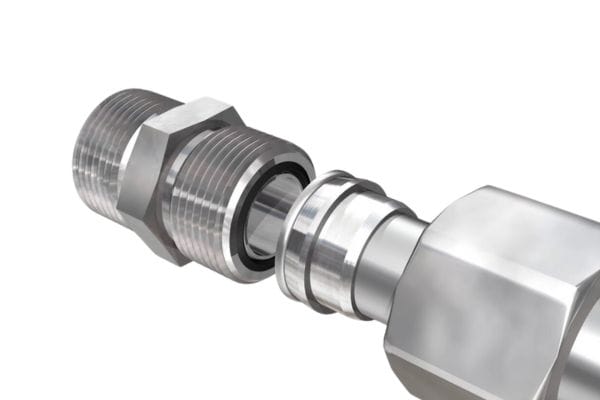
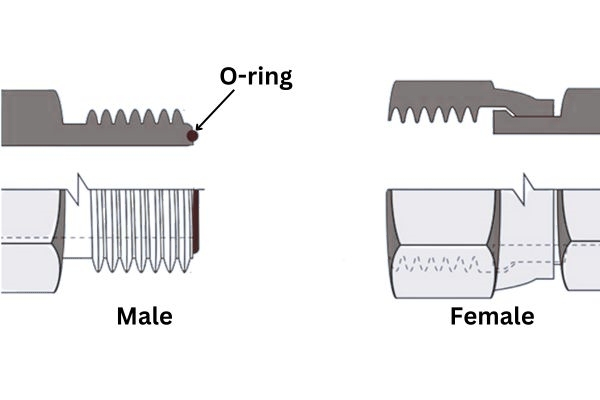
ORFS connections use straight threads and a flat-face sealing interface. On a typical male ORFS end, an O-ring is retained in a machined face groove and compressed against the flat mating face during assembly. The thread and swivel nut provide mechanical retention rather than the primary fluid seal.

Topa supplies ORFS hose ends, adapters, unions, elbows, tees, bulkhead fittings, caps, plugs, and transition fittings. Available materials include zinc-plated carbon steel and selected stainless steel grades. Product selection should be based on thread size, tube or hose connection, configuration, material, pressure requirement, O-ring compatibility, and applicable standard.

ORFS Crimped Hydraulic Fitting

ORFS crimp fittings form permanent hose assemblies by mechanically securing the fitting to a compatible hydraulic hose with a specified ferrule and crimp diameter.

ORFS Hydraulic Adapter

ORFS adapters connect compatible ports, tubes, or hose assemblies while maintaining a flat-face O-ring sealing interface.

ORFS Hydraulic Hose Fitting

ORFS hose fittings connect hydraulic hoses using a flat-face O-ring seal for reliable, leak-resistant performance in high-pressure systems.

Male ORFS Hydraulic Fitting

Male ORFS fittings feature an external thread and flat sealing face for connecting to compatible female ORFS ports or hose ends.

ORFS Female Hydraulic Fitting

Female ORFS fittings use an internal thread and flat-face sealing interface to connect securely with male ORFS components.

ORFS Bulkhead Hydraulic Fitting

ORFS bulkhead fittings create a sealed hydraulic connection through panels, brackets, or equipment walls.

ORFS Hydraulic Cap

ORFS caps close and protect male ORFS connections during system operation, storage, transportation, or maintenance.

ORFS Hydraulic Plug

ORFS plugs seal unused female ORFS ports and help prevent fluid leakage and contamination ingress.

ORB Hydraulic Fitting

ORB hydraulic fittings are used for leak-proofing medium and high pressure hydraulic systems.

JIC to ORFS Hydraulic Fitting

JIC-to-ORFS fittings connect a 37° flare interface to an ORFS flat-face connection without changing the hydraulic line.

ORFS to NPT Hydraulic Fitting

ORFS-to-NPT fittings transition between an ORFS flat-face connection and an NPT tapered-thread port in a hydraulic circuit.

Metric to ORFS Hydraulic Fitting

Metric to ORFS fittings combine metric threads with a flat-face O-ring seal for compatible hydraulic equipment and piping systems.

ORFS Hydraulic Fittings Video

This video presents Topa’s range of ORFS hydraulic fittings, including hose fittings, adapters, straight connectors, 45° and 90° elbows, tees, bulkhead fittings, caps, plugs, and transition configurations. It provides a closer view of the flat-face sealing interface, male O-ring groove, female swivel connection, machined threads, sealing surfaces, and available body shapes.

Before ordering, confirm the reference part number, ORFS thread size, mating connection, hose or tube size, body configuration, material, surface finish, operating pressure, working fluid, temperature range, O-ring material, required quantity, and packaging or identification requirements. Reference numbers, drawings, samples, and product photographs may be used for initial identification, but the thread, sealing interface, key dimensions, and application requirements should be verified before approving production or recurring orders.

Application

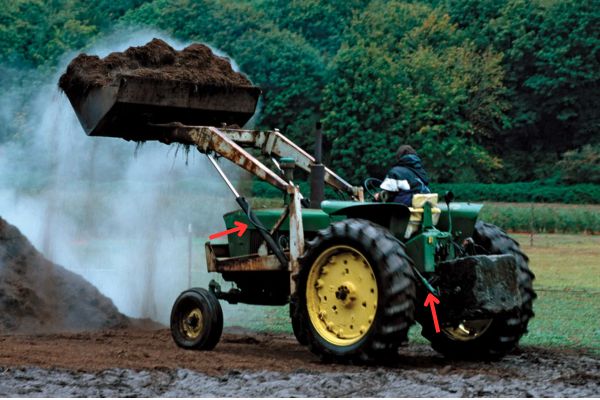
ORFS hydraulic fittings are mainly used where frequent vibration systems, such as tractors, combines, and other heavy equipment are used in construction. It also can be used in chemical plants, off-road construction and agricultural equipment, wellheads in the gas and oil industry, wind turbines, or auxiliary systems in liquid fuel control, ORFS hydraulic fittings will find their use.

Agriculture Equipment hydraulic Cylinder

Agricultural Equipment

Suitable configurations may be used in tractors, harvesters, sprayers, balers, planters, and hydraulic implements for connecting hose, tube, valve, and cylinder circuits.

ORFS hydraulic fittings application mining

Mining

ORFS connections are used in selected hydraulic circuits on drilling equipment, loaders, conveyors, lifting equipment, and other machinery exposed to vibration and demanding operating cycles.

ORFS hydraulic fittings application construction

Construction

ORFS fittings are used in hydraulic lines on excavators, loaders, graders, telehandlers, compact equipment, and other mobile machinery where vibration and pressure cycling require a controlled elastomeric face seal.

Need ORFS Fittings for Stock, Production, or Recurring Supply?

Send us your part-number list, required specifications, quantities, material requirements, packaging instructions, and delivery destination. Our team will review the requested ORFS configurations before preparing a quotation.

Compatible Topa ORFS Hydraulic Fittings Manufacturer

ORFS hydraulic fittings are also called o-ring face seal fittings or o-ring flat seal fittings. Due to its durability, it is the most popular and reliable choice in international hydraulic fittings. There is nothing like an O-ring face seal fitting or (ORFS) when connecting various hydraulic hoses. Its elastic sealing characteristics make it the best choice for 100% leak-free connections. The design of this fitting is such that when the connection is tightened, this O-ring face seal compresses onto the face sleeve brazed to the end of the tube. This is what makes the seal perfect. The metal-to-metal seal eliminates the possibility of twisting by providing firm support during installation.

ORFS Hydraulic Fitting Installation

Zero Clearance

Our ORFS fittings are designed with zero clearance, making installation smoother and faster. This feature allows for easy alignment and ensures there are no gaps or spaces during the connection, reducing the complexity of plumbing and minimizing installation errors.

Resistance to Over-Torque

The innovative design of our ORFS fittings provides superior resistance to over-torque. This means you can tighten the fittings securely without the risk of damaging threads or seals, significantly prolonging the lifespan of the system and reducing the need for frequent maintenance.

Vibration Resistance

Our ORFS fittings are engineered to resist loosening caused by high levels of vibration within hydraulic systems. Through rigorous testing, we’ve proven that these fittings maintain a tight, leak-free connection even under intense operational conditions, ensuring safety and reliability in demanding environments.

Flat Face

The flat-face design of our ORFS fittings ensures a perfect seal every time, even after multiple disassemblies and reassemblies. This remakability feature allows for repeated use without compromising the integrity of the connection, making them ideal for systems that require regular maintenance or adjustments.

ORFS connection

Technical Specifications of ORFS Fittings

Pressure Range


ORFS fittings are designed to handle high-pressure applications, with a maximum operating pressure of 3000 psi, providing reliable performance even in the most demanding hydraulic systems. These fittings are ideal for both dynamic and static pressure applications, ensuring a secure connection under heavy operational conditions.

Materials of Construction

ORFS fittings are available in a variety of durable materials to suit different environments. They are offered in steel, zinc-plated steel (XTR), and stainless steel, ensuring high resistance to corrosion, wear, and extreme temperatures. This variety ensures the fittings can be used in a wide range of industrial applications, from construction to automotive.

Types and Shapes

Our ORFS fittings are available in several configurations to meet different system requirements. These include 45°, 90°, straight, cross, and tee shapes. This variety allows for flexibility in designing hydraulic systems and ensures that users can find the perfect fitting for their specific needs.

Compliance with International Standards

Topa’s ORFS fittings meet or exceed the requirements of SAE J1453 and ISO 8434-3, ensuring they adhere to global industry standards. These fittings have gained international acceptance, making them a trusted choice for manufacturers and engineers worldwide. Compliance with these standards guarantees superior performance and compatibility in diverse hydraulic systems.

ORFS Fitting Sealing Mechanism

The combination of both external and internal sealing mechanisms in ORFS fittings ensures a highly reliable, leak-proof connection. The external O-ring creates a secure seal against environmental leakage, while the internal sealing ensures that the hydraulic fluid remains contained within the system. This dual-seal approach makes ORFS fittings an excellent choice for applications requiring high-pressure resilience, vibration resistance, and long-term reliability.

External Seal Mechanism

A typical ORFS connection uses an O-ring retained in a machined groove on the male sealing face. When the female swivel nut is tightened, the mating flat face compresses the O-ring to create the primary fluid seal. The straight threads and nut generate the clamping force required to hold the sealing faces together.

Reliable sealing depends on correct thread and size matching, an undamaged sealing face, the specified O-ring material and dimensions, proper alignment, cleanliness, and the approved assembly torque. The threads themselves are not intended to provide the primary hydraulic seal.

orfs fittings male thread
orfs fittings female thread

Internal Seal Mechanism

The internal seal of ORFS fittings is facilitated by the metal-to-metal contact between the fitting’s face and the corresponding mating part. The O-ring in the ORFS fitting serves primarily to create an internal pressure barrier, ensuring that the hydraulic fluid remains confined within the system. The precise flat-face design eliminates the need for additional sealing components, reducing the chances of internal leakage. The O-ring is compressed against the metal face during assembly, forming a tight internal seal that can withstand pressure spikes and vibration. This internal seal is crucial for maintaining system integrity and preventing fluid loss inside the hydraulic circuit.

Key Advantages of the Internal Seal:

Provides a pressure-tight internal connection.

Reduces the risk of internal fluid loss or contamination.

Ensures effective sealing even under high vibration and pressure conditions.

Request a Multi-SKU ORFS Quotation

For an accurate quotation, provide your ORFS part numbers or drawings, connection sizes, hose or tube requirements, body configurations, materials, surface finishes, quantities by SKU, packaging instructions, and destination country.

How to Customize the Right Topa Hydraulic ORFS Fitting

Customizing the perfect ORFS fitting for your specific hydraulic system involves several key steps to ensure compatibility, durability, and optimal performance. Here’s a guide to help you tailor the ideal Topa Hydraulic ORFS fitting:

Determine the Required Size and Type

The first step is to decide on the size and type of fitting you need. ORFS fittings come in a variety of sizes (ranging from 1/4″ to 2″) and different configurations (such as 45°, 90°, straight, cross, and tee).

Size: Match the fitting size to the hose or tube diameter and pressure requirements of your hydraulic system.

Type: Choose the appropriate fitting type based on the connection layout of your system. This may involve elbows, tees, or straight fittings depending on the direction of flow and space constraints.

Select the Material

Material choice is crucial for the fitting’s performance in your environment. Topa ORFS fittings are available in different materials to suit various conditions:

Steel: Ideal for general industrial applications.

Zinc-Plated Steel (XTR): Provides additional corrosion resistance for environments exposed to moisture and harsh conditions.

Stainless Steel: Best for highly corrosive environments or applications involving high temperatures and chemicals.

Select the material that offers the best protection against corrosion, wear, and environmental factors while meeting your pressure and durability needs.

Specify the Pressure Rating

ORFS fittings from Topa are designed to handle pressures up to 9200 psi (63 MPa). Ensure the fittings you choose are rated for the maximum pressure your hydraulic system will experience. For systems with dynamic pressure requirements, this rating is critical for preventing leaks or fitting failure under high-pressure conditions.

Choose the Sealing Features

ORFS fittings offer reliable sealing mechanisms. However, you should customize the sealing features based on your system’s needs:

External Seal: The O-ring on the flat sealing surface ensures the fitting is securely sealed against external leaks. Ensure the O-ring material is compatible with the hydraulic fluid being used (e.g., nitrile, Viton, etc.).

Internal Seal: The internal seal ensures a robust metal-to-metal connection to prevent fluid from escaping under pressure. Customizing the tolerance and surface finish can optimize the sealing performance.

orfs fittings types

Specify Special Features

If your hydraulic system has unique requirements, you can further customize the ORFS fitting with special features, including:

Custom Hose or Tube Adaptability: Customize the fitting to connect specific hose types or wall thicknesses (inches or metric).

Locknut Size: Topa’s robust port stud and long locknut design can be customized to prevent washer damage and ensure secure, mistake-proof assembly.

Shape Customization: Depending on your system layout, you can customize the fitting’s shape to include angles or configurations like 45°, 90°, or even more complex tees and crosses.

Manufacturing Process

Topa’s manufacturing process integrates cutting-edge technology with expert craftsmanship, ensuring that every hydraulic ORFS fitting is engineered for excellence. From raw material selection to final testing, we focus on precision at every step to deliver products that exceed customer expectations.

hydraulic fittinf material cutting

Cutting

CNC robotic machine Topa

CNC Machining

CNC machine hydraulic fitting

Threading

CNC thread machining hydraulic fitting

Polishing

6. fitting galvanize Topa

Galvanize

crimping Hydraulic hose fitting Topa

Crimping

Evaluate an ORFS OEM Supply Project

Send your drawing, annual or batch quantity, material, surface finish, testing requirement, packaging specification, and target delivery schedule for technical and commercial review.

Topa Services

At Topa, we are committed to delivering exceptional customer service that goes beyond just providing high-quality products. We understand that our customers’ needs are diverse and unique, which is why we offer tailored solutions and dedicated support throughout every step of the process.

Multi-SKU Quotation

Submit multiple part numbers, sizes, quantities, materials, and packaging requirements in one quotation request.

Specification Review

Reference numbers, drawings, product photos, thread data, and sealing details can be checked before an offer is confirmed.

24/7 Customer Support

We value our customers’ time and offer rapid response times. Our dedicated support team is available 24/7 to address any questions or concerns, ensuring minimal downtime and swift resolutions.

Repeat-Order Control

Approved specifications, part numbers, labels, and packaging requirements can be referenced for future production.

Private-Label Packaging

Customer labels, bags, cartons, identification codes, and packing lists can be arranged according to confirmed order requirements.

Order and Logistics Coordination

Production schedules, consolidated shipments, export packaging, and shipping documents are coordinated according to the confirmed order.

FAQ

What is ORFS fitting?

ORFS uses an O-ring compression mechanism for sealing.

Female Orfs fitting has a flat surface and a straight thread UNF swivel nut. 

Male Orfs fitting is a straight thread

What are the Precautions for installing ORFS hydraulic fittings?

Step 1. Check for possible contamination or damage during shipping or handling. Verify that the face seal O-ring is properly installed.

Step 2: Lubricate threads and O-rings with your system hydraulic fluid or light lubricant.

Lubricate the system with hydraulic fluid or light lubricant.

Step 3: Align the matching face seal with the O-ring and tighten the face seal.

Tighten the end seal nut.

Step 4: Tighten the packing nut to the value shown in the table on the left side of this manual.

How do you confirm the pressure rating?

Pressure capability must be verified for the exact fitting type, size, material, manufacturing specification, and complete hose or tube assembly; one pressure value should not be applied to every ORFS product.

Can different ORFS sizes and configurations be combined in one order?

Multiple ORFS hose ends, adapters, elbows, tees, bulkhead fittings, caps, plugs, and transition fittings can be included in one quotation, subject to production and commercial review.

Can you produce custom ORFS fittings from drawings?

Drawing-based production can be reviewed after confirming critical dimensions, tolerances, thread and sealing details, material, finish, testing, annual or batch quantity, and application requirements.

Which O-ring material should be specified?

O-ring selection depends on hydraulic fluid, operating temperature, pressure, environmental exposure, and equipment requirements. The compound should be confirmed before production rather than selected from the connection name alone.

What may cause ORFS hydraulic fittings to leak?

Wrong installation operation, the mismatch between system and ORFS hydraulic fittings, poor product quality, etc. All these may lead to leakage.

Can ORFS hydraulic fittings be used in tight places?

Yes, ORFS hydraulic fittings have a straight threaded male fitting, an O-ring sealed to the female thread, and a rotatable female fitting, thus allowing for flexibility in a wide range of situations.

Comparison between ORFS and ORB?

Both are straight threaded, the difference is the sealing method, ORFS hydraulic fittings uses both metal and O-ring for sealing, and ORB hydraulic fittings are sealed by O-ring.

How does JIC compare to ORFS hydraulic fittings ?

The JIC hydraulic fittings is a metal-to-metal seal in the form of a 37-degree flared tube. ORFS hydraulic fittings is a better seal in the form of an O-ring seal and a metal seal. the JIC should be used for fuels and fluids at higher pressures, the ORF is more focused on hydraulic systems under vibration conditions.

Can you cross-reference existing ORFS part numbers?

Existing supplier part numbers can be used as reference points, but the thread, sealing face, dimensions, material, pressure requirement, O-ring specification, and mating component must be checked before interchangeability is confirmed.

Get More Information About Products

ORFS hydraulic fittingcatalog

Contact Topa

Save 30% on maintenance costs with our easy-install hydraulic fittings. Contact Now!