
The lowest-priced fitting is not the lowest-cost choice when a hose failure can release fluid, contaminate a work area, disable steering or braking functions, or stop production. One-piece fittings for mining should be selected through verified hose compatibility, connection geometry, crimp data, material suitability, and actual service conditions. Their integrated stem-and-ferrule construction can reduce picking errors, but it cannot compensate for an incorrect thread, unsupported hose series, poor routing, or an unverified crimp. Safety must set the purchasing boundary before price is compared inside that boundary.
Why Mining Changes the Fitting Decision
Pressure is only one part of the duty cycle
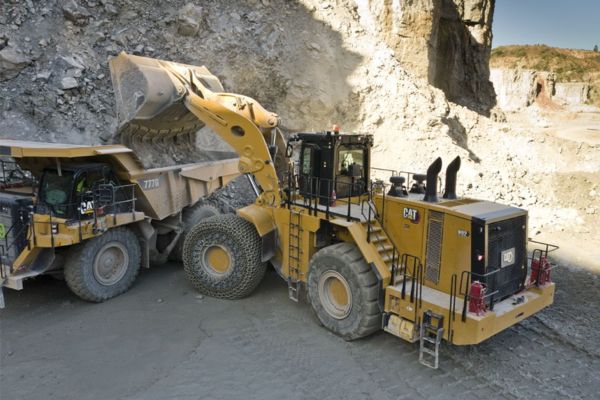
Mining hose assemblies may experience pressure impulses, vibration, mechanical shock, repeated articulation, abrasive debris, washdown, temperature changes, and exposure to water or process fluids. A catalogue working-pressure value does not describe all of those loads. The allowable assembly condition depends on the lowest-rated component and must also account for the hose construction, fitting, port, fluid, temperature, impulse duty, routing, installation, and applicable equipment requirements.
This is why two fittings with the same nominal size and end style are not automatically equivalent in service. A connection that appears adequate on a stationary return line may be unsuitable for a high-impulse circuit on mobile equipment. Before price enters the comparison, the application must be defined closely enough to separate ordinary replacement risk from a safety-critical decision.
Failure consequences determine how much verification is needed
Not every mining hose performs the same function. A leak on a guarded, low-consequence auxiliary circuit and a failure affecting steering, braking, lifting, personnel access, or stored-energy control do not deserve the same substitution process. The more severe the credible consequence, the stronger the need for approved components, traceable assembly data, controlled installation, and manufacturer or engineering review.
Maintenance urgency does not lower that standard. A machine waiting for a hose can create intense schedule pressure, yet installing a part because it threads into the port or resembles the old fitting can exchange visible downtime for a less predictable failure. The safe decision is to restore service only after the connection, hose, fitting series, crimp procedure, and application limits have been verified.
What One-Piece Construction Solves—and What It Does Not
The integrated ferrule reduces one source of error
In a one-piece hydraulic hose fitting, the fitting body or stem and ferrule are supplied preassembled or fixed as one assembly; the precise construction varies among product series. This format can reduce the chance of selecting a loose ferrule from the wrong series during picking or assembly. It may also simplify bin control because the stem and its intended ferrule do not travel through stores as two independently selected parts.
That benefit is useful where dust, poor lighting, time pressure, and multiple hose systems make part identification difficult. Fewer loose components can mean fewer opportunities to mix similar-looking shells. One-piece construction is not the same as a reusable or field-attachable fitting, however, and not every crimp fitting uses a one-piece design.
Integration does not create universal compatibility
The attached ferrule does not prove that the fitting matches the hose on the machine. Compatibility still depends on the exact hose manufacturer and series, hose size, reinforcement and cover construction, fitting series, stem geometry, assembly method, and valid crimp specification. Equal dash size only describes a nominal size relationship; it does not authorize mixing components from different systems.
One-piece construction also says nothing by itself about thread form, sealing face, pressure suitability, corrosion resistance, or temperature capability. A well-organized store can still issue the wrong item if a JIC connection is confused with an SAE 45-degree flare, a BSP thread with another pipe form, or an O-ring seal with a metal-seat connection.
Establish the Technical Boundary Before Comparing Price
Verify the hose, fitting series, and crimp system as one combination
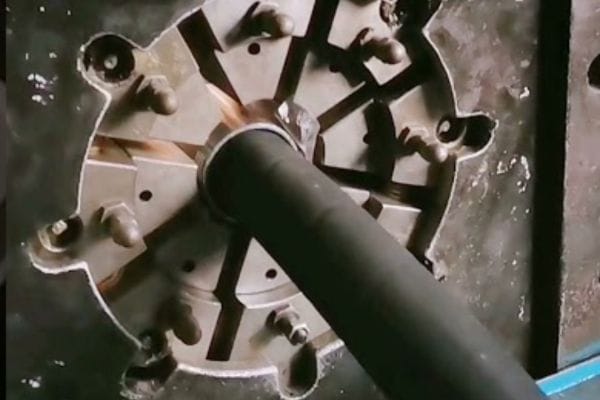
Start with the complete hose assembly system, not the fitting catalogue page. Confirm the hose manufacturer and exact series, hose ID or dash size, intended fitting series, crimping machine, available dies, and current assembly instructions. The applicable data must define any skive or no-skive preparation, insertion depth, die selection, crimp diameter and measurement position, plus required inspection steps.
Do not borrow a crimp diameter from a similar-looking fitting, another hose construction, or an old workshop note whose revision and scope cannot be established. A crimp that is too loose can reduce retention or sealing performance; excessive compression can damage reinforcement, the stem, or the hose tube.
Confirm the port connection and sealing method independently
Identify male or female connection, thread outside or inside diameter, pitch or threads per inch, and straight or tapered thread form. Then identify the sealing method separately: metal flare or cone, flat face with O-ring, O-ring boss, bonded seal, tapered thread, flange, or another defined interface. Thread engagement retains a connection, but the thread may not be the surface that seals the fluid.
Photos and an old part number are valuable screening evidence, not final proof when records are uncertain. Measure the physical part with suitable tools and inspect the mating port for damage, distortion, corrosion, or mixed components. Thread sealant cannot repair an incorrect thread form or a damaged metal or O-ring sealing face; forcing engagement may damage the port and complicate the next repair.
| Decision boundary | Evidence required before price comparison | Reason for rejection or escalation |
|---|---|---|
| Hose compatibility | Exact hose series, size, fitting series, current assembly data | Dash size alone or an unverified mixed-brand combination |
| Port connection | Thread form, diameter, pitch/TPI, gender, seat and seal | Visual similarity, partial engagement, or damaged mating surface |
| Pressure and duty | Circuit requirement, impulse severity, temperature, routing, lowest-rated component | Unknown circuit function or unsupported pressure assumption |
| Environment | Fluid, abrasion, corrosion, washdown, heat and external loading | Material or finish selected only from appearance or salt-spray claims |
| Assembly control | Crimper, dies, preparation, insertion, crimp and inspection records | Copied crimp value or no traceable procedure |
Account for the Mine Environment
Abrasion, routing, and external loads often start the failure
A hydraulic fitting may be technically compatible yet installed in a hose route that shortens assembly life. Check for rubbing against structures, insufficient bend radius, twisting, tension at full articulation, unsupported hose mass, sharp guards, heat sources, rock impact, and movement concentrated immediately behind the ferrule. A hose should not be pulled into alignment by tightening the fitting, because that can introduce twist and side load into the connection.
Guards, sleeves, clamps, and routing changes can manage specific hazards, but they must not trap damaging heat, conceal inspection points, or force an excessive bend near the fitting. Inspect the full range of machine motion before returning equipment to service.
Material and finish must match exposure, not a universal ranking
Choose fitting material and surface treatment by considering hydraulic fluid compatibility, external corrosion, temperature, mechanical loading, galvanic interaction, site rules, and regulatory requirements. No material is always best. A coating that performs well in a controlled corrosion test does not translate directly into a guaranteed field life because abrasion, coating damage, chemicals, maintenance practices, and geometry change real exposure.
Inspect storage conditions as well as installed conditions. Water, corrosive dust, condensation, and careless handling can damage threads, sealing faces, and protective finishes before a fitting reaches the machine. Keep caps or suitable protection in place, segregate damaged parts, and prevent dirty fittings from becoming a contamination path into an opened hydraulic circuit.
A Safer Replacement Workflow for Mining Hose Assemblies
Control the machine and preserve evidence first
Shut down the equipment, isolate it, release hydraulic pressure and stored energy, and follow the equipment and component manufacturers’ safety procedures before inspection or removal. Never search for a pinhole leak with a bare hand; escaping hydraulic fluid can penetrate skin. Support raised or moving elements through approved procedures rather than relying on hydraulic pressure to hold them while work is performed.
Before discarding the failed assembly, photograph both ends, the complete routing, hose layline, tags, adapters, clamps, guards, abrasion points, and visible leakage path. Record installed orientation and overall length using the defined measurement method. Preserve the old fitting and mating component for identification because damage patterns can reveal misalignment, incorrect sealing, corrosion, overtightening, movement, or external contact.
Identify, assemble, inspect, and document in sequence
Use a controlled workflow rather than making several assumptions at once:
- Define the circuit function, credible failure consequence, pressure and temperature requirements, fluid, motion, and environment.
- Identify both end connections by thread and sealing geometry; verify adapters and mating ports rather than copying appearance.
- Confirm the exact hose-and-fitting system and obtain current preparation, insertion, crimp, and inspection data.
- Assemble with controlled cleanliness, correct tools, verified dies, and the specified procedure; record the measured result where required.
- Install without twist or forced alignment, restore guards and clamps, and check the route through its intended motion.
- Follow the authorized commissioning and leak-inspection procedure, then update the equipment record.
If any essential field remains unknown, stop at that decision point and obtain authoritative information. Equipment documentation may define an approved assembly or routing constraint; hose and fitting data establish component compatibility; crimper instructions govern setup and measurement. A rushed replacement should not turn missing information into an unsupported engineering judgment.
Compare Total Risk and Cost After Technical Approval
Unit price belongs inside an approved candidate set
Price comparison becomes meaningful only after every candidate satisfies the same technical and traceability requirements. Then compare delivered cost, availability, identification accuracy, packaging protection, documentation control, batch consistency, storage impact, and the practical ability to reproduce the approved assembly. A low price loses its advantage if unclear labels lead to wrong picks or if missing crimp data prevents controlled assembly.
Include the cost of inspection, rework, urgent freight, repeated small orders, machine access, fluid cleanup, contamination control, and downtime in the evaluation. These costs vary by site and circuit, so a universal savings percentage would be misleading. The purpose is not to declare the highest-priced fitting safest; it is to prevent price from overriding evidence of compatibility and controlled use.
Validate alternatives without using critical circuits as experiments
An alternative fitting should be evaluated by specification and controlled verification, not by brand cross-reference or appearance alone. Begin with complete drawings and data, inspect samples for connection dimensions, sealing geometry, stem and ferrule features, material, finish, markings, packaging, and consistency, then confirm the supported hose and crimp process. A trademarked part number can aid identification but does not prove full interchangeability.
Do not introduce an uncertain alternative first on a high-consequence circuit. The review method, sample size, acceptance criteria, testing, and authorization should reflect the failure consequences and applicable engineering or manufacturer requirements. Record deviations and stop the evaluation when compatibility cannot be demonstrated; a favorable unit price is not evidence that an unresolved technical difference is harmless.
Information to Record Before the Next Breakdown
Build an equipment-level hose record
A usable hose record shortens future downtime because it replaces memory and photo matching with verified data. Link each assembly to a machine and installation position, using a stable identifier that remains readable after maintenance. Record revisions when routing, adapters, hose construction, or end orientation changes so an obsolete description is not issued again.
At minimum, preserve:
- Equipment identifier, circuit function, assembly location, and risk classification
- Hose manufacturer, exact series, ID or dash size, overall length, and routing notes
- Fitting style and orientation at both ends, including adapters
- Thread form, diameter, pitch/TPI, gender, seat angle, and sealing method
- Confirmed part numbers, material and finish requirements, plus clear photographs
- Crimper, die set, applicable crimp specification, measured result, and assembly date
- Working pressure, temperature, fluid, environmental exposure, and inspection findings
Keep stocking decisions tied to this installed-base record and actual replacement history. Frequently used, correctly identified assemblies and fittings may justify local availability; rare or high-risk items may need a controlled sourcing plan rather than speculative bins. Standardize labels, location codes, and obsolete-part controls so one-piece fittings for mining remain traceable from storage through installation.
Prepare a checkable request, not a visual guess
For a quotation or technical review, send the hose series and size, both fitting styles, thread measurements, sealing-face details, part markings, assembly length and orientation, application conditions, crimper information, required quantity, and purpose. Include clear overall, thread, sealing-face, ferrule, hose-layline, damage, and installed-routing photographs. Mark unknown facts as unknown so the reviewer can identify what requires measurement, documentation, or direct inspection.
FAQ
Can a one-piece fitting prevent hose pull-off?
No; integrated construction only removes the separate ferrule-selection step. Retention still depends on a supported hose-and-fitting combination, correct insertion and crimping, sound components, and service within the assembly’s limits.
Is stainless steel always safer for underground mining?
No; material selection must consider the fluid, corrosion mechanism, temperature, mechanical loads, mating materials, site conditions, and applicable rules. Stainless steel may solve some exposure problems while introducing cost or galvanic and compatibility considerations elsewhere.
Can an old fitting be reused to avoid downtime?
Do not assume that a crimp fitting or damaged connection is reusable. Follow the component manufacturer’s instructions and the site’s approved maintenance procedure; one-piece crimp fittings should not be confused with fittings specifically designed and approved for reuse.
Does a higher pressure rating guarantee longer service life?
No; service life also depends on impulse duty, temperature, routing, abrasion, contamination, assembly quality, bend conditions, and external loads. The complete assembly and application—not one catalogue number—set the operating boundary.
When should manufacturer or engineering review be mandatory?
Escalate whenever compatibility data are missing, the circuit is safety-critical, the old assembly is unidentified, the port is damaged, the application has changed, or an alternative falls outside approved documentation. Site procedures and applicable legal requirements may demand review in additional situations.