
When someone requests one urgent Parker fitting, the fastest safe response is not an immediate cross-reference—it is a one-page verification card that turns a short message into an approved specification. The card should show what was requested, what the sales team verified, what remains unknown, and exactly what the buyer is confirming. This prevents a familiar failure: everyone moves quickly, but one missing suffix, hose size, seat type, angle, or crimp requirement sends the wrong part.
Urgency Changes the Communication, Not the Criteria
One part can still contain several decisions
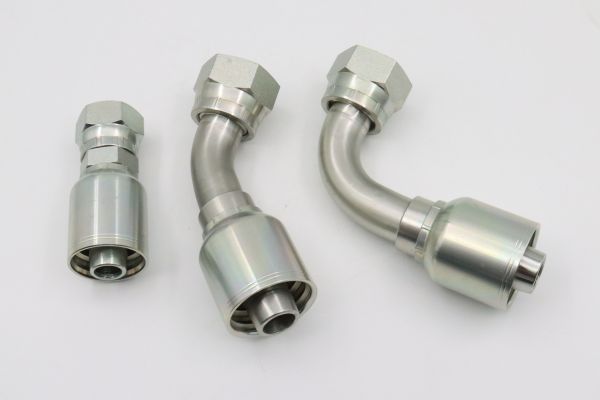
A request for one part number looks simple because the quantity is small, yet the technical decision may still include brand series, connection type, port size, hose ID, shape, drop, material, and assembly method. A Parker base number without its full suffix may represent a family rather than one orderable configuration. A photographed label may also contain a character that was read incorrectly, or the number may come from an old invoice rather than the part installed on the machine. The one-page card must therefore preserve the exact source of the number instead of treating every typed code as equally reliable.
Speed comes from parallel confirmation
The card shortens the process by placing the requested part, catalog interpretation, missing facts, and approval line in one view. Sales can cross-check the current catalog while the customer sends a photo or hose layline, instead of waiting for a long sequence of separate questions. The goal is not to collect every possible hydraulic parameter; it is to collect every field that can change this specific item or make its use unacceptable. A well-designed card helps both sides see the last open question immediately.
Start With the Part Number and Its Evidence
Record the complete code without normalizing it
Copy the part number exactly as supplied, including every prefix, suffix, hyphen, material code, and package or regional marker. Do not silently correct a character that looks unusual, because 0/O, 1/I, 5/S, or a missing dash can redirect the search; place uncertain characters in brackets and ask for a second view. Ask where the number came from: fitting stamp, hose tag, equipment manual, drawing, previous order, invoice, or memory, and record that source on the page so a later reviewer understands the evidence. A number read directly from the installed assembly and supported by the recommended fitting photographs and markings carries different identification value from a number copied from an unrelated purchasing record, especially when equipment has been modified since the record was created.
Translate the code into a plain description
After locating the current catalog entry, write the interpreted specification beside the code: product series, connection standard, gender, seat or seal, port size, hose ID, straight or elbow shape, material, and other listed options. Parker product pages show why this matters; a complete item can distinguish the port connection, hose size, shape, thread, and material rather than presenting only a family label, while a base code can hide several suffix combinations.
Confirm the Connection and Hose as Separate Sides
The port end needs its own evidence
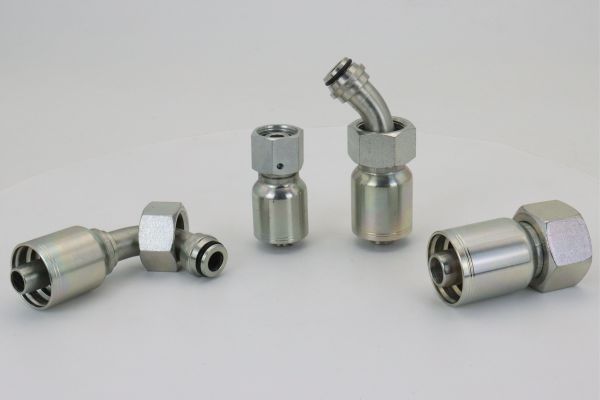
The connection side must state the standard and sealing method, not only male, female, swivel, or flange. Record thread diameter and pitch when identification is uncertain, plus straight or tapered form, seat angle, O-ring or sealing face, and fitting orientation. The earlier female swivel identification process demonstrates why generic descriptions can point to incompatible JIC, SAE, pipe, BSP, metric, DIN, or ORFS connections. Clear photos should show the complete end, threads, and sealing surface with enough scale to support—not replace—measurements.
The hose side needs current assembly data
If the item will be crimped to hose, the card must identify the hose manufacturer, series, hose ID or dash size, fitting series, and current crimp-data source. Matching dash size alone does not establish hose construction or fitting compatibility, and a one-piece stem-and-ferrule assembly does not create a universal crimp diameter. For a loose fitting sold as a replacement, state whether the recipient will assemble it and whether the exact hose-and-crimp combination has been verified.
| Card section | Minimum content | Why it matters |
| Requested item | Exact code, quantity, source of code, urgency date | Preserves what was actually requested |
| Catalog interpretation | Series, port end, hose end, shape, material | Turns a code into confirmable language |
| Physical evidence | Photos, markings, thread/seat dimensions, hose layline | Detects copied or incomplete numbers |
| Application check | Pressure, temperature, fluid, equipment, routing | Tests whether the proposed use matches the selection |
| Approval | Selected item, limitations, confirmer, date | Creates an actionable release record |
Ask Only Questions That Can Change the Decision
Use a stoplight rule for missing information
Mark each field green, amber, or red. Green means supported by current catalog data or clear physical evidence; amber means plausible but awaiting confirmation; red means the part cannot be released because the missing fact can change the connection, hose assembly, pressure suitability, or safe installation. Assign one owner and one next action to every amber or red line—for example, “customer to send seat photo” or “sales to verify current crimp table”—so the card drives resolution instead of merely displaying uncertainty. Quantity, requested date, and delivery route may affect service, but they do not compensate for a red technical field, and a promised dispatch time should remain conditional until the red field closes. This visual rule keeps the card short while preventing urgency from hiding the only question that matters.
Use red status when any of these remain uncertain:
- The complete part number or exact catalog configuration.
- Connection standard, thread, seat, seal, flange code, or mating port.
- Hose manufacturer, series, size, or valid crimp specification when assembly is required.
- Straight versus elbow shape, orientation, drop, or installation clearance.
- Material, fluid compatibility, working pressure, temperature, or safety-critical application.
Remove questions that do not affect this item
Do not mechanically copy a full inquiry checklist into every urgent exchange. A rigid adapter does not require hose and crimp fields; a straight fitting does not need elbow clocking; a confirmed original item may need less dimensional evidence than an aftermarket replacement. Keep irrelevant fields off the visible card or mark them not applicable with a reason. The customer is more likely to confirm a focused page when each question clearly changes the selected part, assembly, or risk.
Use a One-Page Card That Invites a Clear Reply
Copy-ready Parker fitting verification card
The following template is designed for email, PDF, or a messaging screenshot. Keep the checked catalog description and open fields on the same page, attach photos separately, and use revision numbers when the card changes. Do not fill unknown information with assumptions; write Not confirmed and assign the appropriate stoplight status.
URGENT PARKER FITTING VERIFICATION CARD
Card ID / Revision: _ Date: _
Required date: _ Quantity: _1. REQUEST RECEIVED
Parker number exactly supplied: ________
Number source: ☐ Fitting stamp ☐ Hose tag ☐ Drawing ☐ Manual ☐ Previous order ☐ Other
Existing part or replacement candidate: ________2. CATALOG DESCRIPTION CHECKED BY SALES
Series: _ Port connection and size: _
Thread / seat / seal: _ Hose ID or second end: _
Shape / angle / drop: _ Material / finish: _
Catalog or drawing reference and revision: ________3. PHYSICAL AND APPLICATION CONFIRMATION
Photos and markings received: ☐ Yes ☐ No
Hose manufacturer / series / size: ________
Crimp specification source: ________
Equipment / location: ________
Working pressure / temperature / fluid: ________
Installation clearance or orientation limits: ________4. STATUS
☐ GREEN—Specification supported
☐ AMBER—Awaiting: ____________________________
☐ RED—Do not release because: __________________5. CONFIRMATION REQUIRED
“I confirm the selected item and description above match the required connection, hose or second end, shape, quantity, and intended application. Any field marked amber or red must be resolved before release.”
Confirmed by: _ Company / team: _ Date: __
Make confirmation binary and traceable
End with one specific action: confirm the card as written or return corrections in the marked fields. Avoid “Please check” because it does not say whether silence, a thumbs-up, or partial feedback authorizes release; the reply should identify the card revision and repeat any accepted exception or limitation. Save the approved revision with the quote, order, photos, and catalog reference, and copy the final description into the internal item record so the commercial document and technical approval do not carry different wording. If a correction arrives after approval, issue a new revision and obtain confirmation again instead of editing the archived page silently.
Prevent the Card From Becoming False Assurance
Confirmation does not transfer engineering responsibility
A signature or message reply documents shared facts; it does not make an unsuitable assembly safe. The sales team should not ask the customer to approve a parameter that neither side has verified, and the card should not convert unknown application conditions into a waiver. Safety-critical, unusual-fluid, extreme-temperature, high-impulse, or unclear installations may require the equipment, hose, fitting, or crimp-system technical authority before release.
Check the received item against the approved page
The verification loop ends only when the physical item agrees with the approved card. Before shipment or assembly, compare the part marking, packaging label, connection, size, shape, material indicator, and quantity with the approved revision; where replacement risk justifies it, add dimensional or sample checks. A one-page card that is never used for outgoing inspection is only a conversation record. When the match is complete, retain the card so the next urgent request can begin from confirmed data instead of another one-line message.
Conclusion
An urgent Parker fitting request should never be confirmed by part number, appearance, or a short description alone. A clear verification card helps both the buyer and supplier confirm the complete part number, connection type, hose size, sealing method, material, application, and crimping requirements before the order is released. This reduces the risk of receiving the wrong fitting, delaying repairs, or creating unsafe hose assemblies.
If you need Parker-compatible hydraulic fittings, send Topa your existing part number, fitting photos, hose information, required quantity, and application details. Our team can help verify the specification, recommend a suitable replacement, and prepare a quotation for standard, trial, or bulk orders. Contact us today to confirm your fitting and place your order with greater confidence.
FAQ
Is a complete Parker part number enough to skip the card?
Not always; record the number source and confirm the current catalog description, quantity, and intended use, especially when the request involves a replacement.
Can the customer confirm by replying “OK” in a message?
Yes, if the reply clearly refers to the final card revision and your process records who confirmed it and when.
Should price and delivery appear on the technical card?
The required date and quantity belong on the card, but commercial terms can remain on the quotation unless they affect the identified item or approval.
What if no hose information is available?
If the fitting will be crimped to hose, keep the card amber or red until the exact hose and valid assembly data are established.
Does the same card work for adapters and flange components?
Use the same decision structure but remove hose and crimp fields that are not applicable and add the dimensions, seals, hardware, or flange code that can change that item.