
When a hose assembly needs one special Parker 43 end, the missing item is not merely one fitting—it is the component that can block the entire assembly order. The standard hose and common end have little commercial value if the finished assembly cannot connect to the equipment. A special Parker 43 fitting therefore affects conversion because it controls whether the complete, installable result can be supplied with credible technical and delivery commitments.
A Hose Assembly Is One Dependent Product
Both ends define whether the assembly has value
A finished hydraulic hose assembly combines the hose, two end connections, crimps, overall length, orientation, cleanliness, identification, and application requirements. These elements are not separate line items once the assembly must fit a machine. If one end cannot mate with the port, the correct hose and common fitting cannot complete the repair. The order is evaluated by the assembly’s ability to install and operate, not by the percentage of components that were easy to source.
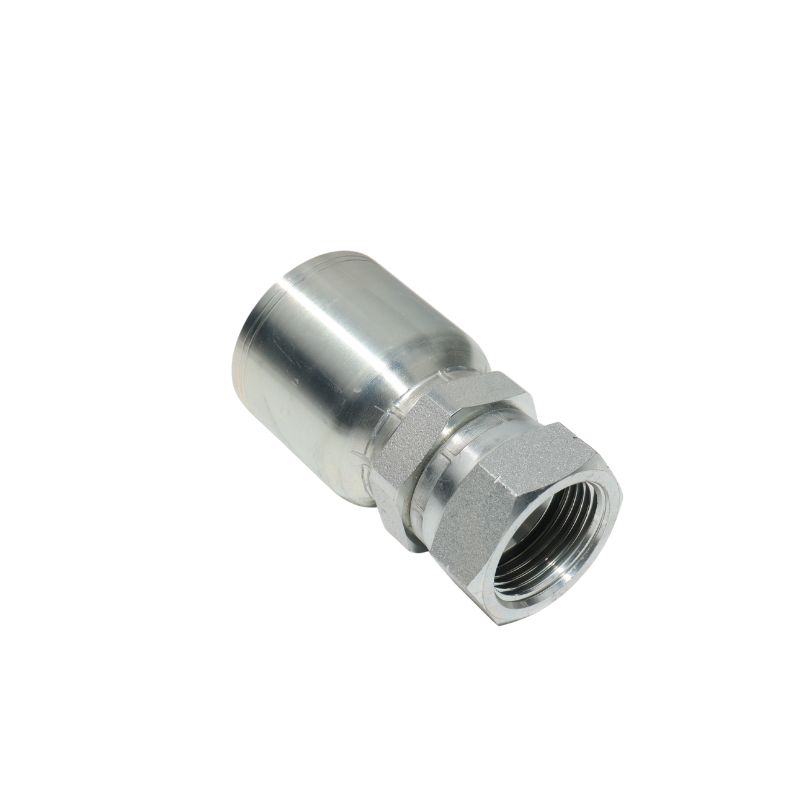
The uncommon end often carries the equipment interface
The special end may be the only component that matches a legacy port, metric or Japanese connection, block-style elbow, banjo, unusual flange, reducer, flat seat, or restricted installation envelope. “Special” may simply mean low local demand, a discontinued machine platform, unusual material, or incomplete identification, but its function remains essential and its replacement evidence must still be complete. Without that exact interface, the assembly has no correct second endpoint, and offering a common-looking alternative only transfers the identification problem to installation.
The Special End Freezes the Assembly Specification
Cut length depends on both fitting dimensions
Overall assembly length is not the same as raw hose cut length. Cut length as the required overall assembly length minus the dimensional deductions associated with both ends, commonly shown as B1 and B2, so the calculation belongs to the approved pair of fittings rather than to the hose alone. If the special end changes, its stem, insertion, or cutoff dimension can change the hose cut length even when the requested overall length stays fixed; an elbow may also change the datum used for measuring overall length. Cutting hose before the candidate end is frozen can produce a finished assembly that is too long or too short, creating rework and wasting otherwise usable components. On a multi-assembly order, repeating the same unverified deduction can turn one unresolved end into a batch-wide dimensional error.
Orientation and clearance also depend on the final part
An elbow, banjo, block end, or offset connection establishes where the hose leaves the port and how the second end must be clocked. A substitute with the same thread and seat may still have another drop, body width, nut envelope, or hose-centerline position. That difference can move the hose into a guard, cylinder, hot surface, or bend tighter than the specified minimum radius. The earlier one-piece fitting identification checklist is therefore more valuable when it includes the complete assembly and installation space, not only a close-up of the loose special end.
| Assembly decision | What the special end controls | Order impact if unresolved |
| Port fit | Thread, seat, seal, flange, angle, and mating standard | Finished assembly cannot be installed |
| Hose cut | End deduction, insertion, and overall-length calculation | Assembly length may be wrong |
| Crimp process | Stem/ferrule family, hose compatibility, dies, and crimp data | Assembly cannot be released safely |
| Routing | Angle, drop, envelope, clocking, and first bend | Interference, preload, or abrasion risk |
| Delivery | Availability, sample approval, and receiving verification | Entire order date remains conditional |
Technical Uncertainty Quickly Becomes Commercial Risk
A partial quote does not solve the buyer’s problem
Quoting the hose, common end, and labor while marking the special end “to be confirmed” may create a fast price, but it does not create a reliable complete-assembly offer. The buyer still has to find the missing interface, coordinate another source, accept a split shipment, or assume responsibility for a substitute that has not been validated, while the quoted common items may sit unused. This weakens the comparison against any quote that provides a finished, traceable assembly with one accountable specification and delivery date. The apparent fitting shortage becomes a lost order because the competing decision is between complete uptime support and an unfinished collection of parts, not between the unit prices of two fittings.
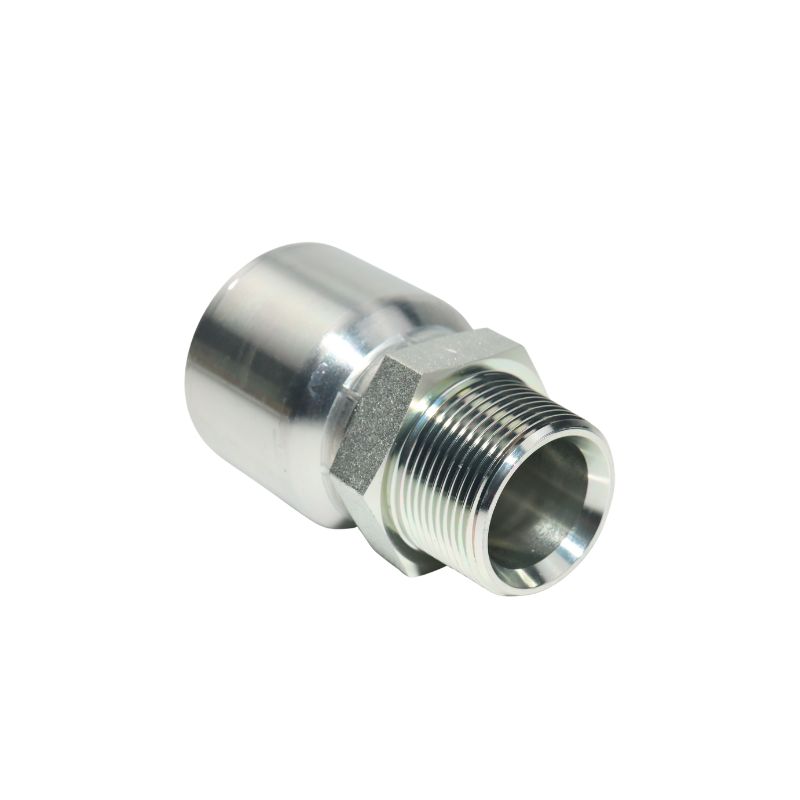
Unqualified delivery promises damage trust
A lead time based only on common components is not the assembly lead time. The special end may require drawing confirmation, current stock verification, a sample, alternate material review, incoming inspection, and trial assembly before the hose can be cut and crimped. Promising the common-item date and revising it later makes the technical gap look like poor order control. A stronger response states the confirmed portion, the exact blocking field, the owner of the next action, and the date on which a complete commitment can be issued.
A Cross-Reference Must Be Validated at Assembly Level
Similar port descriptions are only a starting point
A Parker number, photograph, or generic description can identify candidates, but it does not prove complete interchangeability. Confirm the full suffix, connection standard, thread diameter and pitch, seat or sealing method, hose size, fitting series, shape, material, finish, and dimensional envelope. Then compare the candidate with the actual mating port and installation. The one-piece fitting cross-reference process should organize evidence and exclusions rather than turn brand-code similarity into an automatic replacement claim.
Hose and crimp compatibility must remain controlled
Parker 43 Series fittings are permanent crimp-style components used with specified hose families and assembly data; the one-piece construction reduces separate ferrule-selection errors but does not make every hose of the same ID compatible. The exact hose series, size, crimper, dies, insertion depth, preparation method, and final crimp requirement must be established from current instructions.
Recover the Order by Solving the Bottleneck First
Triage the special end before pricing everything else
At inquiry intake, identify which line or assembly contains the least common end and move it to the first technical review. Common hose and fitting availability can be checked in parallel, but the commercial offer should not be finalized until the bottleneck has a defined resolution path. This reverses a common workflow in which the easy majority is quoted first and the decisive minority is discovered later. Early triage protects the time spent pricing, freight planning, and delivery coordination for the rest of the order.
Use four possible resolution paths:
- Source the exact original part with the full suffix and current documentation.
- Approve a dimensionally and functionally verified replacement through controlled comparison and sample assembly.
- Redesign the connection with an approved adapter or routing change only when the equipment authority accepts the new joints, envelope, and ratings.
- Mark the assembly technically blocked when identification, application, or valid crimp data cannot be established.
Present options as complete assembly outcomes
Do not present a cheaper fitting as an equivalent option unless it has passed the same technical checks. Compare alternatives by finished assembly: exact port match, approved hose and crimp combination, overall length, orientation, pressure and fluid suitability, validation work, delivery date, and total installed risk, including whether the alternative changes clamps, guards, adapters, or service access. An adapter-based option may be available sooner but add connections and alter routing; an exact end may take longer but preserve the original envelope; a verified replacement may balance both only after dimensions and assembly data are approved. The buyer can make a rational decision only when each option shows a complete installable result, its open assumptions, and the event that converts its provisional date into a committed date.
Build a Confirmation Package for the Entire Order
Collect assembly data in one record
The confirmation package should connect every assembly line to its two ends, hose, length, orientation, application, and inspection criteria. For the special end, attach the original number source, photos, measurements, catalog or drawing revision, candidate comparison, and approval status. Use a consistent internal item code so the approved end cannot be replaced by a visually similar part during picking.
Request or verify these fields:
- Complete assembly part number, quantity, equipment location, and required date.
- Hose manufacturer, series, size, overall assembly length, and length tolerance.
- End 1 and End 2 full numbers, standards, sizes, seals, shapes, materials, and dimensions.
- Elbow orientation or clocking, routing, guards, sleeves, adapters, and clearance limits.
- Working pressure, temperature, fluid, impulse, environmental, and cleanliness requirements.
- Crimper, dies, preparation, insertion, crimp specification, inspection, marking, and test requirements.
Release purchasing and production from the same revision
The approved revision must control quotation, purchasing, assembly, inspection, labeling, and shipment, with the same end descriptions and drawing references visible to every function. If the special end changes, recalculate cut length, review orientation and clearance, verify crimp data, update price and delivery where affected, and obtain approval again before production; do not let a purchasing substitution bypass the assembly review. Do not reuse a permanent fitting removed from a used hose as a way to rescue the order.
Conclusion
One special Parker 43 end can determine the whole hose assembly order because every useful outcome depends on a complete, compatible, installable assembly. That end can control the port interface, hose cut length, crimp process, orientation, routing, inspection, and credible delivery date. Treat it as the first technical bottleneck rather than the last missing SKU. Confirm the full number and geometry, validate the hose-and-crimp combination, compare alternatives as finished assemblies, and release every department from one approved revision that preserves the dimensions, assumptions, and approval evidence needed for repeat work. When the special endpoint is solved early, the rest of the order becomes executable; when it remains vague, even fully stocked common components cannot create a finished result.
FAQ
Can the assembly be quoted while the special end is still unconfirmed?
Provide a clearly conditional budgetary quote if useful, but do not present the assembly price or delivery as final until the blocking technical fields are resolved.
Can a standard fitting plus an adapter replace the special end?
Only after the added joints, pressure rating, sealing systems, routing, clearance, and equipment approval are verified for the complete assembly.
Why not cut the hose while waiting for the fitting?
The final end can change the dimensional deduction and therefore the cut length needed to achieve the specified overall assembly length.
Can the old permanent fitting be cut off and reused?
No; a permanent crimp fitting removed from a used hose should not be reused to build the replacement assembly.
What should be stocked after the order is completed?
Use verified demand, equipment population, repair consequence, lead time, and repeat frequency to decide whether the special end deserves stock rather than treating one order as universal demand.