When end customers keep pushing for lower prices, repeatedly discounting branded hydraulic fittings is usually the wrong response. It trains the market to wait for concessions, weakens the reference price, and uses one product line to serve applications with very different risk and willingness to pay. A better approach is to keep the branded-original offer intact and add a separately governed validated-alternative price band. The second band should have its own SKU identity, technical approval, quotation wording, price floor, and application boundaries so it captures price-sensitive demand without pretending to be the branded product or forcing brand margin downward.
Discounting One Line Does Not Create Segmentation
Repeated concessions damage the reference price
When the same branded item is quoted at progressively lower prices, the buyer learns that the first price was negotiable rather than tied to value. Sales then has to defend yesterday’s higher transaction, and future requests begin from the latest concession. Lower gross profit may not be recovered by extra volume because every discounted unit gives up margin immediately while incremental demand remains uncertain. The commercial problem is not simply an expensive fitting; it is a portfolio with only one answer for buyers who value different combinations of brand, traceability, availability, and price.
A second band creates a real choice
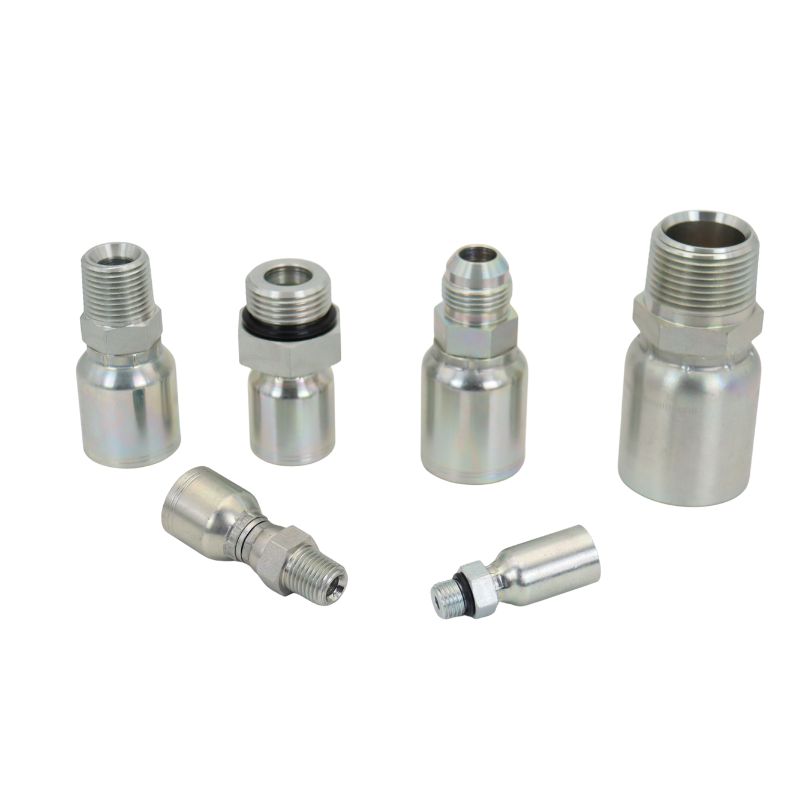
Tiered pricing works when each offer has distinct value and conditions, not when the same item receives two unexplained prices. The good-better-best pricing concept describes how differentiated options can serve different willingness to pay without relying only on discounts; hydraulic fittings often need two controlled bands rather than three marketing packages. The branded-original band protects applications that require specified provenance and lower substitution risk. The validated-alternative band creates a lower entry price by changing the product and service proposition transparently, not by hiding a discount.
Define Two Bands by Application, Not by Adjectives
The branded-original band has a clear job
Keep the branded band for orders where the drawing, equipment manual, contract, warranty, internal standard, or end user specifies the original brand. It also remains the default for safety-critical systems, unclear applications, exceptional pressure or temperature conditions, specialized fluids, high downtime cost, or any request that lacks enough information to validate a replacement. Its value includes documented configuration, known system fit, established traceability, and reduced approval work. Do not describe this band only as “premium,” because the practical reason to select it is controlled risk, not prestige.
The validated-alternative band needs a narrower gate
Use the second band where the complete end connection, hose series and size, material, finish, pressure and temperature conditions, fluid, shape, envelope, and crimp data can be verified. Suitable starting points are repeat configurations with clear drawings, stable demand, measurable quality requirements, and applications whose substitution process is understood. High-risk, ambiguous, or brand-mandated work should not be forced into the alternative band merely to meet a target price. The one-piece fitting ordering checklist provides the technical fields needed to decide whether a candidate can enter the controlled alternative line.
| Decision factor | Branded-original band | Validated-alternative band |
| Product identity | Original branded item | Clearly labeled aftermarket alternative |
| Primary value | Specified provenance, traceability, established system fit | Lower acquisition cost for approved applications |
| Application gate | Brand-required, critical, unclear, or high-consequence use | Complete specification and accepted substitution process |
| Technical evidence | Current original catalog and system data | Drawing comparison, hose/crimp data, sample and approval record |
| Quote wording | Original brand and full part number | Alternative brand, reference basis, and validation limits |
| Price control | Protected brand floor | Separate cost model and price floor |
Build the Alternative Line Before Setting Its Price
Select SKUs from evidence, not catalog breadth
Start with a small, data-supported group rather than copying an entire branded catalog. Review lost quotes, discount requests, sales frequency, equipment population, repair consequence, connection standards, hose systems, and availability problems to find items where price pressure is real and technical validation is practical. Exclude items whose only evidence is a single unusual order or whose application cannot be reconstructed. The goal is not the largest cross-reference list; it is a repeatable set of alternatives that sales and assembly personnel can identify correctly.
Validate the complete hose-end system
A branded part number is a cross-reference starting point, not proof that another product is completely interchangeable. Confirm thread, seat, seal, hose ID, hose construction, fitting series, material, finish, shape, pressure and temperature suitability, dimensional envelope, and valid crimp data. Inspect samples and controlled assemblies before routine release, then record deviations and approval limits. The one-piece fitting trial-order method keeps evaluation focused on compatibility, assembly accuracy, consistency, documentation, and repeat supply rather than purchase price alone.
Use an entry checklist for every alternative SKU:
- Complete branded reference and alternative item number.
- Controlled drawings, critical dimensions, threads, seats, seals, and materials.
- Approved hose series, size, crimper, dies, and current assembly data.
- Sample inspection, assembly result, fit check, and application boundary.
- Labeling, packaging, traceability, receiving inspection, and change control.
- Cost, freight, duties, finance, inspection, rework, return, and warranty exposure.
Create independent internal item codes, descriptions, labels, bins, photos, and approved-vendor records. Do not place the alternative under the branded part number with a hidden note, because picking, invoicing, and future replenishment will eventually lose that context; the fast-moving one-piece fitting stock framework likewise depends on identification, validation, and stock control rather than catalog breadth alone. Quote wording should say “original branded item” or “validated aftermarket alternative referenced to [part number]” and should never use “genuine,” “OEM,” or “fully interchangeable” without evidence and authorization. Clear identity protects trust, makes price comparison legitimate, and lets later margin analysis distinguish a strategic second band from an unrecorded substitution.
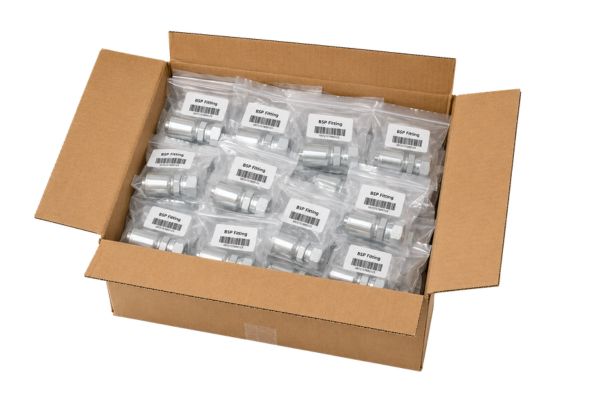
The selected band must remain visible from quotation through purchasing, assembly, inspection, invoice, and shipment. Require renewed approval when a source, drawing, material, finish, hose combination, or crimp specification changes, and prevent purchasing personnel from replacing one approved alternative with another low-cost source under the same item code. Receiving inspection should check the exact alternative code rather than only the reference brand number, while stock locations, barcode rules, and pick documents should minimize mixed selection. A low-cost line that cannot be controlled operationally will create returns, rework, leakage complaints, mislabeling, and brand damage that overwhelm its apparent unit margin.
Price Each Band From Its Own Economics
Protect floors instead of improvising discounts
Set separate price floors using the full economics of each band. The branded floor should account for acquisition cost, availability, service, inventory exposure, payment terms, and the value of preserving a specified original option. The alternative floor must include validation, samples, inspection, freight, financing time, lower-volume risk, documentation, returns, and technical support rather than applying a simple percentage below brand.
Create a meaningful but defensible gap
The price difference should be large enough to give a price-sensitive buyer a real choice, yet it must come from different product economics and value—not an arbitrary target. Do not publish a universal gap because freight, duties, order size, validation cost, supply stability, and local competition vary by SKU and transaction. If the two bands land too close, the alternative adds complexity without changing the decision; if the gap is achieved only by ignoring inspection and after-sales risk, it is not sustainable. Review the gap using net contribution after all transaction costs, not list-price percentage alone.
Quote the Choice Without Cannibalizing the Brand
Lead with application fit before price
Ask whether the original brand is mandatory, whether the equipment is under warranty, how costly failure or downtime would be, and whether complete technical data is available. Recommend one default based on those answers, then show the second option only when its gate is satisfied. This prevents the lower band from becoming the automatic first line on every quote. The conversation changes from “How much discount can you give?” to “Which risk-and-value package fits this application?”
Use concise option language:
- Original branded option: specified brand, full traceability, current catalog configuration, and the strongest continuity with the existing system.
- Validated alternative option: separately branded product for the confirmed application, supplied against the listed drawing, hose/crimp combination, and approval conditions.
- Not eligible for substitution: brand-mandated, safety-critical, technically incomplete, or outside the validated application envelope.
Never make the cheaper choice deceptive
Show both identities, technical scope, included services, delivery conditions, and approval requirements. Do not preselect the alternative, remove the branded label from the comparison, or imply that the buyer requested an original and received “the same thing.” If the alternative needs a trial, sample, or written acceptance, state that before the order rather than in a later disclaimer. Transparent choice protects the branded line because customers can still see what its higher price buys.
Measure Portfolio Profit, Not Only Conversion
Track whether the second band adds demand
The key question is whether the alternative wins price-sensitive business that the branded line would otherwise lose, not whether it produces more low-price transactions. Track quote conversion by band, gross-margin dollars, realized price versus floor, returns, rework, technical support time, inventory turns, stockouts, and repeat purchases, then compare those results with the same customers’ earlier branded buying patterns. Also review which applications chose each band and why, how often a lower quote needed exceptional approval, and whether alternative sales led to complete hose assemblies or only isolated low-value items. This reveals whether the alternative is expanding coverage, creating useful attachment sales, or merely replacing profitable branded demand while adding operational cost.
Set explicit cannibalization controls
Audit cases where an existing branded buyer moves to the alternative, especially when the application still values the original benefits. Require reason codes for price pressure, brand mandate, validation status, and selected band, then review exceptions rather than rewarding volume alone. Sales incentives should recognize contribution margin and compliant product selection, not only revenue. Expand the alternative line only after results show acceptable technical performance, inventory movement, and incremental contribution.
Conclusion
Persistent price pressure should lead to better segmentation, not endless discounting of branded hydraulic fittings. Keep the branded-original band for specified, critical, unclear, and high-consequence applications, and build a separate validated-alternative band for complete, repeatable, approved specifications. Separate the two through item codes, labels, stock, quotation wording, price floors, technical records, and change control, while training sales and warehouse personnel to preserve the selected identity through every transaction. Price each from its own total economics, present the lower band only when its application gate is met, and measure incremental margin alongside returns, support time, inventory movement, and cannibalization; the second price band succeeds sustainably when it wins business the brand line could not, not when it quietly replaces profitable branded orders or hides the true cost of technical risk.
FAQ
Should every branded fitting receive an alternative SKU?
No; prioritize repeat, technically clear, price-sensitive configurations and exclude applications where validation cost or risk outweighs the opportunity.
Can the alternative use the branded part number on its label?
Use the brand number only as a cross-reference field and give the alternative its own clear manufacturer and internal item identity.
How should sales respond when only the lowest price matters?
Offer the validated band if the application qualifies; otherwise state which missing or high-risk condition prevents responsible substitution.
Will a lower band always reduce average margin?
Not necessarily, but judge it using incremental contribution, transaction costs, returns, and cannibalization rather than unit margin or conversion alone.
When should the alternative line be expanded?
Expand after verified demand, stable technical results, acceptable returns, reliable supply, healthy inventory movement, and evidence that the line adds rather than shifts profit.