
A local market can look simple from a distance: the same repair shops, equipment fleets, factories, and mobile machines appear every month. At the counter, however, their hose ends may follow four different connection systems. One request needs a JIC female swivel, the next needs ORFS, a third arrives with BSP threads, and a large-bore line uses a four-bolt flange. If an alternative fitting range covers only the most familiar family, the sales team may quote individual items but still fail to complete the customer’s hose assembly, repair kit, or maintenance order.
One Local Market Can Contain Four Connection Systems
Equipment origin and age create mixed demand
Hydraulic equipment does not enter a market from one factory or in one year. American-designed mobile equipment may use JIC or ORFS connections. Machinery influenced by British or European practice may contain BSP connections. Pumps, cylinders, and high-flow lines may use SAE four-bolt flanges, especially at larger sizes. Older machines can remain in service beside newer models, and previous repairs may add adapters or locally available hose ends. The result is not one local standard but a layered installed base shaped by equipment origin, age, application, and maintenance history.
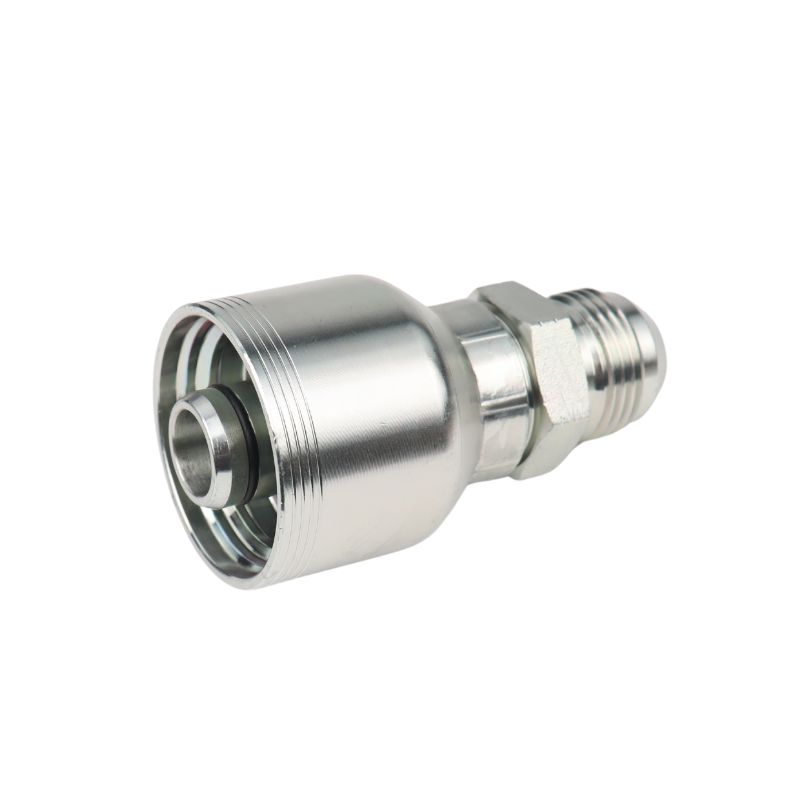
This mix appears inside individual accounts as well as across the market. A maintenance team may operate loaders with JIC ends, agricultural equipment with BSP ports, newer machines with ORFS connections, and power units with flange ports. Seeing only the most frequent family can underestimate the range required for the actual maintenance workload.
Similar appearance does not create compatibility
These connection names are not cosmetic labels. JIC uses straight UN/UNF threads and a 37-degree metal-to-metal flare seal. ORFS also uses straight threads, but sealing occurs at a flat face with an O-ring. BSP must be divided further: BSPP has parallel threads and may seal through a cone, bonded washer, or another defined sealing arrangement, while BSPT has tapered threads and normally relies on controlled thread interference with an appropriate sealing method. A four-bolt flange uses a face seal, O-ring, clamps, and bolts; Code 61 and Code 62 have different dimensions and ratings and must be identified separately.
A thread that starts by hand is not proof of a correct match. The sealing surface, thread form, pitch, diameter, gender, size, and applicable standard all matter. A practical hydraulic fitting identification process checks the seal first, then angle, diameter, and pitch. Broader coverage therefore requires more than adding visually similar ends—it requires distinct, correctly identified product families.
Partial Coverage Can Lose a Complete Order
The missing end controls the value of the basket
Many fitting requests are attached to a larger job. The customer may need hose, two end fittings, adapters, clamps, protective sleeve, and crimping as one usable assembly. If the range includes a common JIC end but not the required ORFS elbow or BSP swivel at the opposite end, the available items do not solve the shutdown. The missing low-value component can determine whether the entire basket is purchased locally or moved to another source.
This is why item-by-item availability can give a misleading picture of performance. A shelf may contain hundreds of fittings and still leave frequent order combinations incomplete. The more useful commercial question is: what percentage of common local assemblies and repair orders can be finished from the planned range? Complete-order coverage connects inventory decisions to the customer’s real outcome—putting equipment back into service.
Adapters are a controlled option, not a universal answer
An inter-series adapter can be the correct engineered solution when its two ends, pressure rating, material, seal, and installation envelope are verified. But using adapters automatically to compensate for every assortment gap creates new problems. Each extra joint adds length, another seal point, more components to identify, and more opportunities for assembly error. On a compact machine, the additional stack height can interfere with guards, frames, or nearby lines. On a hose assembly, it can also change routing and increase leverage at the port.
Use adapters when the design permits them and the complete connection is confirmed. They do not make direct JIC, ORFS, BSP, or flange ends unnecessary. A balanced range combines high-frequency direct ends with validated transition adapters.
Broader Coverage Is a Matrix, Not a Longer Catalog
Map the dimensions that decide order completion
The real assortment is a matrix. Connection family is only its first dimension. A technically useful plan also accounts for hose size and family, end size, male or female form, straight or elbow geometry, sealing method, material, and application risk. Flanges add Code 61 or Code 62, flange size, head style, O-ring, clamp, and hardware requirements. BSP adds the need to distinguish parallel from tapered threads and to document the intended seal.
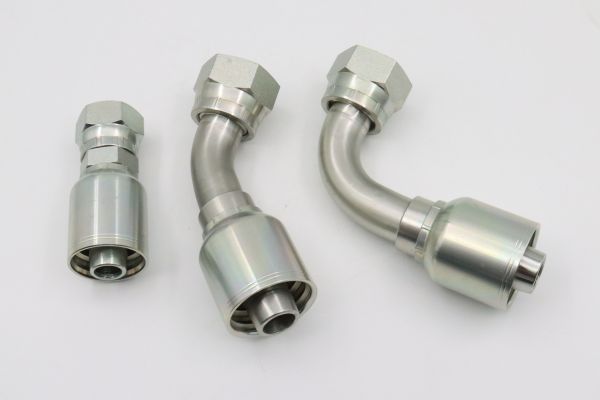
A simple coverage matrix can begin with these fields:
- Connection family and exact sealing type
- Thread or flange size and hose dash size
- Straight, 45-degree, 90-degree, or other geometry
- Rigid, swivel, port, hose-end, or adapter function
- Compatible hose family and approved crimp specification
- Material, seal compound, and environmental requirement
- Monthly demand, lost-request frequency, and replenishment time
- Core stock, secondary stock, or special-order status
This structure exposes practical gaps. For example, the business may carry ORFS straights in common sizes but repeatedly lose orders because 90-degree swivels are missing. It may carry Code 61 flange heads but lack matching clamps or O-rings. It may list BSP products without separating BSPP and BSPT in item descriptions. The matrix turns “we need more products” into specific decisions that can be sourced, labeled, stocked, and measured.
Coverage should follow recurring combinations
Do not start by copying every page of a manufacturer’s catalog. Start with evidence from quotation history, counter requests, returned samples, emergency jobs, machine populations, and lost-order notes. Group requests by connection family and then by the combinations that complete an assembly. This reveals whether the business needs depth in common sizes, selected elbows, mixed-end assemblies, flange kits, or a faster special-order route.
Photographs can support the process, but they do not prove an exact match. Ask for the full fitting, readable markings, thread and seal close-ups, caliper measurements, pitch-gauge results, hose layline, overall length, and machine application.
Build a Three-Level Alternative Range
Stock core, secondary, and special-order items differently
Complete coverage does not mean equal stock for every configuration. A three-level model keeps working capital aligned with demand:
- Core stock: high-frequency connection, hose, size, and shape combinations needed for routine repairs and assemblies.
- Secondary stock: recurring but lower-volume items that prevent meaningful order loss, including selected ORFS elbows, BSP variants, and flange components.
- Special order: rare sizes, unusual materials, uncommon angles, or application-specific ends supported by clear lead times and a documented confirmation process.
The boundary between levels should be local, not universal. One market may justify deep JIC and ORFS stock; another may need more BSP and Code 61 coverage. Review actual demand, gross margin, replenishment reliability, minimum order quantities, and the value of the full baskets affected. A slow-moving fitting can still merit stock if it repeatedly unlocks valuable hose assembly orders, but that decision should be visible in the data.
Add technical evidence before adding shelf quantity
An alternative item should enter the range only after its identity and application limits are clear. A branded part number or visual resemblance can help locate a candidate, but neither proves interchangeability. Confirm the connection standard, sealing surface, thread, size, dimensions, pressure rating, material, seal compound, and hose compatibility. For crimped ends, use current crimp data for the exact hose-and-fitting system and the available machine and tooling. Trial assemblies and inspection should precede volume commitments.
One-piece construction can reduce the risk of pairing a loose ferrule with the wrong insert, but it does not remove the need to verify the hose, fitting, crimp diameter, insertion depth, and finished assembly.
Operational Control Makes Broad Coverage Usable
Identification and storage must prevent near-match errors
As coverage expands, the risk of picking a near match also expands. JIC, ORFS, BSPP, BSPT, and flange components should have unambiguous item codes and descriptions. Labels should show the connection family, size, hose size, geometry, and material. Separate bins and visual markers help prevent similar-looking items from being mixed. Thread gauges, calipers, angle gauges, and seal inspection tools should be available where parts are received and identified.
The receiving and counter workflow should include a stop rule: if the sealing method or standard is uncertain, the item is not released as an exact alternative. This avoids turning speed into returns, leaks, rework, or damage to the customer’s port. The same rule applies to flange hardware. Code, size, clamps, bolts, and O-ring must be treated as a system, not as interchangeable loose pieces.
The quotation process should show complete solutions
A broad range creates value only when the sales team can find and explain it. Search tools and quote templates should allow filtering by connection family, seal, size, geometry, and compatible hose. Mixed-end assemblies should be easy to specify without relying on memory. If a direct end is unavailable, the quote should distinguish a validated adapter solution from a special-order direct end and explain the effect on dimensions and lead time.
For uncertain samples, use a one-page confirmation record. It should capture photos, measurements, hose data, application, pressure and temperature information, fluid, quantity, required date, and the customer’s approval of the identified configuration. This creates a reusable technical record for repeat orders and reduces the chance that the same fitting is re-identified from scratch.
Wider Coverage Strengthens the Commercial Offer
It supports a second price band without weakening trust
When only the original branded fitting is available, every price discussion becomes a choice between discounting that item and losing the request. A verified alternative range creates a second price band while preserving a clear premium option. The customer can compare lead time, technical confirmation, warranty terms, and price without being told that two parts are identical merely because they connect to the same nominal size.
Mixed-standard coverage makes this approach more credible. Offering an alternative only for JIC suggests a fragmented program; supporting the recurring JIC, ORFS, BSP, and flange combinations shows that the range was built around complete local maintenance needs. That consistency helps the sales team protect margin on branded parts while winning budget-sensitive work with a technically controlled option.
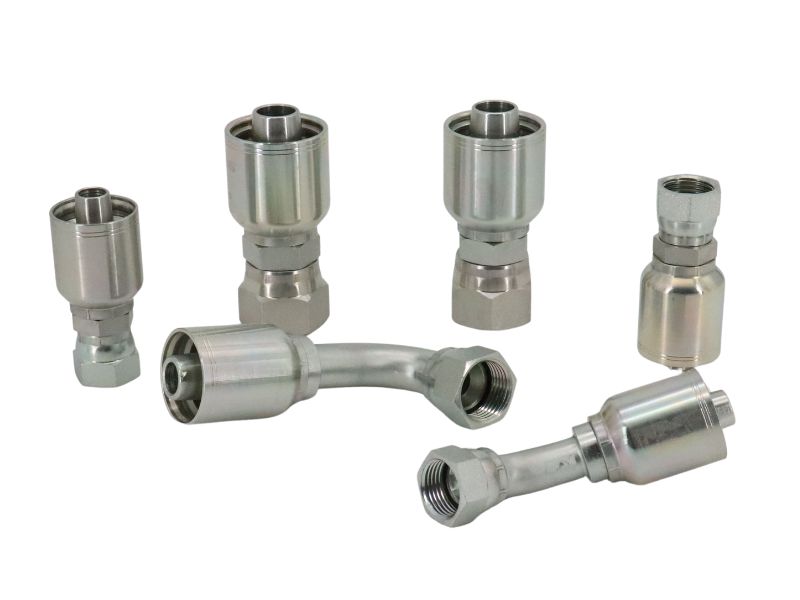
Service capability becomes harder to replace
Price can be copied quickly. A reliable map of the local installed base, trained identification, suitable stock, current crimp data, and complete-order support takes longer to build. Customers remember the source that can inspect an unfamiliar end, separate BSPP from BSPT, identify the correct flange code, and finish a mixed-end hose assembly without repeated trial and error.
Every confirmed sample and completed order improves demand intelligence. Over time, the business learns which combinations deserve stock, which can remain special order, and where one missing component blocks a larger basket.
Measure Coverage by Outcomes, Not SKU Count
Use metrics tied to completed work
A larger SKU count is not automatically better. Track whether the range solves more of the work that arrives. Useful measures include:
- Complete-order fill rate for common hose assemblies and repair baskets
- Fill rate by JIC, ORFS, BSPP, BSPT, Code 61, and Code 62 family
- Requests lost because one fitting, adapter, seal, or hardware item was missing
- Quote-to-order conversion for branded-only and dual-option quotations
- Inventory turns, aged stock, returns, and identification-related rework
- Emergency order response time and repeat-order accuracy
Review these measures together. A high fill rate bought with excessive aged stock is not healthy. Strong inventory turns accompanied by frequent incomplete orders may mean the range is too narrow. The target is not maximum stock or minimum stock; it is the best repeatable balance between order completion, response time, technical control, and working capital.
Expand in controlled waves
Begin with a sample of recent requests and identify the smallest set of additions that would have completed the most valuable recurring orders. Validate technical documents and sample assemblies, then place a limited initial quantity. After a defined review period, compare actual sales, attached hose revenue, lost requests, returns, and stock movement. Promote proven items to core stock, retain justified secondary items, and remove assumptions that demand does not support.
This phased method is safer than a large catalog purchase. It makes every expansion decision traceable to a local need and allows the team to correct descriptions, binning, training, or sourcing before scaling. Broader coverage becomes an operating capability rather than a one-time inventory event.
Conclusion
Mixed JIC, ORFS, BSP, and flange demand is not a reason to buy everything. It is a reason to understand the local installed base more completely. When the alternative range is built around complete assemblies, verified technical boundaries, and measured order outcomes, broader coverage reduces lost baskets without turning the warehouse into an uncontrolled catalog.
Frequently Asked Questions
Does broader coverage mean stocking every JIC, ORFS, BSP, and flange fitting?
No. It means stocking the combinations that repeatedly complete local orders, keeping selected secondary items for meaningful gaps, and providing a controlled special-order route for rare configurations. The coverage matrix should be based on demand and complete-order value.
Can an adapter solve every missing connection?
No. An adapter must be technically compatible and acceptable for the application’s pressure, material, seal, space, and routing requirements. It also adds length and another joint. Direct ends should cover common assemblies where adapters would create avoidable complexity.
Why must BSPP and BSPT be tracked separately?
They use different thread forms and sealing approaches. BSPP is parallel; BSPT is tapered. Treating “BSP” as one item description increases identification and sealing errors. The actual port, mating end, and seal arrangement must be confirmed.
Are Code 61 and Code 62 flanges interchangeable at the same nominal size?
No. They have different dimensional and pressure characteristics. Confirm the code, size, flange head, port pattern, clamps, bolts, O-ring, and application requirements before selection. Parker’s flange documentation likewise separates connections governed by SAE J518 and ISO 6162.
What is the first step in expanding an alternative fitting range?
Analyze recent quotations, completed assemblies, emergency requests, lost orders, and returned samples. Build a matrix by connection family, size, geometry, hose compatibility, and order value. Then validate a small first wave before increasing stock.