
Neither ORFS nor JIC is automatically better in every vibration-prone or leak-sensitive hydraulic system. The useful ORFS vs JIC one-piece fittings decision begins with their different sealing interfaces: ORFS commonly seals with an O-ring compressed against a flat face, while JIC seals through matched 37-degree flare surfaces. Vibration reaches those interfaces through the hose, fittings, ports, supports, and machine structure, so connection choice cannot compensate for poor alignment or routing.
The Decision Is Conditional, Not a Universal Winner
ORFS may be attractive where a flat-face elastomeric seal and visible face inspection fit the system’s leakage-control strategy. JIC may remain appropriate where the established equipment interface, all-metal flare seal, available service practice, and verified assembly controls favor it. The connection must match the port and application; it should not be changed solely because another design has a stronger reputation.
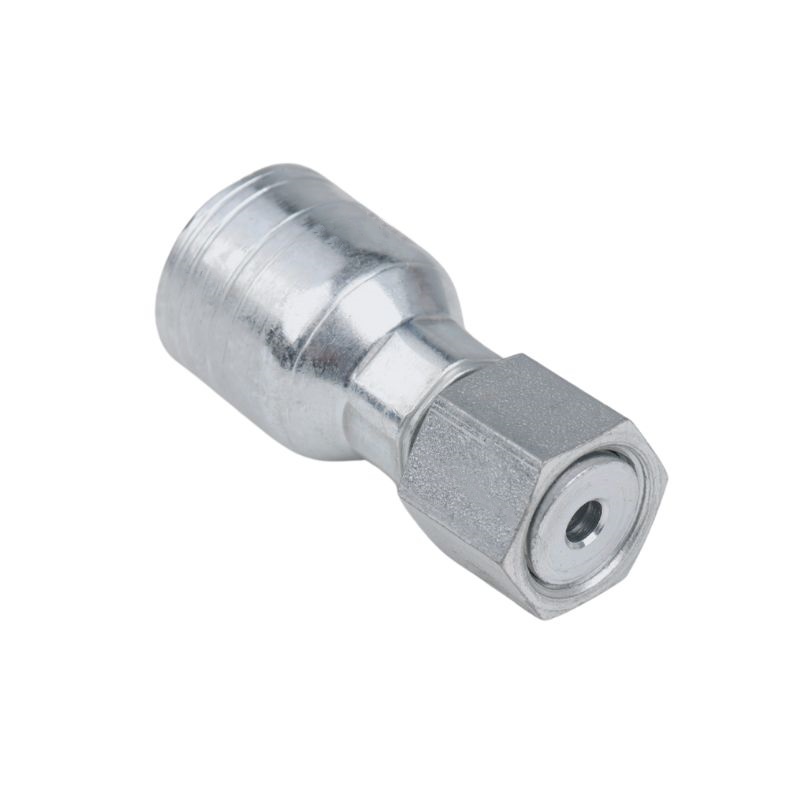
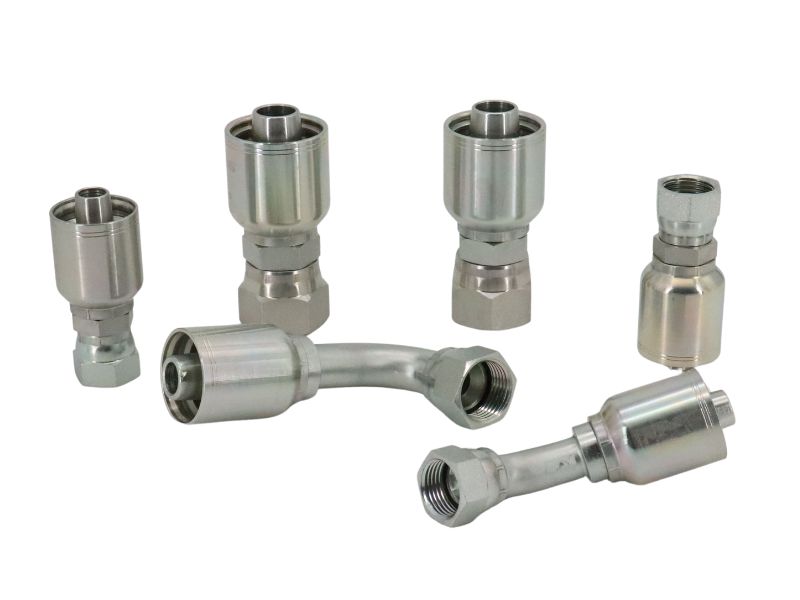
A one-piece fitting joins a preassembled, attached, or retained stem-and-ferrule arrangement to a connection end, with exact construction varying by series. That structure can simplify hose-side picking but does not alter the connection’s fundamental sealing mechanism. It also does not guarantee hose compatibility, correct crimping, torque, pressure suitability, or zero leakage.
Establish the comparison boundary
Compare complete, correctly specified connections rather than isolated labels. Confirm thread form and size, male or female arrangement, sealing interface, compatible mating component, hose and fitting series, material, O-ring where applicable, pressure and temperature conditions, fluid, and installation geometry. A similar thread that screws together is not proof of correct sealing.
Leakage control also includes the route. If a hose is too short, twisted, bent too close to the fitting, or unsupported, either connection can receive side load and repeated movement. Fixing those conditions may matter more than changing the connection family.
Compare the Physical Sealing Interfaces First
ORFS and JIC create seals in different places and through different contact conditions. Understanding that difference makes inspection and failure analysis more precise than simply labeling one design “leak free.”
ORFS flat face and O-ring
An ORFS connection commonly uses a straight thread to pull a flat male face and mating face together while an O-ring provides the designed seal. The thread supplies clamping action; it is not normally the fluid-sealing surface. The O-ring material, size, condition, groove, mating face, alignment, and compression all matter.
A cut, missing, extruded, contaminated, chemically incompatible, or incorrectly installed O-ring can defeat the interface. A damaged flat face or groove may prevent controlled compression. Replacing the seal without inspecting those hard surfaces can hide the cause rather than correct it.
JIC 37-degree flare interface
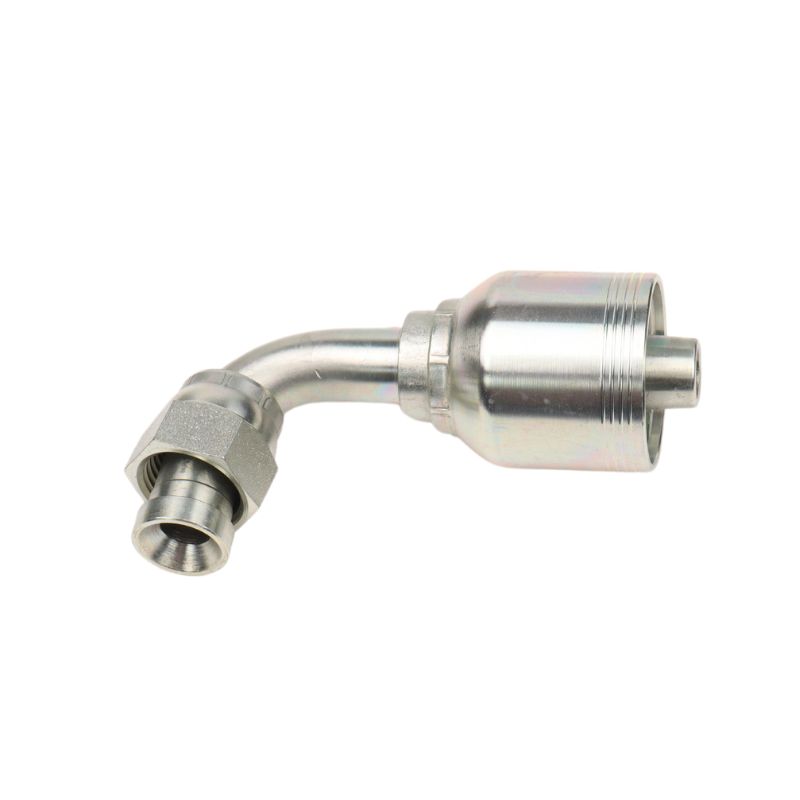
A JIC connection commonly uses a straight thread to draw matching 37-degree flare surfaces together. The metal-to-metal seat is the designed sealing interface. Thread engagement creates clamping force, but thread sealant cannot correct an incorrect seat angle, damaged flare, cross-threading, or wrong connection standard.
The flare surfaces must be compatible, clean, aligned, and free from damage that affects contact. Confusing JIC with another visually similar flare system can produce apparent thread fit without a valid seal. Final identification requires controlled thread and seat information, not a photograph alone.
Vibration Reaches Both Connections Through the Assembly
Vibration does not act only on the seal. It travels through the hose mass, adapters, tube, clamps, ports, and equipment structure, creating cyclic bending, side load, or movement at the joint. A connection performs best when routing and support prevent that motion from concentrating at the sealing interface.
ORFS uses an elastomeric sealing element that may accommodate controlled face conditions within its approved design, but the O-ring cannot compensate for loose assembly, gross misalignment, damaged hardware, or an unsuitable application. JIC uses direct flare contact, which likewise depends on stable alignment and clamping. Neither design should be expected to absorb continuous hose twist or unsupported vibration.
Control the load path before choosing the seal
Inspect where the vibration originates and how the hose is restrained. Confirm adequate hose length, natural bend, minimum bend radius, clamp position, movement allowance, port stability, and elbow orientation. A heavy or stiff hose cantilevered from a fitting can impose repeated leverage regardless of connection type.
Do not tighten a leaking joint repeatedly as a substitute for correcting routing. Use the applicable current assembly or equipment instructions for tightening and inspection; universal torque values cannot be inferred from the connection name alone.
Surface Damage, Contamination, and Misalignment Affect Them Differently
Both designs require clean, intact sealing surfaces, but the vulnerable features differ. ORFS inspection focuses on the flat face, O-ring groove, elastomer, and mating face. JIC inspection focuses on the flare seats, concentricity, alignment, and evidence of seat damage.
| Engineering factor | ORFS consideration | JIC consideration |
| Primary seal | O-ring against flat mating face | Matched 37-degree flare surfaces |
| Surface damage | Face or groove damage can disturb O-ring compression | Scratched or distorted flare can interrupt metal contact |
| Contamination | Debris may damage or displace the O-ring or hold faces apart | Debris may score the flare or prevent uniform seating |
| Misalignment | Can load faces and O-ring unevenly | Can prevent concentric flare contact and add side load |
| Service item | Correct O-ring identity and condition require control | Flare condition and mating geometry require control |
| Inspection emphasis | Seal, groove, flat face, and mating face | Flare angle identity, seat condition, and alignment |
Contamination control is not cosmetic. Debris trapped at either interface can create a leak path or damage a surface during tightening. Cap clean components, inspect before assembly, and avoid wiping practices that leave fibers or abrasive contamination.
Misalignment cannot be tightened away
Connections should mate without using the nut to pull a badly routed hose or tube into place. That practice stores load in the assembly and can distort the sealing relationship. Correct the hose length, elbow clocking, tube position, support, or adapter arrangement before final connection.
Surface damage also requires technical disposition. Do not polish, reshape, or dress a sealing face unless an approved procedure permits it. Removing material informally can change geometry while making the part appear cleaner.
Repeated Disassembly Changes the Service Decision
Service access is a separate lifecycle issue because every disassembly exposes the seal to handling, contamination, and inspection variability. ORFS and JIC can both be serviced when components remain within their approved conditions, but neither should be described as indefinitely reusable.
For ORFS, the O-ring should be treated as a controlled sealing component. Its identity, compatibility, condition, storage, installation method, and replacement rules matter. Reusing an unknown or damaged O-ring because it looks intact can undermine an otherwise acceptable face connection.
For JIC, repeated make-and-break cycles can mark or distort flare surfaces, especially if alignment or tightening is poor. A metal seal does not eliminate wear. Inspect both mating seats and hold parts with galling, deformation, cracking, or other unacceptable damage according to the responsible procedure.
Preserve the mating pair and service record
After opening either connection, protect exposed surfaces and record why the joint was disturbed. If a recurring leak returns at the same location, investigate alignment, routing, vibration, mating-port condition, component identity, and assembly practice rather than replacing only the most accessible part each time.
A service policy should state which seals are replaced, which hard parts are inspected, what documents control acceptance, and how the system is safely returned to operation. The policy must reflect the actual component manufacturer and equipment requirements.
Installation and Inspection Must Match the Design
Correct installation begins before tightening. Verify the connection standard, thread, seat or face, seal identity, component cleanliness, hose route, and ability of the parts to mate without force. Keep protective caps in place until assembly where practical.
For ORFS, inspect the O-ring and groove, confirm the mating face, and prevent the seal from being cut or displaced. For JIC, inspect both flare surfaces and confirm the 37-degree interface rather than a visually similar alternative. In both cases, use current approved tightening procedures and suitable tools; do not invent a universal torque.
Before inspection or service, stop the equipment, isolate the hydraulic system, release pressure and stored energy, secure suspended loads, and follow lockout and manufacturer procedures. Never search for a pinhole leak with a hand. Use a safe method and suitable protective equipment because injected hydraulic fluid can cause severe injury.
The post-installation record should include:
- Connection and mating-port identities.
- Seal or flare inspection result.
- Hose series, fitting series, and approved assembly record.
- Tightening method and applicable document revision.
- Routing, clamp, clearance, and orientation confirmation.
- Safe leak-check result under the organization’s approved commissioning procedure.
Match the Connection to the Application Scenario
Connection choice becomes clearer when the sealing interface is placed inside a real service pattern. The following scenarios are conditional examples, not performance guarantees.
Mobile equipment with persistent movement
Where machine motion and vibration are significant, first control hose support, length, bend, and port loading. ORFS may be considered when the approved design, elastomer compatibility, and maintenance controls suit a leak-sensitive interface. JIC may remain suitable when the existing port, flare condition, routing, and established assembly procedure are correctly controlled.
Repeated service access
Where a connection is opened regularly, ORFS offers a visible replaceable seal but requires disciplined O-ring identification and face protection. JIC avoids an elastomer at the flare yet requires careful inspection of metal seats after repeated cycles. The better operational fit depends on parts control, technician practice, contamination exposure, and mating-component condition.
Clean industrial routing
In a stable, well-supported route with aligned ports, either connection may perform acceptably when correctly specified and assembled. Existing equipment interfaces, fluid and temperature compatibility, maintenance policy, space, and approved data may outweigh a theoretical preference based on seal type alone.
Use a conditional selection framework: define the port standard, determine whether elastomer compatibility is acceptable, evaluate surface and contamination controls, map vibration load paths, review service frequency, confirm installation access, and verify the complete hose assembly and application ratings. If those inputs remain unknown, the connection decision is not ready.
Conclusion
ORFS and JIC control leakage through different interfaces, so selection should follow the application rather than a universal ranking. ORFS relies on the correct O-ring, groove, flat faces, and controlled compression; JIC relies on compatible, clean, aligned 37-degree flare surfaces. Both can leak when routing transmits vibration, ports are misaligned, surfaces are damaged, or assembly practices are uncontrolled. Review repeated service access separately because O-rings and metal seats have different inspection needs. Before deciding between ORFS vs JIC one-piece fittings, prepare the exact port and fitting identities, hose route, pressure, fluid, temperature, vibration source, service pattern, and approved tightening information. Correct the load path and verify the complete assembly instead of expecting either connection to eliminate leakage by design name alone.
FAQ
Does ORFS always leak less than JIC?
No, because leakage depends on correct parts, intact sealing surfaces, alignment, assembly, routing, and service conditions. ORFS uses a different seal, not a guarantee against leaks.
Can a JIC connection be reused indefinitely?
No, repeated service can damage or deform flare surfaces. Inspect both mating seats and follow approved acceptance and replacement procedures each time the joint is opened.
Is ORFS automatically better for vibration?
No, vibration performance depends heavily on hose routing, support, port stability, and application conditions. The O-ring cannot compensate for persistent side load, twist, or loose assembly.
Can thread sealant stop a leaking JIC flare?
No, the designed seal occurs at the matched flare surfaces rather than the straight threads. Sealant cannot correct the wrong seat, damaged flare, misalignment, or cross-threading.
What must be checked before changing a JIC port to ORFS?
Review the equipment port or approved adapter arrangement, sealing method, O-ring compatibility, pressure, fluid, temperature, space, routing, service policy, and current engineering approval. Similar thread appearance is not enough to authorize the change.