
A low purchase price does not create a reliable inventory system when arrival timing changes from order to order. Predictable replenishment for one-piece fittings means the shop can make a reasonable, evidence-based forecast of when each important SKU will become usable stock. Without that confidence, buyers order too early, wait too long, or resort to emergency freight after a shortage. The solution is not one universal reorder formula. It is a SKU-specific planning process that combines actual use, free stock, open orders, realistic lead-time behavior, and clear shipment visibility while preserving technical compatibility and service-critical coverage.
Price and Replenishment Answer Different Questions
Unit price shows the purchase cost of a fitting; replenishment predictability shows whether the fitting will be available when work requires it. A cheap but erratic source can increase emergency orders, schedule changes, and duplicate commitments.
Lowest price can hide timing uncertainty
If an order may arrive early, late, split, or incomplete, the buyer must carry more uncertainty. Staff may protect the shop with extra inventory, repeated tracking, or backup orders. Those responses use cash and attention even when the quoted unit price looks favorable.
Compare price only after defining the complete replenishment path: availability confirmation, order processing, dispatch, transit, receiving, inspection, posting, and bin placement. Stock becomes useful only after the correct item passes those stages.
Predictability supports a credible decision
A predictable source does not need identical transit on every order, but its changes should be visible and understandable. The shop needs confirmed dates, clear open-order status, and prompt notice when assumptions change. That evidence lets purchasing choose whether to wait, reorder, protect critical stock, or revise a service promise.
The distinction also improves internal accountability. If purchasing records only the final delivery date, an early availability warning and a late receiving step can disappear inside one total. Milestone evidence shows which uncertainty the buyer can influence and which requires a scheduling contingency. It also prevents a team from judging replenishment solely by whether a carton eventually arrived.
When comparing options, ask how quickly stock is confirmed, whether the confirmation identifies exact quantities, how changes are communicated, and whether partial shipments are visible by SKU. These questions are more useful than a general claim that lead time is “fast.” They allow the shop to build promises from documented conditions instead of promotional language.
Variable Arrival Times Complicate Reorder Decisions
Lead-time variability widens the period the shop must cover from inventory. When that range is unclear, the same reorder point may be too late for one cycle and unnecessarily early for another.
The uncertainty affects both shortages and overstock
Ordering late can leave common jobs blocked. Ordering early every time can build excess stock, especially when several delayed orders arrive together. Split shipments add another problem: part of the order appears, but the exact SKUs needed for open jobs may still be missing.
Track milestones separately rather than recording one vague lead time. Capture order date, confirmed availability, planned dispatch, actual dispatch, arrival, receiving completion, and usable-stock date. This shows whether variation comes from supply, transit, or the shop’s own receiving process.
Use a range of observed outcomes
Planning should reflect actual order history and current confirmation, not a remembered best case. Avoid inventing a standard safety-stock formula or service target. A shop with seasonal repair demand, limited storage, and local emergency alternatives will make a different decision from one supporting remote equipment.
Review unusual events separately so a one-time disruption does not automatically define every future order. The goal is honest forecast confidence, not a false promise of perfect timing.
Four Data Sets Build a Useful Forecast
Every reorder decision needs actual use, usable on-hand stock, open orders, and realistic replenishment time. Missing any one of these can create a false sense of coverage.
Start with demand and free stock
Use rate should come from actual issues or completed jobs for the exact SKU. Grouping only by thread family can hide differences in hose side, angle, seal, or fitting series. Consider known seasonal work and scheduled fleet service without turning estimates into guaranteed demand.
Free stock excludes reserved, quarantined, damaged, unidentified, or technically unresolved pieces. A system quantity is not enough if some units cannot be issued. Confirm bin accuracy before purchasing more to correct a false stockout.
Add open orders and realistic timing
For each open line, record ordered quantity, outstanding quantity, confirmed SKU, promised dispatch or arrival, shipment status, and affected jobs. Do not count an unconfirmed order as if it were shelf stock.
The planning record should include:
- exact fitting SKU and controlled description;
- recent usage and known future demand;
- usable, reserved, and quarantined quantity;
- open-order quantity and present milestone;
- observed and currently confirmed replenishment timing;
- critical jobs, approved alternatives, and review owner.
Replenishment Predictability Is SKU-Specific
One supplier-level average cannot describe every fitting. Availability can differ by connection, size, angle, material, production family, and order pattern.
Exact identity controls usefulness
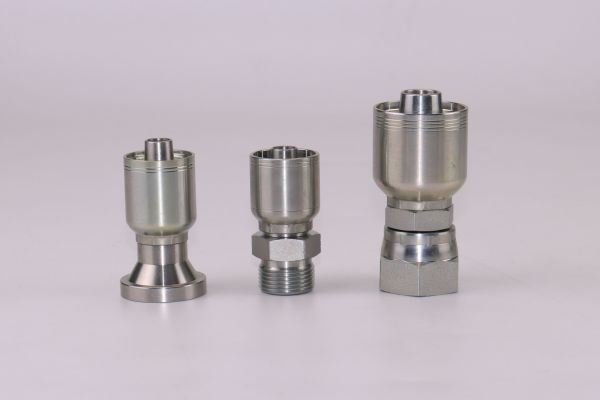
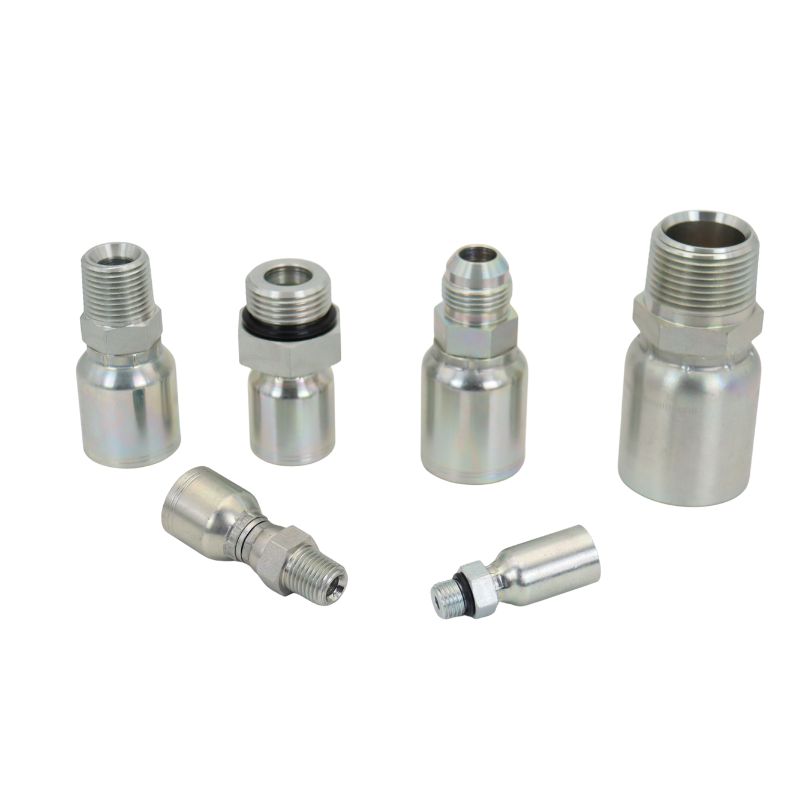
A one-piece fitting contains a stem or body with a retained or preassembled ferrule, with construction varying by series. Similar fittings may differ in thread, seat, seal, hose tail, ferrule, or crimp requirements. An on-time carton containing the wrong variant does not improve reliability.
Track performance by complete SKU and, where helpful, by family. Confirm connection standard, diameter, pitch or TPI, taper, gender, seat or sealing face, O-ring location, orientation, hose size, and fitting series. The same dash size does not prove hose compatibility.
Different SKUs need different confidence
A common stocked item may have regular usage and many past orders, making its timing easier to evaluate. A rare fitting may have little history and require current confirmation for each job. A special material or angle can behave differently from the supplier’s normal range.
Do not assume reliable delivery of one family proves reliable delivery of another. Ask SKU-specific questions and record where confidence is based on limited evidence.
Fast Movers and Rare Items Need Different Assumptions
Fast movers justify frequent review because small timing errors affect many jobs. Rare items require caution because carrying deep stock may tie up cash and increase aging risk.
Plan fast movers from repeat evidence
Review issue frequency, blocked-job history, current free stock, open orders, and arrival behavior. A fast mover with variable timing may justify earlier review or carefully reasoned buffer coverage, but no universal quantity applies.
Look for demand combinations rather than totals. Straight and elbow fittings with similar connection codes may not substitute in constrained routing. Preserve the exact SKU evidence that connects inventory to completed work.
Separate rare critical from rare noncritical
A rarely used fitting can still be important when it supports equipment with severe downtime and no verified alternative. Another rare fitting tied only to planned work may remain special-order. Evaluate consequence, lead time, equipment population, storage life, and ability to obtain current technical data.
Do not reduce technically necessary emergency stock purely to improve a metric. Equally, do not overbuy every rare SKU to compensate for an uncertain forecast.
Order Visibility Enables Earlier Decisions
Visibility matters before a shipment becomes late. A buyer who can see an unconfirmed line or slipping dispatch can act while usable stock still remains.
Build an exception-based open-order view
Show each important line’s current milestone, last confirmed date, changed expectation, split quantity, and linked job. Highlight missing confirmation and deviations rather than asking staff to chase every order equally.
If a shipment splits, allocate confirmed quantities to the most appropriate jobs using technical identity, urgency, and existing promises. Do not assume the first carton contains the required SKU, and do not double-count the outstanding balance.
Communicate changes across the shop
Purchasing, receiving, scheduling, and counter staff should use the same current status. A buyer’s private email does not protect a promise made at the service desk. Define who updates the record and when the next confirmation is due.
Fast information cannot replace technical accuracy. When an alternative is proposed, verify connection, seal, hose series, ferrule design, current crimp data, material, and application before treating it as usable supply.
Review Planned Versus Actual Arrival Performance
A replenishment reliability scorecard should compare stated expectations with observable milestones. It need not invent percentages or rank suppliers with a single number.
| Planned arrival | Actual arrival | Operational impact | Follow-up question |
| Confirmed and met | usable after normal receiving | plan remained stable | Was the exact SKU and quantity correct? |
| Confirmed but late | job or buffer consumed | forecast confidence reduced | Which milestone changed, and when was notice given? |
| Split shipment | only some lines usable | coverage differed by SKU | Which balance remains confirmed? |
| On time but wrong | stock quarantined | service remains blocked | Did order data, picking, or receiving fail? |
| Delivered but posted late | physical stock unavailable | internal delay extends lead time | How can receiving priority reflect blocked jobs? |
Review patterns, not isolated disappointments
Compare several orders for the same SKU or family when history exists. Note confirmation quality, milestone changes, quantity accuracy, and usable-stock date. Keep one-off carrier or disruption events visible without treating them as the only evidence.
Turn evidence into a planning change
Possible actions include earlier review, stronger confirmation requirements, adjusted order cadence, a controlled backup source, improved receiving priority, or narrower promise language. Test changes on a small SKU group and preserve original records for comparison.
Review the scorecard at a cadence appropriate to ordering activity, and close exceptions only when their cause and effect are known. A late line caused by an order-entry error needs different prevention from a late line caused by changed availability. Likewise, an on-time carton held in quarantine is a conformity or data problem, not proof that the replenishment plan succeeded.
The shop should also record whether its action created a secondary risk. Ordering earlier may increase average inventory age; using a second approved source may add identity and receiving complexity; demanding more confirmations may add work without improving evidence. A small trial reveals whether the selected control improves forecast confidence in practice.
Document the decision, owner, review date, and affected SKUs so later results can be compared with the original replenishment problem.
Before inspecting or replacing a hose, stop equipment, isolate the system, release pressure and stored energy, secure raised loads, and follow lockout and manufacturer procedures. Replenishment uncertainty never justifies an unverified fitting or damaged stock.
Conclusion
Predictable replenishment for one-piece fittings gives a hose shop enough confidence to time purchases, protect critical service, and avoid repeated emergency reactions. The forecast should combine exact-SKU usage, usable stock, reservations, open orders, current confirmations, and observed milestone history. Fast movers and rare items need different assumptions, while rare but critical parts require explicit service-risk review. Track planned versus actual arrival through the point of usable stock, because on-time dispatch or physical delivery alone does not release a job. A cheap but erratic source may add tracking, duplicate orders, and urgent freight. Evidence-based scorecards and exception visibility improve decisions without pretending that one formula or fixed safety-stock level fits every fitting.
Frequently Asked Questions
How should a shop plan around variable fitting lead time?
Use observed SKU-level milestones plus current order confirmation, not the best past result. Review free stock, demand, open orders, and service consequence before choosing an earlier trigger or additional coverage.
Should open purchase orders count as available inventory?
No, they should remain a separate expected-supply category until received, verified, and posted as usable stock. Unconfirmed, split, or delayed lines need explicit status.
How should seasonal demand affect replenishment?
Use actual seasonal history and known upcoming work to adjust review timing. Avoid treating last season’s pattern as guaranteed, and reassess equipment population and service commitments.
Does uncertain lead time always require more safety stock?
No, possible responses include better confirmation, earlier review, alternate approved supply, or different order cadence. Added stock must be justified by demand, criticality, storage, cash, and obsolescence risk.
How should split shipments appear in the plan?
Record received and outstanding quantities by exact SKU and milestone. Allocate only verified usable units, keep the balance open, and update jobs that still depend on missing lines.